Making your home ready for holiday guests with mobility needs starts with walking the path they’ll take. Start at the entrance, since steps are the most common barrier. Then add a few bathroom upgrades, clear your walking paths, and ask your guest what helps.
Most of what makes a home welcoming for a guest with mobility needs is small, reversible, and doable before the holidays arrive. You don’t need a construction crew. You don’t need to remodel your bathroom. You need a plan that is built around the handful of spots in your home that matter.
This guide gives you that plan. You’ll learn how to walk your guest’s route and spot the real barriers, how to fix your entrance (the single most common sticking point), how to make your bathroom safer in an afternoon, and how to set up sleeping and living spaces so your guest can relax instead of navigate. Every section includes a no-cost option and a paid one, because a great host works with the time and budget they have.
Start With a Walkthrough of Your Guest’s Route
Trace the exact route your guest will take: from the car, to the front door, through the hallway, to the bathroom, to wherever everyone eats and sits. At each stop, look for the same four things: step heights, door widths, floor transitions, and lighting. Notice anything your guest would need to carry or step over, like a garden hose, a loose rug edge, or a raised threshold.
Here’s a practical benchmark to keep in mind: according to ADA guidelines, a wheelchair generally needs about 32 inches of clear door width to pass through comfortably, and roughly a 5-foot circle of open floor space to turn around. If a doorway or hallway feels tight to you, measure it to confirm.
Fix the Entrance First
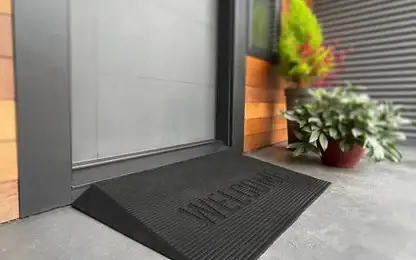
Start with the no-cost options. Could your guests park closer to a door with fewer steps? Many homes have a side or garage entrance with just one step, instead of a full flight at the front. If steps remain, a Multi-Fold or Threshold Ramp handles one or two steps affordably and sets up in minutes. Households expecting repeat visits, or managing a family member’s changing needs, may find a permanent ramp worth the investment.
Whatever ramp you choose, slope matters more than most people realize. A reliable rule of thumb according to ADA guidelines: one foot of ramp length for every inch of rise.
Make the Bathroom Safe and Usable
Your guests may not mention it, but the bathroom is often where visitors feel most unsure. A few simple updates help everyone feel safe, comfortable, and welcome in your home.
Quick Fixes You Can Do in an Afternoon
A surprising amount of bathroom accessibility comes from small, inexpensive changes:
- Non-slip mats inside and outside the tub or shower
- A raised toilet seat, available at most pharmacies
- A shower chair or transfer bench for sitting during a shower
- A handheld showerhead so standing isn’t required
- Better lighting, especially over the sink and shower area
- Moving toiletries to a height that doesn’t require reaching or bending
Most of these items are available locally, cost little, and pack away easily once the holidays wrap up.
When to Install Grab Bars
Suction-cup grab bars feel secure, but they are not weight-bearing. A bar that detaches mid-use is worse than no bar at all. A properly installed grab bar is mounted into wall studs or blocking, strong enough to bear a person’s full weight in a moment that matters.
If you’re not sure what’s behind your bathroom wall, this is a job for a professional. It’s a small investment that protects against a serious fall.
Set Up Sleeping and Living Spaces
Bed height matters more than most hosts realize. A bed that’s too low or too high makes sitting down and standing up harder than it needs to be. If stairs are a barrier, consider setting up a main-floor room as the guest room for the visit, even temporarily.
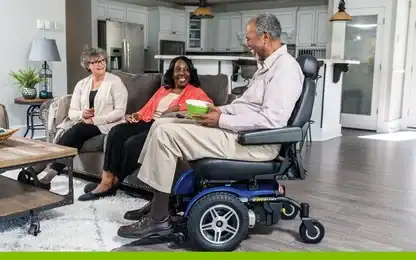
Walk through your living spaces and clear a path. Secure or remove throw rugs, coil extension cords, and move furniture away from the walkways your guest will use most. In your main gathering room, set out at least one chair with arms. Arms make standing up much easier for anyone with limited leg strength.
Two easy additions that go a long way: a spot to charge a power chair or scooter overnight, and a place to store a walker or cane that isn’t the middle of a busy hallway.
Plan the Visit, Not Just the House
Plan around timing and energy. A quiet room where your guest can rest for twenty minutes mid-afternoon isn’t a luxury. It’s often what lets them stay for the whole gathering. Arrange seating so no one ends up on the edge of the room, away from the conversation. If your guest uses a wheelchair, check that your dining table is the right height. If reaching across the table is difficult, adjust the utensils or serving setup.
What to Rent and What to Buy
Deciding between a one-time holiday setup and a lasting home change comes down to one question: how often will you need this?
For a single visit, renting is almost always the right call. This allows you to get the right equipment for the visit without a long-term commitment.
Buying or installing makes more sense when visits are frequent, or when a household member’s own mobility needs are changing. In that case, a free in-home assessment from a local accessibility provider is a low-commitment way to get expert eyes on your space before you spend anything.

Frequently Asked Questions
Walk your guest’s route: entrance, hallways, bathroom, and gathering space. Start at the entrance, since steps are the most common obstacle. Then check that doorways are at least 32 inches wide and clear any tripping hazards along the path.
Can you rent a wheelchair ramp for just a few days?
Yes. Many local accessibility providers rent portable and modular ramps, which makes it a practical choice for a single holiday visit rather than a permanent installation.
How wide do doorways need to be for a wheelchair?
A wheelchair generally needs about 32 inches of clear door width to pass through without difficulty, plus roughly a 5-foot circle of open floor space nearby to turn around comfortably.
What is the safest way to install grab bars in a bathroom?
Grab bars should be anchored into wall studs or blocking, not just attached with suction cups. If you’re unsure what’s behind the wall, hire a professional installer to ensure the bar can safely support a person’s full weight.
How do I ask a guest about their mobility needs without being awkward?
Just ask. Keep it simple, and do it before the visit, by phone or in person: “Is there anything about getting around the house I should plan for?” Most guests are touched you thought of it. And a quick, friendly question beats guessing every time.
Hosting Well Is Mostly About Planning Ahead
A guest who feels welcome and a guest who feels like a burden are usually separated by a few small changes, made before the doorbell rings. A ramp at the entrance. A sturdy grab bar. A clear path. An honest conversation about what helps.
Most of what’s on this list is temporary, affordable, reversible, and comes down as easily as it goes up.
If you’d rather have an expert walk through your home with you, schedule a free home accessibility consultation and get a plan tailored to your space before the holiday rush begins. Need something faster? Ask about our rental options and have them ready at your door before guests arrive.