Managing Arthritis: Simple Home Modifications for a More Comfortable Life

Living with arthritis often means navigating a changing landscape within your own body. What were once simple movements: turning a doorknob, climbing the front steps, or standing up from a favorite chair can become daily sources of frustration or pain. As you adapt to changes in your abilities, you may be looking at parts of your home like stairs, bathrooms, and entryways as potential problems.
If you are feeling overwhelmed about where to start with changes to your home, you are not alone. Many adults living with osteoarthritis, rheumatoid arthritis, or psoriatic arthritis share a common goal: the desire to maintain independence and avoid relying heavily on family or caregivers.
The good news is that you don’t have to overhaul your entire life to make a difference. By implementing practical, cost-effective home modifications, you can create a living space that prioritizes comfort and safety.
Why Home Modifications Matter When Living With Arthritis
Arthritis and other rheumatic diseases affect joints, mobility, and the ability to perform daily tasks, but the environment you live in plays a massive role in how those symptoms manifest.
Falling is already a risk for older adults; according to the CDC, falls are the leading cause of injury for adults ages 65 and older, with one in four older adults reporting a fall every year. Arthritis further increases the likelihood of falling. In a 2015 Arthritis Care & Research study, people with pain in one lower joint — their knee or hip — were 53% more likely to fall. Those with two affected joints had a 74% higher chance, and people with three to four painful joints were 85% more likely to fall.
Modifying your home isn’t just about convenience; it is a proactive health measure. The right adaptations provide three major benefits:
- Reducing Pain and Strain: Ergonomic changes mean less stress on inflamed joints.
- Preventing Falls: Arthritis is a significant risk factor for falls; proper modifications mitigate this risk.
- Preserving Independence: Safe environments allow you to age in place on your own terms.
How to Start: Assessing Your Home & Lifestyle
Before you buy equipment or hire a contractor, take a moment to look at your specific needs. Start with your own everyday routine: what specific tasks trigger pain, and where do you struggle the most? For best results, don’t just guess! If your knees ache every time you use the stairs, or your hands struggle with the bathroom faucet, write it down.
If you want a thorough benchmark of your current abilities, consider a home mobility assessment. You can visit a doctor for a comprehensive mobility evaluation that includes a thorough look at your medical history and a physical examination. However, you can also conduct your own more casual home mobility evaluation using a few tests that are designed to determine functionality and ability. Once you have an understanding of your abilities, it may be easier to know if it’s time to install a stairlift or other mobility devices.
You should also consider your budget. Modifications can range from small tweaks like non-slip rugs to major renovations like adding an elevator.
Key Areas to Modify (Room-by-Room Approach)
Every home has a unique layout and every person with arthritis has different abilities, but certain areas consistently pose higher risks for those managing joint pain and stiffness. By tackling these high-traffic zones one by one, you can transform your home from a source of strain into a sanctuary of comfort.
The Bathroom: Reducing Slip Risks and Joint Strain
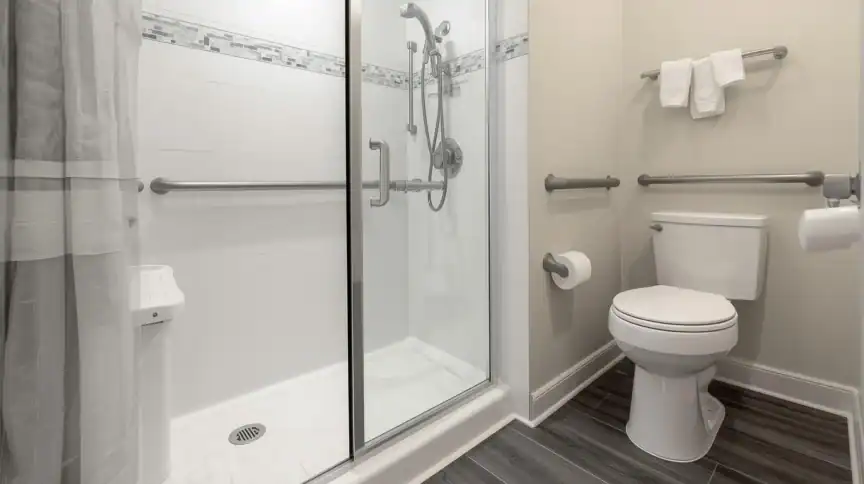
Bathrooms are often the most hazardous room in the house due to the combination of slippery surfaces, tight spaces, and hard fixtures. For someone with arthritis, simply stepping over a high tub wall or lowering onto a standard toilet can be agonizing for hips and knees.
- Strategically Placed Grab Bars: These are not just for emergencies; they provide daily support for transitioning in and out of the shower or rising from the toilet. Professional installation into wall studs is essential to ensure they can support your full weight without failing.
- Raised Toilet Seats: Standard toilets are often too low, requiring significant leg strength and knee flexion to use. A raised seat reduces the distance you need to bend, making sitting and standing significantly easier.
- Walk-in Tubs or Showers: Stepping over a tub rim is a major fall risk. Walk-in tubs or zero-threshold showers eliminate this barrier, allowing you to walk straight in without lifting your legs high, which is crucial when joints are stiff.
- Non-Slip Flooring: Adding non-slip mats or updating flooring can stabilize your footing, reducing the tension and fear that comes with navigating wet tiles.
The Kitchen: Conserving Energy and Protecting Hands
The kitchen is the heart of the home, but it requires a lot of standing, gripping, and reaching—actions that can quickly trigger arthritis pain. The goal here is to reduce the load on your small joints (fingers/wrists) and minimize fatigue.
- Lever-Style Handles: Twisting a round doorknob or faucet requires a tight grip that can be painful. Swapping these for lever-style handles allows you to open doors or turn on water using your elbow or a closed fist, bypassing wrist strain entirely.
- Ergonomic & Reacher Tools: Keep a “grabber” or reacher tool nearby to avoid bending down for dropped items or stretching for high shelves. Additionally, using kitchen tools with thick, soft grips can protect hands from cramping.
- Rolling Utility Carts: Carrying heavy pots or grocery bags puts immense strain on your shoulders and spine. A simple rolling cart allows you to transport items from the counter to the table safely without bearing the weight
Living Room & Bedroom: Safe Transitions and Resting Zones

Relaxing should be simple, but soft sofas and low beds can act like traps for painful joints, making it difficult to stand up after a period of rest.
- Lift Chairs: These specialized recliners look like standard furniture but feature a powerful lifting mechanism. With the push of a button, the chair tilts forward to guide you to a standing position, saving your knees and back from the effort of “launching” yourself up.
- Bed Rails: A sturdy bed rail provides a secure anchor point to help you reposition during the night or pull yourself up in the morning, which is helpful when morning stiffness is at its peak.
- Clear Pathways: Arthritis can affect balance and reaction time. Removing loose rugs and clearing clutter creates smooth, predictable routes for walking or using mobility aids.
Entryways & Stairs: Overcoming Barriers
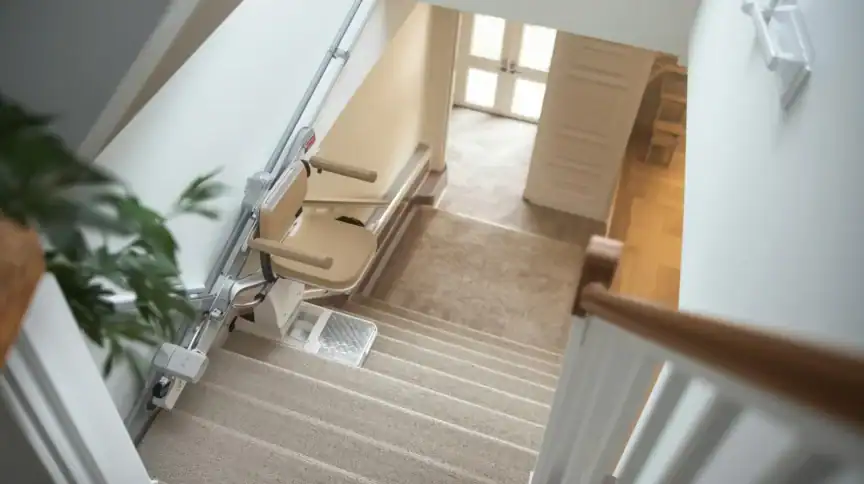
Stairs are often the single biggest obstacle to independence, representing a repetitive impact that can damage load-bearing joints like hips and knees. What’s worse, if stairs become an issue, is you can lose access to half of your home without modifications.
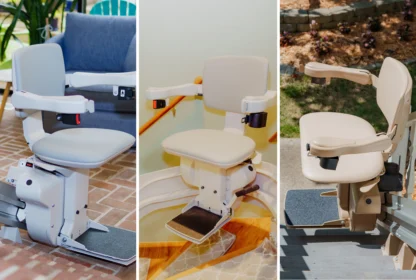
- Stairlifts: Whether your staircase is straight or curved, a stairlift allows you to move between floors safely with the push of a button. This eliminates the need to climb, preserving your energy and preventing the “bone-on-bone” pain that can be caused by stairs.
- Ramps: Even a single step at the front door can be a tripping hazard for those with foot drop or ankle stiffness. Modular or portable ramps provide a smooth incline, making it easy to enter your home with a walker or wheelchair.
- Vertical Platform Lifts (VPLs): If a ramp isn’t feasible due to space, a VPL acts as a mini-elevator for your porch, lifting you and your mobility device from ground level to the entryway.
Low-Cost vs. Higher-Cost Home Modifications
You don’t need an unlimited budget to make your home safer. Even small changes add up to a big impact.
A 2025 article in Healthcare (Basel) found that 65% of 20 historic studies ranging from 1998 to 2024 confirmed the effectiveness of home modifications in fall prevention, functional independence, and cost savings. This included both smaller changes like grab bars, anti-slip flooring, and furniture adjustments and large modifications like structural improvements and stair adaptations.
| Budget Level | Estimated Cost | Examples |
| Budget-Friendly | Under $100 | Non-slip mats, lever door handles, reacher tools, ergonomic utensils. |
| Moderate | $100 – $2,000 | Lift chairs, raised toilet seats with arms, grab bar installation. |
| Major | $2,000+ | Stairlifts, walk-in tubs, home elevators, permanent ramps. |
How 101 Mobility Can Help With Home Modifications
At 101 Mobility, we’re passionate about mobility and accessibility solutions that help you live safely, comfortably, and confidently. We are proud to be serving people in their homes with a focus on delivering exceptional outcomes for those managing arthritis and joint pain.
As a locally owned and operated provider, we are deeply committed to our communities. Every installation—whether it is a stairlift, a ramp, or a home elevator—demonstrates our dedication to quality and is backed by our 1-year service warranty, giving you lasting peace of mind.
We also understand that arthritis can change over time. For those with evolving needs, such as recovering from a joint replacement surgery, our rentals are available for short-term use and flexible service options provide added support.
When you choose 101 Mobility, you’re choosing a partner dedicated to providing freedom and independence every single day. If you’re ready to take the next step toward a safer, more accessible home, schedule a free in-home consultation today.
Steps to Get Started
Ready to reclaim your independence and make living in your home an easier, more comfortable option? Here is the path forward:
- Request a Consultation: Contact us for a free in-home consultation to assess your specific layout.
- Identify Funding: We can help you identify the right grants or financing. For veterans, we can help gather VA documentation for service-connected disabilities.
- Professional Installation: Our certified team installs your solution, ensuring it is safe and secure.
- Enjoy Your Home: Experience renewed independence with the peace of mind that comes from ongoing service support.
Frequently Asked Questions About Home Modification
What modifications help reduce joint pain at home?
Home modifications that reduce the need to bend, reach, or grip tightly help most. This includes lever handles, raised toilet seats, and stairlifts to avoid impact on knees.
How much do home modifications for arthritis typically cost?
Costs vary wildly based on needs. Simple tools like grab bars and reachers can cost less than$100, while structural changes like stairlifts or elevators are major investments.
Are there insurance or grant programs for home modifications?
Sometimes. Medicare does not cover home modifications, such as ramps or widened doors for improving wheelchair access. But there are still federal, state, and local programs that can help. Veterans may qualify for special grants for home modification. Additionally, there are always traditional funding methods like loans and financing.
Read more here: How to Pay for ADA Home Modifications.
At what point should I consider moving vs. modifying my home?
If your home cannot structurally support necessary changes (like a ramp or stairliftlift) or if the cost of renovation exceeds the cost of moving to an accessible community or home, moving might be best. However, many find modifications are more cost-effective than relocating.
Can I do these modifications myself or do I need a professional?
Small items like non-slip mats are DIY. However, for structural items like grab bars (which must be anchored to studs) or stairlifts, professional installation is crucial for safety.