A front door should feel like a welcome point, not a risk. Yet for many older adults, the small rise at the doorway can become one of the most overlooked hazards in the home. A shoe catches. A walker bumps. A cane slips. A grocery bag shifts balance at the wrong moment. That is the “waiting for a fall” problem.
Waiting for a fall means delaying home modifications or mobility support until after an injury happens. It is common. It is understandable. However, it is also often far more expensive than acting early.
Preventing elderly parents from tripping at the front door threshold starts with one simple shift: look at the home before an accident forces the conversation. That shift can protect health, preserve independence, reduce caregiver stress, and help your loved one keep moving through daily life with more confidence.
101 Mobility helps families do exactly that with customized home accessibility and mobility solutions, including expert in-home consultations and tailored product options for safer living.
The True Cost of Waiting for a Fall
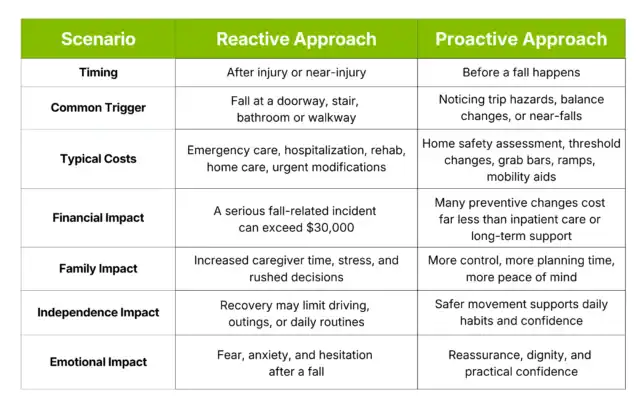
Each year in the U.S., between 700,000 and 1 million hospitalized patients experience a fall. The average cost of a serious fall-related incident can exceed $30,000. That number often does not include the full cost to families: missed work, extra caregiving, transportation, home changes made in a rush, and the emotional weight of seeing a loved one lose confidence.
What Is a Reactive Mobility Strategy?
A reactive mobility strategy means postponing needed home modifications or mobility aids until after a fall occurs. In plain terms: you wait until something happens. Then you act under pressure. That pressure can lead to fast decisions, higher costs, and fewer choices. It can also mean your parent spends more time recovering instead of staying active at home.
Reactive Costs vs. Proactive Investment
A proactive approach does not remove every risk, but it can lower the chance of preventable falls and help your family make calm, thoughtful decisions.
How Falls Impact Health and Independence
A single fall can change the rhythm of a household. That change is not just physical. It affects confidence, routine, and connection.
Common Injuries and Health Effects
Falls can lead to injuries such as:
- Hip fractures
- Wrist or arm fractures
- Head injuries
- Sprains and bruising
- Back or shoulder injuries
- Cuts or skin tears
A hip fracture, in particular, can lead to a longer recovery and a greater need for support. After a serious fall, some older adults need help with bathing, dressing, meals, transportation, or moving safely around the home.
What Are Immobility Complications?
Immobility complications are health problems such as muscle loss, pressure sores, blood clots, pneumonia, and delirium that can arise when someone cannot move well after an injury. This is why fall prevention is not only about avoiding a trip. It is about protecting strength, routine, and independence.
How a Fall Can Affect Daily Life
After a fall, families often notice changes such as:
- Less confidence walking outside
- Fear of falling again
- Reduced driving or loss of driving privileges
- More need for home health support
- More caregiver involvement
- Delayed return to normal routines
- Possible transition to assisted living
- Social isolation
- Anxiety or low mood
The emotional side matters. Your parent may not say, “I’m afraid.” They may say, “I’ll just stay in today.” That is a signal worth paying attention to.
Financial Consequences of Delayed Mobility Support
A serious fall can create layers of expense.
Direct Costs Families May Face
Direct costs may include:
- Emergency transportation
- Hospital care
- Surgery
- Imaging and tests
- Medication
- Rehabilitation
- Follow-up appointments
- Durable mobility support
- Skilled nursing or in-home care
- Urgent home changes after discharge
When inpatient fall care can exceed $30,000, the cost of home modifications vs. rehab often becomes clear. Preventive work can be a far more manageable path.
Indirect Costs of Falls
Indirect costs of falls are non-medical expenses or losses, such as time off work, stress, travel, and reduced quality of life, that result from fall-related injuries.
Examples include:
- A daughter reducing work hours to help with appointments
- A spouse taking on more household tasks
- Gas, rideshare, or medical transport costs
- Temporary meal delivery
- Extra cleaning or laundry help
- Lost sleep for caregivers
- Last-minute home updates
- Family members traveling from out of town
The Hidden Costs Beyond Medical Bills
The front step that once felt ordinary may now feel uncertain. A hallway may seem too narrow. A bathroom may feel less secure. Even when the injury heals, confidence can take longer.
Caregiver Burden and Emotional Cost
Caregiver burden is the extra time, stress, and responsibility family members often take on after a loved one is injured. Caregiver strain is the ongoing emotional fatigue that can come with that role. This does not mean caregivers are unwilling. Most families step in because they care, but the load can become heavy.
Hidden costs may include:
- Worry when your parent is home alone
- Stress about another fall
- More calls, check-ins, and visits
- Less time for work, children, or rest
- Tension between siblings over care decisions
- Guilt about not doing enough
- Anxiety for the older adult
- Less social activity
- Loss of privacy for everyone
Fall prevention helps reduce more than risk.
Preventing Falls Through Early Intervention
You do not need to wait for a major incident to make a home safer. You can start with simple observations and build from there.
What Is Early Intervention?
Early intervention means taking preventive measures such as home modifications, mobility aids, or balance support before a fall or injury occurs. It can be as simple as removing a loose mat. It can also include installing grab bars, adding a threshold ramp, improving outdoor lighting, or scheduling a home safety assessment.
Key Areas to Review
Think of fall prevention in three simple groups:
1. Entryways
This includes front doors, back doors, garage entries, porches, steps, and thresholds.
Common concerns:
- Raised door thresholds
- Uneven walkway surfaces
- Loose mats
- Poor lighting
- Wet or icy landings
- No handrail
- Doorways too narrow for safe movement with a walker
2. Pathways
This includes halls, stairs, living areas, bedrooms, and routes used every day.
Common concerns:
- Clutter
- Extension cords
- Loose rugs
- Low furniture
- Poor lighting at night
- Uneven flooring
3. High-Use Spaces
This includes bathrooms, kitchens, and bedrooms.
Common concerns:
- Slippery floors
- Low toilet seats
- No grab bars
- Tub or shower edges
- Reaching too far for daily items
- Tight turning spaces
Practical Early Interventions
Fall prevention often includes:
- Home safety assessments
- Grab bars in bathrooms or near steps
- Handrails where support is needed
- Threshold ramps or threshold modifications
- Canes, walkers, scooters, or other mobility aids when appropriate
- Clear pathways through the home
101 Mobility provides in-home consultations to help families identify risks and consider customized accessibility options that fit the home, the person, and the daily routine.

Practical Home Modifications to Reduce Fall Risk
The front door is one of the best places to begin because it’s used the most often.
In practice, that may include:
- Adding a threshold ramp
- Creating a no-step or lower-step entry where possible
- Replacing loose or curled entry mats
- Using non-slip mats with low edges
- Adding a handrail or grab bar near the entry
- Keeping packages, shoes, and planters away from the walking path
- Checking that mobility aids can move smoothly over the threshold
- Making sure the door opens fully and easily
Example: If your mother uses a walker and the front threshold catches the wheels, a threshold ramp may create a smoother transition. That one change can make daily movement feel less uncertain.
Bathroom Updates
Bathrooms are high-risk because of water, tight spaces, and hard surfaces.
Helpful changes may include:
- Grab bars near the toilet and shower
- Non-slip flooring or mats
- Shower seating
- Handheld shower heads
- Clear paths to towels and toiletries
Example: If your father holds the towel bar for balance, that is a sign. Towel bars are not built for steady support. A properly placed grab bar can provide a safer handhold.
Pathway Updates
Daily routes should be clear and predictable.
Helpful changes may include:
- Removing loose rugs
- Securing cords
- Rearranging furniture for wider paths
- Keeping frequently used items within easy reach
- Checking stairways and railings
- Considering mobility aids when walking becomes less steady
Example: If your parent “furniture walks” from room to room, they may need better support. That may mean a mobility aid, improved layout, or both.

A Quick Home Safety Quiz
Use this simple quiz to spot fall risks.
Answer yes or no:
- Does your parent hesitate at the front door threshold?
- Has a shoe, cane, or walker ever caught at the entry?
- Are there loose mats near the front door?
- Is the porch or entry dim at night?
- Does your parent hold the doorframe for balance?
- Are there steps without a handrail?
- Has your parent had a near-fall in the past year?
- Do they avoid certain doors, stairs, or rooms?
- Is the path from the driveway to the door uneven?
- Do you worry when they enter or leave alone?
If you answered “yes” to even a few, it may be time for a closer look.
The Emotional and Caregiver Burden of Falls
After a fall or near-fall, many older adults become more cautious. Some move less or stop doing things they enjoy. Some do not want to worry their families, so they say less than they feel. Caregivers feel it as well. You may find yourself checking in more often, adjusting your schedule, or feeling uneasy when the phone rings. That is why proactive fall prevention is such a powerful step. It helps everyone breathe a little easier.
If a fall has already happened, families should also learn safe response steps, including how to get help and how to avoid injuring themselves while assisting a loved one.
Strategic Benefits of Proactive Mobility Planning
Proactive mobility planning means evaluating risks and making changes before an incident, keeping the home safe and the family prepared.
Why Planning Ahead Works
Proactive planning can help:
- Reduce fall risks
- Lower long-term care costs
- Avoid rushed decisions after injury
- Support aging in place
- Preserve confidence
- Reduce caregiver strain
- Improve daily comfort
- Keep routines intact
How 101 Mobility Can Help
101 Mobility is a trusted nationwide provider of customized home accessibility and mobility solutions. The focus is simple: safer homes, greater independence, and practical support that fits real life. Through in-home consultations, 101 Mobility can help families assess common hazards, including front door threshold trip hazards, stair challenges, bathroom safety concerns, and daily pathway risks.
From there, you can explore tailored product options based on your loved one’s home, mobility needs, and goals.
Frequently Asked Questions
Why is waiting for a fall considered an expensive mobility strategy?
Waiting for a fall often means higher medical bills, emergency care, rehabilitation, and long-term support. These costs can be much higher than making preventive home changes early, such as adding grab bars, improving lighting, or addressing a front door threshold trip hazard.
What are the long-term costs of fall-related injuries compared to early prevention?
Serious fall-related injuries can lead to surgery, hospital stays, rehab, home care, and loss of independence. Early prevention usually costs less and helps avoid the disruption that follows a major fall.
How can families identify early warning signs that suggest a high fall risk?
Watch for unsteady walking, frequent stumbles, near-falls, holding onto furniture, trouble getting up from a chair, avoiding stairs, or hesitation at entryways. If your parent catches a foot or walker at the front door threshold, it should be taken seriously.
What simple steps can be taken now to prevent falls at home?
Start by clearing clutter, removing loose rugs, improving lighting, adding non-slip mats, installing grab bars where needed, and checking thresholds at entry doors. For preventing elderly parents from tripping at the front door threshold, consider a threshold ramp or other entry modification.
When should someone seek a mobility assessment or professional support?
If your parent has balance changes, near-falls, trouble using stairs, difficulty crossing thresholds, or growing concern about moving around the home safely, it is time to consider a professional mobility assessment.
What makes the front door threshold a common trip hazard?
A threshold creates a small change in height between two surfaces. That edge can catch shoes, canes, walkers, or scooter wheels.
Can small home changes really make a difference?
Yes. Small changes can make daily movement safer and easier. By making these adjustments, it reduces avoidable risks and supports confidence at home.

Conclusion: Start at the Door. Protect the Whole Home.
Preventing a fall does not have to start with a major renovation. It can start at the front door.
The cost of waiting can be high and include medical bills, recovery time, caregiver strain, and lost confidence. The value of planning ahead is just as clear. Safer movement, more independence, and a home that continues to support the life your loved one wants.
101 Mobility can help you take the next step with an expert in-home safety evaluation and customized mobility recommendations for your family’s needs.