When a Home Elevator Makes Sense in Scott: Long-Term Accessibility Planning
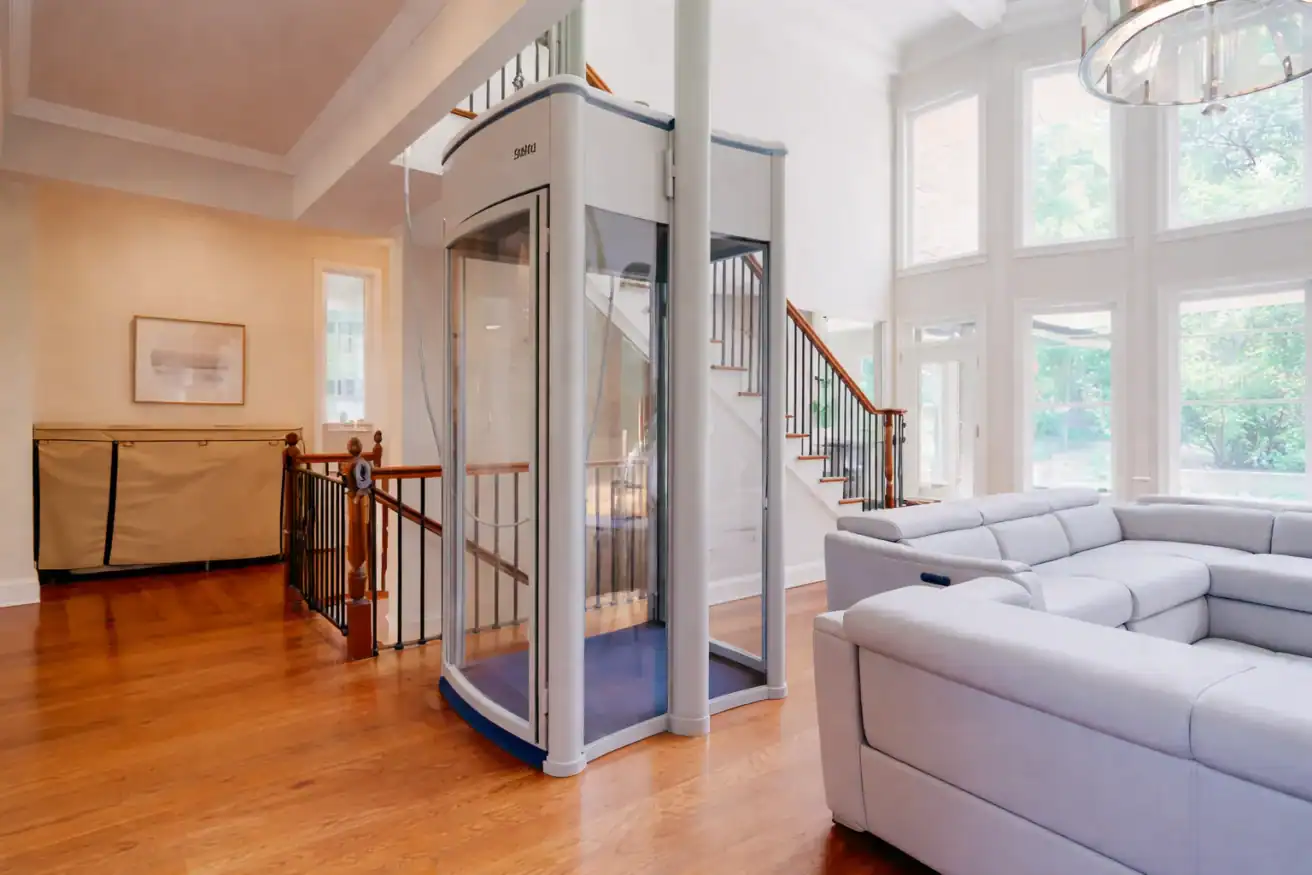
If you love your home but the stairs are becoming less practical, it may be time to think beyond short-term fixes. A home elevator in Scott can be a smart long-term investment for comfort, convenience, and safer daily living in a multi-level home.
For some homeowners, the decision starts with mobility concerns. For others, it starts with planning ahead. Either way, the goal is the same: make the home easier to live in now and more functional for the years ahead.
A well-chosen residential elevator can support independence, reduce strain, and help you continue enjoying every level of your home without redesigning your life around the stairs.
Why More Homeowners in Scott Are Planning Ahead
Long-term accessibility planning is not just about responding to a major change. It is also about making practical decisions before everyday movement becomes more difficult.
That matters in multi-story homes. Going up and down stairs several times a day can become tiring, inconvenient, or unsafe over time. For homeowners who want to stay where they are, accessibility upgrades can make the home work better without giving up comfort or familiarity.
This is where a residential elevator in Scott often becomes part of the conversation. It creates a reliable way to move between floors while supporting the long-term goal of aging in place.
Signs a Home Elevator in Scott May Be the Right Move
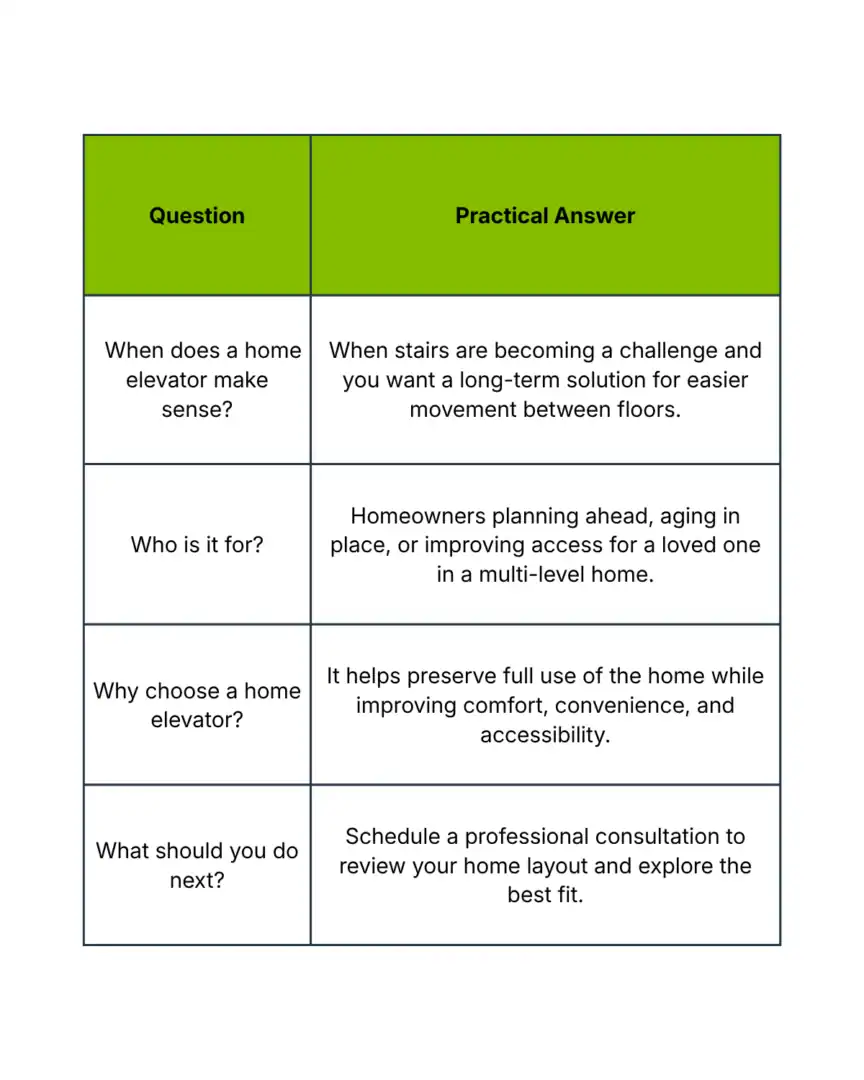
Not every home needs an elevator. But there are clear situations where it makes sense.
Stairs are becoming a daily strain
You do not need to wait for a fall or serious limitation before exploring options. If stairs already feel tiring, awkward, or uncomfortable, that is a reasonable time to evaluate a better long-term solution.
You want to stay in your current home long term
Many homeowners are not looking to move. They want to remain in the home they know, in the neighborhood they love, with fewer physical barriers over time. A home elevator can support that decision.
A family member needs better access between floors
If someone in the home uses a walker, wheelchair, or simply needs more support with mobility, stairs can limit how the home is used. Improving access can make daily routines easier and safer for everyone.
You want a better answer than living on one floor
Restricting daily life to one level may feel like a temporary workaround, not a true solution. A home elevator helps preserve full use of the home rather than shrinking how you live in it.
How a Residential Elevator Supports Aging in Place Planning
Good aging in place planning starts before mobility needs become urgent. When homeowners plan early, they usually have more flexibility in choosing the right solution, layout, and installation approach.
A residential elevator can support aging in place by helping with:
- safer access between floors
- easier movement for everyday routines
- reduced strain from repeated stair use
- better long-term usability of the home
- improved convenience for carrying laundry, bags, or household items
It is not only about medical need. It is also about comfort, confidence, and making a multi-level home more practical for the future.
Home Lift Options for Different Homes and Needs
There is no single answer for every property. The best recommendation depends on the home’s layout, the available space, who will use the lift, and what kind of long-term accessibility goals matter most.
Some homeowners want a compact solution with minimal disruption. Others need more interior room to support walkers, wheelchairs, or additional flexibility. Some are planning for current needs, while others are building in future readiness.
That is why the consultation matters. The right provider should evaluate the home, understand your priorities, and recommend the most appropriate home lift options based on how you actually live.
Is a Home Elevator Better Than Other Multi-Level Home Accessibility Solutions?
It depends on the home and the goal. For some people, another product may make sense. For others, a home elevator is the clearest long-term fit.
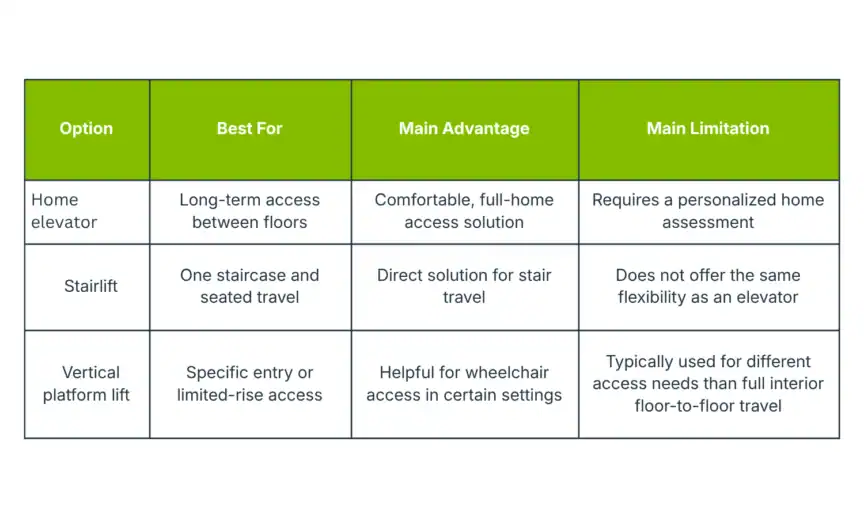
For homeowners focused on multi-level home accessibility, a home elevator often becomes the stronger long-range option when comfort, convenience, and overall home usability are top priorities.
What to Expect From the Planning Process
A quality process should feel clear and personalized.
1. In-home assessment
The first step is understanding the layout of the home, the number of levels involved, and any current or future mobility concerns.
2. Solution recommendation
Based on the assessment, you receive guidance on which elevator or lift option best fits the space and the goal.
3. Professional installation planning
A professional team should explain what installation involves, how the system will fit into the home, and what to expect before work begins.
4. Long-term support
Because this is a long-term accessibility investment, support after installation matters too. Ongoing service and guidance can make ownership easier and more reassuring.
FAQs
When should I start planning for a home elevator?
The best time is usually before mobility needs become urgent. Early planning gives you more flexibility and helps you make a decision based on long-term goals rather than immediate stress.
Is a home elevator only for seniors?
No. A home elevator can help anyone who wants easier floor-to-floor access, including people planning ahead, living with mobility limitations, or supporting a family member’s accessibility needs.
Can a home elevator work in an existing house?
In many cases, yes. The right fit depends on the home’s layout, available space, and the type of lift being considered. A professional consultation is the best way to evaluate options.
Are home lift options only about accessibility?
No. Accessibility is a major reason, but many homeowners also value convenience, comfort, and the ability to keep using every level of the home more easily.
What is the difference between a home elevator and other lift solutions?
A home elevator is typically chosen for comfortable, long-term interior travel between floors. Other lift solutions may be better suited to stairs, porches, or specific access points.
Take the Next Step
If you are thinking about a home elevator in Scott, the best next move is to get expert guidance based on your home and your goals.
Explore local accessibility solutions through 101 Mobility Lafayette or learn more about home elevators and lift options.
When you are ready, Book a Free Consultation to find the right path for safer, more comfortable multi-level living.