Wheelchair Ramp vs Vertical Platform Lift in Kenner: Which Entry Solution Fits Best?
Choosing between a wheelchair ramp and a vertical platform lift often comes down to one thing: what fits your home and daily routine best.
For some Kenner homeowners, a ramp is the simplest way to create safer porch access. For others, a vertical platform lift is the smarter solution when space is tight or the entry is higher off the ground. The right choice depends on the height of the entry, the amount of room available, how the wheelchair will be used, and the budget for the project.
If you are comparing entry accessibility solutions for yourself or a loved one, here is how to narrow the decision with confidence
The short answer: when a ramp makes sense and when a lift makes sense
A wheelchair ramp is usually the better fit when there is enough space to create a gradual incline and a simple path in and out of the home.
A vertical platform lift is often the better fit when the porch or entry is too high for a practical ramp layout, or when the available footprint is limited.
Both can improve wheelchair access at home. The best option is the one that matches the property, the user, and the way the entrance is used every day.
What is the difference between a wheelchair ramp and a vertical platform lift?
A wheelchair ramp creates a sloped surface that allows a wheelchair, scooter, walker, or caregiver-assisted user to move over a rise at an entryway.
A vertical platform lift moves the user straight up and down on a platform. It is designed for wheelchair users who need to reach a porch, deck, garage entry, or similar raised landing without navigating a long slope.
In simple terms:
- A ramp uses distance to overcome height.
- A platform lift uses vertical travel to overcome height.
That difference is what makes space and slope such important factors.
How space and slope affect the right choice
Space is often the first deciding factor.
A ramp needs enough room to create a comfortable, usable incline. As the rise gets taller, the ramp needs more length. That can make layout difficult on smaller lots, narrow side yards, or homes with limited front-entry space.
A vertical platform lift does not need the same long footprint. That makes it appealing when:
- The porch sits several feet above grade
- The front entry area is compact
- Turning a long ramp around the yard would be awkward
- Preserving more of the walkway or landscaping matters
If the home has room for a properly designed ramp, a ramp may be an excellent fit. If the entry height is significant and the yard layout is restrictive, a lift may be more practical.
Wheelchair ramp Kenner homeowners often choose for lower-rise entries
A wheelchair ramp in Kenner is often a strong choice when the goal is straightforward porch access with a predictable route in and out of the home.
Ramps can work especially well when:
- The entry rise is relatively manageable
- There is enough room for the ramp layout
- The user prefers a simple access path
- Caregivers may be assisting with movement
- The project needs a practical entry solution without vertical equipment
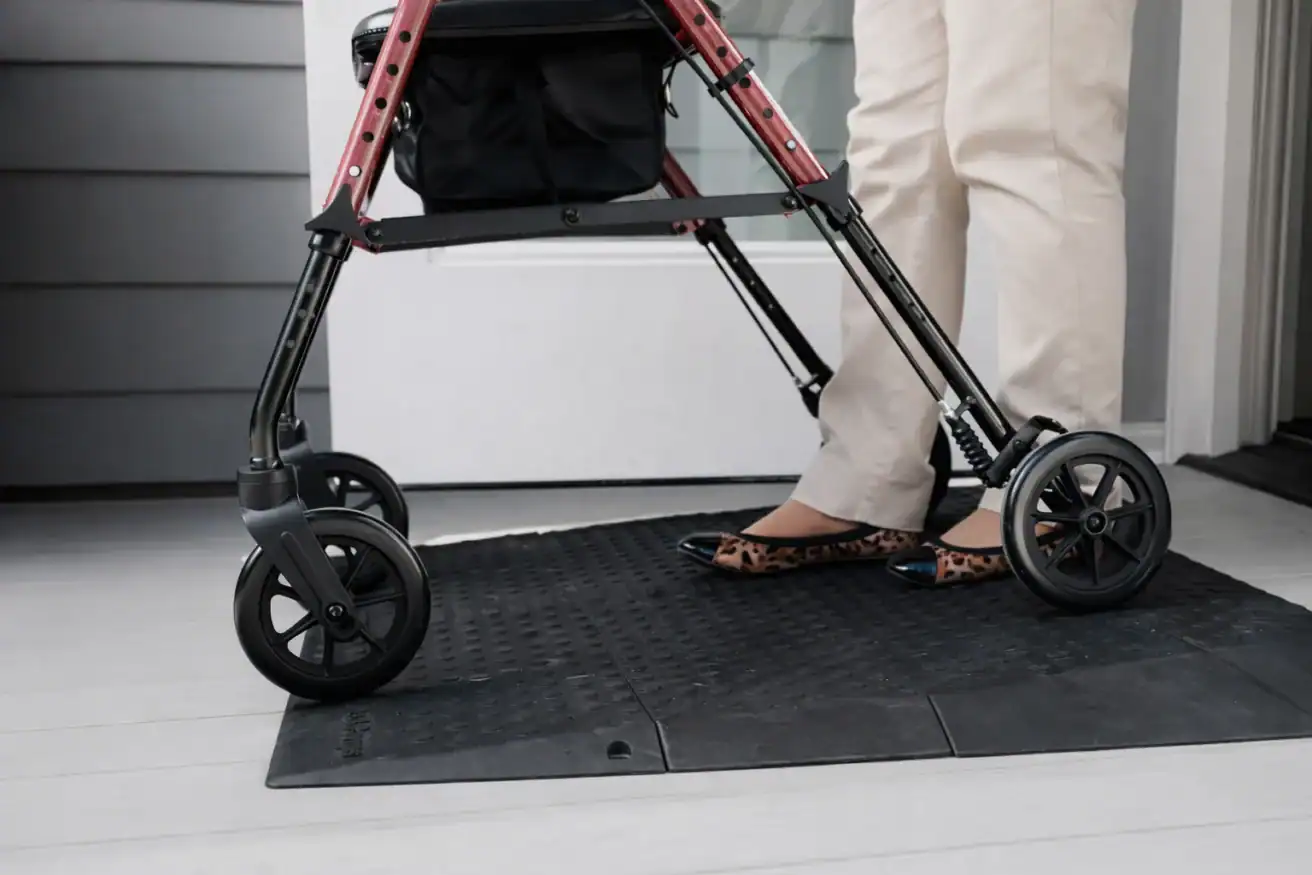
Depending on the entry, different ramp styles may help solve different problems. Threshold ramps can help with smaller doorway rises. Modular aluminum ramps can be customized for larger exterior access needs. Portable ramp options may help in more temporary or limited-use situations.
For many families, a ramp feels intuitive because it creates continuous wheelchair access home entry without requiring the user to stop and operate a lift.
When a vertical platform lift in Kenner may be the better fit
A vertical platform lift in Kenner may be the better fit when the home has a taller porch, elevated landing, or limited outdoor space.
This option can make sense when:
- The porch height would require a long ramp
- The property does not allow an easy ramp layout
- The user wants to remain in the wheelchair during travel
- Daily access needs to be direct and compact
- The solution needs to serve a raised deck, garage, or porch entry
For some wheelchair users, a lift can also reduce the physical effort involved in navigating a longer incline. Instead of traveling the full ramp length, the user rolls onto the platform, secures the position, and is raised to the landing.
That can be a major advantage when entry height is substantial and direct access is the priority.
Compare wheelchair ramp vs platform lift by key decision factors
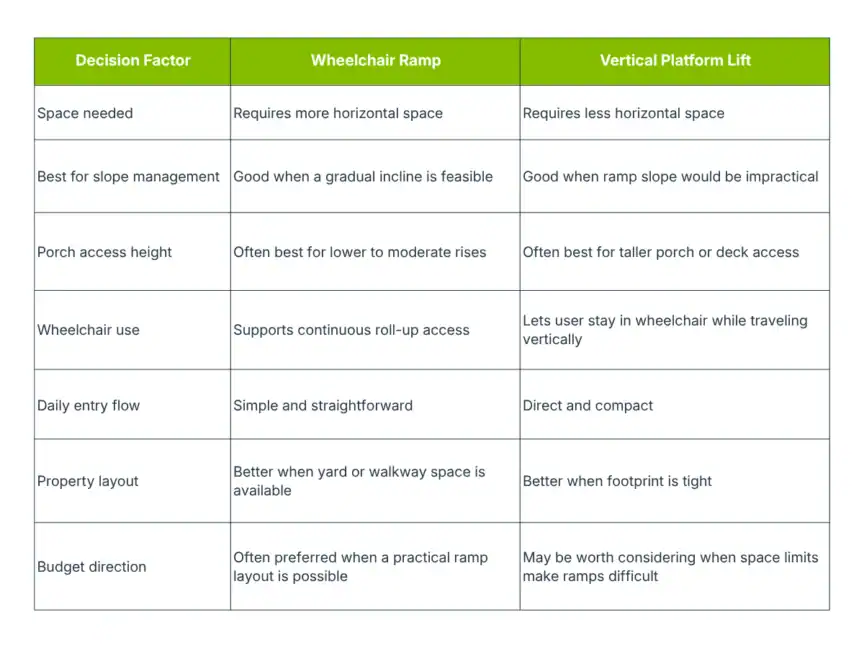
A simple decision chart
Use this quick guide as a starting point:
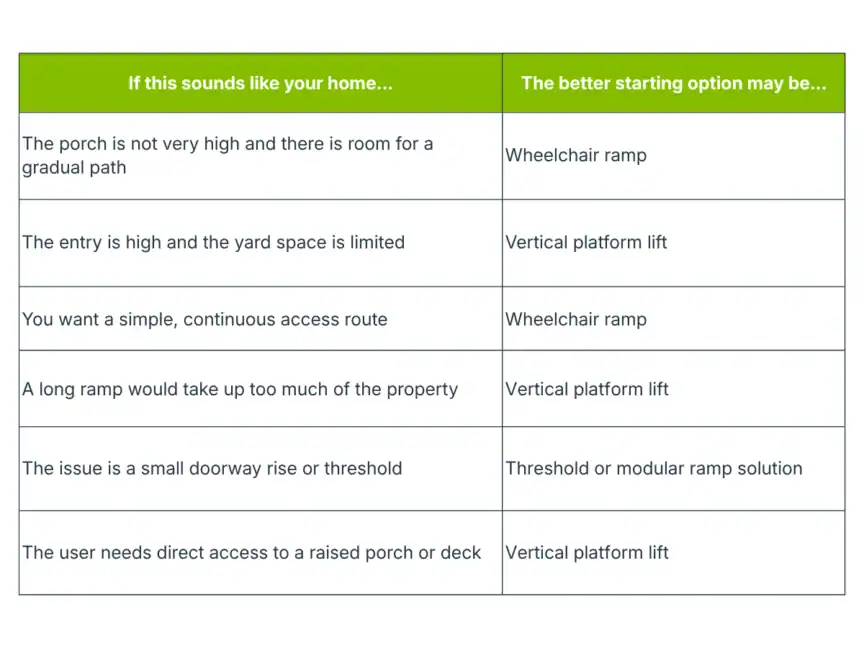
Questions to ask before choosing an entry accessibility solution
Before moving forward, it helps to answer a few practical questions.
How high is the entry?
The height of the porch or landing affects whether a ramp layout is realistic or whether a lift may be a better fit.
How much space is available?
A ramp may work well in one yard and not at all in another. The available footprint matters as much as the rise itself.
Who will use the solution every day?
Think about whether the user is in a wheelchair full-time, uses a scooter, uses a walker, or may have caregiver assistance. The right solution should match real daily use.
Is this for a short-term need or a long-term plan?
Some families are planning for aging in place. Others are solving access needs after surgery or injury. The timeline may influence which solution feels most practical.
What matters more: a long access path or a compact vertical solution?
Some homeowners prefer the simplicity of a ramp. Others want the shorter footprint of a lift. There is no universal answer. The property and the user should drive the decision.
Why professional guidance matters
Entry accessibility solutions are rarely one-size-fits-all.
What works well for one Kenner home may not work well for the next. A qualified consultation can help evaluate the rise, the available layout, wheelchair dimensions, user needs, and the long-term goal for the home.
That matters because the best outcome is not just adding equipment. It is creating a safer, more usable entry that fits the home and supports independence.
101 Mobility approaches accessibility as a customized solution, helping families identify the real barrier, compare practical options, and move forward with a professional recommendation that fits the space.
You can explore broader mobility and accessibility support on the 101 Mobility New Orleans page and learn more about available wheelchair ramp solutions.
FAQ
Is a wheelchair ramp or platform lift better for a high porch?
A vertical platform lift is often the better fit when the porch is high enough that a ramp would require a long layout. If the rise is lower and there is enough room, a ramp may still be a strong option.
Does a wheelchair ramp need more space than a lift?
Yes. A ramp typically needs more horizontal space because it relies on slope and length. A vertical platform lift usually works in a smaller footprint.
What is the best option for porch access in a small yard?
A vertical platform lift is often worth considering when yard space is limited and a long ramp would be difficult to fit around the home.
Can a wheelchair ramp help with smaller entry changes too?
Yes. Some homes benefit from threshold ramps or modular ramp sections for smaller doorway and entry transitions.
Which option is better for wheelchair access at home every day?
Both can work well. A ramp may be better for continuous roll-on access, while a lift may be better for higher entries and tighter spaces. Daily routine, entry height, and available layout should guide the choice.
How do I know which entry accessibility solution fits my home?
The best way is to compare the entry height, available space, wheelchair use, and long-term needs during a professional consultation.
Book a Free Consultation
If you are comparing a wheelchair ramp in Kenner with a vertical platform lift in Kenner, the right answer depends on your home, your entry height, and the way the solution will be used every day.
101 Mobility can help you evaluate the space, compare practical entry accessibility solutions, and choose the option that fits best.
Book a Free Consultation to discuss porch access, wheelchair access home needs, and the right next step for a safer, easier entry.