Wheelchair Ramp Tips for Prairieville Homes During Summer Storm Season
Summer storms in Prairieville can turn a routine home entry into a stressful one. Rain, slick porch surfaces, puddling near thresholds, and reduced visibility all make safe access harder for wheelchair users, walkers, and caregivers.
That is why storm-season planning should start before the weather becomes a daily issue. The right ramp setup can help make entry smoother, safer, and more reliable when conditions are wet. If you are evaluating a wheelchair ramp Prairieville summer solution, focus on how the ramp performs in real conditions, not just how it looks on a clear day.
Why Summer Storms Make Ramp Safety More Important
A ramp that seems workable in dry weather may become much harder to use in a summer storm.
Common problems include:
- Slippery ramp or porch surfaces
- Water collecting near the bottom or top landing
- Thresholds that become harder to cross when wet
- Low visibility in heavy rain or evening storms
- Entry routes that feel too steep or tight when maneuvering carefully
Storm season accessibility is not only about the ramp itself. It is also about how the whole entry sequence works, from driveway or walkway to porch, threshold, and doorway.
Wheelchair Ramp Prairieville Summer Planning Starts With the Entry Point
Before choosing a ramp, look closely at the full approach to the home.
Ask these questions:
- How high is the porch or step from grade?
- Is there enough room for a safe ramp run and landing?
- Does water collect near the entry after rain?
- Is the doorway threshold creating another barrier?
- Is there enough turning space for a wheelchair, scooter, or walker?
- Will the user need extra support during wet conditions?
A good accessible entryway should feel predictable. The user should be able to approach, transition, and enter without rushing, overreaching, or navigating awkward gaps.
Ramp Features That Matter in Wet Weather
Not every access solution fits every home. During storm season, a few features matter more than others.
Slip-Resistant Surfaces
Wet conditions can reduce traction quickly. A slip-resistant surface helps support safer movement when shoes, wheels, or mobility devices bring in water.
This is especially important for porch ramp setups and outdoor entries that see repeated use during rainy weeks.
Handrails and Edge Protection
When rain reduces confidence, handrails can add stability and control. Edge protection also helps define the ramp path and reduce the chance of wheels drifting off the usable surface.
For longer ramps or higher porches, support features can make the entry feel much more secure.
Threshold Transitions
The ramp may solve the porch or step, but the doorway can still be a problem. Small rises at the threshold can catch wheels or create an abrupt transition.
A properly selected threshold ramp can help create a smoother entry into the home.
Visibility in Low Light or Rain
Summer storms often bring darker conditions, even during the day. Clear ramp edges, unobstructed pathways, and visible transitions can help users and caregivers move more confidently.
If a family member assists with entry, visibility becomes even more important during fast-moving weather.
Best Ramp Options for Common Prairieville Home Access Issues
The right choice depends on the home layout, the user’s mobility needs, and how permanent the solution should be.
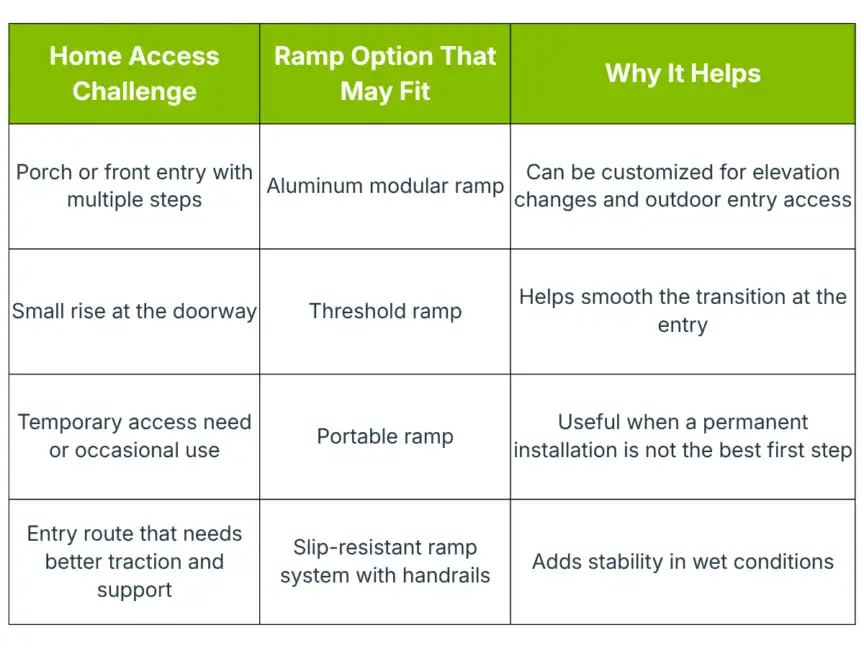
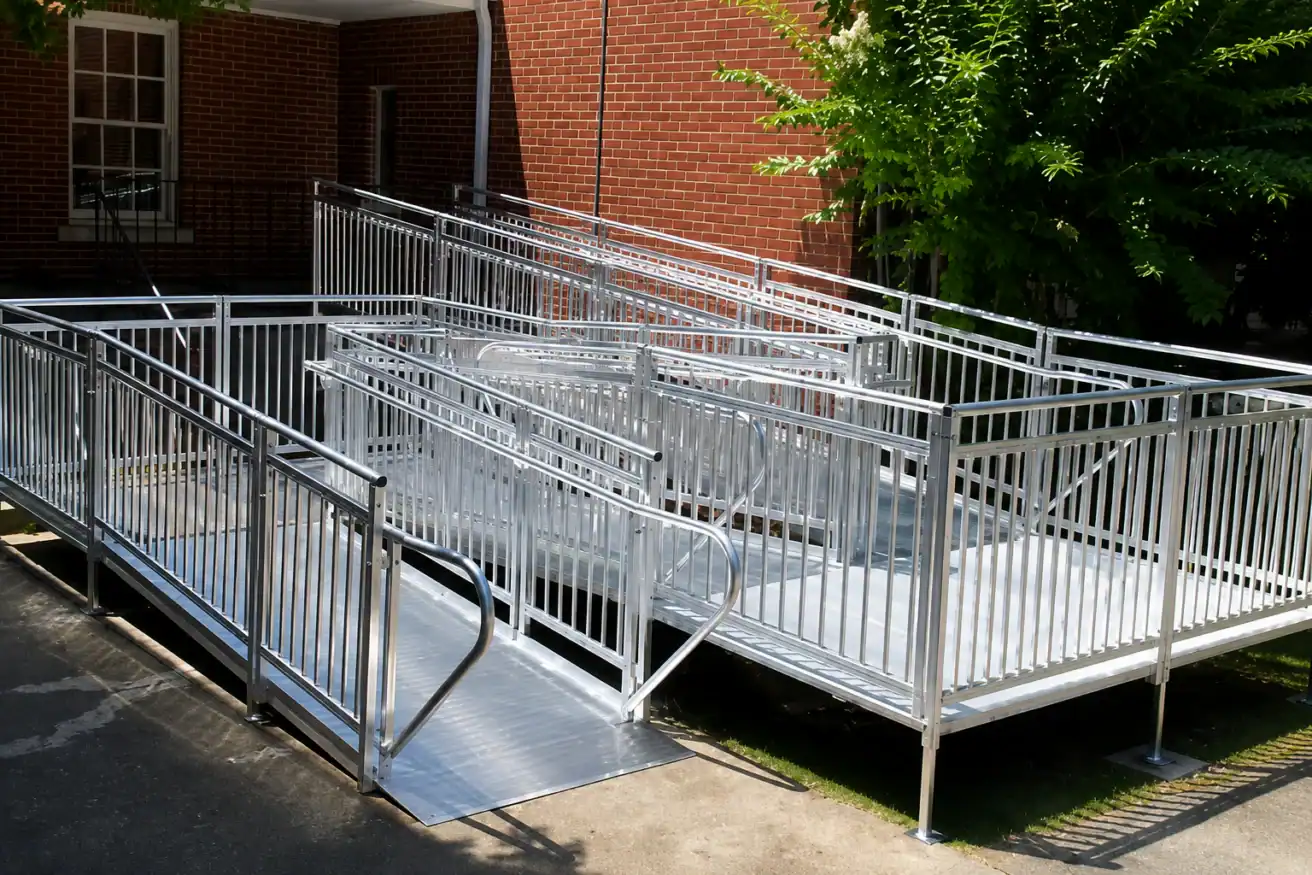
Aluminum modular ramps are often a strong option for homes that need a more durable porch ramp or entry solution. They can work well when the goal is a stable path with handrails and a more tailored layout.
Threshold ramps can help when the bigger challenge is not the porch itself, but the raised lip at the door.
Portable ramps may make sense for shorter-term needs or specific access points, but they still need to be used with the right slope and setup.
Material and Surface Considerations for Storm Season
Material choice affects how the ramp performs over time.
For many homes, aluminum is worth considering because it can support outdoor use and can be paired with slip-resistant surfaces. It is often a practical choice for a more permanent accessible entryway.
Rubber threshold ramps can also be useful near doorways because they help smooth small rises and can provide a stable transition point in wet conditions.
The best material is not just the one that handles weather. It is the one that matches the user, the entry height, the available space, and the way the home is used every day.
A Quick Storm-Season Ramp Check for Homeowners
Use this checklist before storm season ramps up:
- Check whether the ramp surface still feels secure when wet
- Look for puddling at the bottom or top of the ramp
- Confirm the threshold transition is smooth
- Make sure the approach path is clear and wide enough
- Review whether the slope still feels manageable for the user
- Check handrails, edges, and surrounding surfaces for stability
- Think through entry timing during rain, including lighting and caregiver assistance
If any part of the entry feels uncertain in bad weather, it is worth reviewing the setup before repeated storms make the problem harder to manage.
When to Schedule a Professional Ramp Consultation
A consultation makes sense when:
- The porch is high enough that slope becomes a concern
- The home has limited space for a safe ramp run
- The threshold is still difficult even with a porch solution
- The user’s needs have changed since the current ramp was added
- You want a more dependable solution before peak storm season
This is also the right time to think beyond one product. In some homes, the best result comes from combining a porch ramp with a threshold solution or adjusting the entry layout for a smoother approach.
If you are comparing options, visit the 101 Mobility Baton Rouge location to learn more about local support, or browse their wheelchair ramps page to see available ramp categories.
FAQ
What is the best wheelchair ramp option for Prairieville summer storms?
The best option depends on the entry height, available space, and mobility needs. For many homes, an aluminum modular ramp is a strong choice for porch access, while threshold ramps help with smaller doorway rises.
How can I make a porch ramp safer during rainy weather?
Focus on slip-resistant surfaces, stable handrails, smooth transitions, and a layout that does not feel too steep or cramped when wet.
Do I need a threshold ramp if I already have an outdoor ramp?
Sometimes, yes. An outdoor ramp may solve the elevation change to the porch, but the doorway threshold can still create a bump or catch point that affects safe entry.
What should I check before installing a wheelchair ramp at my home?
Review porch height, doorway threshold, approach space, turning clearance, drainage patterns, and how the user enters during bad weather. The safest solution is based on the whole entryway, not just one measurement.
When should I choose a permanent ramp over a portable ramp?
A permanent ramp is often the better fit when daily access is needed, the porch height is greater, or the family wants a more stable and dependable accessible entryway.
Make Storm-Season Access Easier Before the Next Heavy Rain
Summer storms are easier to manage when your entry setup is planned in advance. A safer ramp, smoother threshold transition, and better overall layout can make daily access less stressful for users and caregivers alike.
If your current setup feels slippery, steep, or harder to use in wet weather, now is a good time to act. Book a Free Consultation with 101 Mobility Baton Rouge to discuss the right ramp solution for your Prairieville home.