Wheelchair Ramp Tips for Kenner Homes During Summer Storm Season

Summer storm season can make home access harder and less predictable. Rain, slick surfaces, reduced visibility, and fast-moving weather all put more pressure on a ramp setup to work safely every time. If you are planning a wheelchair ramp Kenner summer solution, the goal is not just getting over one step. It is creating a reliable path into the home when conditions are wet, rushed, or low-visibility.
For many households, the safest approach is to look at the entire entry sequence before storms become frequent. That includes the ramp, porch, landing, threshold, and the route leading to the door.
Why summer storms change ramp safety at home
A ramp that feels manageable on a dry day may feel very different during a summer downpour. Rain can reduce traction, puddles can collect near the landing, and dim conditions can make edges or threshold changes harder to see.
Storm season also changes behavior. People move faster to get inside, caregivers may be managing mobility equipment and bags at the same time, and surfaces that usually feel familiar can become less forgiving. That is why storm season accessibility planning should focus on consistency, visibility, and smooth transitions.
Start with the full path of travel, not just the ramp
A safe entry starts before the ramp begins. Look at the whole route from where someone exits the car or approaches the house.
Ask these questions:
- Is the walkway stable and clear in wet weather?
- Does water collect near the porch or landing?
- Is there enough space to approach the ramp straight on?
- Does the door threshold create an extra bump or uneven transition?
- Is the entry visible during rain, cloud cover, or evening storms?
This wider view helps prevent a common mistake: solving one height change while leaving another access barrier in place. A good accessible entryway should feel smooth from the outside approach to the inside floor.
Wheelchair Ramp Kenner Summer Planning Should Focus on Slope and Surface Grip
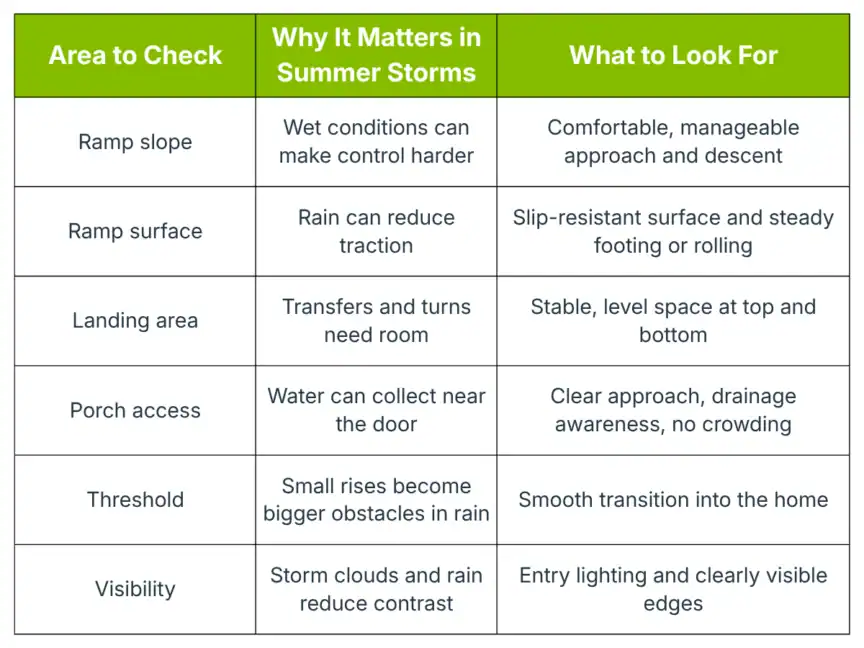
Slope matters even more in wet conditions. A ramp that feels too steep on a dry day will often feel less controlled in the rain. The same is true when a landing area is too short or when the transition at the top or bottom is abrupt.
Surface grip matters too. Wet conditions can expose problems with worn materials, slippery coatings, or surfaces that do not shed water well. Homeowners should also avoid quick fixes that were not designed for repeated outdoor use. A stable, properly matched ramp solution is usually the better long-term choice than a stopgap board or improvised platform.
Quick comparison: what to evaluate before storm season
Best ramp features to think about before storm season
Different homes need different solutions. The right fit depends on entry height, porch layout, threshold rise, and whether the need is temporary or ongoing.
Porch ramp access
A porch ramp can help create a smoother approach to a raised front entry. This is especially important when the porch is the main access point and storms make steps less dependable. The key is making sure the porch landing and ramp connection feel stable and predictable, not cramped or uneven.
Threshold transitions
Even when the main ramp is in place, the doorway itself can still be a problem. A threshold change at the door can interrupt momentum and create a jolt right at the point of entry. For some homes, threshold ramp solutions help close that gap and support a smoother indoor-outdoor transition.
Portable ramps for temporary needs
Portable options can help in some situations, especially when access needs are short-term or when a home has a limited height change. During storm season, though, portability should not come at the cost of stability. The setup should still feel secure, visible, and appropriate for the entry conditions.
Visibility and edge awareness
Summer storms reduce contrast. Shadows, rain, and overcast skies can make edges harder to read. Entry areas benefit from better visibility, especially around the landing, threshold, and any change in direction. When people can quickly see where the usable path begins and ends, the entry feels more confident and less rushed.
Common storm-season access problems homeowners overlook
Many entry issues show up only after several storms. A ramp may be technically in place, but the surrounding conditions make it less effective.
Common issues include:
- Water pooling near the bottom of the ramp
- Slick porch surfaces near the doorway
- Uneven transitions between walkway, ramp, and threshold
- Debris collecting where wheels or feet need clean contact
- Poor visibility at the front entry during dark weather
- A ramp that solves one height change but not the full route inside
These issues do not always require a complete redesign, but they do signal that the access path should be reviewed before the weather pattern gets more active.
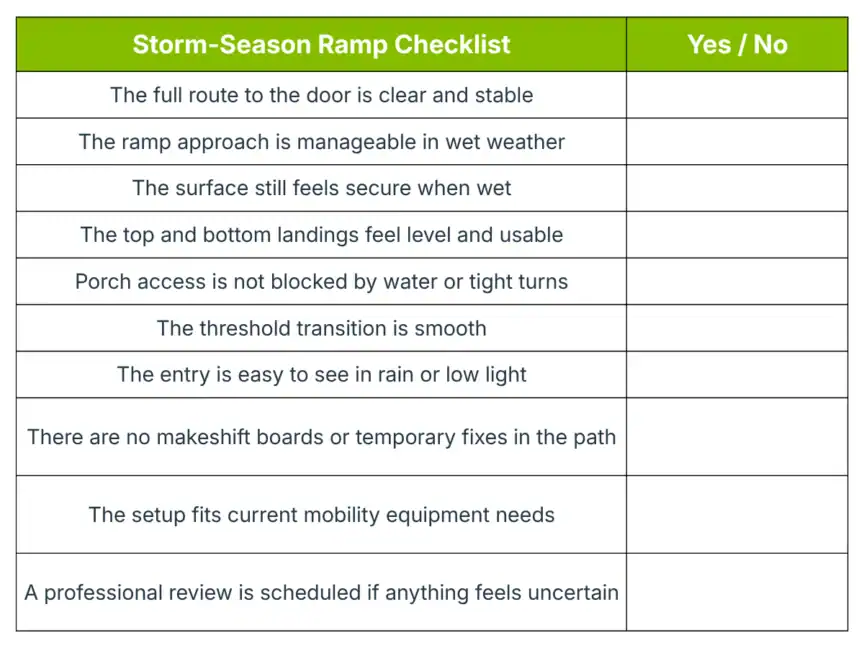
A simple storm-readiness checklist for an accessible entryway
Use this checklist to review your setup before storm season is in full swing.
When to schedule a professional ramp consultation
The best time to address storm-season access is before repeated bad weather exposes weaknesses in the setup. A consultation can be useful when:
- The entry includes steps, a porch, or a raised threshold
- The current route feels slippery or awkward in rain
- A caregiver is helping with transfers or assisted entry
- Mobility needs have changed
- You are planning ahead instead of waiting for an urgent problem
A well-matched wheelchair ramp Kenner solution should support everyday safety, not just occasional use. It should also account for how the home is actually used during wet weather.
FAQ
What makes a wheelchair ramp safer during summer storms?
A safer storm-season ramp supports steady traction, manageable slope, smooth transitions, and a clear path from the driveway or walkway to the door. Visibility and landing stability also matter when weather conditions are wet or rushed.
Can a porch ramp help during rainy weather?
Yes. A porch ramp can improve access when the main barrier is a raised front entry. It works best when the porch, landing, and threshold are all considered together rather than treated as separate problems.
Why is the threshold important if a ramp is already installed?
A threshold can still interrupt entry even when the main ramp is in place. A small rise at the doorway may create a rough transition for wheels, walkers, or assisted entry, especially in wet conditions.
Are portable ramps a good fit for storm season?
They can be, depending on the entry and the user’s needs. The key is making sure the setup feels stable, appropriate for the height change, and practical for repeated use during rainy weather.
When should a homeowner request a consultation?
It makes sense to request a consultation when access feels uncertain, when storms regularly affect the entry path, or when a household wants to improve safety before the need becomes urgent.
If you are reviewing home access ahead of the rainy season, explore local support through the 101 Mobility New Orleans location or learn more about available wheelchair ramp solutions.
Book a Free Consultation
If your entryway feels harder to use during summer storms, now is the right time to plan ahead. The right ramp solution can help create a safer, smoother, more reliable path into the home. Book a Free Consultation to discuss porch access, threshold transitions, and ramp options that fit your space and mobility needs.