Quick Takeaways:
- Manufacturer-certified installers matter more than general contractor licenses.
- A local, owner-operated provider is more accountable than a national company dispatching subcontractors.
- Ask directly whether technicians doing the work are employees or subcontractors.
- A reputable installer includes a live demonstration and written warranty documentation before leaving.
- Red flags: same-day pressure, verbal-only quotes, no local presence, no verifiable reviews.
You have done the research. You know a stairlift is the right call. Now comes the part that does not get enough attention: finding someone you can actually trust to install it correctly in your parent’s home. A stairlift is a safety device, and a poor installation is not just an inconvenience. It is a real risk to the person depending on it every day. This guide gives you a practical checklist so you can evaluate any provider without needing to become an expert yourself.
Why the installer matters as much as the equipment
Choosing a stairlift brand and model is only the first decision. The installation itself requires precise rail fitting, electrical work, and load calibration specific to your staircase’s exact dimensions. Straight stairs are one thing. Curved or split-level layouts add complexity that not every technician is trained to handle.
A stairlift installed correctly by someone who knows the product will run reliably for years. One that is rushed or handled by someone unfamiliar with the equipment is a different story. Your instinct to check the installer’s credentials is the right one.
Qualifications to verify before you book
When you speak with any provider, ask about these directly.
Manufacturer-certified or factory-trained technicians. This is the credential that matters most. General contractor licensing does not translate to stairlift expertise. You want someone trained by or certified through the manufacturer of the specific product going into the home.
Licensed and insured. Confirm they carry general liability insurance and workers’ compensation. Any reputable company will have both and will not hesitate to provide proof.
Local presence and accountability. A locally owned franchise or owner-operated business has more accountability than a national company dispatching subcontractors. If something goes wrong after installation, a local provider picks up the phone. It is also worth reading verified customer reviews from real people in your area before you commit.
Experience with your specific staircase type. Straight and curved stairlift installations are genuinely different jobs. Ask whether the technician has done installations similar to yours.
Post-installation support. Get a clear answer on who to call six months from now if the lift needs adjustment or service. Vague answers here are a warning sign.
Questions to ask during the consultation
These are worth asking any provider before you sign anything.
| 1 | How long has your team been installing this specific brand, and how many jobs like mine have you completed? |
| 2 | Do your technicians handle installations themselves, or do you use subcontractors? |
| 3 | What does your post-installation support look like if the lift needs servicing in the first year? |
| 4 | Can you walk me through the timeline from consultation to completion, and what happens on the day of installation? |
A provider who answers these questions specifically and without hesitation is worth your time. You can also schedule a free consultation with 101 Mobility to see what a thorough, no-pressure walkthrough actually looks like.
Red flags to watch for
A few things should give you real reservations with any provider.
Verbal-only quotes without a written breakdown. Same-day pressure to commit. No physical location or local office. Inability to name a specific manufacturer relationship. No verifiable local reviews. These are not minor concerns. They consistently pattern-match to companies that are difficult to reach once the job is done.
What a professional installation includesA well-run installation involves four things: a pre-visit measurement or assessment, a clean in-home process with no damage or mess, a full live demonstration of the lift after it is running, and written warranty documentation before the technician leaves. If any of these are missing, ask for them. |
What installation day should look like
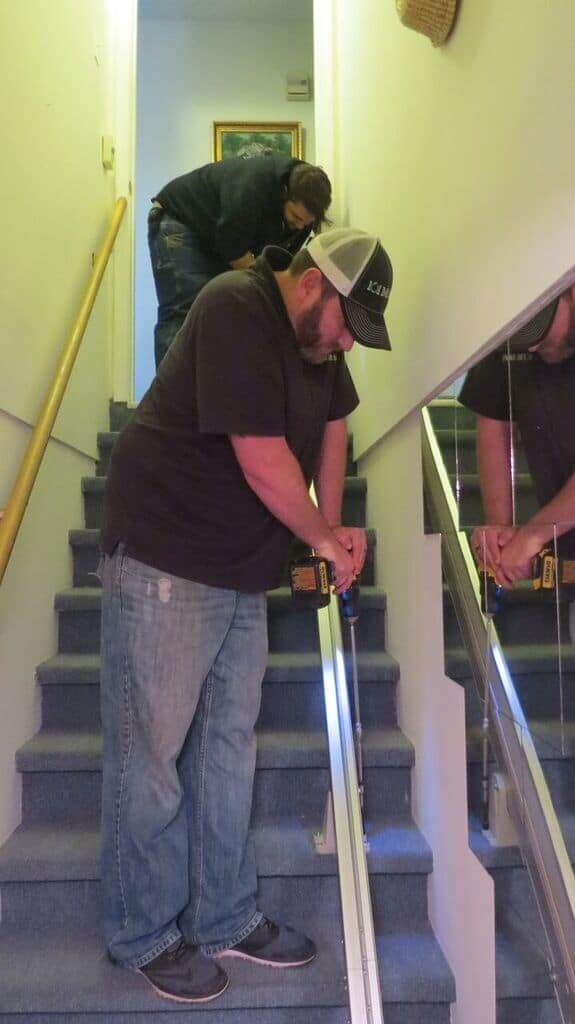
Before the technician arrives, you should have already had a measurement visit or in-home assessment. The installation itself is careful, precise work. The technician will mount the rail to the stair treads, connect the electrical supply, test the lift at every point on the track, and adjust for smooth operation.
When the job is done, a reputable installer does not leave until you have seen a live demonstration and have the warranty paperwork in hand. If they are packing up without that conversation, ask for it. You are entitled to it. For a full breakdown of what installation typically costs and what affects pricing, the Stairlift Pricing Guide on the 101 Mobility website covers it clearly.
Frequently Asked Questions
Do I need a licensed contractor to install a stairlift?
General contractor licensing is not the credential that matters most here. What you want is manufacturer-specific training. Stairlift installation involves product-specific rail systems and electrical connections that require training tied to the actual equipment being installed. Ask whether the technician is factory-trained or certified by the brand.
How long does stairlift installation take?
Straight stairlifts typically take two to four hours from start to finish. Curved stairlifts take longer because the rail is custom-fabricated for your specific staircase geometry. Any provider quoting you the same timeline for both is glossing over a real difference. Ask for a specific estimate based on your setup.
Can a company use subcontractors for installation?
Yes, and some national companies do. The problem is that a subcontractor has no ongoing relationship with the company or with your family. If something needs service later, you may be dealing with a different person entirely. Asking upfront whether the technician is a company employee is a simple way to find out.
What should the warranty cover?
The equipment warranty covers the stairlift itself. A responsible installer also provides a workmanship guarantee covering the installation. Get both in writing and ask specifically about the service process for the first year. You want to know the name of who to call, not a general customer service number.
How do I compare quotes from multiple companies?
Written, itemized quotes are the only way to do a fair comparison. A lower number that excludes the in-home assessment, removal of old equipment, or a post-installation service call is not a better deal. Ask each company to break out every line item so you are comparing the same scope of work.
| You now know what to ask, what to look for, and what should raise a flag. The difference between a smooth experience and a difficult one usually comes down to who you hire. 101 Mobility’s locally owned franchise model means the person who shows up to your parent’s home is invested in getting it right. Book a free in-home assessment and see what a consultation-first process actually looks like. |