What to Expect From a Free Accessibility Consultation in St. Gabriel
If you are researching mobility solutions for yourself or a loved one, it helps to know what the process actually looks like before you book. A free accessibility consultation in St. Gabriel is designed to help you understand your options, evaluate the home, and plan the right next step with confidence.
Rather than guessing which product might work, the consultation focuses on your layout, your mobility needs, and your long-term goals. It is a practical first step for people who want safer access, better daily function, and a clear plan.
Why Schedule a Free Accessibility Consultation in St. Gabriel
Many people reach out when something in the home starts to feel harder or less safe than it used to. That could mean stairs are becoming difficult, a wheelchair or walker does not move easily through an entry point, or a bathroom is starting to feel risky.
A consultation can help if you are:
- Planning to age in place
- Recovering from surgery or injury
- Living with a disability or progressive mobility changes
- Helping a parent, spouse, or family member stay safer at home
- Trying to understand which solution fits the home before making a decision
This kind of visit is useful because it combines an in-home consultation St. Gabriel homeowners can relate to with a more focused mobility assessment that looks at how daily movement happens in the real space.
What Happens During the In-Home Consultation
A good consultation is not just about products. It is about understanding the challenge first.
During the visit, the conversation usually starts with a few simple questions:
- What parts of the home feel difficult or unsafe?
- Who will use the solution now, and who may need it later?
- Is the goal to improve stair access, entry access, bathroom safety, or transfers?
- Are there caregiver concerns, space limitations, or future planning goals?
From there, the consultant looks at the parts of the home that matter most. That may include staircases, porches, garages, bathrooms, hallways, thresholds, or outdoor areas.
Understanding Your Mobility Needs
The mobility assessment is about real-life use. It looks at how someone moves through the home today and what would make daily life easier and safer.
That can include:
- Whether stairs are still manageable
- Whether a walker, wheelchair, or scooter needs more usable access
- Whether transfers in or out of bathrooms, bedrooms, or entryways are difficult
- Whether a temporary solution or long-term modification makes more sense
The goal is not to force a one-size-fits-all answer. It is to understand the person, the home, and the best way to improve access.
Evaluating the Home Environment
The home evaluation helps identify what is practical for the space. Even if two people have similar needs, their homes may require very different solutions.
A consultant may review:
- Stair shape and available clearance
- Entry height and approach space
- Indoor and outdoor access points
- Bathroom layout and safety concerns
- Transfer areas around beds, chairs, or vehicles
- Where equipment would fit best without disrupting daily life
This step matters because the right recommendation depends on both function and fit.
What Recommendations You Can Expect
After the consultation, you should have a clearer picture of which options fit your needs and why.
That may include recommendations such as:
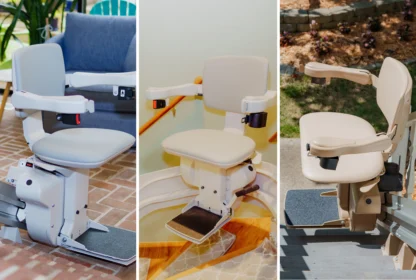
- Stairlifts for safer movement between floors
- Ramps for smoother entry and exit
- Platform lifts when vertical access is needed and space is limited
- Home elevators for multistory access planning
- Bathroom safety solutions for more stable everyday use
- Patient handling or transfer equipment when caregiver support is part of the equation
The most helpful recommendations are based on the home, the user, and the goal, not just the product category. That is where customized accessibility solutions become so important. The best solution is the one that fits daily life, supports safety, and works within the actual layout.
Understanding the Accessibility Installation Process
One of the most common questions people ask is what happens after they decide to move forward.
The accessibility installation process usually includes a few clear stages:
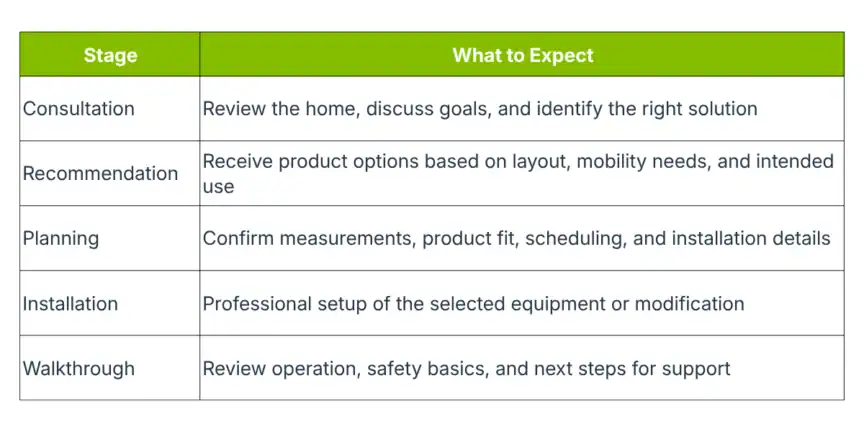
In many cases, installation planning involves confirming dimensions, placement, and any home-specific requirements before the work begins. That way, you know what to expect before installation day arrives.
For homeowners and families, this part of the process often brings the most relief. Once the plan is clear, the project starts to feel manageable.
What Happens After Installation
A strong consultation process should not end once the equipment is installed.
Long-term value comes from knowing you have support after the job is complete. That may include:
- Making sure the equipment is operating properly
- Reviewing how to use it safely
- Answering follow-up questions
- Providing service and support as needs change over time
This matters because accessibility needs are not always static. A solution that works well today may need to be adjusted as mobility changes, or a household may decide to plan for additional access later.
Quick Consultation Overview
Here is a simple view of what most people can expect from start to finish:
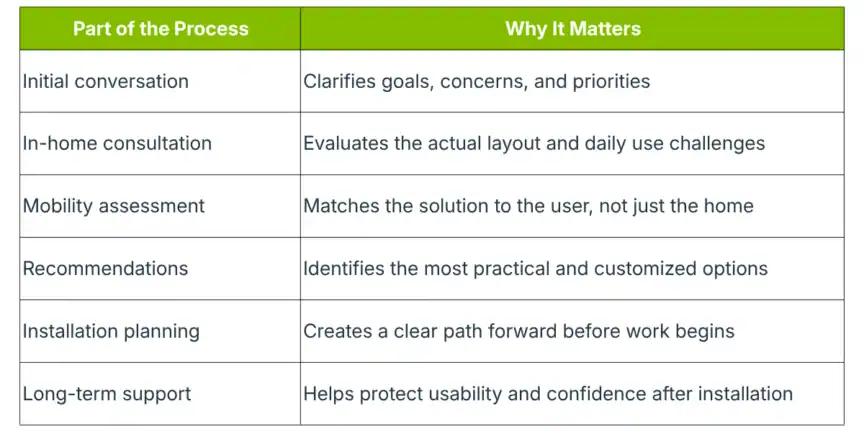
How to Prepare for Your Consultation
You do not need to overprepare, but a few details can make the visit more productive.
It helps to think about:
- Which areas of the home feel most difficult
- Whether the need is urgent or part of longer-term planning
- Who will be using the solution
- Whether caregivers or family members should be present
- What questions you want answered about timing, options, or next steps
Even a short list of concerns can help shape better recommendations.
FAQ
What is included in a free accessibility consultation in St. Gabriel?
A consultation usually includes a discussion of your needs, an in-home evaluation, a mobility assessment, and recommendations based on the home and the person using the solution.
How long does an in-home consultation take?
The exact timing can vary by home and project scope, but the visit is typically focused on understanding the challenge, evaluating the space, and identifying the best next step.
Will I get product recommendations during the consultation?
Yes. The consultation should help narrow down the most practical options based on safety goals, home layout, and mobility needs.
Is the consultation only for seniors?
No. It can also help people recovering from surgery, living with a disability, planning ahead for future access, or supporting a loved one at home.
What kinds of solutions might be discussed?
Depending on the situation, recommendations may include stairlifts, ramps, platform lifts, home elevators, bathroom safety products, or transfer-related solutions.
What happens after I decide to move forward?
The next step is usually installation planning, which may include measurements, product confirmation, scheduling, and a clear overview of the installation process.
Take the Next Step With Confidence
A consultation should leave you with more clarity, not more confusion. If you are trying to make a home safer, improve access, or plan ahead for changing mobility needs, a professional consultation can help you make the right decision for the space and the person who will use it.
To learn more about available solutions, visit the 101 Mobility Baton Rouge location page. When you are ready to get started, Book a Free Consultation.