What to Expect During a 101 Mobility Accessibility Consultation
The first part of an accessibility consultation in Lafayette means sharing what areas of the house are difficult to manage, what you need the house to do, and where you experience these issues. Following this, I take the relevant measures and walk the paths, before presenting options based on the house rather than beginning with a product catalog.
I have the same process when I meet with customers of 101 Mobility of Lafayette, whether the issue is in Lafayette or any of the surrounding areas of Broussard, Youngsville, Scott, or Carencro.
A consultation should help you understand the barrier, the possible products you can use, and the next steps required.
The Route I Ask You To Walk Me Through
I am interested in identifying the movement that causes the problem.
For example, if the problem stems from how you enter the house, I am interested in the path from the arrivals area to the door. If you have problem with stairs I will look at both the staircase and the landing. If problems are caused by transfers, I will be interested in seeing the areas and how much space is available around the transfers.
You are not expected to identify and bring the product that you want.
Oftentimes, it is more helpful if you show me the issues that you are facing.
For the home access assessment, I’ve created a series of exercises where I ask you to describe part of the route and demonstrate how you understand it and what you think it could affect.
| Part of the Route | What I Look At | What It Could Affect |
|---|---|---|
| Entry | Steps, rise, landing, approach, doorway | Ramp or other entry-access options |
| Staircase | Shape, width, landings, nearby doors | Stairlift fit |
| Hallways and doors | Clear passage and turns | Equipment movement and route planning |
| Bedroom | Positioning and transfer areas | Patient-handling options |
| Bathroom | Doorway, fixtures, transfer points | Bathroom and transfer solutions |
| Daily destination | Where the person actually needs to go | Whether the proposed solution solves the full route |
I also ask how other people use the same space.
A product can solve one mobility barrier while creating an inconvenience somewhere else. That is why I want to understand the actual route before recommending equipment.
For a family in Scott, for example, the main concern might be getting through the entrance. In Carencro, the question might involve moving between a bedroom and bathroom. The town does not determine the product. The route does.
The Measurements I Take and Why
Once I understand the problem, I measure the parts of the home that control the recommendation.
The measurements depend on the equipment category.
For a stairlift, I need to understand the staircase geometry, available width, rail position, and space at the top and bottom.
For an entry-access project, I look at the rise, available footprint, landing, approach, and doorway.
I need to learn about floor space, door clearance, equipment positioning, and the route in order to understand the needs for the equipment used in transfer.
Each measurement serves a specific function. They provide the answers to three main questions:
- Does the equipment fit?
- Is the equipment usable in the route?
- How will the equipment affect others in the space?
Because of these reasons, a mobility equipment consultation in Acadiana is necessary and extends beyond just showing a picture and suggesting a model.
A product specification gives the needs of the equipment. The house measurements provide a comparison to see if the needs are met.
How I Narrow Product Options Without Starting From a Catalog
I do not want to start with, “Which product do you want?”
I want to start with, “What movement do we want to facilitate?”
Once I know that, product comparisons become more meaningful.
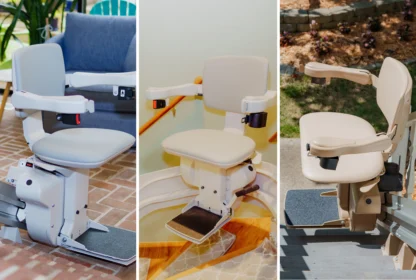
For example, if the main difficulty is moving between floors and you have a staircase with an access issue, I could recommend a Bruno Elan Straight Rail Stairlift.
If the barrier is at the entrance and there is room to create a usable route, Aluminum Modular Ramps would work along with the stair lift to solve the problem.
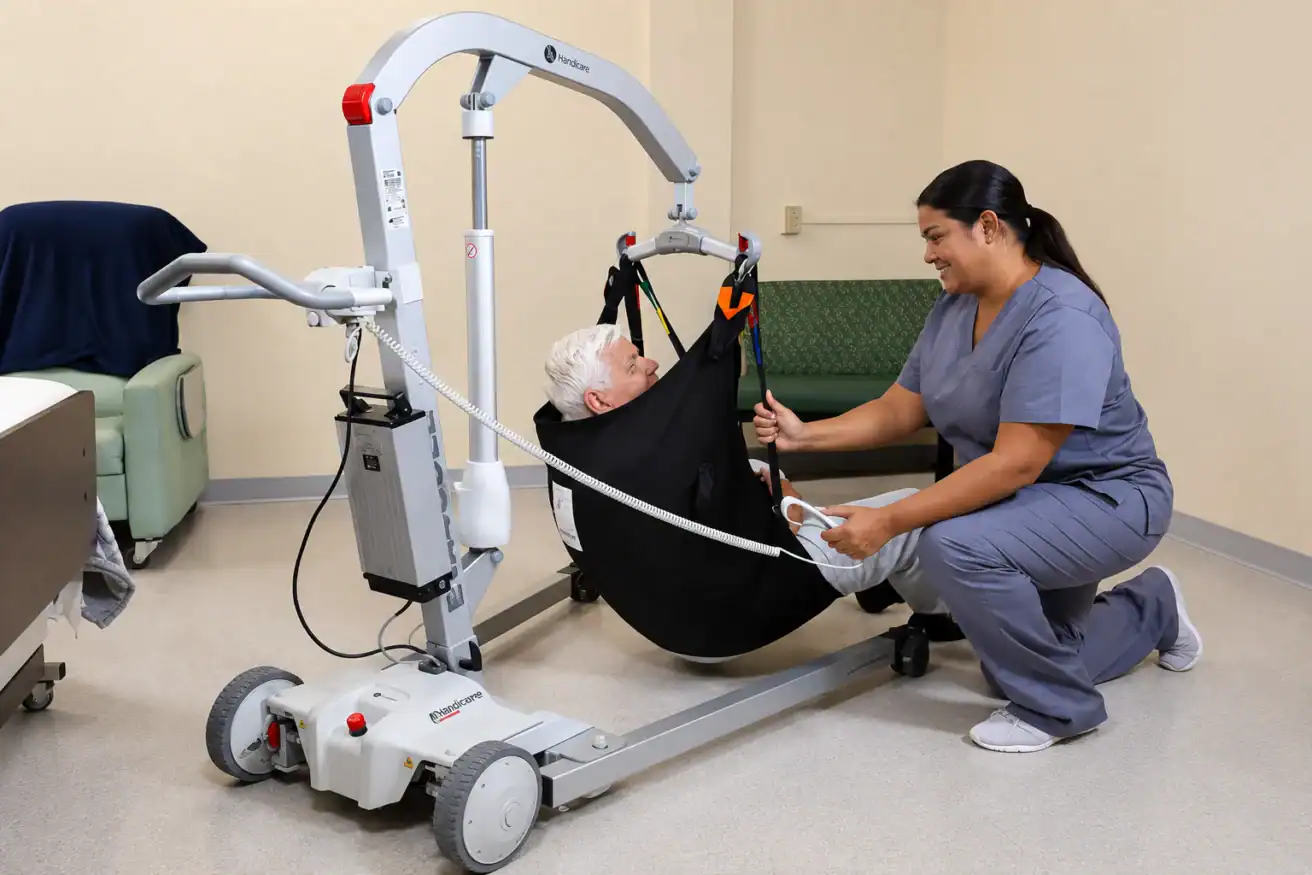
For moving a person between various levels that require assistance from a caregiver, I would recommend patient handling products like Handicare EvaDrive.
Those examples solve different problems, and it’s why I’m not starting with a catalog.
There are plenty of straightforward examples.
I’m not going to recommend a larger, more complicated option just because a bigger and more complicated option can be installed.
Simplest solutions can be the best.
That’s especially true if there’s a simpler solution that solves the primary goal and introduces no new issues.
The same can be true of smaller options. A smaller option, for example, may appear to be less complicated, but may in fact still fail to address the whole issue. If a solution is presented to address one of the many steps needed, it is very little help if the outcome is still that the person is unable to reach the bathroom, bedroom, or living spaces, for example.
That’s where we separate the technically feasible from the practically sound solutions given how people will live in their home.
What We Discuss About Installation, Timing, Support, and Future Needs
Once we’ve narrowed the choices down, I explain what each choice would mean beyond the product itself.
That comes with installation.
I need you to think through both where the product would be placed and where it would be located in the home.
Of course, we talk about the timing of the installation as well.
Some things need to be addressed now, and the rest will come. The best solution can vary depending on if you are addressing a barrier and preparing to go home, or you are just preparing in advance for changes in your mobility.
And, I am going to ask you if the solution is just for the person using it now or if other people will be using it in the future.
Future needs matter, but I don’t want to build for assumptions. We will base our recommendation on your current situation and on the equipment priorities you have indicated.
Our service and support post-installation are part of this recommendation too. Our support extends beyond the recommendation and beyond the installation. We support our customers with questions related to the equipment, and we carry out the necessary maintenance and repair tasks.
What Comes After The Consultation?
The recommended next step will be clearer after the consultation, compared to before the consultation.
You will know:
- The physical barrier we identified
- The measurements that inform the recommendation
- The product categories that are pertinent
- The options that will not work in the given space
- The meaning of the installation
- The equipment’s impact on the existing Router
- What remains to be answered
If a product is pertinent, we can progress through the recommendation and planning for the installation.
The consultation will not ask you to come up with a final product choice. The consultation is a means to an end for us, not you.
Our consultation for families in Lafayette, Broussard, Youngsville, Scott, and Carencro, has stopped them from making a very common mistake. That mistake is purchasing the equipment, which results in them molding their homes to fit the new equipment.
To see for yourself what will work in your home, schedule a free in-home consultation. From there, we can go on the route with you, take all measurements, inform you of the practical options, and explain the effects the options would have on your home.
FAQs: Accessibility Consultations in Lafayette
What happens in an accessibility consultation?
The first step is for me to understand the challenge you are experiencing and to then assess the impacted spaces and measurements. I can then suggest accessibility solutions that can be retrofitted to your home.
Do I have to bring mobility products to my consultation?
You do not have to bring anything to the consultation. Your challenge could be more of a movement challenge, or maybe there is a part of a room that is difficult to use. I can identify which mobility products should be considered based on the movements, space, mobility difficulty, and the routine.
What do I do to prepare for a free home accessibility consultation in Lafayette?
You need to be willing to show me the problem route. You should also be ready to explain what this solution will accomplish. The route is likely a movement challenge for a family member or caregiver as well, so their involvement in the process will help me visualize the solution.
What measurements are taken?
It depends on the accessibility challenge. For example, the scope of a stairlift assessment may focus only on the staircase, stair landing areas, and adjacent clear floor space. The scope of an entry accessibility project may require an assessment of rise and available area. Transfer equipment may require assessment of clear floor space, positioning, and reach measurements.
Will I get a product recommendation during the consultation?
By letting me know some information about your home, measurements, and mobility needs, I can at least narrow your options. Depending on what information I have, I can explain what solutions would be the best fit and why. Some cases require the selection of some products and installation specifics before the project is completely locked in.
What comes after I pick an accessibility solution?
Once you have picked a solution, we move to the coordination of the installation of the product and the setup of the product. We will explain how the product works and will provide support through service should there ever be a need to maintain, repair, or ask any other questions regarding the product.
About the Author
Jonas Boutte is the owner of 101 Mobility of South Louisiana and has hands-on training from mobility and accessibility manufacturers including Bruno, Harmar, Stiltz, Staying Home, EZ-ACCESS, National Ramp, and others. He helps customers throughout Lafayette and surrounding communities evaluate stairlifts, ramps, lifts, transfer equipment, and other accessibility solutions based on their homes, daily routes, and mobility needs.