Summer Recovery Accessibility in Walker: Safer Home Solutions After Surgery or Injury
Recovering at home in summer sounds simple until daily routines start revolving around steps, slippery bathrooms, and exhausting transfers. Whether someone is healing after surgery or adjusting after an injury, the right setup can make recovery safer, easier, and less stressful for everyone involved.
That is where summer recovery accessibility Walker planning matters. A few targeted changes, such as a temporary ramp, safer stair access, or better bathroom support, can help reduce fall risk, protect energy, and make home recovery more manageable.
Why summer recovery at home can be more challenging
Summer recovery often brings extra movement and extra strain. People may be going to follow-up appointments, leaving the house more often, or simply trying to stay comfortable while managing pain, swelling, or limited mobility.
At the same time, common home barriers do not take a season off. A single front step can become a major problem after knee surgery. A narrow bathroom setup can make basic routines more difficult. Stairs can turn a short trip upstairs into a risky task.
If recovery is expected to last weeks or months, small access problems can quickly become daily obstacles.
Summer recovery accessibility in Walker starts with the biggest mobility barriers
The most effective home recovery plans usually start by fixing the areas that create the most risk or frustration:
- Entryways with steps or uneven access
- Interior stairs between main living areas
- Bathroom spaces used multiple times a day
- Raised thresholds at doors
- Tight transfers in and out of the home
Instead of making broad changes everywhere, it is usually better to focus on the places that affect safety and independence right away.
The most useful accessibility solutions after surgery or injury
Temporary ramps for safer entry and exit
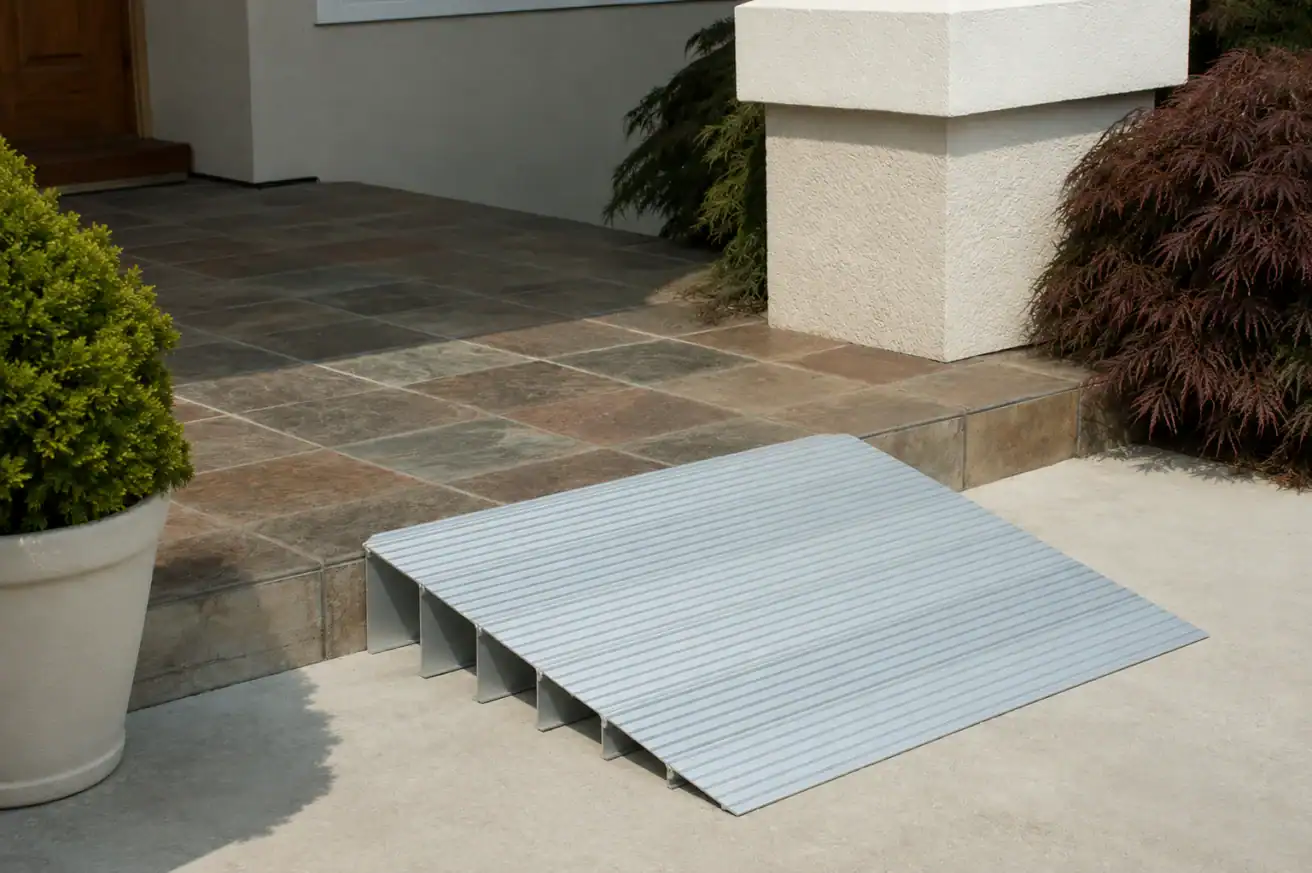
For many households, the first issue is simply getting in and out of the home. Temporary ramps can help bridge steps, landings, and entry points so someone using a walker, wheelchair, or other mobility aid can move more safely.
This is often one of the most practical forms of post-surgery accessibility Walker families look for. It can make a big difference for:
- Hospital discharge planning
- Outpatient surgery recovery
- Short-term mobility loss
- Homes with one or two problematic entry steps
Portable and modular ramp options can also work well when recovery needs may change over time.
Stair access solutions for multi-level homes
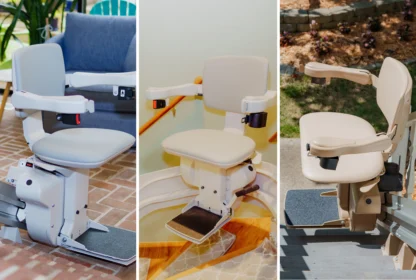
When bedrooms, bathrooms, or living areas are split across levels, stairs can slow recovery and increase risk. In some homes, a stair access solution may be more practical than asking someone to avoid an entire floor.
This can be especially helpful when a person is not supposed to bear full weight, tires easily, or is recovering from orthopedic procedures that make repeated stair trips difficult.
Bathroom support for daily routines
Bathrooms are one of the most important parts of home recovery safety. Recovery is harder when basic tasks feel unstable or exhausting.
Bathroom accessibility equipment may help support:
- Safer transfers
- Better stability during bathing
- Easier toilet access
- More confidence during daily routines
These upgrades are often some of the most valuable because they affect comfort, privacy, and fall prevention every day.
Threshold solutions for small but risky elevation changes
Not every mobility problem comes from a full staircase. Sometimes the biggest issue is a small lip at a doorway, patio entrance, or bathroom threshold.
Threshold ramps and entry transition solutions can help reduce trip hazards and make it easier for walkers or wheelchairs to move smoothly through the home. These smaller adjustments are easy to overlook, but they can have an outsized impact on safety and convenience.
Quick guide: which solution fits which recovery challenge?
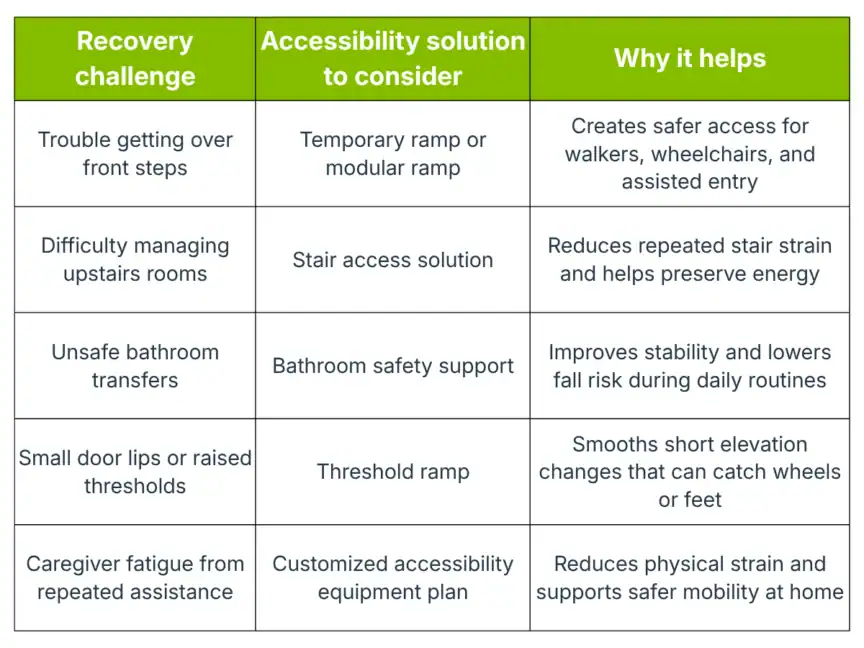
How the right setup can reduce caregiver strain
Recovery affects more than one person. Family members and caregivers are often helping with transfers, appointments, bathroom routines, and getting in and out of the home.
That physical support adds up quickly.
The right temporary mobility solutions can help reduce caregiver strain by making everyday movements more predictable and less physically demanding. Instead of lifting, steadying, or improvising around obstacles, caregivers can support recovery in a safer and more sustainable way.
That can mean:
- Fewer risky manual assists at the front door
- Less stress around stairs
- Smoother bathroom routines
- More independence for the person recovering
In many cases, the goal is not just convenience. It is safer recovery for both the individual and the person helping them.
When to choose temporary mobility solutions vs. longer-term equipment
Some recovery situations call for short-term help. Others reveal a longer-term need that should not be treated like a temporary inconvenience.
A temporary solution may make sense when:
- Recovery has a defined timeline
- Mobility limitations are expected to improve
- Access needs are focused on one or two problem areas
- The goal is to bridge the gap after surgery or injury
A longer-term solution may make more sense when:
- Recovery is uncertain or prolonged
- Mobility changes are likely to continue
- The home has multiple access barriers
- Independence and aging in place are part of the bigger picture
A professional assessment can help determine whether a short-term fix is enough or whether a more durable accessibility plan would better support the household.
What to look for before installing accessibility equipment
Before choosing equipment, it helps to think through the recovery routine clearly.
Ask:
- Where does the person struggle most right now?
- Are they using a walker, wheelchair, cane, or other device?
- Which bathroom and entrance will they use most often?
- Is the goal short-term recovery, long-term safety, or both?
- How much caregiver assistance is currently required?
These questions can make it easier to choose the right accessibility equipment instead of overbuying, underplanning, or solving the wrong problem first.
FAQ
What are the best temporary mobility solutions after surgery?
The best solution depends on the home and the person’s mobility needs. Common options include temporary ramps for entry access, threshold solutions for small elevation changes, bathroom safety support, and stair access solutions for multi-level homes.
How can I improve post-surgery accessibility in Walker?
Start by identifying the biggest daily barriers, usually stairs, entrances, bathrooms, and thresholds. From there, choose solutions that improve safe movement and reduce the amount of physical assistance required.
Are temporary ramps a good option for summer recovery at home?
Yes. Temporary ramps can be a practical option when someone needs safer short-term access into and out of the home during recovery from surgery or injury.
What parts of the home should I address first during recovery?
Focus on the spaces used most often and the places with the highest fall risk. For most homes, that means the main entrance, bathroom, thresholds, and any essential stairs.
Can accessibility upgrades help reduce caregiver strain?
Yes. The right setup can make transfers, entry, and daily routines safer and less physically demanding, which can reduce stress and lower injury risk for caregivers.
Get Help With Summer Recovery Accessibility in Walker
If summer recovery at home feels harder than it should, the right accessibility plan can make a meaningful difference. A safer entrance, better bathroom support, or a more workable stair solution can help turn daily recovery from a struggle into a routine.
To explore solutions for summer recovery accessibility Walker, visit the 101 Mobility Baton Rouge location or Book a Free Consultation. A customized plan can help you find the right fit for recovery needs now, while supporting safer mobility at home.