Summer Recovery Accessibility in Marrero: Safer Home Solutions After Surgery or Injury
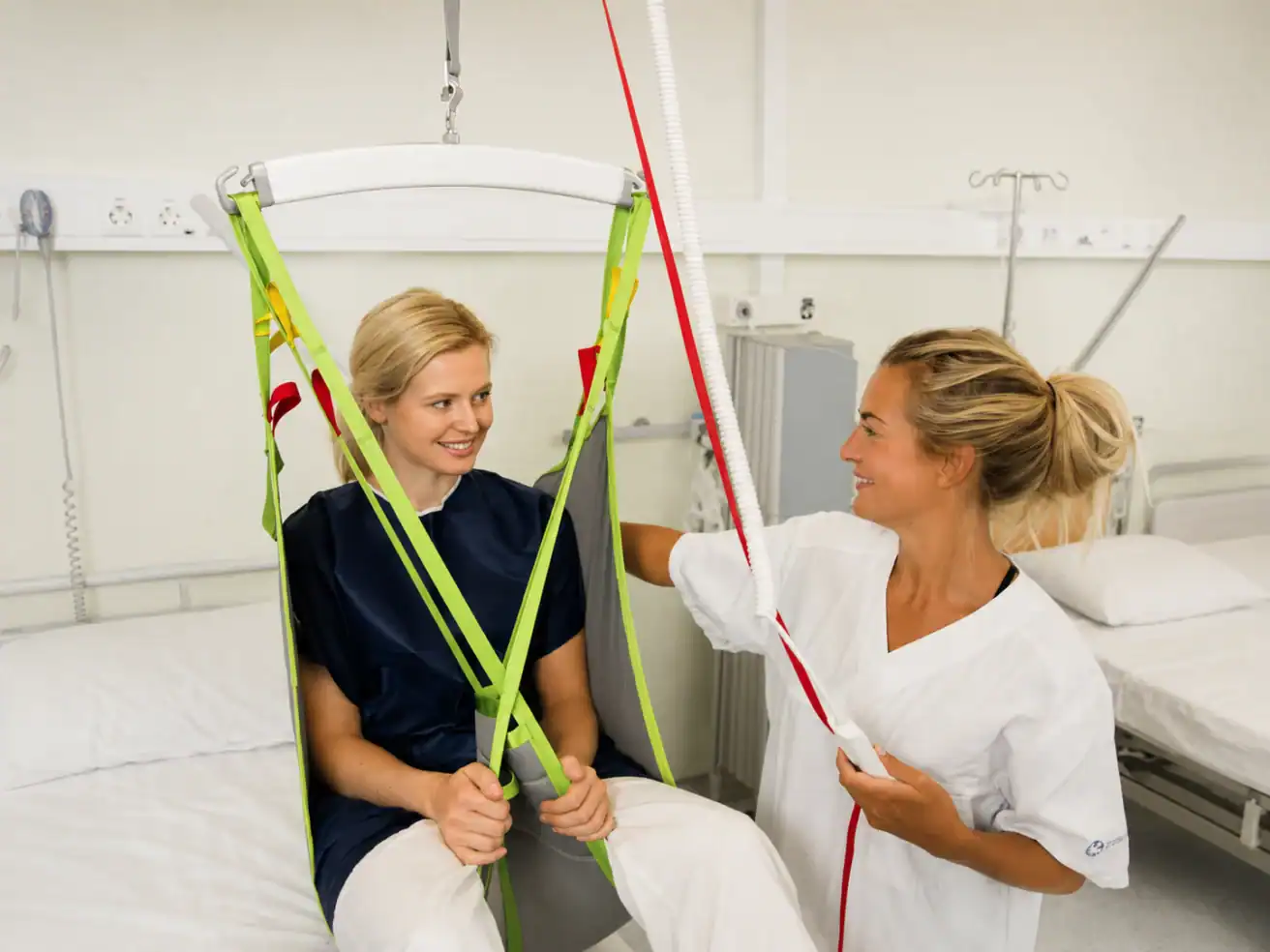
Recovering at home during the summer can sound simple until daily routines start to feel harder. A few front steps, a slippery bathroom, or a staircase between the bedroom and kitchen can quickly turn recovery into added stress.
That is why summer recovery accessibility Marrero searches often come from families trying to solve immediate, practical problems. The right home setup can make recovery safer, reduce strain on caregivers, and help the person healing move through the home with more confidence.
Why summer recovery at home can be harder than expected
Summer recovery brings a few challenges that people do not always plan for. Heat can increase fatigue. More trips in and out of the house can make entry stairs harder to manage. Bathrooms can become one of the highest-risk spaces in the home. Even simple tasks like showering, getting to bed, or leaving for a follow-up appointment may require more support than expected.
For someone healing after surgery or injury, the goal is not to make the home perfect. The goal is to make the most-used spaces safer, easier, and less exhausting.
Summer recovery accessibility in Marrero starts with the biggest daily barriers
The fastest way to improve recovery at home is to identify where the person is struggling most often.
Usually, the biggest barriers fall into four categories:
- Getting into and out of the house
- Using stairs safely
- Managing bathroom routines
- Moving without over-relying on a family caregiver
When these areas are addressed early, home recovery safety tends to improve quickly.
Entry and exit
Front steps, porch access, and raised thresholds are common problems after surgery or injury. If a walker, wheelchair, or extra support is needed, even one or two steps can become a daily obstacle.
In these cases, temporary mobility solutions such as a modular ramp may help create safer access without forcing the household to improvise every time the person leaves or returns home.
Stairs inside the home
Many recovery plans assume a person can “just take it slow” on stairs. In reality, stairs can become one of the hardest and most draining parts of the day.
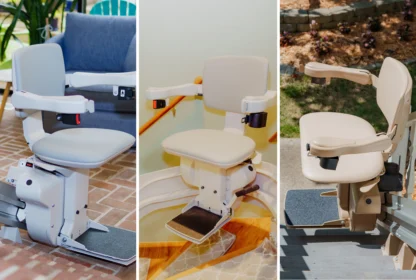
For post-surgery accessibility Marrero needs, stair access solutions may help reduce repeated strain, lower fall risk, and make it easier to reach bedrooms, bathrooms, or main living areas without unnecessary exertion.
Bathroom safety
Bathrooms demand balance, strength, and awkward movement at the exact time someone has less of all three. Getting on and off the toilet, stepping into a shower, or standing on a wet surface can all create risk.
Supportive accessibility equipment in the bathroom may include grab bars, shower seating, and other safety features that make daily hygiene more manageable and less stressful.
Best accessibility equipment for post-surgery recovery at home
Not every recovery requires the same setup. The right solution depends on how the person is moving now, how long recovery is expected to last, and which parts of the home are creating the most difficulty.
1. Temporary ramps for safer entry
A temporary or modular ramp can help when front steps are slowing down recovery or making appointments harder to manage. This is often useful when the person is using a wheelchair, walker, or transport chair.
Best fit:
- Recent surgery
- Injury-related limited mobility
- Short-term or transitional access needs
2. Stair access solutions for multi-level homes
If the bedroom or bathroom is upstairs, repeated stair use can become exhausting or unsafe. A stair access solution may be worth considering when recovery depends on limiting strain and preserving energy.
Best fit:
- Knee, hip, back, or foot recovery
- Weakness after hospitalization
- Homes where essential rooms are on another level
3. Bathroom support for daily safety
Bathroom safety solutions are often the highest-value change because they support a routine people cannot avoid. Even a modest improvement in bathroom setup can make daily recovery smoother.
Best fit:
- Reduced balance
- Transfer difficulty
- Limited range of motion
- Concern about falls during bathing or toileting
4. Other home recovery safety upgrades
Sometimes the problem is not one product but the overall flow of movement through the home. Safer transitions, better access, and the right equipment can help the person recovering conserve energy and stay more independent.
Best fit:
- Caregivers assisting with multiple transfers
- Repeated near-falls
- Difficulty moving between key rooms
Temporary mobility solutions vs. longer-term upgrades
One of the most common questions families ask is whether they need a short-term fix or a more lasting solution.
Here is a simple way to think about it:
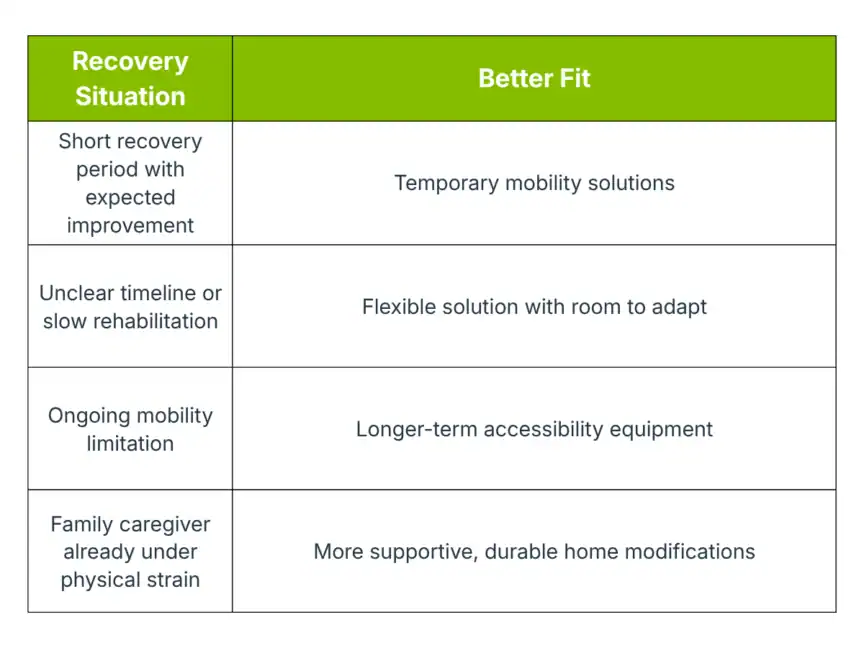
If the person’s needs may continue beyond the summer, it often makes sense to plan for safety and usability now instead of restarting the process later.
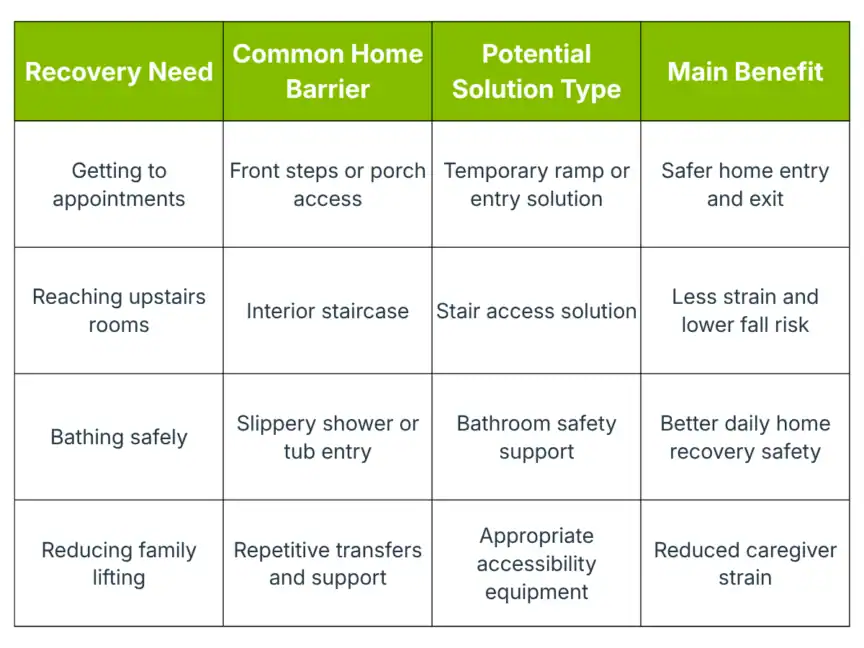
Quick comparison table for common recovery needs
When families in Marrero should schedule a home accessibility consultation
Some families wait until there is a close call. It is better to act earlier.
A home consultation may make sense when:
- Discharge from the hospital or rehab center is coming soon
- The person recovering is avoiding stairs or bathrooms
- Family members are physically assisting more than expected
- Appointments are hard to manage because entry access is limited
- Recovery is becoming more stressful than planned
The advantage of a consultation is that it focuses on the actual layout of the home and the real movement challenges happening every day.
For local support, visit the 101 Mobility New Orleans location to learn more about available solutions and service options.
FAQ
What is the best accessibility solution after surgery at home?
The best solution depends on where recovery is hardest. For some people, it is entry access. For others, it is stairs or bathroom safety. The most effective plan usually starts with the area creating the most daily risk.
Are temporary mobility solutions a good option for recovery?
Yes. Temporary mobility solutions can be a practical fit when mobility limits are expected to improve over time. They can help make the home safer during recovery without assuming the need will be permanent.
Why is bathroom support so important during home recovery?
Bathrooms combine wet surfaces, tight spaces, and frequent transfers. That makes them one of the most difficult areas to navigate safely after surgery or injury.
When should a family look into post-surgery accessibility in Marrero?
Families should look into support as soon as they see daily movement becoming difficult, especially before discharge or as soon as stairs, entry access, or bathroom use start creating risk.
Can accessibility equipment reduce caregiver strain?
Yes. The right setup can reduce repeated lifting, improve transfers, and make daily routines less physically demanding for family members and caregivers.
Make summer recovery at home safer and less stressful
Healing at home should not mean working around avoidable barriers every day. The right combination of ramps, stair access, bathroom support, and other accessibility equipment can make recovery more manageable for both the person healing and the people helping them.
If you are planning for summer recovery accessibility Marrero needs, the next best step is to get expert guidance based on the home, the recovery plan, and the person’s day-to-day mobility.
Book a Free Consultation to discuss safer, more practical recovery solutions for your home.