Summer Recovery Accessibility in Breaux Bridge: Safer Home Solutions After Surgery or Injury

Recovering at home in summer can sound simple until everyday movement becomes difficult. A few front steps, a slippery bathroom floor, or a staircase between the bedroom and kitchen can quickly turn a normal routine into a daily obstacle.
That is why summer recovery accessibility Breaux Bridge homeowners and families can rely on often starts with one question: what will make recovery safer, easier, and less stressful right now?
After surgery or injury, the right home setup can help reduce risk, support independence, and make caregiving more manageable. In many cases, temporary or targeted changes are enough to make a meaningful difference.
Why summer recovery at home can be more difficult
Summer often brings more household activity, more trips in and out of the home, and more pressure to keep up with normal routines. For someone healing after surgery or injury, that can create avoidable strain.
Common recovery challenges at home include:
- Trouble getting in and out of the house safely
- Difficulty using stairs multiple times a day
- Increased fall risk in the bathroom
- Fatigue from standing, transferring, or walking longer distances
- Greater physical strain on family members helping with care
When these issues are addressed early, home recovery usually feels more manageable.
Summer recovery accessibility in Breaux Bridge starts with the right home setup
The best recovery setup depends on the person, the home, and the expected length of recovery.
Someone using a walker for a few weeks may need a different solution than someone recovering from a major procedure with limited weight-bearing ability. A one-story home may only need safer entry access and bathroom support. A multi-level home may require stair access solutions as well.
The goal is not to overcomplicate the home. It is to remove the biggest obstacles that could slow recovery or create safety risks.
Accessibility solutions that can help after surgery or injury
Temporary ramps for safer entry and exit
Front steps and uneven entry points are one of the first barriers families notice after surgery or injury. A temporary ramp can help create smoother access for walkers, wheelchairs, transport chairs, and safer assisted movement.
This can be especially helpful when the person recovering needs to:
- Attend follow-up appointments
- Move in and out of the home with less strain
- Avoid unstable stepping during early recovery
- Enter through a garage, porch, or front door more safely
For many families, temporary mobility solutions make sense because they address immediate recovery needs without requiring a permanent modification right away.
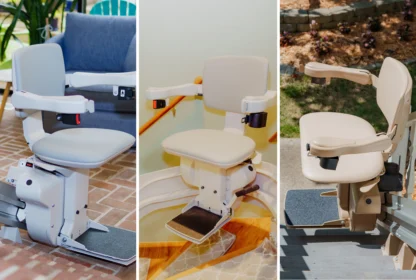
Stair access solutions for multi-level homes
If the bedroom, bathroom, or main living area is on a different floor, stairs can become one of the biggest daily challenges.
In these situations, stair access solutions may help reduce repeated strain and lower the risk of missteps during recovery. The right option depends on the home layout, the user’s mobility, and whether the need is short term or part of a longer recovery plan.
This is often one of the most important parts of post-surgery accessibility Breaux Bridge families should evaluate early, especially when the home cannot easily be rearranged around one floor.
Bathroom support for safer daily routines
Bathrooms are one of the most common problem areas during home recovery. Standing up, stepping over a tub edge, or moving on a wet floor can become much harder after surgery or injury.
Bathroom support may help with:
- Safer transfers in and out of bathing areas
- Better stability while standing or sitting
- Reduced slipping risk during daily routines
- Less reliance on a caregiver for every movement
When families think about home recovery safety, the bathroom should be near the top of the list.
Other accessibility equipment that may improve recovery
Depending on the situation, other forms of accessibility equipment may also help improve comfort and safety during recovery. These may support movement inside the home, reduce physical demands on caregivers, or make daily routines easier to manage.
The best fit depends on the person’s mobility, diagnosis, home layout, and expected recovery timeline. That is why an in-home assessment is often the most useful next step.
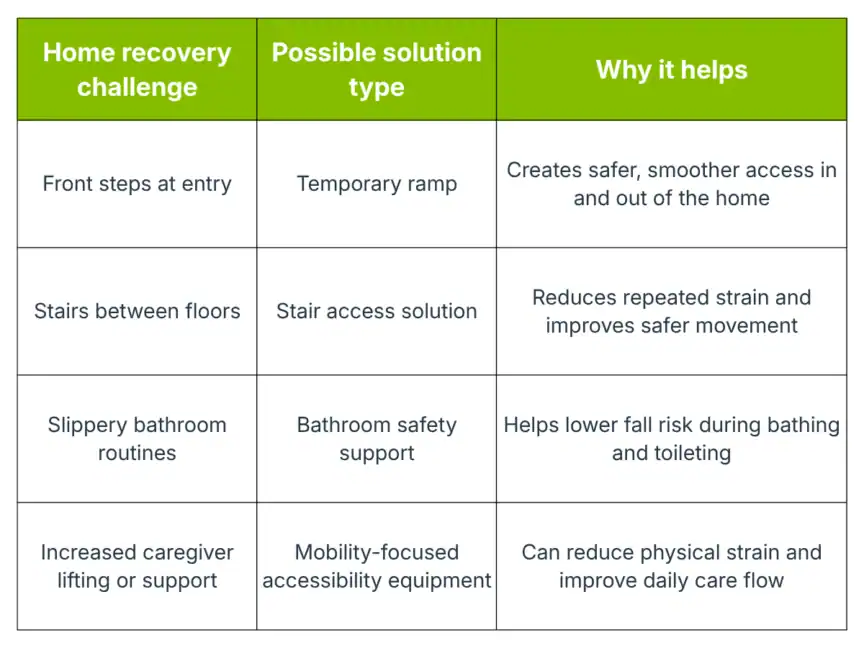
A quick comparison of common home recovery needs
How the right setup can reduce caregiver strain
Recovery does not only affect the person healing. It also affects the family members helping every day.
Without the right support in place, caregivers may need to assist with stairs, bathroom transfers, entry access, and repeated positioning throughout the day. That can be exhausting and physically demanding.
Thoughtful home modifications and temporary support equipment can help by:
- Reducing the need for hands-on lifting
- Making transfers more predictable
- Supporting safer movement for both the individual and caregiver
- Creating a smoother daily routine during recovery
For many families, that balance matters just as much as the equipment itself.
What to consider before choosing a solution
Before selecting a recovery-related accessibility solution, it helps to think through a few practical questions:
- How long is the recovery expected to last?
- Is the person using a walker, wheelchair, cane, or hands-on assistance?
- Which part of the home is creating the biggest barrier right now?
- Is the goal safer temporary access, easier daily routines, or both?
- Has a surgeon, therapist, or care team recommended any movement restrictions?
The clearer the recovery picture, the easier it is to choose a solution that matches the need.
Why local support matters in Breaux Bridge
Home recovery needs can feel urgent. Families usually do not want to sort through options alone while also managing appointments, medication schedules, and day-to-day care.
Working with a local accessibility team can make the process easier. An experienced provider can help assess the home, identify the most important barriers, and recommend practical next steps based on real recovery needs.
101 Mobility helps customers address mobility challenges with customized solutions designed to improve safety, access, and independence. Their broader approach focuses on matching the right solution to the person and the home, not just offering equipment.
Frequently asked questions
What is the best home accessibility solution after surgery?
The best solution depends on the recovery plan and the layout of the home. Some people need safer entry access, while others need help with stairs or bathroom routines. A home assessment usually helps identify the most useful option.
Are temporary mobility solutions a good fit for short-term recovery?
Yes. Temporary mobility solutions can be useful when recovery needs are expected to improve over time. They can help make the home safer without requiring a long-term commitment to a permanent setup.
How can I make a home safer for recovery after an injury?
Start by identifying the highest-risk areas, usually entry points, stairs, and bathrooms. Then look for solutions that improve stability, reduce strain, and support safer movement during daily routines.
Why is bathroom support important during home recovery?
Bathrooms combine tight spaces, slippery surfaces, and frequent transfers. That makes them one of the most important areas to address when planning for safer recovery at home.
Can accessibility equipment also help caregivers?
Yes. The right accessibility equipment can reduce physical strain, make daily routines smoother, and help caregivers provide support more safely.
Get help planning a safer recovery at home
If you or a loved one is preparing for home recovery after surgery or injury, the right accessibility plan can make daily life safer and less stressful.
Explore local solutions through 101 Mobility Lafayette or Book a Free Consultation to discuss the home setup, recovery goals, and support needs.