Summer Mobility Assessment in Brusly: What to Review Room by Room
A summer mobility assessment in Brusly is a practical way to spot access issues before they turn into daily frustrations or safety risks. For many households, summer means more trips outside, more visitors, and more use of porches, patios, garages, and entryways. That makes it a smart time to walk through the home and review how well each space supports safe movement.
This kind of review is useful for older adults planning ahead, families helping a loved one stay independent, and caregivers trying to make daily routines easier. A thoughtful home accessibility assessment can reveal where small barriers are starting to create bigger problems.
Below is a room-by-room guide to help you evaluate room by room safety and identify where mobility solutions in Brusly may make home life safer, simpler, and more manageable.
Why a Summer Mobility Assessment Matters in Brusly
Mobility needs often become more noticeable during active seasons. Summer usually brings more movement between indoor and outdoor spaces, more errands, more family visits, and more time spent on porches, decks, and yards.
That is why an aging in place review should not focus only on major hazards. It should also look at the smaller daily obstacles that add up over time, such as a raised threshold, an awkward stair run, a narrow bathroom entry, or a bedroom layout that makes transfers harder than they should be.
A good review answers a few simple questions:
- Where is movement becoming harder?
- Which spaces feel less safe than they used to?
- Are caregivers working around the home, or working against it?
- Which changes would improve safety and independence first?
Start With the Entry and Exit Points
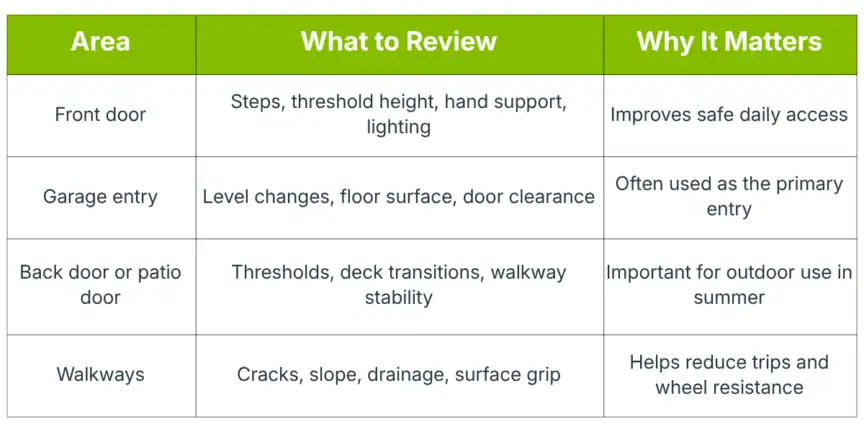
The first place to review is the way someone gets in and out of the home. For many households, the biggest barrier is not inside the house. It is the step, threshold, or uneven surface right outside the door.
Walk through the front entry, garage entry, and back door. Look for:
- Steps that feel difficult or unstable
- Door thresholds that catch a walker or wheelchair
- Narrow landings with little turning room
- Uneven concrete, brick, or decking
- Poor lighting at the door
- A lack of steady support when entering or exiting
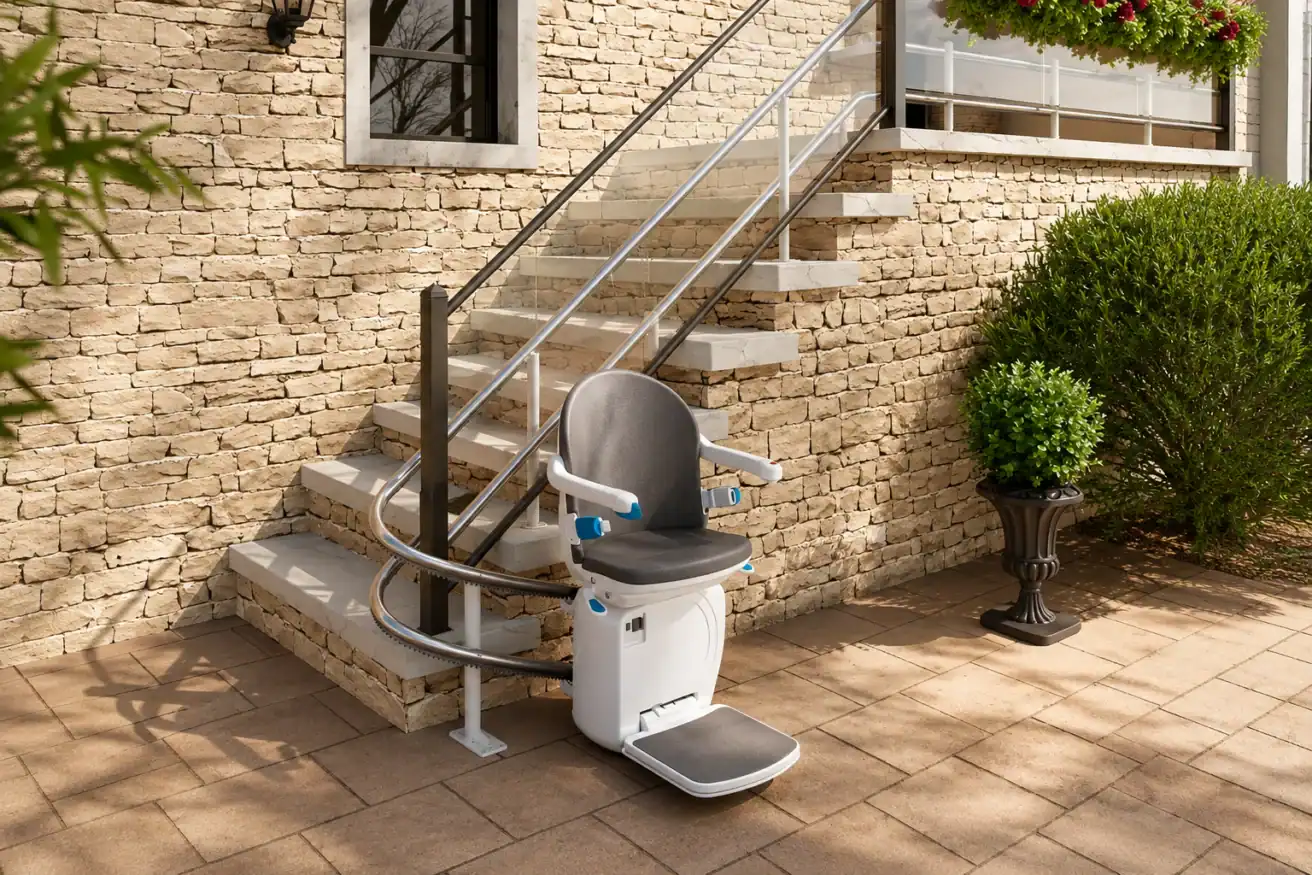
If the issue is a small rise at the doorway, a threshold ramp may help smooth the transition. If the challenge is a larger step or porch entry, a modular entry ramp may be worth exploring. For homes where access changes depending on the outing, portable ramp options can also make sense.
Entry Review Questions
Check Stairways and Level Changes Inside the Home
If someone hesitates before using the stairs, needs extra time, or avoids a part of the home altogether, stairs should be a priority in the review.
Look closely at:
- Whether the stairs are used less often than before
- Any missed steps or near-falls
- Handrail stability
- Tight turns or poor visibility
- Landings that feel cramped
- Fatigue when going up or down
Also review smaller level changes inside the home. A single step down into a den, sunroom, garage, or patio access point can become a recurring hazard.
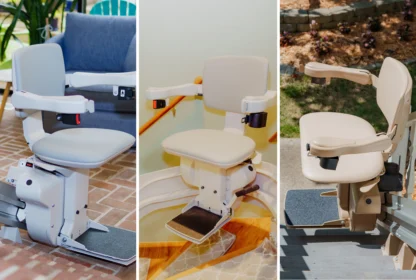
When stairs are becoming a daily barrier, it may be time to consider whether a stairlift or another accessibility solution would make the home easier to use long term. The key is not to wait until the stairs become unusable.
Review the Bedroom for Everyday Access
Bedrooms affect independence more than many families expect. The space has to support safe transfers, clear walking paths, and easy movement first thing in the morning and last thing at night.
Check for:
- Enough space to get in and out of bed safely
- Clear paths between the bed, dresser, and doorway
- Room for a walker, wheelchair, or other mobility device
- Easy access to light switches and essentials
- Tripping hazards such as loose rugs, cords, or clutter
- Safe nighttime access to the bathroom
This is also a good place to think about caregiver movement. If someone assists with dressing, transfers, or nighttime support, the room should allow them to move without twisting into tight spaces or lifting from awkward angles.
Assess the Bathroom for High-Risk Safety Issues
Bathrooms deserve special attention because they combine tight spaces, slippery surfaces, and frequent transfers.
Review the bathroom with a simple question in mind: can the person using it move through each step of the routine with confidence?
Check:
- Entry clearance at the bathroom door
- Toilet height and ease of transfer
- Space beside the toilet or sink
- Shower or tub entry height
- Slip risk on the floor
- Support points for sitting, standing, and turning
Even when a bathroom still “works,” it may already be creating extra strain. If someone has to brace against a vanity, avoid bathing alone, or step awkwardly over a tub wall, that space may need attention sooner than it appears.
A room by room safety review often shows that the bathroom is one of the first places where practical accessibility changes can make daily life noticeably easier.
Don’t Skip Outdoor Areas
Summer use increases the importance of outdoor access. A home may feel manageable inside but still create real limits outside.
Review:
- Porch and patio access
- Deck transitions
- Steps to the yard
- Garage-to-driveway changes
- Paths to vehicles, mailboxes, or sitting areas
- Surface stability after rain or heat exposure
Outdoor access matters for more than convenience. It affects how easily someone can leave for appointments, enjoy time outside, and stay connected to everyday life.
If a person can move safely through the home but avoids the porch, backyard, or driveway because of steps or uneven surfaces, the home accessibility assessment is not complete yet.
Include Caregiver Needs in the Review
A mobility review should not focus only on the person receiving support. It should also account for the people helping them.
Caregivers often notice where the real strain shows up:
- Tight corners during transfers
- Bathroom support that requires awkward lifting
- Stair use that creates stress for everyone
- Bedroom layouts that leave too little working room
- Entry points that are difficult to navigate together
When the home is arranged better, care tends to become safer and less physically demanding. That matters for the comfort of the person receiving help and for the long-term sustainability of caregiving at home.
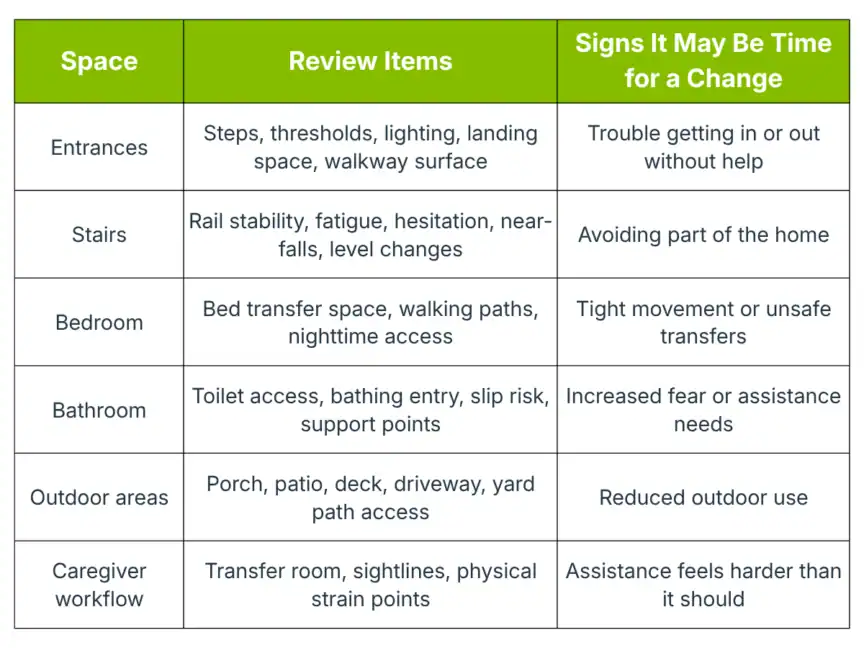
Room-by-Room Summer Mobility Assessment Checklist
Use this checklist as a quick starting point.
When to Move From Review to Action
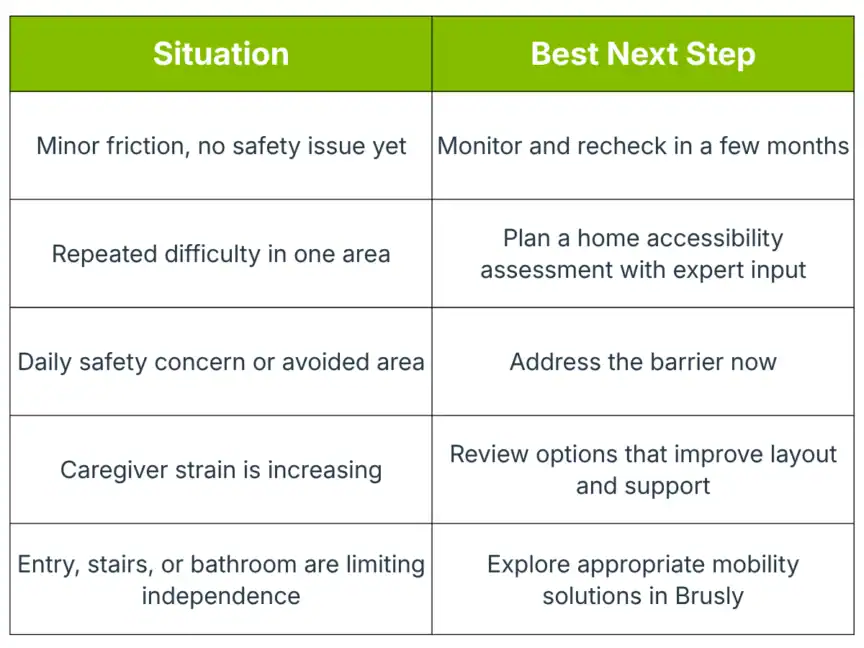
Not every issue needs the same response. Some can be monitored. Others should be addressed before they lead to a fall, a difficult transfer, or a major disruption to daily life.
What to Do Next
If you are already noticing repeated difficulty with entrances, stairs, bathrooms, or outdoor access, it may help to review available solutions through the 101 Mobility Baton Rouge location.
FAQs
What is a summer mobility assessment?
A summer mobility assessment is a room-by-room review of the home that looks for barriers affecting safe movement, especially during a season when people tend to use entrances, patios, garages, and outdoor spaces more often.
Who should do a home accessibility assessment?
It can help older adults planning ahead, people recovering from injury or surgery, wheelchair or walker users, caregivers, and families supporting someone who wants to remain at home safely.
What rooms matter most in an aging in place review?
Start with entrances, stairs, bedrooms, bathrooms, and outdoor access points. These spaces often have the biggest effect on independence, fall risk, and daily routines.
What are common issues found during a room by room safety review?
Common concerns include raised thresholds, unsafe steps, poor stair access, tight bathroom layouts, difficult bed transfers, uneven outdoor surfaces, and home setups that make caregiving harder.
When should I look into mobility solutions in Brusly?
If someone is avoiding part of the home, needing more assistance, struggling with entry or stairs, or finding bathroom use less safe, it is a good time to explore solutions before the issue becomes urgent.
Final Thoughts
A summer mobility assessment in Brusly does not need to be complicated to be useful. The goal is to notice where the home is helping and where it is starting to work against safe, confident movement.
A careful room-by-room review can make it easier to prioritize changes, support aging in place, and reduce strain for both users and caregivers.
When you are ready for expert input, you can Book a Free Consultation or learn more through 101 Mobility Baton Rouge.