Stairlift Questions in Rayne: What to Ask Before Choosing a Model
Choosing a stairlift is not just about picking a seat that goes up and down the stairs. The right model depends on the shape of the staircase, how the user moves each day, how much landing space is available, and what will feel safe and comfortable over time.
That is why the best place to start is with the right questions.
If you are comparing options for a stairlift in Rayne, use this guide to prepare for a stairlift consultation and make a clearer, more confident decision.
Why These Stairlift Questions Matter Before You Compare Models
Two homes can both have stairs and still need completely different solutions.
A straight staircase may call for one type of system. A staircase with turns or intermediate landings may need a different setup. Comfort matters too. So do transfer ability, control style, and what happens during a power outage.
Asking the right stair safety questions early helps narrow the options faster and keeps the conversation focused on real daily use, not just product features.
Stairlift Questions Rayne Homeowners Should Ask First
1. Is the staircase straight, curved, narrow, or broken by a landing?
This is one of the first questions to answer because staircase layout shapes the recommendation.
A straight staircase is usually the simplest starting point. A staircase with curves, turns, or multiple landings often needs a more customized approach. Stair width and wall clearances also affect what will fit comfortably.
Before your appointment, note:
- Whether the stairs go straight up
- Whether they turn
- Whether there is a landing in the middle
- Whether the staircase feels tight or narrow
You can also review broader stair access solutions before the consultation if you want a clearer sense of what categories exist.
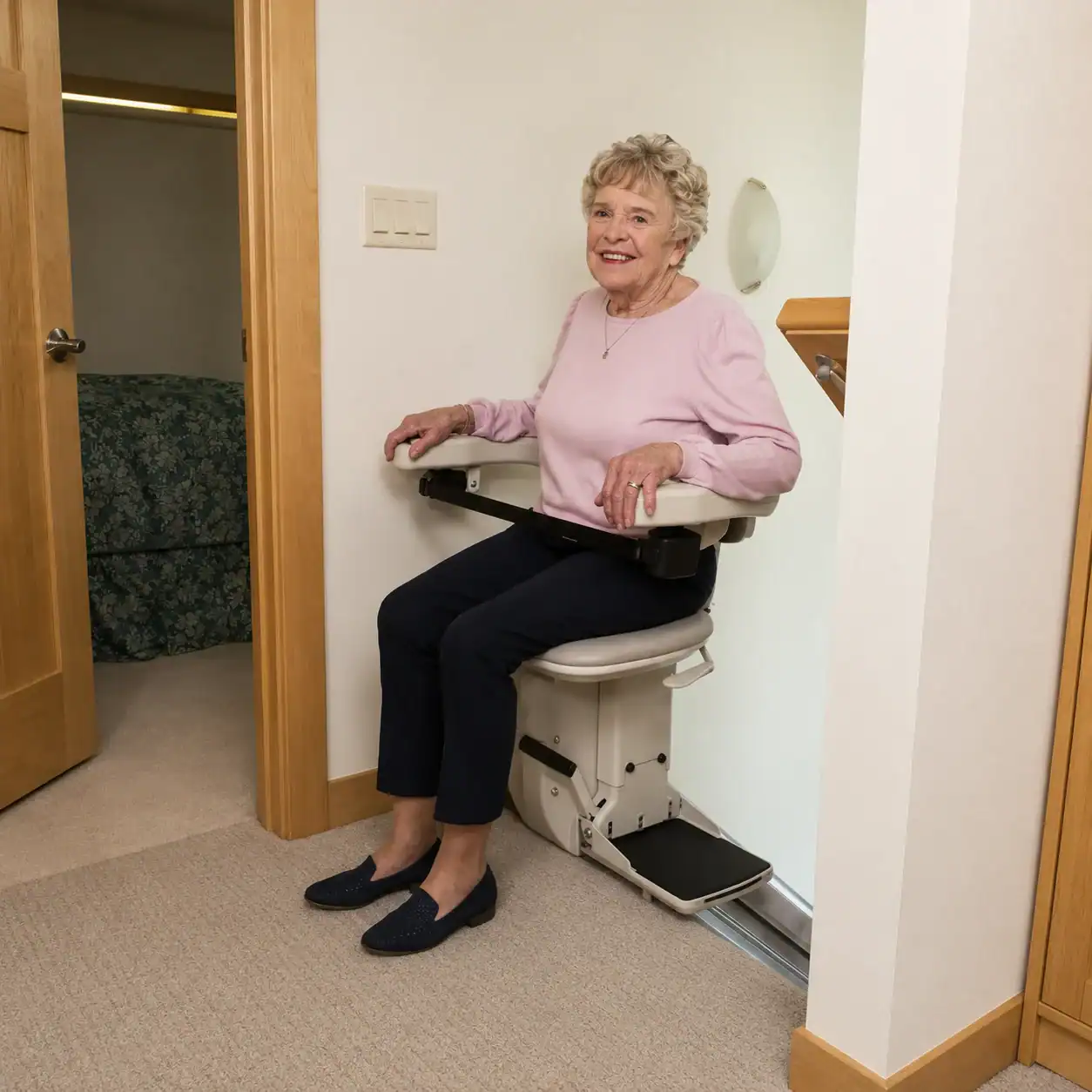
2. Can the user safely sit down, ride, and stand back up?
A stairlift works best when the user can transfer on and off the seat safely.
That makes this a key question for upstairs access planning. If sitting, standing, or turning at the top of the stairs is difficult, comfort and transfer support become major parts of the decision. In some homes, another accessibility solution may be worth comparing if wheelchair access must remain continuous.
A useful question to ask is: Will this model support the way the user actually gets on and off the lift each day?
3. Is there enough space at the top and bottom of the stairs?
Landing space matters more than many people expect.
The user needs enough room to approach the stairlift, sit down safely, and step away comfortably at the other end. This becomes especially important when a hallway is tight, a doorway is nearby, or the top landing needs a safer exit position.
Ask whether the recommended model allows for:
- Safe approach at the bottom
- Safe exit at the top
- Seat positioning that reduces awkward turning
- Folded storage when the lift is not in use
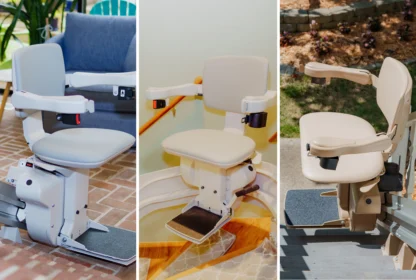
4. What features will make the ride more comfortable?
Comfort affects whether the stairlift will actually be used consistently.
Ask about:
- Seat size
- Back support
- Armrest design
- Footrest position
- Seat swivel function
- Ride smoothness
This is especially important if the user will rely on the lift every day. A model that technically fits the stairs is not always the one that feels best for regular use.
5. Which controls will be easiest to use every day?
Controls should feel simple, predictable, and easy to reach.
Some users care most about large, intuitive controls. Others need something that feels easier on the hands. Households with more than one user may also want to ask about call-send controls so the lift can be moved to the needed floor.
A good stairlift consultation should not skip this point. Daily ease of use matters just as much as the rail design.
6. What happens if the power goes out?
Power backup is one of the most practical stair safety questions to ask.
If the stairlift is needed every day, it is important to understand how the unit operates when household power is interrupted, how charging works, and what the user should expect during an outage.
Ask:
- Does the model use a battery system
- Where does it charge
- How does it behave during a power interruption
- What should the user do if the lift stops unexpectedly
7. What maintenance should be expected?
Maintenance should be discussed before the model is chosen, not after installation.
Ask what routine service looks like, what signs may indicate the lift needs attention, and how support is handled if something changes over time. This helps set realistic expectations and makes it easier to compare models with long-term use in mind.
It is also smart to ask who to call for service and what kind of follow-up support is available after installation.
Questions to Ask During a Stairlift Consultation
A good consultation should leave you with more clarity, not more guesswork.
Bring these questions with you:
| Question | Why It Matters |
|---|---|
| Which model best fits this staircase layout? | Helps match the rail system to the actual stair shape |
| Will the user be able to transfer on and off safely? | Keeps the recommendation focused on daily use |
| How much landing space is needed at the top and bottom? | Reduces the chance of an awkward or unsafe exit |
| Which comfort features are worth prioritizing? | Helps compare models beyond basic movement |
| Which controls are easiest for this user? | Improves confidence and day-to-day usability |
| What happens during a power outage? | Clarifies backup expectations and peace of mind |
| What maintenance and service should I expect? | Supports a better long-term decision |
| Is a stairlift the best fit, or should we compare another option? | Encourages the right recommendation, not a rushed one |
Quick Stairlift Decision Table
Use this table as a simple pre-consultation checklist:
| Decision Area | What to Review Before Choosing a Model |
|---|---|
| Staircase shape | Straight, curved, narrow, or landing-based layout |
| User movement | Ability to sit, stand, turn, and transfer safely |
| Landing space | Safe entry and exit room at both ends |
| Comfort | Seat shape, armrests, footrest, and ride feel |
| Controls | Ease of use, visibility, and reach |
| Power needs | Charging setup and outage behavior |
| Maintenance | Service expectations and support after install |
When a Stairlift Is Usually a Strong Fit
A stairlift is often a strong fit when the main problem is using the stairs safely, the user can transfer on and off the seat, and the goal is to make everyday movement easier without major structural changes.
It may be worth comparing other options when the home needs wheelchair access between levels without transferring, or when the access challenge goes beyond the staircase itself.
That is why a local consultation is so useful. The best recommendation should be based on the stairs, the home, and the person using the solution.
You can start with the Lafayette 101 Mobility team or review general stairlift product options and straight stairlift models before your appointment.
FAQ
What is the first question to ask before buying a stairlift?
Start by asking whether the staircase is straight or curved and whether the user can safely transfer on and off the seat. Those two points shapes most of the next decisions.
How do I know if a stairlift will fit my stairs?
Fit depends on staircase shape, width, turns, landings, and available space at the top and bottom. A consultation helps confirm what is realistic.
What should I ask during a stairlift consultation?
Ask about staircase fit, user comfort, landing space, controls, power backup, maintenance, and whether the recommended model matches everyday use.
Are stairlifts only for straight stairs?
No. Some stairlifts are designed for straight staircases, while others are built for stairs with turns or landings.
Is maintenance something to ask about before installation?
Yes. It is smart to ask about routine service, support, and what to expect over time before choosing a model.
Book a Free Consultation
If you are trying to compare stairlift options in Rayne, the best next step is to get advice based on the actual staircase and the person who will use it.
Book a Free Consultation with 101 Mobility Lafayette, or explore stair access solutions to get familiar with the options before your appointment.