Stairlift Questions in Brusly: What to Ask Before Choosing a Model
Choosing a stairlift is easier when you know what to ask before the consultation starts. For many Brusly homeowners and families, the real issue is not whether a stairlift sounds helpful. It is whether a specific model will fit the staircase, support the user comfortably, and make daily movement safer without creating new obstacles.
The right questions can help you avoid guesswork, compare options more clearly, and walk into a stairlift consultation with confidence.
Start With the Staircase, Not the Catalog
Before comparing features, start with the stairs themselves.
A stairlift is not a one-size-fits-all product. The staircase shape, the available landing space, and the user’s transfer needs all affect which model may be appropriate. A straight staircase usually leads to a different solution than one with turns, intermediate landings, or unusual angles. Outdoor stairs also bring different planning considerations than indoor stairs.
That is why the best first step is not asking, “What is the best stairlift?” It is asking, “What fits this staircase and this user?”
Stairlift Questions in Brusly Homeowners Should Ask First
Use these stair safety questions to guide the conversation.
1. Is the staircase straight, curved, narrow, or split by a landing?
This is the first filter.
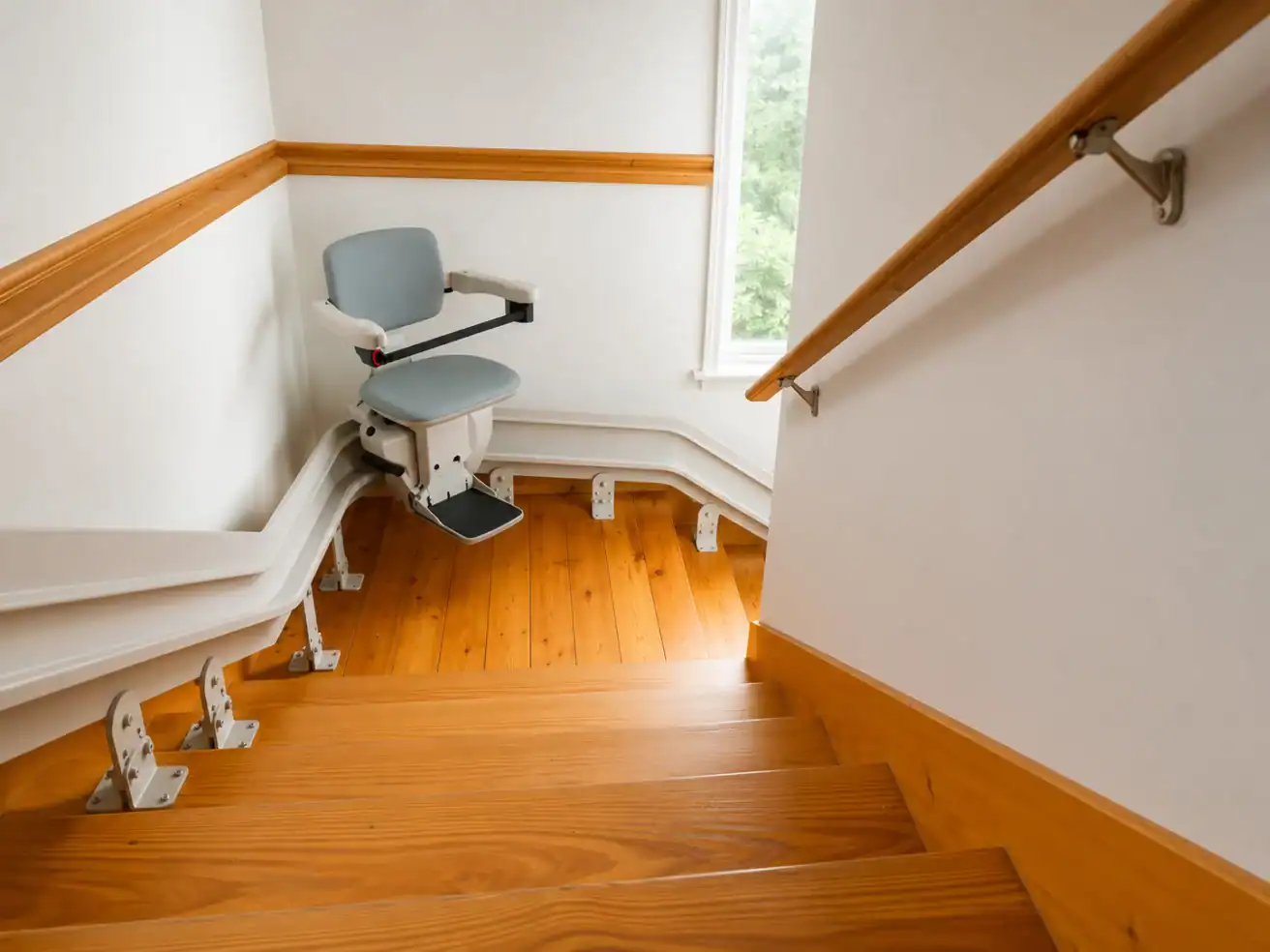
Ask whether the staircase requires a straight or curved rail and whether there are any tight turns, doorways, trim, or other obstructions that could affect installation. A model that works on one staircase may not work on another, even if both are inside similar homes.
2. Will the user be comfortable getting on and off the stairlift?
A stairlift is not just about travel up and down the stairs. It also has to support safe transfers at the top and bottom.
Ask about seat height, armrest support, footrest position, and how easy it is to sit down and stand up. If the user has balance concerns, joint pain, or limited leg strength, comfort and transfer support matter just as much as the ride itself.
3. Is there enough room at the top and bottom landing?
Landing space is one of the most important details to review.
Ask where the user will get on and off the stairlift and whether the chair will leave enough clear space for safe entry and exit. A good fit should support safer upstairs access without creating crowding at the landing.
4. Will the stairlift leave enough room for other people to use the stairs?
In many homes, the staircase still needs to work for everyone else.
Ask whether the seat, armrests, and footrest fold up, and whether the parked position helps keep the staircase usable when the lift is not in use. This is especially helpful in shared living spaces.
5. Are the controls easy to use every day?
Ease of use should be simple, not stressful.
Ask how the rider sends the stairlift up or down, how the seat is operated, and whether the controls are manageable for someone with limited hand strength or dexterity. This is a key part of any stairlift consultation because everyday usability affects long-term satisfaction.
6. What happens if the power goes out?
This is a practical question many buyers forget to ask.
You want to understand how the lift is powered, what backup capability may be available, and what the user should expect during an outage. Reliability matters because the stairlift may become part of the user’s daily routine.
7. What service and maintenance should be expected?
A stairlift is not just a purchase. It is an installed accessibility solution.
Ask what routine maintenance may be needed, how service is handled if a problem comes up, and what support is available after installation. Clear service expectations can make a big difference in peace of mind.
8. Is this the right solution for the user’s needs now and later?
Sometimes the best question is the broadest one.
Ask whether the recommended stairlift fits the user’s current mobility level and whether it still makes sense if needs change over time. A good recommendation should account for both today’s challenge and the near-term future.
Quick Comparison Table: What to Check Before Choosing a Model
| Question | Why It Matters | What to Listen For |
|---|---|---|
| What type of staircase is this? | Determines the basic model category | Straight, curved, outdoor, or complex layout |
| Is boarding and exiting comfortable? | Supports safer daily use | Transfer ease, seat position, arm support |
| Is there enough landing space? | Reduces crowding and fall risk | Clear top and bottom access |
| Will the lift fold when not in use? | Helps preserve stair access | Fold-up seat, arms, and footrest |
| Are the controls easy to operate? | Affects independence and confidence | Simple call/send and rider controls |
| What is the power setup? | Helps plan for reliability | Practical explanation of power needs and backup operation |
| What service is available after installation? | Sets ownership expectations | Maintenance guidance and service support |
| Is this the best fit for long-term needs? | Prevents short-term decisions | Recommendation tied to mobility goals |
What To Prepare Before a Stairlift Consultation
A little preparation can make the consultation more useful.
Bring or note:
- A few photos of the staircase from the top and bottom
- Any details about turns, narrow spots, or nearby doorways
- Who will use the stairlift most often
- Any concerns about balance, transfers, or seating comfort
- Questions about daily operation, service, and future needs
This helps move the conversation from general interest to practical decision-making.
When a Stairlift May Not Be the Only Option
A stairlift is often the right answer for stairs inside or outside the home, but it is not the only accessibility solution a household may consider.
If the issue extends beyond the staircase itself, such as entry access or broader multi-level mobility planning, it can help to ask whether another solution should also be considered. The goal is not to force a product into the space. It is to find the option that best matches the home and the user.
Key Takeaways
- The best stairlift choice starts with the staircase layout and the user’s daily needs.
- Landing space, transfer comfort, and control ease are just as important as model type.
- Service, maintenance, and power questions should be part of the decision early.
- A strong consultation should make the process clearer, not more confusing.
FAQ
What is the most important question to ask before buying a stairlift?
Ask whether the recommended model truly fits the staircase and the user. That keeps the conversation focused on real function instead of generic features.
Can a stairlift work on a staircase with turns?
It can, but the staircase shape needs to be reviewed carefully. Straight and curved staircases usually require different planning.
What should families ask during a stairlift consultation?
Ask about staircase fit, rider comfort, landing space, controls, power setup, folding features, and service after installation.
Will a stairlift block the stairs?
That depends on the staircase and the model. Many homeowners ask whether the seat and footrest fold to help keep the stairs more open when the unit is parked.
Is a stairlift only for seniors?
No. A stairlift may help anyone who has difficulty using stairs safely, including people recovering from surgery, living with limited mobility, or planning ahead for easier upstairs access.
Book a Free Consultation
If you are comparing stairlift options in Brusly, the best next step is a consultation based on the actual staircase and the actual user. Explore local stairlift solutions through the Baton Rouge stairlift page or visit 101 Mobility Baton Rouge to Book a Free Consultation.