Stairlift Fit in Denham Springs: What a Professional Installation Should Include
When I evaluate stairlift fit in Denham Springs, I’m looking at much more than whether a rail can physically be installed on the stairs.
A good stairlift has to fit the staircase, the person using it, the landings, and the way the household moves through the space every day. Just as important, the installation should include careful planning, professional setup, clear training, and support after the work is complete.
That’s why Ellen C.’s experience stands out to me. She said her stairlift was delivered and installed “as promised,” and that our team carefully explained how to operate it and use its safety features.
That is what I believe a complete stairlift installation should look like.
How I Evaluate Stairlift Fit in Denham Springs
Every project starts with the home and the person who will use the equipment.
During a stairlift assessment in Denham Springs, I look at several practical questions:
| What I Evaluate | Why It Matters |
|---|---|
| Staircase shape | Determines whether a straight or custom-curved solution is appropriate |
| Stair width | Helps determine available clearance for the lift and other people using the stairs |
| Top and bottom landings | Affects how comfortably the user can board and exit |
| Nearby doors and walkways | Helps prevent the rail or parked chair from unnecessarily interfering with traffic |
| User comfort | Seat position, controls, boarding, and exiting should work for the individual |
| Daily household use | The installation should preserve practical use of the staircase whenever possible |
| Future accessibility needs | Helps us consider whether other areas of the home may also need attention |
I don’t like treating accessibility equipment as one-size-fits-all. The goal is to recommend something that works in the actual home, not simply something that looks appropriate on paper.
Families who are beginning that process can also review our stair access solutions before an in-home assessment.
Bruno Elan vs. Harmar Pinnacle: How I Compare the Fit
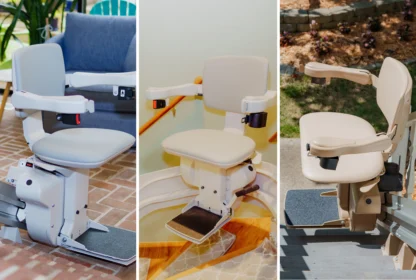
Two options I may discuss for a straight residential staircase are the Bruno Elan Straight Rail Stairlift and the Harmar Pinnacle.
I don’t begin by asking which brand is “best.” I start with which solution makes the most sense for the staircase and the person using it.
My comparison considers factors such as:
- available stair and landing space
- where the chair will park
- how easily the user can sit down and stand up
- control placement
- folding components and clearance
- boarding and exiting at the upper landing
- the user’s size and comfort needs
- how the rest of the household uses the staircase
The Harmar Pinnacle family, for example, offers multiple configurations, so the appropriate version depends on the user’s needs and the installation environment.
The Bruno Elan is another straight-rail option I may evaluate when the staircase configuration and customer needs make it a good candidate.
Straight vs. Curved Stairlift
The first distinction is simpler than the brand comparison.
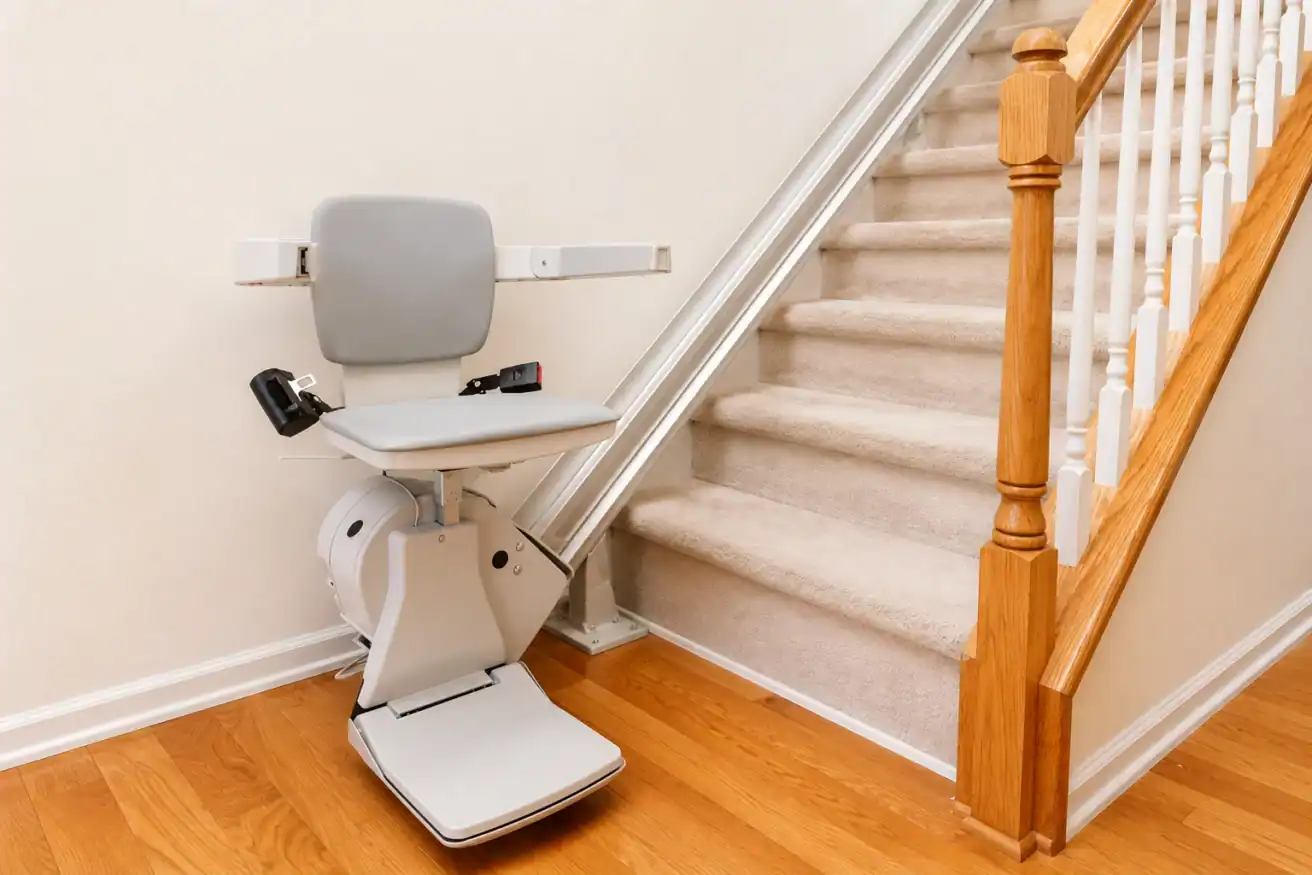
A straight stairlift is designed for a staircase that follows a continuous straight path.
A curved stairlift is designed for stairs with turns, curves, intermediate landings, or configurations requiring a custom rail.
That means the right answer to a straight vs. curved stairlift question should come from the staircase itself. If the rail needs to follow bends or turns, trying to force a straight solution into the space is not the right approach.
Professional Stairlift Installation Planning Starts Before Installation Day
Good stairlift installation planning happens before anyone arrives with equipment.
Measurements need to be accurate. I also want to understand what happens around the staircase throughout a normal day.
For example, is there a doorway near the bottom landing? Does the stairway open into a frequently used hallway? Is there enough room at the top for the user to get on and off comfortably?
Those details can influence rail placement, parking position, and whether certain configuration options should be considered.
I also explain the recommended solution before installation so the customer understands what is being installed and why.
For households still comparing options and budgets, our stairlift pricing information can provide a useful starting point before a personalized recommendation.
What Should Happen During a Professional Stairlift Installation?
Once installation day arrives, the process should feel organized and predictable.
A complete installation should generally include four stages:
1. Careful Setup
The installer should confirm the planned location and prepare the work area while respecting the customer’s home.
2. Precise Installation
The rail and stairlift need to be installed according to the selected system and the staircase measurements established during planning.
The goal is a secure installation that also accounts for usable staircase and landing space.
3. Operational and Safety Checks
Before the customer begins using the stairlift, the installer should verify that the system operates as intended and that relevant controls and safety functions are working properly.
4. Customer Walkthrough
Installation isn’t complete simply because the equipment moves.
The person who will use the stairlift—and a family member or caregiver when appropriate—should know how to operate it confidently.
Training Is Part of the Installation
This was an especially important part of Ellen C.’s experience.
She specifically noted that our team explained both operation and safety features. I think that distinction matters.
A professional walkthrough may cover:
- how to start and stop the stairlift
- how to use the primary controls
- proper boarding and exiting
- how and when to use the seat belt
- how the swivel seat operates
- how folding components work
- how remote controls work, when included
- where the stairlift charges
- how applicable obstruction-detection features function
- what to do if the lift does not operate as expected
I encourage customers to operate the stairlift during the walkthrough rather than simply watching a demonstration.
The goal is for normal operation to feel familiar before we consider the project finished.
A Stairlift Installation That Was Completed as Promised
Ellen C. described her stairlift as being delivered and installed “as promised.” She also appreciated that the team carefully explained its operation and safety features.
That is a short review, but it describes several things I consider essential.
The equipment arrived as expected. The installation was completed. The customer wasn’t left to figure out the stairlift alone afterward.
For me, that is the standard a Denham Springs household should expect from a professional stairlift project: clear planning, proper installation, practical instruction, and support.
Customers who want to see more firsthand experiences can visit our 101 Mobility reviews.
I Also Look Beyond the Staircase
Sometimes a stairlift solves the biggest accessibility problem in a home, but not the only one.
During a consultation, I pay attention to nearby barriers that may affect the person’s daily routine.
A raised doorway threshold, for example, may create difficulty for someone using a walker or wheeled mobility device. Depending on the situation, an EZ-ACCESS threshold ramp may be worth considering.
Bathrooms deserve the same attention. Grab bars and other appropriate bathroom-safety products can help address areas where slippery surfaces, transfers, and tight spaces may create additional challenges.
I don’t recommend adding products simply for the sake of adding them. The point is to identify real barriers and decide which improvements would make daily movement safer and easier.
Stair Safety Should Work in Everyday Life
A stairlift can address one specific mobility challenge, but stair safety is part of a larger home-safety picture.
The National Institute on Aging’s fall-prevention guidance encourages older adults and families to look at the home environment as part of reducing fall risks.
NIA also recommends practical home measures such as maintaining good lighting around stairs and addressing hazards throughout frequently used living areas.
That broader approach makes sense to me.
When I evaluate an accessibility solution, I want to understand the complete path the customer takes—from getting out of a chair, to approaching the staircase, to reaching the next floor, bathroom, bedroom, or entrance.
The equipment should support real daily routines.
What Happens After the Stairlift Is Installed?
I believe customers should know who they can contact after installation.
Questions can come up after someone has used a stairlift for several days or months. Equipment can also eventually need inspection, maintenance, troubleshooting, or repair.
That is why I consider after-installation support part of the overall decision—not an afterthought.
101 Mobility provides ongoing service and support for accessibility equipment, giving customers a place to turn if their needs change or a problem develops.
A stairlift is something a customer may depend on every day. The relationship shouldn’t end when the installer leaves the driveway.
Professional Stairlift Installation: What to Expect at a Glance
| Stage | What a Complete Process Should Include |
|---|---|
| Assessment | Staircase, landings, clearances, user needs, and household routines |
| Recommendation | Appropriate stairlift type and model based on the assessment |
| Planning | Accurate measurements, rail placement, scheduling, and customer expectations |
| Installation | Professional fitting, setup, and testing |
| Training | Controls, boarding, exiting, operation, and relevant safety features |
| Support | A clear path for questions, maintenance, and future service |
The process is sequential: Assess → Recommend → Install → Train → Support.
Frequently Asked Questions
How do you determine whether a stairlift will fit my Denham Springs home?
I start by assessing the staircase shape, available width, top and bottom landings, nearby doors or walkways, and the needs of the person who will use the stairlift. The goal is to determine both physical fit and practical everyday usability.
How do I know if I need a straight or curved stairlift?
A straight stairlift is generally appropriate when the staircase follows one continuous straight path. If the stairs curve, turn, or require the rail to travel around an intermediate landing, a custom curved solution may be necessary.
Does a stairlift require major remodeling?
Not every stairlift project requires major structural remodeling. The specific installation depends on the staircase and selected equipment, which is why an in-home assessment and accurate measurements should come first.
What should the installer teach me before leaving?
You should understand how to operate the stairlift, board and exit safely, use the seat belt and controls, operate relevant folding or swivel components, use remotes when supplied, and understand applicable safety features. You should also know who to contact if you need service.
Should I consider other accessibility improvements at the same time?
Sometimes. If the assessment reveals additional barriers—such as difficult thresholds or bathroom-safety concerns—it can make sense to discuss solutions such as EZ-ACCESS threshold ramps or appropriate bathroom-safety products. Recommendations should be based on actual needs in the home.
Can I compare options before making a decision?
Absolutely. I prefer helping customers understand why one option fits their situation better than another. A consultation should help you compare the space, equipment, comfort, daily use, and long-term support—not pressure you into a particular product.
Start With the Right Stairlift Assessment
If you’re considering a stairlift for a Denham Springs home, I recommend starting with the space rather than the product.
I’ll look at the staircase, the landings, how the person will use the lift, and how the installation will affect everyday movement through the home. From there, we can compare appropriate options such as the Bruno Elan, Harmar Pinnacle, or another solution that better matches the situation.
As part of 101 Mobility of Baton Rouge, I help families throughout Denham Springs and the surrounding area work through those decisions from assessment through installation and support.
Book a Free Consultation to have your staircase and accessibility needs professionally evaluated.
About the Author
Jonas Boutte has hands-on accessibility and mobility industry training from leading manufacturers, including Bruno, Harmar, Stiltz, Staying Home, EZ-ACCESS, and National Ramp. He helps customers evaluate, select, and coordinate customized accessibility solutions—from stairlifts and ramps to platform lifts and home elevators—with a focus on education, practical recommendations, safety, and independence.