Stairlift Fit in Broussard: What a Professional Installation Should Include
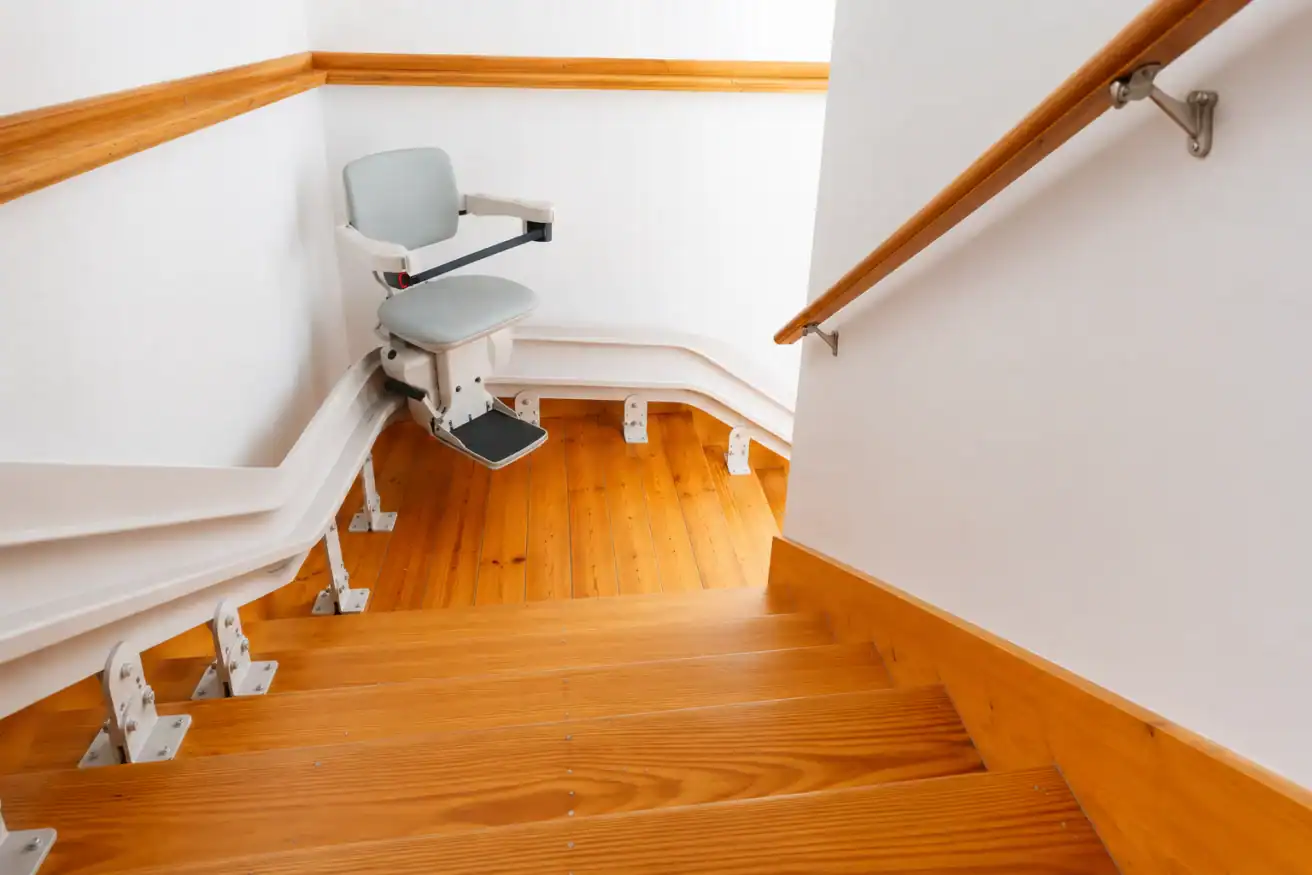
A good stairlift fit in Broussard is about much more than finding a chair that travels up and down the stairs.
The staircase has to support the right rail configuration. The seat and controls need to work comfortably for the person using them. The lift needs enough clearance at the top and bottom. And after installation, the user should understand exactly how to operate the stairlift and its safety features.
That is why I look at the complete installation—not just the product.
For Broussard homeowners considering a stairlift, a professional process should include an in-home assessment, precise measurements, thoughtful product selection, installation planning, testing, user training, and reliable support afterward.
What Determines Stairlift Fit in a Broussard Home?
I evaluate stairlift fit in two ways: fit for the staircase and fit for the person using it.
A staircase may appear straightforward, but several details can affect the installation:
- Whether the stairs run straight or change direction
- Stair width and length
- Available room on the top and bottom landings
- Doors, hallways, or walkways near the rail
- Which side of the stairs provides the best installation position
- How much room the stairlift occupies when folded
- The user’s height, weight, seating position, and transfer needs
- Whether other people regularly use the staircase
These factors help determine both the stairlift category and the specific model that makes sense.
For families researching options throughout Broussard and the surrounding Lafayette area, our 101 Mobility of Lafayette team can evaluate those details during an in-home consultation.
Start With a Professional Stairlift Assessment in Broussard
A professional stairlift assessment in Broussard should happen before the final product decision.
During the assessment, I want to understand three things:
- What does the staircase require?
- What does the person using the stairlift require?
- How will the installation affect everyday movement through the home?
Measurements are important, but measurements alone do not provide the whole answer.
For example, a rail may physically fit beside a staircase while creating an inconvenience near a doorway at the bottom. A chair may fit the stairs while providing the wrong seating position for its primary user. A landing may have enough room for the lift but not enough room for a comfortable transfer.
Professional stairlift installation planning considers all of those conditions together.
Straight vs. Curved Stairlift: Determine the Staircase First
One of the first decisions is whether the home requires a straight or curved rail.
A straight stairlift is generally intended for a staircase that travels directly from one landing to another without turns.
A curved stairlift is designed for staircases that change direction, wrap around a landing, or require a rail specifically configured around the staircase.
That distinction should be established before comparing individual models.
101 Mobility offers stair access solutions for straight, curved, and outdoor staircases, so the recommendation can begin with the home’s actual configuration instead of trying to make the wrong type of lift fit the space.
Straight vs. Curved Stairlift at a Glance
| Staircase condition | Typical solution |
|---|---|
| One uninterrupted straight flight | Straight stairlift |
| 90-degree or 180-degree turn | Curved stairlift |
| Intermediate landing requiring the lift to continue | Often a curved stairlift |
| Straight outdoor staircase | Outdoor straight stairlift |
| Curved outdoor staircase | Outdoor curved stairlift |
The purpose of this first step is simple: choose the right category before worrying about individual features.
Bruno Elan vs. Harmar Pinnacle for a Straight Broussard Staircase
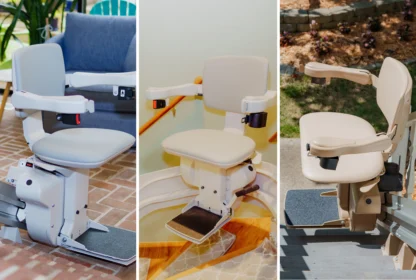
For a straight indoor staircase, two options I may evaluate are the Bruno Elan Straight Rail Stairlift and the Harmar Pinnacle.
Both are straight-rail stairlift families, but they offer different configurations.
| Fit consideration | Bruno Elan | Harmar Pinnacle |
|---|---|---|
| Staircase type | Straight indoor stairs | Straight stairs |
| Standard/model capacity | 300 lbs. | SL300: 300 lbs.; SL600: 350 lbs.; SL600HD: 600 lbs. |
| Seat | 15¾ in. wide × 16¾ in. deep | SL300/SL600: 19 in. × 16 in.; SL600HD: 18.5 in. × 14 in. |
| Space characteristics | Vertical rail installs within approximately 5 in. of the wall | Compact folded profiles vary by model |
| Folding components | Flip-up arms, seat, and footrest | Flip-up arms, seat, and footrest |
| Top-landing access | Offset swivel seat | Offset swivel seat |
| Controls | Armrest control and wireless remotes | Armrest rocker switch and wireless remotes |
| Obstruction protection | Sensors | Sensors |
| Power | Battery-operated | 24V DC battery system |
| Best reason to evaluate it | Straight staircase where a compact, straightforward configuration fits the user | Straight staircase where model choice, folded footprint, or higher-capacity options are important |
The important point is that there is no universally better stairlift.
A Bruno Elan can make excellent sense for one household, while a Harmar Pinnacle configuration may be better for another. The correct recommendation depends on measurements, user fit, clearance, capacity requirements, and daily routines.
A Broussard Household Example: Evaluating Space and Daily Use
Consider a hypothetical Broussard home with one straight flight of stairs connecting the main living area to upstairs bedrooms.
The staircase itself appears suitable for either the Bruno Elan or an appropriate Harmar Pinnacle model.
That does not mean the decision is finished.
Suppose there is a hallway running past the bottom of the staircase. In that situation, I would pay particular attention to the folded footprint of the chair and rail. If there is a nearby doorway, I would also determine whether the rail could interfere with normal traffic and whether a folding-rail configuration should be considered.
At the top, I would look at how the user gets on and off the stairlift. A swivel seat can help position the user toward the landing rather than requiring an awkward movement near the staircase.
Then I would evaluate the user.
Does the seat provide a comfortable position? Is the footrest appropriate? Can the user operate the armrest control comfortably? Is the selected model within the appropriate weight capacity? Can the user consistently transfer onto and off the chair?
This is what stairlift fit means in practice. The product, person, staircase, and surrounding space all need to work together.
What Professional Stairlift Installation Planning Should Include
A well-managed stairlift project should follow a clear sequence.
| Stage | What should happen |
|---|---|
| 1. Home assessment | Review the staircase, landings, household traffic, user needs, and potential obstructions. |
| 2. Measurements | Measure the staircase and surrounding clearance needed for the selected system. |
| 3. Product recommendation | Compare appropriate models based on physical fit, user fit, features, and long-term needs. |
| 4. Installation planning | Determine rail position, charging requirements, options, and any clearance considerations. |
| 5. Scheduling | Establish when the approved equipment can be delivered and installed. |
| 6. Professional installation | Secure and configure the system according to the approved layout. |
| 7. Operational testing | Confirm travel, stops, controls, charging, sensors, seat operation, and other installed functions. |
| 8. User training | Demonstrate everyday operation and the installed safety features. |
| 9. Ongoing support | Provide a clear path for maintenance, troubleshooting, repairs, and future service needs. |
Installation Process at a Glance
Assess → Measure → Recommend → Plan → Install → Test → Train → Support
The chair is only one part of that sequence.
A Stairlift Installation That Was Completed as Promised
A verified review published by 101 Mobility illustrates why the service surrounding a stairlift matters.
Customer Ellen C. said the team delivered and installed the stairlift “exactly as promised” and thoroughly explained its operation and safety features.
Her published location is not identified, so I would not present her experience as a Broussard installation. But the lesson is directly relevant to Broussard families comparing stairlift providers.
A professional installation should leave you with more than functioning equipment.
You should know:
- How to start and stop the stairlift
- How the seat and footrest operate
- How to use the seat belt
- How to swivel the seat correctly
- What the obstruction sensors do
- Where and how the lift charges
- How the remote controls work
- What to do if the lift does not operate normally
- Who to contact for service
You can read additional experiences on the 101 Mobility customer reviews page.
Operation and Safety Training Should Be Part of the Installation
Stair safety does not end when the rail is secured.
Before I consider an installation complete, the person using the stairlift—and a family member or caregiver when appropriate—should understand the controls and safety features installed on that particular model.
For the Bruno Elan or Harmar Pinnacle, that may include demonstrating:
- Armrest controls
- Seat belts
- Swivel-seat operation
- Folding components
- Wireless remotes
- Obstruction sensors
- Charging position or charging system
- Safe entry and exit at the landings
The goal is not simply to show that the stairlift moves. The goal is to make sure the user understands how to use it confidently as part of everyday life.
Stairlift installation can address one specific mobility barrier, but fall prevention should be considered more broadly throughout the home. The National Institute on Aging’s guidance on falls and fall prevention is a useful resource for families reviewing other potential risks.
What Happens After Installation?
A stairlift is equipment that may be used every day, so the relationship with the installer should not disappear when the installation appointment ends.
101 Mobility provides service and support for accessibility equipment and includes a One-Year Limited Service Warranty with new products the company sells and installs.
That ongoing support matters because questions can arise later.
You may need help with:
- Troubleshooting
- Equipment maintenance
- Replacement components
- Adjustments
- Repairs
- Changes in the user’s accessibility needs
When comparing stairlift providers, I recommend asking who will support the equipment after installation—not just who can sell it today.
Questions to Ask Before Approving a Stairlift Installation
Before moving forward, a Broussard homeowner should be able to answer these questions:
About the staircase
- Is this staircase straight or curved?
- Is there sufficient space at both landings?
- Will the rail affect a door or hallway?
- How much staircase width remains when the lift is folded?
About the user
- Does the chair fit comfortably?
- Is the weight capacity appropriate?
- Can the user reach and operate the controls?
- Can the user safely transfer at both landings?
About the installation
- Where will the rail be positioned?
- How will the system receive or maintain its charge?
- Are folding components needed?
- What will be tested before the installer leaves?
About support
- What manufacturer warranty applies?
- What service coverage is included?
- Who handles repairs?
- Who should the family call with questions after installation?
That checklist can make a product comparison much more useful than comparing features alone.
Frequently Asked Questions About Stairlift Fit in Broussard
How do I know whether a stairlift will fit my staircase?
A professional assessment should evaluate staircase shape and dimensions, landing space, nearby doors or walkways, rail position, folded clearance, and the needs of the person who will use the lift. A physical fit alone is not enough—the stairlift should also work comfortably in everyday use.
Are stairlift rails attached to the wall?
Straight stairlift rails are generally supported by brackets attached to the stair treads rather than being supported by the wall. The exact installation configuration depends on the selected equipment and staircase.
Do I need a straight or curved stairlift?
A straight staircase without turns will generally use a straight-rail stairlift. A staircase that changes direction or continues around an intermediate landing may require a custom curved rail. A professional assessment should confirm the correct category.
Is the Bruno Elan or Harmar Pinnacle better?
Neither model is automatically better for every home. The Bruno Elan is a straight stairlift with a 300-pound capacity and a compact vertical rail design. The Harmar Pinnacle line offers several configurations, including higher-capacity models. The better option depends on the staircase, space, user fit, and required features.
Does stairlift installation include training?
It should. A professional installation should include testing and an explanation of the controls, seat operation, safety features, charging, remotes, and normal everyday use before the installer leaves.
What should happen after a stairlift is installed?
The homeowner should know who provides service, how warranty support works, what basic maintenance may be needed, and whom to contact if the equipment requires troubleshooting or repair.
Get a Professional Stairlift Fit Assessment in Broussard
The best stairlift decision is not based on a model name alone.
It starts with the person who will use the lift, the shape and dimensions of the staircase, the available landing space, and the way the household moves through the home every day.
From there, the right stairlift can be selected, installed, tested, and explained properly.
If you are comparing stairlift options in Broussard, book a free consultation with 101 Mobility. We can assess the staircase, discuss options such as the Bruno Elan and Harmar Pinnacle when appropriate, and help determine the configuration that works for your home and daily needs.
About the Author: Jonas Boutte
Jonas Boutte is the owner of 101 Mobility of South Louisiana and an accessibility specialist serving Lafayette and surrounding communities. With hands-on manufacturer training, he helps families evaluate stairlifts and other home accessibility solutions from consultation and product selection through installation coordination and ongoing support.