Senior Bathroom Renovation Cost: What You'll Actually Pay for Safety Modifications
Quick Takeaways:
- Buying a stairlift online typically shows a lower sticker price, but installation, customization, and service are almost always excluded.
- Third-party installation fees for online purchases commonly run $200 to $600 or more, and that assumes a standard staircase.
- Online stairlift warranties are usually manufacturer-only, meaning no local technician if something goes wrong after installation.
- Local stairlift dealers include in-home assessment, custom track fitting, professional installation, and ongoing service in a single quoted price.
- The right question is not which costs less to buy — it is which costs less to own over five or ten years.
If you are researching senior bathroom renovation cost, the answer depends entirely on scope. The total range runs from $150 for a single professionally installed grab bar to $15,000 or more for a complete walk-in shower conversion with structural modifications. Most bathrooms that need meaningful safety upgrades fall somewhere in the $500 to $3,000 range for targeted modifications.
This article breaks down the real cost of each type of modification, explains what drives the variation in quotes, and gives you a prioritized starting point based on safety impact per dollar.
The Cost of Common Bathroom Safety Modifications
The table below covers the most common senior bathroom safety modifications with typical installed cost ranges. Labor is included in all ranges unless noted.
| Modification | Low End | High End | Notes |
|---|---|---|---|
| Grab bar installation (per bar) | $150 | $400 | Varies by wall type and location |
| Toilet safety frame | $40 – $80 | No installation | No installation required |
| Shower bench (built-in) | $200 | $600 | Fold-down bench adds more |
| Handheld showerhead | $50 – $150 | DIY-friendly | Minimal labor if existing plumbing fits |
| Non-slip flooring (per sq ft) | $3 | $12+ | Scope varies widely |
| Tub-to-shower conversion | $1,500 | $15,000+ | Plumbing and tile work involved |
| Walk-in shower (full install) | $3,000 | $15,000+ | Structural and waterproofing scope |
| Walk-in tub | $2,000 | $10,000+ | Installation and plumbing included |
These ranges reflect typical professional installation across many U.S. markets and are meant for planning rather than as a firm quote. Labor costs vary by region; markets with higher construction costs will trend toward the high end of each range. Material selection also affects the total, and decorative or ADA-rated stainless grab bars cost more than standard chrome bars, but they hold better under load and last longer.
What Drives the Cost Variation
Two quotes for “bathroom safety modifications” can look very different depending on four main variables.
- Scope: A single grab bar near the toilet is very different from a full bathroom accessibility renovation. Make sure any quote you are comparing covers the same scope.
- Structural work: Doorway widening, subfloor repair, or moving a toilet or shower drain adds significant cost. If the current bathroom layout does not allow for safe access, structural changes may be unavoidable.
- Material grade: ADA-rated grab bars, slip-resistant tile, and barrier-free shower bases cost more than standard alternatives,and perform better long-term. This is usually where value-conscious buyers get the most return on a modest upgrade.
- Wall construction: Grab bar installation in tile over drywall is different from installation in cement board or steel stud walls. Installation in walls without blocking requires finding studs or adding backing which affects labor time.
DIY vs. Professional Installation: The Real Trade-off
Some items require no installation at all: toilet safety frames, handheld showerheads (if the existing fitting matches), and shower benches that hang from the tub rail. These are reasonable DIY purchases.
Grab bars are where DIY creates real risk. A grab bar that is not anchored into studs or solid blocking will pull free under load which is exactly the scenario it was supposed to prevent. Proper installation means locating studs, drilling at the correct angle, and torquing to spec. A poorly installed grab bar can give a false sense of security, so this is one place where professional installation really pays off.
Walk-in shower conversions involve plumbing, waterproofing, and potentially subfloor work. For most homeowners, this is best handled by a professional. The cost of fixing a failed waterproofing job, water damage to the subfloor and adjacent walls, far exceeds the cost of professional installation.
Where to Start: Safety Impact per Dollar
If budget is a priority, here is how to sequence the modifications for the most safety return on initial spend.
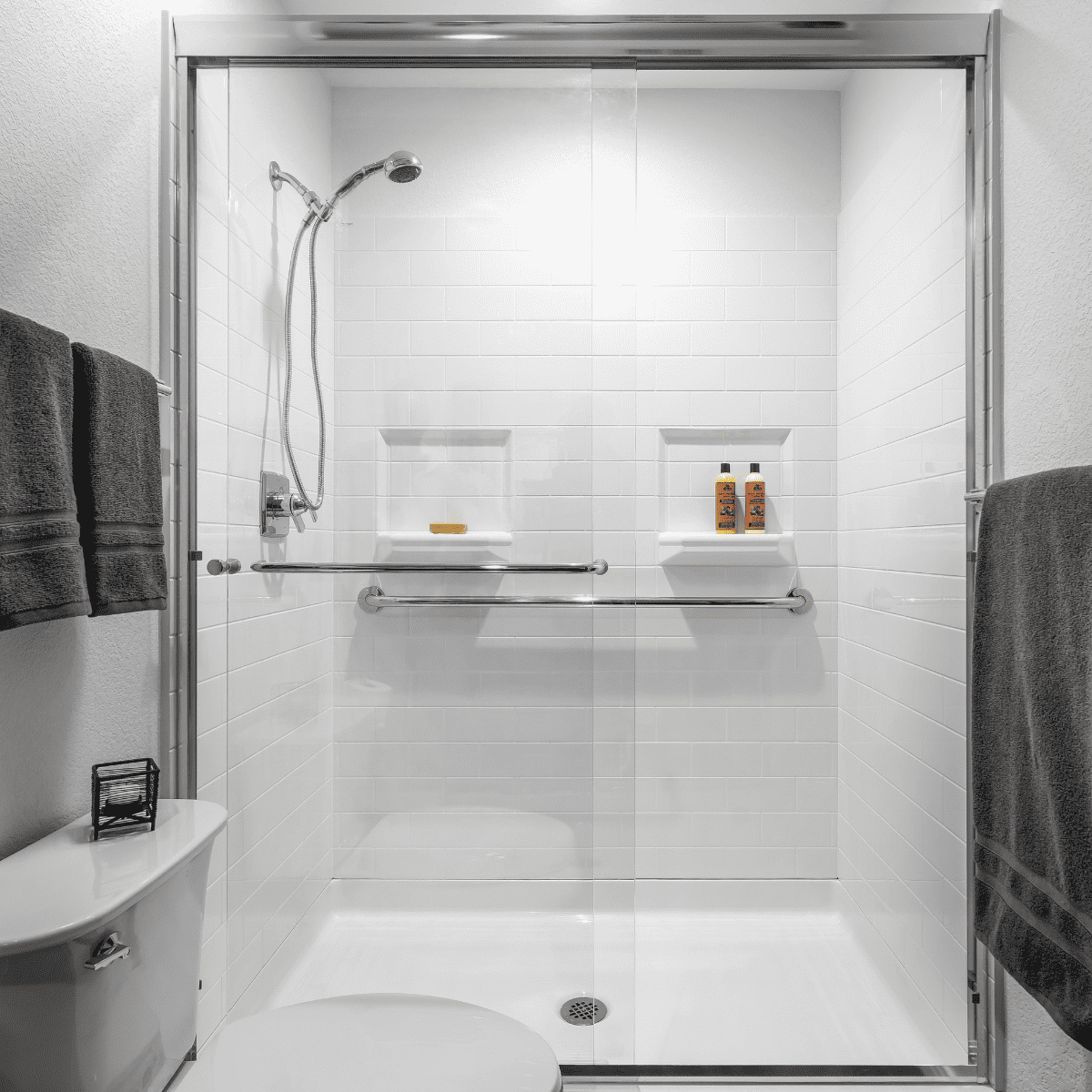
- Grab bars near the toilet and in the shower or tub: High fall-prevention impact, relatively low cost, professionally installed. Start here.
- Non-slip bath mat or adhesive strips in the tub and shower floor: Very low cost, meaningful friction improvement. Not a substitute for structural changes but useful immediately.
- Toilet safety frame: Low cost, helps with sit-to-stand mechanics. Appropriate for anyone with hip, knee, or lower body strength limitations.
- Handheld showerhead: Low cost, allows bathing from a seated position and reduces the need to reach or stretch.
- Shower bench: Medium cost, important for anyone who cannot stand for the full duration of a shower.
- Tub-to-shower conversion or walk-in shower: Higher cost, but transformative for long-term safety and daily usability. Worth planning for if the current setup is a genuine barrier.
You can browse the full range of bathroom safety products available through 101 Mobility before scheduling a consultation.
Does Insurance Cover Any of This?
The short answer is: sometimes, partially, and it depends on your specific plan and situation.
- Medicare (Part A and B): Standard Medicare generally does not cover home safety modifications or grab bar installation. This includes most bathroom safety equipment.
- Medicare Advantage (Part C): Some plans include home modification benefits. Coverage varies significantly by plan. Call your plan directly and ask specifically about home accessibility modifications.
- VA Benefits: Veterans may qualify for the Specially Adapted Housing (SAH) grant or the Home Improvements and Structural Alterations (HISA) benefit through the VA. These programs cover specific accessibility modifications for qualifying veterans. Because eligibility rules can change, confirm current details directly with the VA.
- Medicaid waiver programs: Some state Medicaid programs include home and community-based services waivers that cover home modifications. Eligibility and scope vary by state.
- Long-term care insurance: Some policies include home modification benefits. Review your policy or contact your insurer directly.
If you think you may qualify for any of these programs, it’s worth confirming coverage in writing before committing to a scope of work. A local dealer can also advise on what documentation is typically required for VA or Medicaid reimbursement claims.
Frequently Asked Questions
What is the cheapest way to make a bathroom safer for seniors?
Grab bars near the toilet and in the shower, combined with non-slip surfaces, provide the highest safety return at the lowest cost. A professional grab bar installation runs $150 to $400 per bar and is completed in a single visit. A toilet safety frame adds under $100 with no installation required. Starting with these two items covers the most common fall scenarios at minimal cost.
How much does grab bar installation cost?
Professional installation typically runs $150 to $400 per bar, depending on wall type, location, and regional labor rates. The bar itself is a fraction of that cost, and most of the price reflects proper anchoring into studs or backing. Installing two bars (toilet and shower) at the same visit is more cost-efficient than two separate appointments.
Is a walk-in shower worth the cost for seniors?
For someone who has difficulty stepping over a tub edge or managing a shower threshold, a walk-in or barrier-free shower is the single highest-impact bathroom modification available. The cost is real, but so is the safety return. A fall in the tub or on a wet floor can be far more expensive, medically and financially, than a conversion done proactively.
Can I get financial help for bathroom modifications?
Potentially yes, depending on your situation. Medicare Advantage plans, VA benefits, state Medicaid waivers, and some long-term care insurance policies may cover part of the cost. Check your specific coverage before planning the scope of work. Your local 101 Mobility representative can walk you through what documentation is typically needed for reimbursement claims.
How long does a bathroom safety modification take?
Grab bar installation is typically completed in a single visit of one to two hours. A full tub-to-shower conversion takes one to three days depending on scope and whether structural work is involved. Walk-in shower installations vary based on complexity. A local provider can give you a specific timeline for your bathroom after an in-home assessment.
Getting an Accurate Quote for Your Bathroom
The ranges in this article are useful for planning, but the only number that actually matters is the one based on your specific bathroom. Wall construction, existing layout, and the modifications that make sense for your parent’s specific mobility situation all affect the final scope and cost.
The fastest way to get that number is a free in-home assessment. No pressure to commit to anything, and you leave with a specific quote for a defined scope of work.
| 101 Mobility provides free in-home consultations for bathroom safety modifications. A specialist will assess your bathroom, walk you through the options that fit your budget and your parent’s needs, and give you a complete written quote. Schedule your free bathroom safety consultation at 101mobility.com/get-free-consultation. |