Caregiver Transfer Planning in Abbeville: How I Plan Handicare-Assisted Transfers at Home
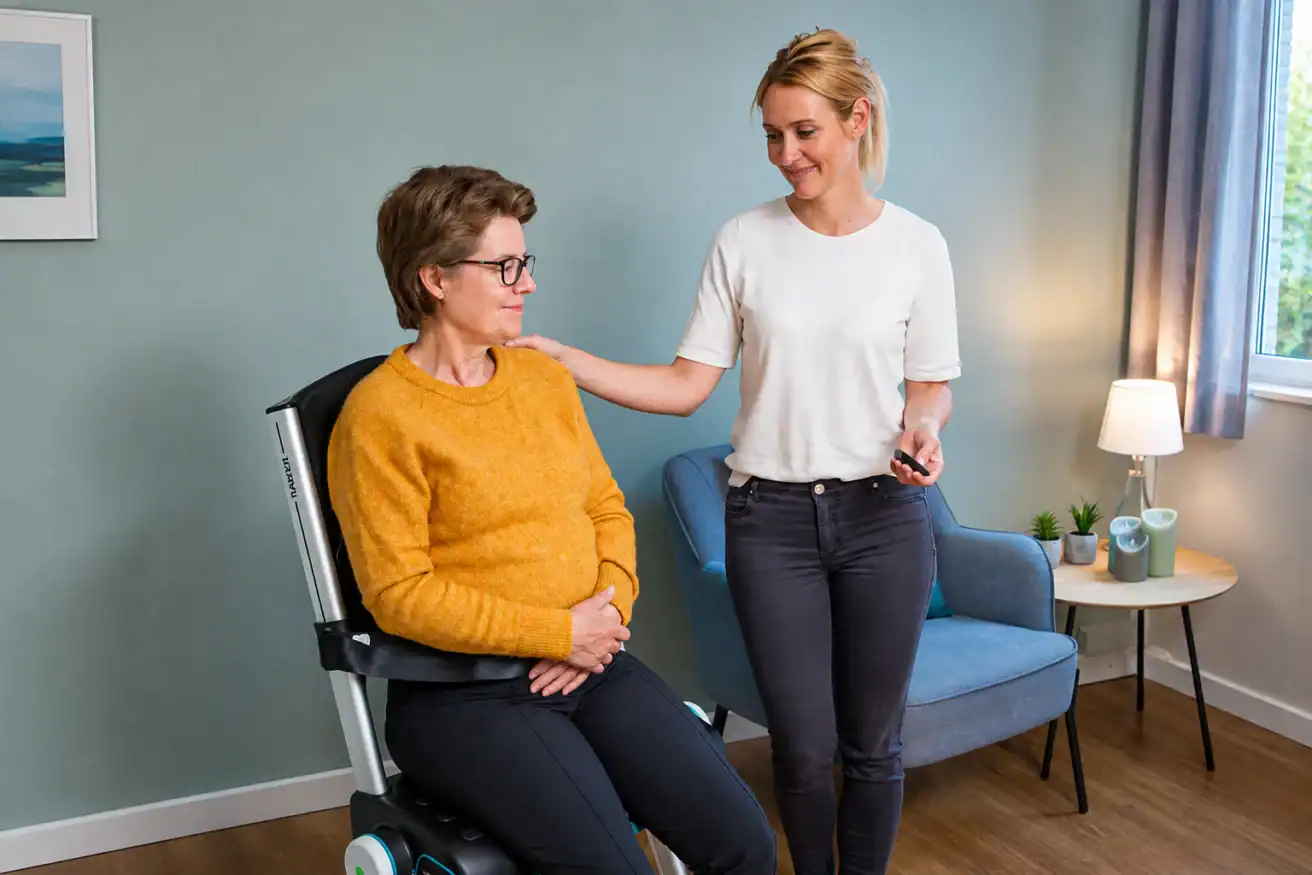
When I help an Abbeville family plan for assisted transfers at home, I do not start by choosing a patient lift. I start by looking at what happens during a normal day.
Where does the person need help moving? How often does that happen? Is the caregiver assisting between the bed and wheelchair, getting into a favorite chair, or managing bedroom bathroom transfers several times each day?
Those details help me determine whether patient-handling equipment may make the routine more manageable—and what type of setup actually fits the home.
For families throughout Abbeville and the surrounding area, 101 Mobility of Lafayette can evaluate the space, discuss the transfer routine, and help identify equipment that makes sense for both the individual and the caregiver.
What Caregiver Transfer Planning in Abbeville Starts With
Good caregiver transfer planning in Abbeville begins with the routine, not the product.
Imagine a family member who receives help moving from bed to a wheelchair in the morning, from the wheelchair to a living-room chair later in the day, and between the chair and bathroom as needed.
That is not one transfer problem. It is a series of connected movements through different spaces.
I want to understand:
- which transfers happen every day
- where each transfer begins and ends
- how much room the caregiver currently has
- what furniture and mobility equipment are involved
- whether doorways or tight turns complicate movement
- whether the same caregiver handles most transfers
- what equipment the family already uses
That gives me a much clearer starting point for a patient lift assessment in Abbeville.
The Six Things I Review During a Home Transfer Assessment
1. Transfer Frequency
A transfer performed occasionally creates a different household routine than one repeated throughout the day.
I ask families to walk me through a typical morning, afternoon, and evening.
For example, we may identify:
Morning: bed to wheelchair
Midday: wheelchair to recliner
Bathroom: wheelchair or chair to toilet
Evening: wheelchair back to bed
Repeated transfers make equipment accessibility especially important. If the lift is difficult to reach, store, position, or prepare, it can become inconvenient even if the equipment itself is well suited to the transfer.
2. Bed-to-Chair-to-Toilet Routes
Next, I follow the actual route.
I look beyond individual rooms and consider how the person, caregiver, mobility device, and transfer equipment move between them.
A bedroom may have adequate open space near the bed, for example, but a narrow path between the bedroom and bathroom could change how practical the overall setup is.
For home transfer safety, the complete route matters.
I look for everyday obstacles such as:
- furniture narrowing the pathway
- tight turns
- difficult doorway approaches
- limited space beside a bed
- bathroom fixtures that restrict positioning
- rugs or transitions that interfere with movable equipment
Sometimes improving the route is just as important as selecting the equipment.
3. Floor Space and Equipment Positioning
Portable patient lifts need room to approach the transfer surface and maneuver into position.
That means I look closely at the usable floor area rather than simply measuring the room from wall to wall.
A large bedroom can still feel tight when it contains a bed, dresser, wheelchair, bedside furniture, and other caregiver equipment.
I consider questions such as:
| What I Review | Why It Matters |
|---|---|
| Space beside the bed | Determines whether equipment can be positioned conveniently |
| Clearance beneath furniture | Can affect how certain portable lifts approach a surface |
| Doorway and turning space | Influences movement between rooms |
| Bathroom layout | May limit positioning around the toilet or other transfer point |
| Equipment storage | Helps keep the lift accessible for regular use |
| Furniture arrangement | May create or remove unnecessary obstacles |
Small layout changes can sometimes make an existing room much easier to work in.
4. Sling Fit and Transfer Setup
With sling-based patient lifts, I also discuss the sling rather than treating it as an interchangeable accessory.
Different users and different transfer situations can call for different configurations.
The goal during planning is to make sure the lift, sling, transfer surfaces, and intended routine are considered together.
This is one reason I would rather evaluate the actual household situation than recommend a patient lift based only on a product description.
A family should also follow the equipment manufacturer’s instructions and any guidance provided by the appropriate care professional regarding the user’s transfer needs.
5. Caregiver Reach and Working Position
The caregiver matters just as much as the equipment.
I watch where the caregiver needs to stand, reach, turn, guide equipment, and access controls throughout the transfer.
A setup that forces someone to repeatedly work around furniture or stretch across a bed may not be the most practical arrangement.
This is consistent with a broader principle found in OSHA’s ergonomic guidance for resident handling: transfer planning should account for the task, the person receiving assistance, appropriate equipment, available space, and caregiver training.
At home, I use that principle in a straightforward way—make the equipment accessible and give the caregiver enough usable space to operate it as intended.
6. Training and Everyday Use
Installation is only part of the process.
Families also need to understand how their equipment is intended to be used.
That includes basic topics such as:
- preparing the equipment
- positioning it for the planned transfer
- understanding the controls
- using the correct sling configuration
- checking the transfer area
- returning or storing equipment after use
- knowing where to find the manufacturer’s instructions
The objective is not to turn a family caregiver into a technician. It is to make sure the equipment does not become another confusing part of the routine.
How I Think About Handicare Patient Lift Options
Handicare offers multiple approaches to assisted transfers, and I do not assume the same type will work in every Abbeville home.
101 Mobility currently offers both portable patient lifts and patient ceiling lifts.
Portable Patient Lifts
Portable lifts can make sense when a family needs equipment that can serve different transfer locations and there is enough floor space to maneuver it.
Handicare models available through 101 Mobility include options intended for transfers involving beds, chairs, and other household surfaces.
The main question I ask is not simply, “Will the lift fit in the room?”
I ask, “Can we realistically move and position it everywhere this family expects to use it?”
Handicare Ceiling Lifts
Handicare ceiling lifts take a different approach.
Instead of moving a floor-based lift around furniture, the lifting system follows an overhead track configuration.
That can be worth evaluating when transfers repeatedly happen along a predictable route or when keeping floor space open is an important priority.
Neither approach is automatically better.
The right option depends on the transfer routine, the home’s layout, available space, the individual being assisted, and caregiver needs.
Transfer Planning at a Glance
Here is the basic framework I use when evaluating an Abbeville home:
| Planning Question | What I Look For |
|---|---|
| How often are transfers happening? | Daily frequency and repeated transfer points |
| Where are transfers happening? | Bed, wheelchair, chair, toilet, and other regular surfaces |
| How does everyone reach those areas? | Doorways, turns, furniture, and usable pathways |
| Is there enough working room? | Floor clearance and caregiver positioning |
| What transfer setup is required? | Lift type, sling considerations, and transfer surfaces |
| Can the caregiver comfortably access the equipment? | Controls, handles, positioning, and storage |
| Does the family understand the equipment? | Training, routine operation, and manufacturer instructions |
This keeps the assessment focused on everyday use rather than unnecessary technical details.
Why the Whole Route Matters
One of the biggest mistakes in transfer planning is evaluating only the place where the lift will be used most often.
A family may focus entirely on the bed because that is where the most difficult transfer occurs.
But I also want to know what happens afterward.
Can the wheelchair leave the bedroom comfortably?
Does the bathroom doorway allow the planned approach?
Can the caregiver get beside the person where assistance is needed?
Is equipment going to block the normal walking path when it is not being used?
Looking at the entire routine helps us avoid solving one transfer while creating another accessibility problem nearby.
That whole-home perspective is also why 101 Mobility of Lafayette offers more than patient lifts. Depending on the situation, a family may also need to consider bathroom accessibility, ramps, stair access, or another mobility solution as part of the overall plan.
When I Recommend an In-Home Assessment
I recommend an in-home evaluation when a family knows transfers are becoming difficult but is unsure which equipment or arrangement makes sense.
It is especially useful when:
- transfers happen several times each day
- multiple rooms are involved
- the bedroom or bathroom has limited space
- the family is comparing portable and overhead lift options
- caregivers are unsure how equipment will fit around existing furniture
- the household needs help understanding available patient-handling options
You do not need to know which Handicare model you want before the consultation.
That is what the assessment is for.
We can start with the routine, look at the home, identify the practical constraints, and then discuss which solutions deserve consideration.
Frequently Asked Questions
What happens during a patient lift assessment in Abbeville?
I review the person’s regular transfer locations, the routes connecting those spaces, available floor clearance, furniture placement, caregiver working space, existing mobility equipment, and the family’s daily routine. From there, I can discuss patient-handling options that may fit the home.
Does every family dealing with difficult transfers need a patient lift?
No. The right solution depends on the individual, the type of assistance required, the home, and guidance from the appropriate healthcare professionals. My role is to evaluate the accessibility and equipment side of the situation rather than assume every transfer challenge needs the same product.
Which rooms should be included in transfer planning?
Start with every room involved in the regular routine. For many families, that means the bedroom, bathroom, and primary sitting area, plus the routes connecting them.
Why does sling selection matter?
A sling is part of the transfer system and should be appropriate for the equipment, user, and intended transfer. Families should use compatible equipment as directed by the manufacturer and follow applicable professional guidance.
Can 101 Mobility help with Handicare patient lifts?
Yes. 101 Mobility offers Handicare patient-handling equipment among its available patient-lift solutions. A consultation can help determine which equipment category and setup may be appropriate for the home.
Plan a More Manageable Transfer Routine
When a family member needs regular assistance moving between a bed, wheelchair, chair, or bathroom, choosing equipment from a catalog is only part of the decision.
The transfer routine, room layout, caregiver space, sling setup, and equipment positioning all need to work together.
If you are exploring caregiver transfer planning in Abbeville, 101 Mobility of Lafayette can help you evaluate the home and understand your patient-handling options.
Book a Free Consultation to start with an assessment of your family’s daily transfer needs.
About the Author
Jonas Boutte is the owner of 101 Mobility of South Louisiana and helps families throughout Lafayette, Abbeville, and surrounding communities evaluate practical home-accessibility solutions. He works directly with customers from the initial consultation through product recommendations and installation coordination, with a focus on clear guidance and solutions suited to each home.