For a mobility equipment rental in Lafayette, I start with two questions: how long is the access problem expected to last, and exactly where does the route stop working? A temporary ramp may address an entry step, while a rental stairlift may address a straight staircase. The duration and barrier determine whether renting makes sense.
For families in Scott, Maurice, Lafayette, and Broussard, I do not assume that temporary means the same product in every home. At 101 Mobility of Lafayette, I first follow the route that needs to work and separate an entry problem from a stair problem.
| Short-Term Access Question | Why I Ask It |
|---|---|
| How long is the equipment expected to be needed? | Duration affects whether renting or purchasing is more practical |
| Where does the route stop working? | Entry steps and interior stairs require different solutions |
| What mobility device is being used? | Ramp and landing fit depend on how the route is traveled |
| Is the staircase straight or curved? | Straight and curved stairlifts require different rail systems |
| Is enough space available at the entrance or staircase? | A temporary product still needs a usable approach and landing |
| What happens when the temporary need ends? | Removal or a transition to a permanent solution should be planned early |
When Renting Makes More Sense Than Buying
Renting makes the most sense when the need is genuinely temporary or when the expected duration is still uncertain.
101 Mobility currently offers rental options across several mobility-equipment categories, including stairlifts and wheelchair ramps. The exact equipment available through a local office still depends on inventory, the property, and whether the product can be used appropriately in that location.
That distinction matters.
Someone planning post surgery access in Maurice may expect to need help with an entrance or staircase for a limited recovery period. Another family may not know whether the access problem will last three months or several years.
I treat those situations differently.
For a temporary need, renting can avoid buying equipment that may no longer be necessary after recovery. It can also make sense when family members are staying in the home temporarily or when an existing access problem needs a short-term solution while another plan is being developed.
But I do not recommend renting simply because it sounds less permanent.
I still ask:
- Is the expected period actually short?
- Will the same barrier still exist after that period?
- Does rental equipment fit the house?
- Is the family likely to keep extending the rental?
- Would purchasing make more sense if the access need is expected to continue?
The goal is to match the commitment to the likely duration of use.
Portable Ramp Use for Temporary Entry Access
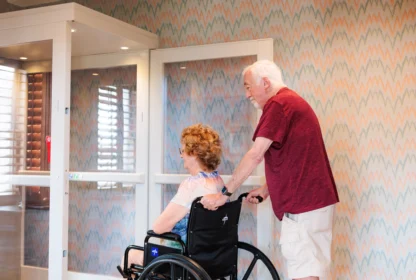
If the problem is at an entrance, I first look at the rise, landing, doorway, approach, and mobility device.
A portable ramp may be useful when those conditions allow it.
The Multi-Fold Ramps offered by 101 Mobility are designed for portable access and can fold in both width and length. They can also separate into sections to make carrying and transport more manageable.
That portability can work well for a temporary ramp in Scott, LA, but portable does not mean appropriate for every set of steps.
I still need to determine:
- How much rise needs to be addressed?
- Is there enough space for the required ramp length?
- What is at the bottom of the ramp?
- Is the upper landing large enough for the mobility device and doorway?
- How will the person approach and leave the ramp?
- Will the ramp stay in place or need to be moved regularly?
A short-term need does not change the geometry of the entrance.
If the available area is too restricted for a usable ramp configuration, I would not force a portable ramp into the route just because it can be removed later.
Another entrance or another accessibility solution may work better.
The same applies if the equipment would need to be set up and taken down so frequently that the temporary arrangement becomes difficult for the household to manage.
Temporary Stair Access and What a Rental Stairlift Requires
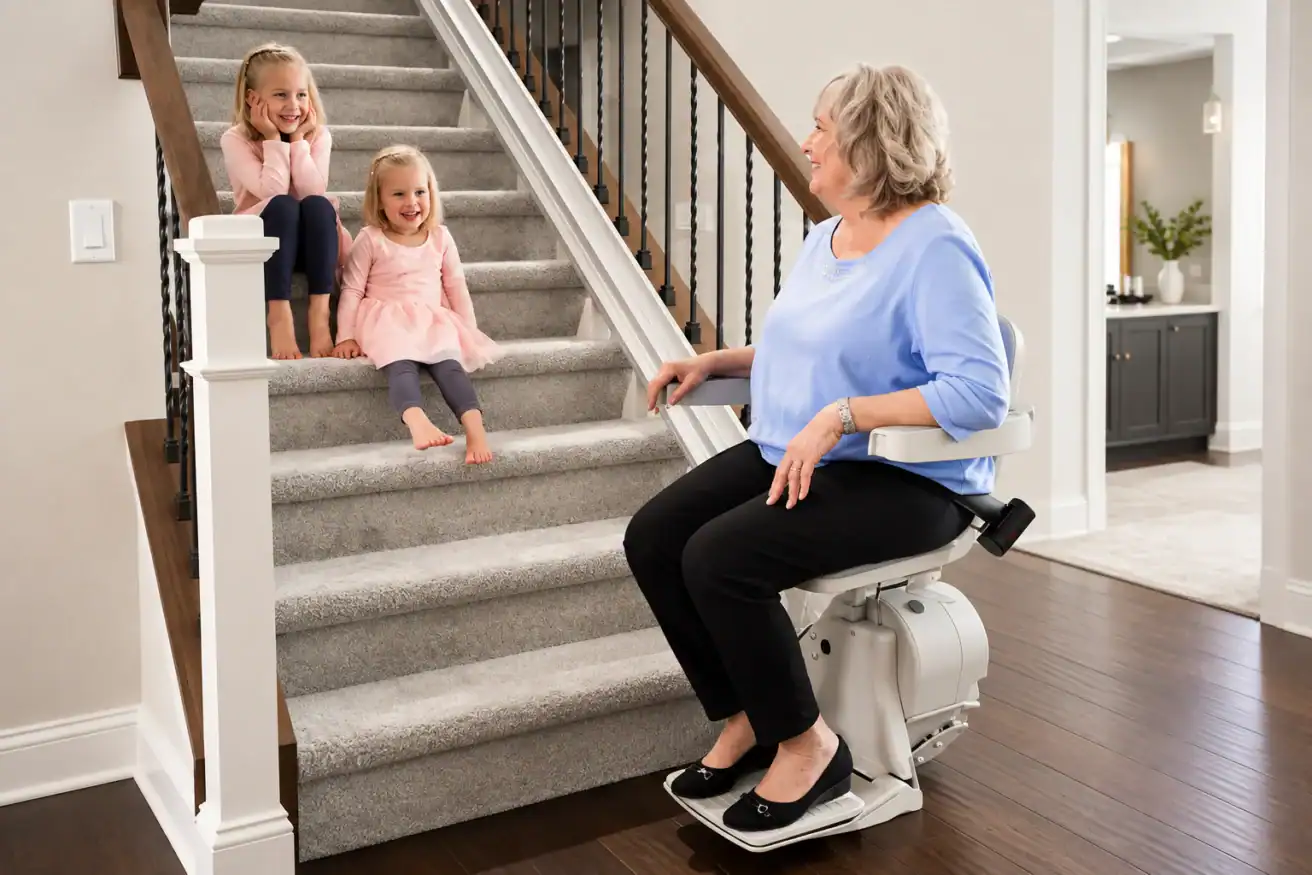
A stairlift rental solves a different problem.
If the temporary barrier is a staircase between two levels of the house, I first look at the staircase itself.
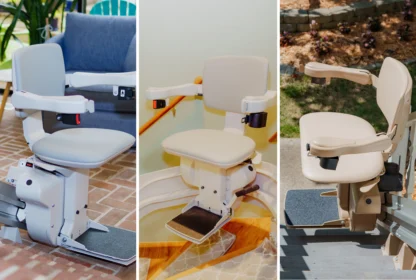
Straight staircases are the most relevant rental situation because straight rails can be matched to a continuous straight flight. Curved stairlifts require rails made around turns, curves, or intermediate landings, which makes them a different type of project.
101 Mobility’s current rental information specifically identifies straight stairlifts as a rental category, while curved stairlifts are generally custom equipment rather than the standard rental approach.
For a stairlift rental in Lafayette, I would look at:
- Whether the staircase is straight
- Stair width
- Top and bottom landing space
- Nearby doors
- Handrails
- The user’s ability to get on and off the chair
- Where the rail ends at each landing
- How the staircase will still be used by other members of the household
The Bruno Elan Straight Rail Stairlift is an example of the type of straight-stairlift product I may compare when evaluating the staircase.
The Elan has a 300-pound published weight capacity, a tread-mounted straight rail, folding seat components, and an offset swivel seat for boarding and exiting at the upper landing.
Those specifications help with product fit. They do not mean that the Bruno Elan itself will always be the rental unit available locally.
Rental inventory and the specific model offered need to be confirmed before I make that recommendation.
I also do not assume a temporary stairlift will fit just because the staircase is straight. A nearby door, narrow landing, or limited transfer space can still change the plan.
What I Would Not Rent if the Home or User Needs a Long-Term Solution
There is a point where a temporary solution stops being practical.
If the access need is expected to continue indefinitely, repeatedly extending a rental may not be the best plan.
The same is true when the physical barrier is permanent and the person’s mobility needs are not expected to return to the previous routine.
For example, if a family in Broussard expects the staircase to remain part of a long-term daily route, I would compare the rental option with purchasing rather than automatically treating the stairlift as temporary.
If the entrance will continue to require wheelchair access, I would also compare a short-term portable ramp with a more permanent ramp configuration.
I would not recommend renting simply to avoid making a decision about a clearly long-term barrier.
The more expensive or permanent option is not automatically necessary, either.
If the need is expected to last only through a defined recovery period and a temporary product fits the route well, buying permanent equipment may be more than the household needs.
The decision should follow the duration.
That is the rent-versus-buy question I want to answer before equipment is installed.
What Happens When the Rental Period Ends?
I prefer to discuss the end of the rental before it begins.
When the expected rental period is nearly complete, the first question is whether the access need has actually ended.
If the user no longer needs the equipment, the rental can move toward removal according to the local rental arrangement.
If the need continues, I want to reassess rather than assume that extending the same temporary setup is automatically the best choice.
The next step may be:
- Extending the rental if that still makes sense
- Transitioning to purchased equipment
- Changing to a different accessibility solution
- Removing the equipment because the original barrier is no longer part of the daily routine
For a ramp, I also want to know whether the entrance has returned to its previous use.
For a stairlift, we look again at how the staircase is being used and whether continued stair access is expected.
101 Mobility provides service and support for accessibility equipment, so questions about equipment operation, maintenance, or the next step do not have to wait until the last day of the rental.
If you are planning temporary access in Scott, Maurice, Lafayette, or Broussard, start with a free in-home consultation. We can identify the barrier, review the expected duration, measure the route, and explain whether a rental, portable solution, purchase, or another access plan better fits the situation.
FAQ: Mobility Equipment Rentals in Lafayette
When does renting mobility equipment make more sense than buying?
Renting can make more sense when the access need is expected to be temporary or its duration is still uncertain. I still compare the expected timeline, physical route, product availability, and likelihood that the equipment will be needed long term.
Can I rent a stairlift for a short-term recovery?
101 Mobility offers stairlift rentals for temporary needs, particularly straight stairlifts. The staircase still needs to be evaluated, and local rental inventory and the exact model available should be confirmed before installation.
Can I use a portable ramp temporarily at my front entrance?
A portable ramp may work temporarily if the rise, available ramp length, landing, doorway, approach, and mobility device all fit the configuration. I measure the entrance rather than choosing a ramp based only on the number of steps.
Is a Bruno Elan available as a rental in Lafayette?
The Bruno Elan is a straight stairlift that can be considered when evaluating a straight staircase, but I would not promise that exact model as a Lafayette rental without confirming current local inventory. Rental availability can vary by location and equipment stock.
Should I rent if I expect to need the equipment permanently?
Not automatically. If the barrier and mobility need are expected to continue, I would compare the full rental plan with purchasing or installing a longer-term solution instead of continuing a temporary arrangement indefinitely.
What happens when I no longer need rented mobility equipment?
The next step is to confirm that the access need has ended and coordinate the rental equipment’s removal according to the local agreement. If the need continues, I would reassess whether extending the rental, purchasing equipment, or changing solutions makes more sense.
About the Author
Jonas Boutte is the owner of 101 Mobility of South Louisiana and has hands-on training from mobility and accessibility manufacturers including Bruno, Harmar, Stiltz, Staying Home, EZ-ACCESS, National Ramp, and others. He helps families throughout Lafayette and surrounding communities evaluate temporary and long-term accessibility solutions based on the person, property, route, expected duration, and daily use.