Porch Lift vs. Ramp in Baker: Choosing Access for Raised Entries
A raised porch, deck, or garage entry can turn one step into a daily barrier. For some homes in Baker, a ramp is the simplest answer. For others, the length and space a ramp needs make a vertical platform lift the more practical choice.
The right solution depends on more than preference. Entry height, porch layout, available yard space, wheelchair use, and how often the access point is used all matter. If you are comparing a porch lift vs. ramp in Baker, the goal is not to choose the most familiar option. It is to choose the one that fits the home and supports safer everyday access.
When a Raised Entry Becomes a Real Access Problem
Raised entries are common at front porches, back decks, garage steps, and side doors. What looks manageable for one person may be unsafe or exhausting for someone using a wheelchair, scooter, walker, or recovering from surgery.
In many cases, families start by asking for a ramp. That makes sense. Ramps are familiar, useful, and often effective. But some homes do not have enough room for the ramp length needed to reach the door comfortably. That is where a vertical platform lift can become the better fit.
Porch Lift vs. Ramp in Baker: What Is the Difference?
A wheelchair ramp creates a gradual path from ground level to the entry. It works well when there is enough room to build the required run and landings.
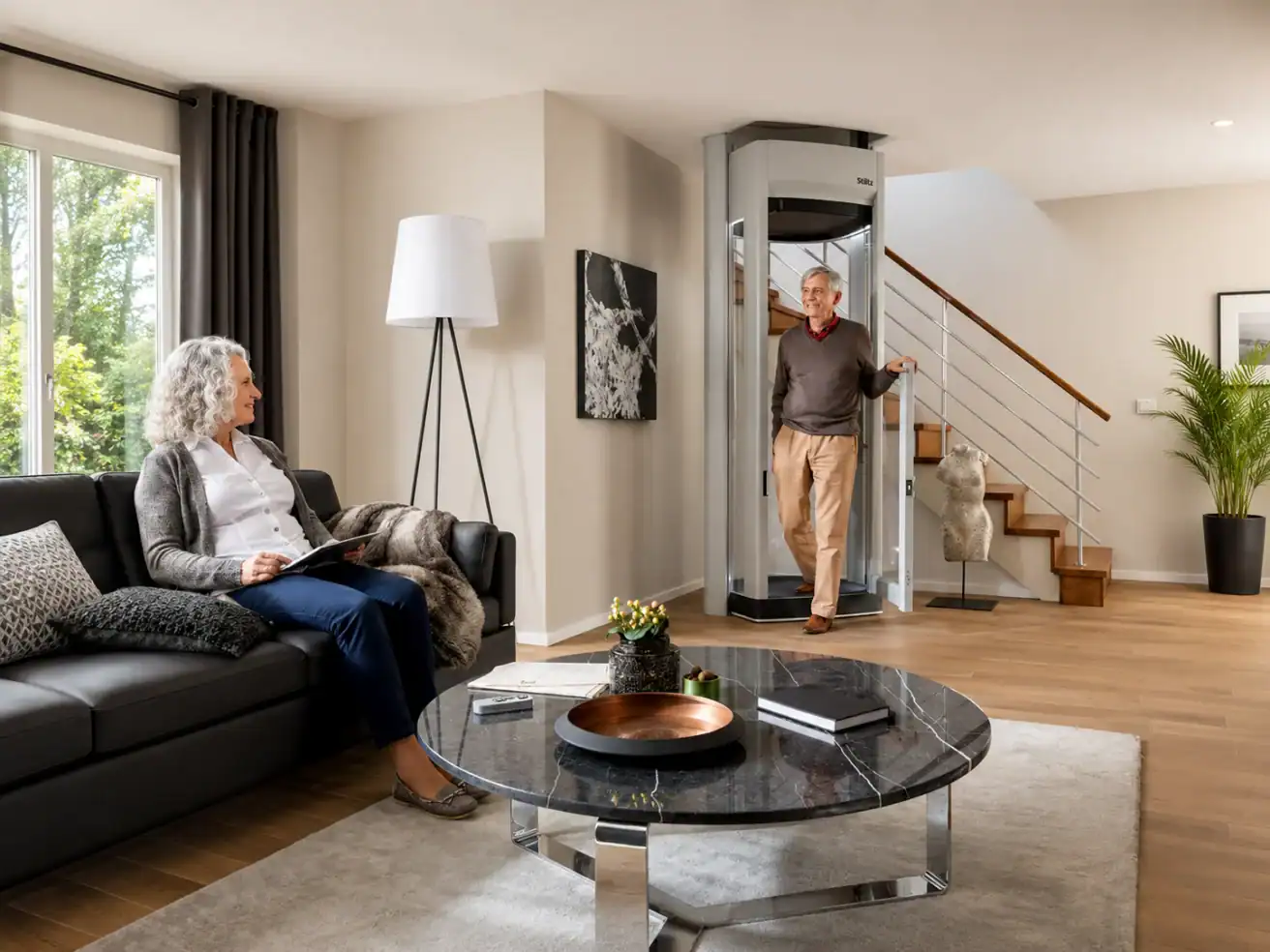
A vertical platform lift, sometimes called a porch lift, raises a wheelchair or power chair straight up to the entry level. Instead of using a long sloped path, it uses a compact vertical travel path.
Both can improve porch access. The difference is how they use space and how they support daily movement.
Space and Slope: Why Layout Matters First
For many homes, this is the deciding factor.
A ramp needs enough horizontal space to rise gradually. As entry height increases, the ramp gets longer. That can affect:
- Front-yard layout
- Sidewalk clearance
- Porch approach direction
- Turning space at landings
- How much of the driveway or yard remains usable
A vertical platform lift usually needs a smaller footprint. That can make it a stronger option when:
- The porch is high
- The lot is tight
- The front approach is narrow
- The home has limited side-yard room
- A long ramp would dominate the entry area
Quick visual comparison
| Factor | Ramp | Vertical Platform Lift |
|---|---|---|
| Best for | Lower rises with room to build out | Raised entries with limited space |
| Footprint | Larger | More compact |
| Path of travel | Gradual slope | Vertical lift |
| Porch layout impact | Can require long runs and turns | Often easier to fit near entry |
| Wheelchair convenience | Good when slope and landings are practical | Strong option for direct wheelchair access |
| Common fit | Open yard or longer approach | Tight porch, deck, or garage access |
When a Ramp Makes More Sense
A ramp may be the better choice when the home has enough room to create a practical path without forcing tight turns or excessive length.
A ramp often works well when:
- The entry rise is relatively modest
- There is open space in front of or beside the home
- The user prefers a simple sloped route
- The approach can be designed cleanly around the property
- The goal is straightforward raised entry access without powered equipment
Ramps can also make sense when there is a natural path from driveway or walkway to the entry and the layout allows a usable landing at the door.
When a Vertical Platform Lift May Work Better
A vertical platform lift may be the better solution when the entry is high enough that a ramp becomes too long, too intrusive, or too difficult to place well.
A porch lift may work better when:
- The porch or deck sits well above grade
- The property has limited room for a long ramp
- The user relies on a wheelchair or power chair every day
- A direct lift to the landing would be easier than a long approach
- Preserving yard, driveway, or porch layout matters
This is why many families comparing porch lift vs ramp Baker options end up looking closely at a vertical platform lift in Baker for tighter homes and higher entries.
Side-by-Side Comparison for Baker Homeowners
| Question | Ramp | Vertical Platform Lift |
|---|---|---|
| Do you have plenty of room from grade to entry? | Often a good fit | May still work, but may not be necessary |
| Is the entry especially high? | May become long and space-heavy | Often worth considering |
| Is the porch layout tight? | Can be difficult to route well | Often easier to place |
| Is the user in a wheelchair or power chair daily? | Can work well with proper design | Often very practical for direct access |
| Do you want to minimize the footprint near the home? | Usually harder | Usually easier |
| Are you comparing wheelchair ramp options for a raised porch? | Strong option if space allows | Strong option if space does not |
Questions to Ask Before Choosing
Before selecting either solution, it helps to answer a few practical questions:
1. How high is the entry?
A small rise and a significant rise do not create the same design needs.
2. How much clear space is available?
Look at the yard, driveway edge, porch landing, walkway, and any obstacles near the door.
3. Who will use it every day?
A solution should match the user’s mobility device, transfer ability, and daily routine.
4. Is the route direct or awkward?
Some entries are easy to approach. Others require turns, narrow access points, or elevation changes that affect the design.
5. Are you planning for today only or for the long term?
Some families are solving an immediate need. Others are planning ahead for aging in place and want a solution that continues to work as mobility needs change.
Why Professional Guidance Matters
The best accessibility solution is usually the one that fits both the home and the person using it. That is why an in-home consultation matters.
A good recommendation should look at:
- Entry height
- Available footprint
- Mobility device use
- Porch and landing dimensions
- Daily traffic patterns
- Long-term accessibility goals
Instead of guessing from photos or measurements alone, professional guidance helps narrow down the most practical option faster.
For Baker homeowners, that can mean determining whether a ramp is fully workable or whether a porch lift would create cleaner, safer, and more convenient access.
Internal Link Opportunities
- Baton Rouge location page: 101 Mobility Baton Rouge & Lafayette
- Vertical platform lifts page: vertical platform lifts for raised porches, decks, and elevated access points
- Optional contextual mention within related site content: ramp solutions, porch access planning, raised entry access, aging in place
FAQ
Is a porch lift the same as a vertical platform lift?
In many residential conversations, yes. Homeowners often say “porch lift” when referring to a vertical platform lift used to reach a raised porch, deck, or entry.
Is a ramp always cheaper than a lift?
Not always in practical terms. A ramp may seem simpler, but total project fit depends on rise, length, layout, and how much structure is required. The better choice is the one that works well in the space.
When is a vertical platform lift better than a ramp?
A vertical platform lift may be better when the entry is high, the lot is tight, or a long ramp would take up too much space.
Can a vertical platform lift work for porches and decks?
Yes. Vertical platform lifts are commonly used to reach raised porches, decks, and similar entry points.
What is the best option for raised entry access?
That depends on height, space, user needs, and layout. Some homes are well suited for a ramp. Others are better served by a porch lift.
Book a Free Consultation
If you are comparing wheelchair ramp options and lift solutions for a raised porch, deck, or garage entry, 101 Mobility can help you choose the right fit for the home.