Mobility Scooter Storage and Charging in Acadiana: Where Should It Park and Plug In?
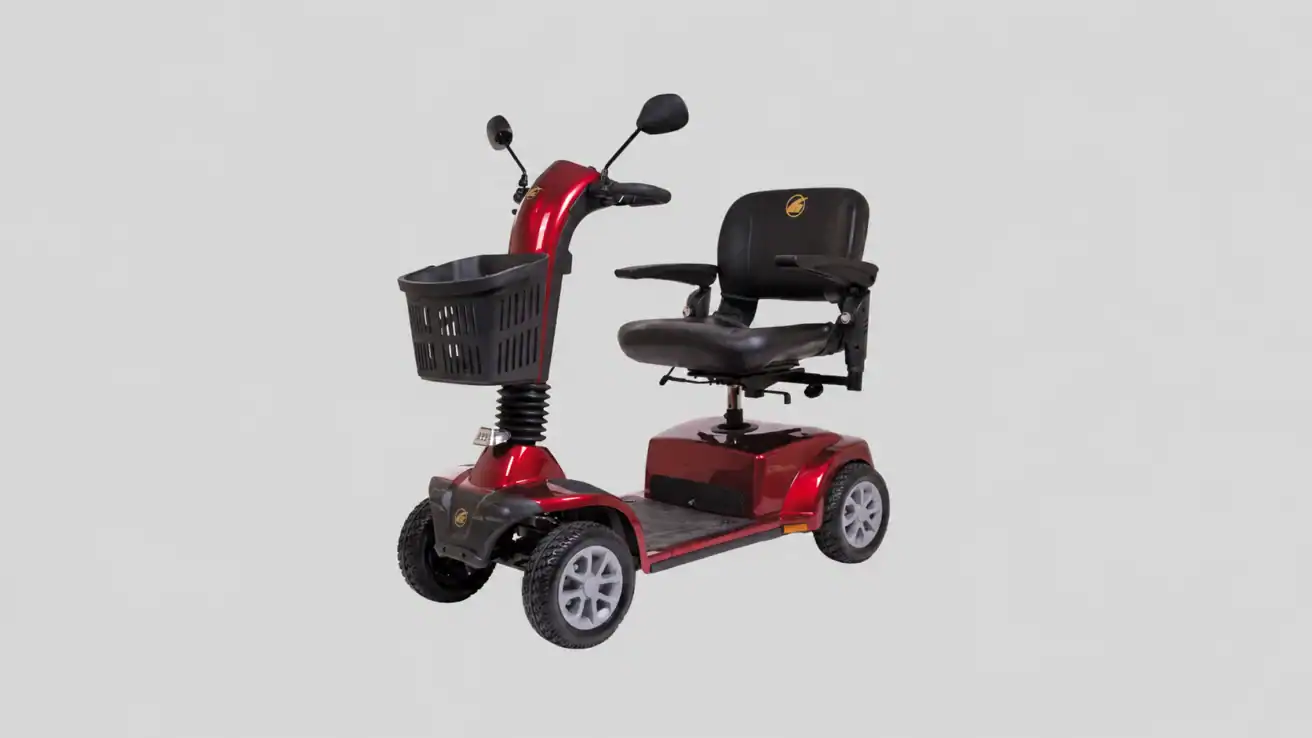
I will address three things for storage of your mobility scooter. First, I will consider where the scooter will park. Second, I will find a location where the scooter can charge. Last, I will locate the first door it will cross. In some situations, a mobility scooter can be too big to work well for storage.
Also, for families in the parishes of Lafayette, Opelousas, Scott, Carencro and Youngsville, I will look to understand the scooter’s entire routine. As a member of the 101 Mobility of Lafayette Team, I will analyze the existing obstacles to scooter mobility that create obstacles for passengers during vehicle transfers. These can include door and threshold clearances, floor and carpet transition surfaces, floor transitions and the path the scooter will use to travel from its parking location to the customer’s vehicle.
The scooter should be able to travel to and from the vehicle even when it is not being used to transport a customer.
| Storage Question | What do I evaluate? | Why? |
|---|---|---|
| Where will it Park? | Floor space and Passage | The scooter should not block regular use of building passages. |
| Where will it charge? | Charging set up and Useable Outlets | |
| What is the width of the door? | Clear Opening | The scooter may not be able to fit through a wide door. |
| Are there thresholds? | Level Changes | |
| Where is the scooter from the storage location? | Distance and Path | |
| Will the storage location expose the scooter to the Elements? |
Routines for charging a mobility scooter and the safest place to store a mobility scooter in the Lafayette area
I account for charging in my mobility scooter plans.
I determine potential storage locations first, then assess charging set ups for each location.
Pride Power Scooters charge via a tiller mounted cord and have a battery level gauge.
Golden Technologies Power Scooters also charge via a tiller mounted cord and have a battery level gauge.
In general, the set up of these mobility scooters provides me with planning factors, however, they don’t determine potential storage locations.
For scooter charging in Lafayette, I have practical concerns.
When charging a scooter, can the user get to it easily?
Is charging a scooter going to block a pathway?
Will it obstruct the use of adjacent doors?
Is charging a scooter going to cause an inconvenience?
If charging a scooter causes an obstruction and/or an inconvenience, is charging a scooter worth it?
The most convenient location to charge a scooter is probably not the most near-seated location.
If the only available outlet is across a door or in a high-use pathway by other members of the household, I will look for an alternative place to store the scooter.
There has to be a balance between convenience, practicality and the limitations of the equipment.
I will evaluate the garage as a potential location, but I will look at the paths and doorways that the equipment will need to use to get to and from the garage.
As an example, the three-wheel model of the Pride Victory 9 at 101 Mobility has a turning radius of 40.25”. The four-wheel model of this scooter has a turning radius of 51.5”. The three-wheel midsize model of the Golden Compact has a turning radius of 39”, while the four-wheel full size model of this scooter has a turning radius of 53.5”.
I take published measurements like these and compared them to the route I am assessing. I inspect the garage and first turn of the route. I analyze many other aspects of the situation including door operation and the clear opening width of the door.
What type of door threshold do I encounter on this route?
Rubber Threshold Ramps could be utilized to transition over a threshold if it is less than two inches.
This ramp does not address all barriers at the doorway.
As before, I consider many aspects of the situation including available space on the other side of the threshold.
When positioning a Pride scooter in a garage, the objective is to determine if the scooter can be maneuvered through the garage door without needing to move other obstacles.
Weather protection and storage of the scooter is a consideration when the scooter is not in use.
Since the scooter is effectively stored for an extended period of time, this factors into the equipment plan.
I consider the route to the scooter and if there will be obstructions to use.
I will also consider how the scooter is protected from the elements and other potential damage when it is not in use.
Pride has optional weather protection kits for the Victory Series that includes a weather breaker and a weather cover. I look into what is available for the specific model and not assume all optional kits are available for all models.
I address the storage location first.
A cover will not solve a scooter that blocks a door and obstructs a clear path.
When a customer is considering a Golden scooter in Acadiana, a two-step is necessary to determine the appropriate model. First, the potential storage space has to be evaluated to determine the appropriate scooter to purchase.
This includes asking, “where will the scooter be stored nightly?”
If the potential storage space is restricted, the storage solution has to be determined first.
This is especially true if the scooter will be transported. In these cases I work from the end and determine where the scooter will be stored in the vehicle first, then work backwards to determine where the scooter will be stored in the house.
What is the vehicle parking location?
Where on the route does the scooter travel to charge itself?
Does it go through a garage or other building entrance?
Will it be driven to the vehicle, disassembled before reaching the vehicle, or loaded/unloaded using other means of transport?
Pride and Golden both discuss disassembly in their scooter lines. Pride mentions one-hand disassembly in its Victory Series, while Golden talks about easy disassembly in its Companion Series.
While easy disassembly or one-hand disassembly helps with transporting the scooter, it still adds an extra step to the process.
It adds extra burden to the user as the disassembled parts have to be transported to the vehicle and then reassembled at the destination.
This also means that the user has to plan the route the scooter will take to travel to and from the vehicle.
Depending on the distance the scooter travels and how often it is transported, I will suggest a different location to store the scooter.
To make charging the scooter convenient, it may be placed near a garage outlet, for example. However, if it takes a lot of effort to move the scooter each time it has to be charged, then placing it near the garage may not be convenient.
This will also help with vehicle transport.
Depending on how far the scooter travels, it may be necessary to move it through other rooms. I wish to store the scooter near the garage so it helps with transport, charging, and other related activities.
What happens after delivery?
After delivering the scooter, we revisit the same planning steps we followed prior to its arrival.
We cover scooter operation, reviewing details like charging and parking. For the battery indicator, we discuss what each indication means.
Familiarity with scooter disassembly and reassembly is not expected of the consumer.
I examine the primary egress from the storage unit to identify potential user obstructions while the equipment is being set up. My objective is to identify potential user obstructions during the set up to avoid time wasting and user frustrations when the consumer wants to leave to do shopping or to other appointments.
I address threshold issues during the equipment set up.
The mobility scooter must be maintained to be useful. We provide post purchase service and support to address customer questions and concerns regarding mobility scooter use and other assistive devices.
If you need mobility scooter storage and charging assistance in the parishes of Lafayette, Opelousas, Scott, Carencro and Youngsville, contact us for a free in-home consultation. Our assessment will help you select the appropriate scooter for your storage and other concerns including route to your vehicle.
What is the best place to store my mobility scooter?
The storage location should be convenient to charge the scooter as described in the set up of the specific model, and should not obstruct regular and normal use of the home including doorways. The storage location should be such that the scooter does not obstruct the route to the vehicle.
Can I charge my mobility scooter in the garage?
If the dimensions of the scooter, charger, and route allow, then yes, a garage can be used for charging. I will also assess if there are obstructions from parked vehicles, if there are tall door thresholds, and if there are obstructive stored items.
How much space does a scooter need to get through a doorway?
This depends on the dimensions of the scooter, and how it is rotated to align with the doorway. I also consider if there are obstructive items on either side of the doorway.
Can a threshold ramp be used to go over a doorway?
A Rubber Threshold Ramp might help if an change in level less than 2 inches is the worst barrier. Rubber threshold ramps, available from 101 Mobility, change level differences up to 2 inches. For complete clearance and maneuverability, note the approach and turning space around the ramp.
When thinking about storage, do I pick the location first and then determine the scooter model?
I usually assess the potential storage and charging route for the scooter before considering the model. Scooters differ in size, weight and shape, as well as how they are charged, transported and turned. Storage and charging constraints impact the model and features of the scooter that will best suit the situation.
How does the transportation of the vehicle impact the storage of the scooter?
The best storage location for the scooter usually changes when the vehicle is transported because the route the scooter takes to be charged is longer. I also consider where the scooter will be disassembled and loaded/unloaded.
About the Author
Jonas Boutte is the owner of 101 Mobility of South Louisiana and has hands-on training from mobility and accessibility manufacturers including Bruno, Harmar, Stiltz, Staying Home, EZ-ACCESS, National Ramp, and others. He helps customers throughout Lafayette and surrounding Acadiana communities evaluate mobility equipment and home-access solutions based on the person, property, route, and everyday use.