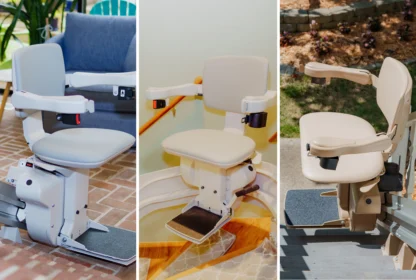
June Home Accessibility Planning in Lafayette: Safer Living Before Summer Gets Busy

June is one of the best times to look at home safety before summer routines become harder to manage. In Lafayette, warmer weather, family visits, vacations, and longer days often mean more movement in and out of the house, more time outdoors, and less margin for avoidable hazards.
That is why June home accessibility Lafayette planning matters. A few smart changes now can make stairs easier to manage, entryways safer to navigate, bathrooms more secure, and daily life more comfortable before summer gets busy.
For families thinking about aging in place Lafayette, June is a practical time to plan ahead rather than wait for a fall, close call, or sudden change in mobility.
Why June is the right time for home safety planning
Home safety problems often become more noticeable in summer. Guests may be coming over more often. Outdoor surfaces may be used more. Daily schedules can feel less predictable. And when routines get busier, small access issues can turn into bigger problems.
June is a strong planning month because it gives you time to:
- Review the home before schedules fill up
- Identify the areas that create the most strain
- Make practical updates before the need becomes urgent
- Choose solutions based on fit, not pressure
Good home safety planning is not about overreacting. It is about noticing where the home makes movement harder than it should be and fixing those issues before they interrupt daily life.
June home accessibility Lafayette priorities to review first
Not every home needs the same changes. But most Lafayette households can start by reviewing four common pressure points.
Entryways and front access
The first safety check should be how someone gets in and out of the home. Even a short step, uneven threshold, or narrow transition can create difficulty for someone using a cane, walker, wheelchair, or scooter.
Review:
- Front steps and side entries
- Porch access
- Threshold height
- Handrail stability
- Pathway condition from driveway or sidewalk to the door
If coming and going feels awkward, tiring, or unsafe, that is often a sign the entry sequence needs attention. This is also one of the most important areas for summer accessibility Lafayette planning because families tend to use entrances more often during summer gatherings and outings.
Bathrooms
Bathrooms are one of the most common places where people start to feel unsafe at home. Tight turns, slippery surfaces, and stepping over a tub wall can all increase risk.
Look closely at:
- Shower and tub entry
- Toilet transfer space
- Support near wet areas
- Flooring traction
- Overall ease of movement
A bathroom does not have to be fully renovated to become safer. In many cases, the goal is to reduce strain, improve support, and make everyday routines more manageable.
Stairs and level changes
A staircase that used to feel routine can become more difficult over time, especially late in the day or during recovery from illness, injury, or surgery.
Pay attention to:
- Hesitation on stairs
- Use of walls instead of rails
- Fatigue when moving between floors
- Avoiding parts of the home because of stairs
- Difficulty carrying items safely up or down
If someone is changing how they use the house because of stairs, that is a strong sign to start evaluating solutions rather than waiting.
Outdoor walkways, porches, and patios
Summer means more time outside. That makes outdoor access just as important as indoor movement.
Check:
- Walkway cracks or uneven surfaces
- Transitions to patios and decks
- Porch steps
- Backyard access points
- Shaded versus exposed travel paths
Outdoor routes should feel stable, usable, and predictable. If they do not, they deserve a place in your June planning.
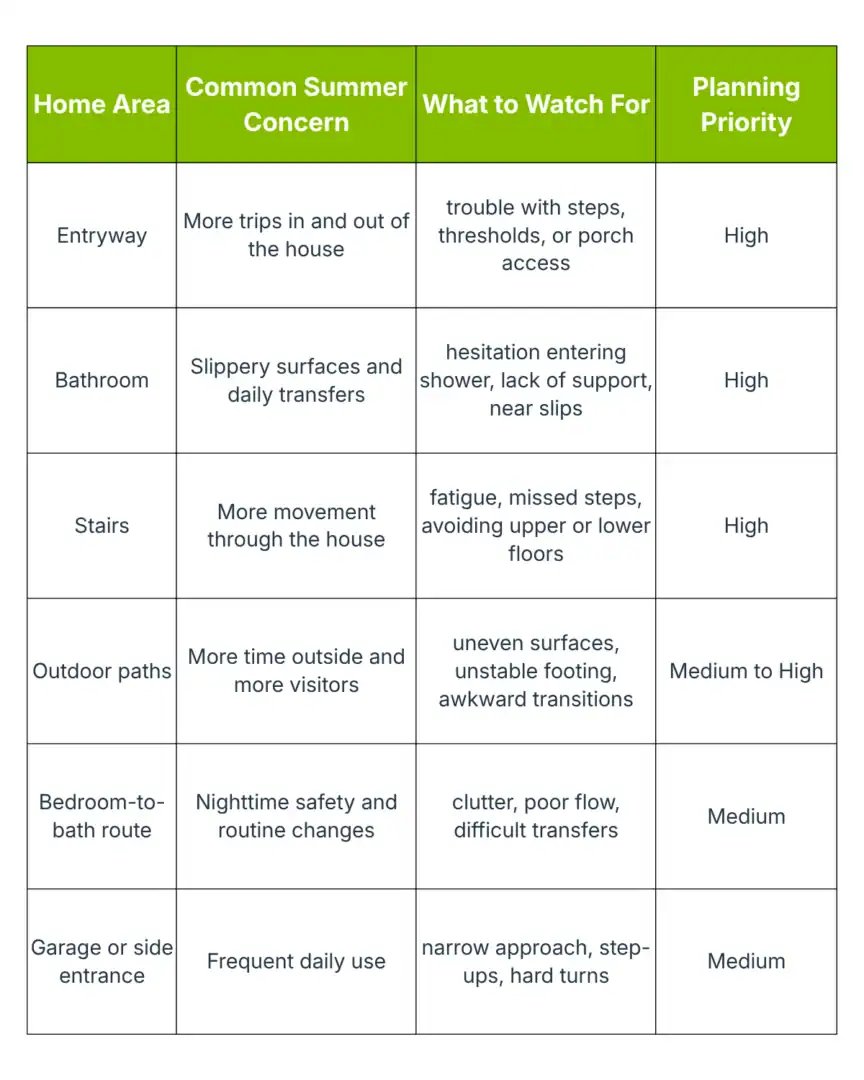
A simple June accessibility planning chart for Lafayette homes
Use this chart to decide where to focus first.
What to fix now vs. what to plan next
One of the easiest ways to approach accessibility planning is to separate immediate concerns from longer-term improvements.
Fix now
These are the issues that deserve fast attention:
- A step or threshold that is hard to clear safely
- A bathroom setup that feels unstable
- A staircase someone is actively struggling with
- An outdoor walking surface that feels uneven or risky
Plan next
These are important, even if they are not urgent today:
- Preparing a multilevel home for future mobility changes
- Improving comfort and convenience, not just safety
- Making access easier for a caregiver or family member
- Choosing solutions that better support long-term aging in place Lafayette
That distinction helps families move forward without feeling overwhelmed. Start with the biggest daily friction points, then build from there.
Why early summer accessibility planning makes decisions easier
The biggest benefit of planning in June is simple: you can make decisions while you still have time and options.
When families wait until mobility changes become urgent, the process often feels rushed. It becomes harder to compare ideas, think through the home layout, or choose the right fit for both current and future needs.
Early planning helps you:
- Evaluate the whole home more clearly
- Focus on the areas that affect daily life most
- Coordinate improvements before schedules tighten
- Choose practical mobility solutions Lafayette homeowners can actually use with confidence
For many households, the goal is not just solving one problem. It is making the home easier to live in through the rest of summer and beyond.
How 101 Mobility helps Lafayette families plan safer homes
The best accessibility plans are tailored to the person, the home, and the daily routine. That is why many families start with a consultation instead of guessing what product or modification might work.
101 Mobility works with Lafayette-area households to identify the real access challenge first, then recommend solutions that fit the space and the need. That may involve safer stair access, improved entry access, bathroom safety improvements, or broader in-home mobility planning.
If you are starting to think about summer accessibility Lafayette needs, or you want a clearer plan for aging in place Lafayette, a local consultation can help you prioritize what matters most without overcomplicating the process.
Explore local options here: 101 Mobility Lafayette
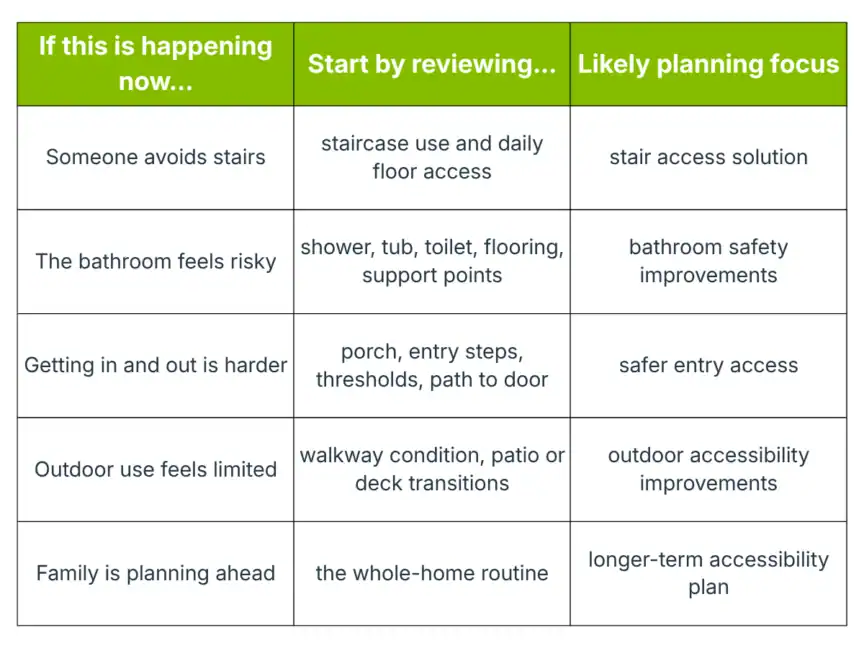
June accessibility priority chart: start here
Here is a simple way to think about next steps:
Frequently Asked Questions
Why is June a good time to plan home accessibility updates?
June gives families time to review the home before summer schedules become crowded. It is easier to evaluate entryways, stairs, bathrooms, and outdoor routes before the need becomes urgent.
What area should most people check first?
Start with the area that creates the most daily strain. For many homes, that is the entryway, bathroom, or stairs. The right starting point is usually the place where movement already feels less safe or less reliable.
Does accessibility planning only make sense after a major mobility change?
No. Proactive planning is often the better approach. It gives you time to choose solutions thoughtfully and supports safer, more comfortable living before a serious disruption happens.
What does aging in place planning usually involve?
It usually starts with identifying the parts of the home that make daily movement harder. From there, the focus is on improving safety, access, and usability so someone can remain in the home more comfortably over time.
When should a family schedule a consultation?
The best time is when the first signs of difficulty appear, not after a close call. If stairs, bathrooms, or entryways already feel harder to manage, now is a good time to schedule one.
Book a Free Consultation
If your household is thinking about safer summer living, June is a smart time to act. A clear plan now can make daily movement easier, support long-term independence, and reduce last-minute decisions later in the season.