June Bathroom Safety Checks in Harvey: Preparing for Guests, Grandkids, and Daily Routines
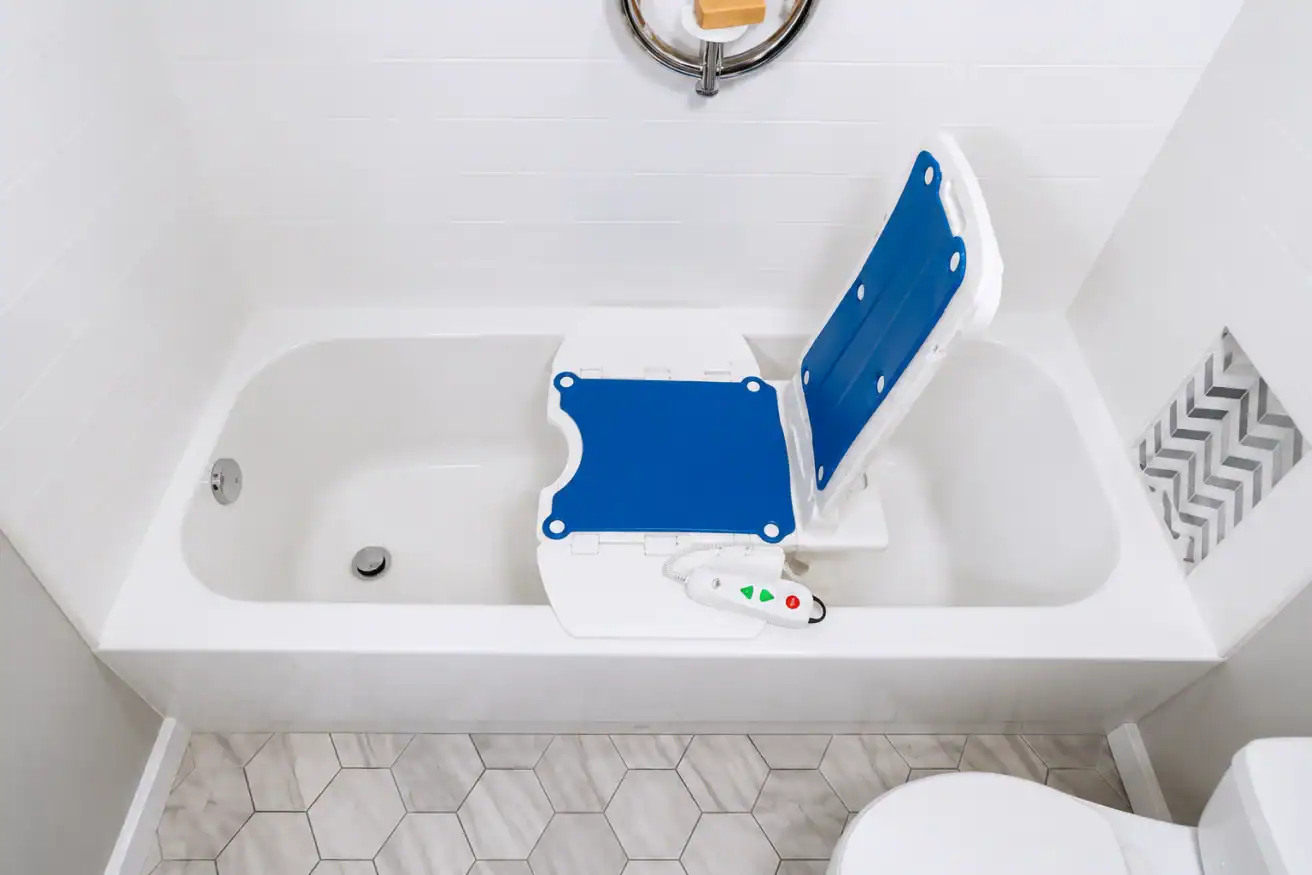
June is a good time to take a fresh look at bathroom safety at home. Summer often brings more activity, more visitors, and more shared routines. That can make small bathroom hazards more noticeable, especially when someone already has limited balance, reduced mobility, or difficulty stepping into a shower.
A safer bathroom does not always require a full remodel. In many Harvey homes, the most important improvements start with a few practical checks: can someone enter the shower steadily, reach reliable support, move through the room without obstacles, and manage transfers with less strain?
This June bathroom safety check will help you spot common problems early, understand what matters most, and decide when it makes sense to bring in professional help.
Why June Is a Smart Time to Review Bathroom Safety in Harvey
Bathrooms tend to get used harder in summer. Grandkids may be in and out. Guests may not know the layout. Morning schedules can get busier. A room that already feels tight or slippery during normal routines can become even less forgiving.
That is why a June review makes sense. It gives you a chance to fix minor issues before they turn into daily frustrations or near-falls.
For households planning ahead, this is also a practical time to think about long-term use. If someone in the home is aging in place, recovering from surgery, or relying more on steady support, bathroom fall prevention should be part of seasonal home maintenance.
Bathroom Safety Harvey June Checklist: What to Inspect First
Start with the areas where people pause, pivot, step over edges, or shift weight.
1. Check shower and tub entry
Look at how someone gets in and out of the shower or tub. Ask:
- Is there a high threshold or awkward step-over?
- Is the floor slick near the entry?
- Does the person have to balance on one foot while stepping in?
- Is there a reliable place to hold for support?
If shower entry feels hesitant, rushed, or unstable, that is a sign the setup may need attention. Good shower safety starts at the point of entry, not just inside the shower.
2. Review grab bars and actual support points
Many people reach for a towel bar, vanity edge, or shower door when they need balance. Those surfaces are not designed to provide the same support as properly placed grab bars.
Look at where support is needed during real movement:
- Stepping into the shower
- Standing up from the toilet
- Turning inside the bathroom
- Moving from walker or wheelchair position into place
The right grab bars in Harvey homes are usually the ones placed around actual movement patterns, not just wherever there is open wall space.
3. Improve lighting and visibility
Lighting problems are easy to overlook until someone uses the bathroom early in the morning or during the night.
Check for:
- Dim bulbs
- Shadows near the shower entry
- Poorly lit corners
- Hard-to-reach switches
- Glare that makes wet surfaces harder to read
Clear lighting helps people judge depth, see water on the floor, and move with more confidence.
4. Clear walking paths and remove slip risks
Take a slow look at the route from the bathroom door to the sink, toilet, and shower.
Common issues include:
- Bath mats that slide
- Clutter near the vanity
- Cords from appliances
- Narrow turning space
- Water collecting on smooth flooring
Non-slip surfaces matter most where people turn, transfer, or exit wet areas.
5. Evaluate toilet transfers
Toilet use is one of the most repeated daily movements in the bathroom. If sit-to-stand feels difficult, the strain adds up quickly.
Watch for:
- Pushing heavily off the vanity
- Rocking forward to stand
- Difficulty lowering slowly
- Unstable pivoting from a walker
- Caregiver strain during assistance
This is often where senior bathroom accessibility has the biggest day-to-day impact.
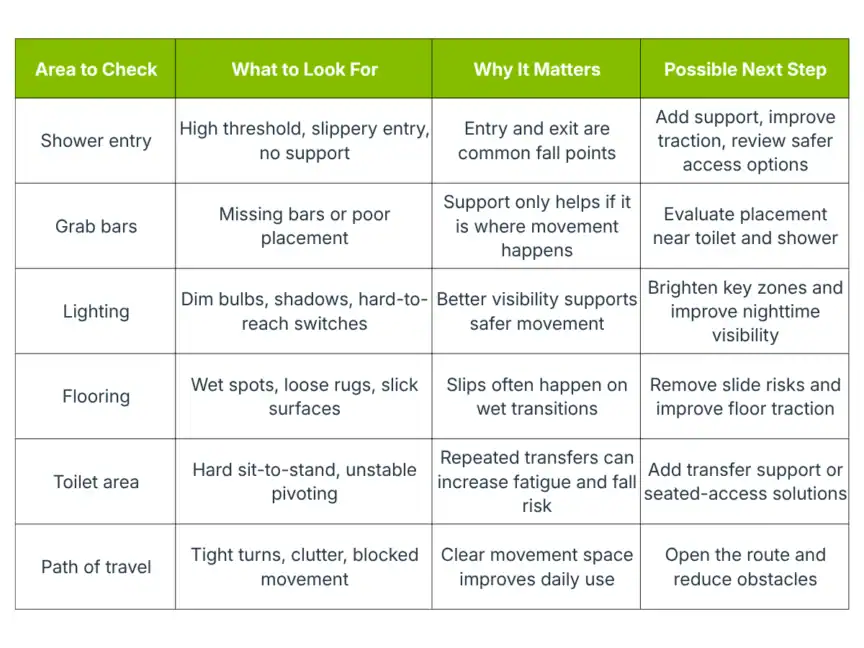
Quick June Bathroom Safety Chart
Simple Fixes vs. Signs You May Need a Bathroom Safety Upgrade
Some issues can be improved quickly. Others point to a bigger accessibility need.
Simple fixes
These are usually easy to address right away:
- Remove loose rugs
- Keep towels and supplies within easy reach
- Replace dim bulbs
- Keep the floor dry
- Clear extra storage items from walking space
Signs the bathroom setup may need an upgrade
These deserve closer attention:
- Someone avoids the shower because entry feels unsafe
- Support is needed, but there is nothing secure to hold
- Caregivers are helping with transfers more often
- There is repeated difficulty stepping over the tub wall
- Turning space is tight for a walker or mobility device
- Near-falls keep happening during normal routines
When those issues show up, it is worth looking beyond temporary workarounds.
Bathroom Safety Features That Can Make Daily Routines Easier
The best bathroom safety improvements are the ones that fit daily life. They should make the room easier to use every day, not just during emergencies.
Depending on the layout and the person’s needs, helpful options may include:
Grab bars placed for real movement
Well-placed grab bars can support stepping, turning, lowering, and standing. Placement matters as much as the bar itself.
Better shower safety support
This may involve safer entry points, support inside the shower, seating options, or a setup that reduces the need to step over a difficult barrier.
Toilet-area transfer support
If sit-to-stand is becoming harder, added support around the toilet area can make routine use more manageable and reduce strain on family caregivers.
Accessibility planning for long-term use
Senior bathroom accessibility is not just about one product. It is about how the whole room works together: entry, turning space, support, traction, and safe transitions.
For many households, the right next step is not guessing. It is having someone assess the space and recommend options that match the room and the person using it.
You can explore local support through the 101 Mobility New Orleans location or learn more about available bathroom safety solutions.
A Practical June Walk-Through for Harvey Households
If you want a simple way to review your bathroom this week, use this order:
- Stand at the doorway and look for clutter, poor lighting, and slippery flooring.
- Move to the toilet area and check whether sitting and standing require extra effort.
- Look at the shower or tub entry and identify where balance becomes difficult.
- Notice what the user reaches for when turning or transferring.
- Decide whether the room feels manageable for daily use, overnight use, and guest-heavy days.
That quick walk-through can reveal a lot. In many cases, the biggest safety problem is not one dramatic hazard. It is a series of small friction points that make daily routines harder than they should be.
FAQs About Bathroom Safety in Harvey
What is the most important bathroom safety check to do first?
Start with shower or tub entry. It combines wet surfaces, shifting weight, and balance changes, which makes it one of the most important areas to review.
Are grab bars really necessary if someone is still walking independently?
They can be. Independent walking does not always mean steady stepping, turning, or transferring in a wet bathroom. Support is often most helpful during those moments.
What are common bathroom fall prevention issues families miss?
Loose rugs, dim lighting, awkward shower entry, and support placed in the wrong location are often overlooked. Families also tend to underestimate how tiring repeated toilet transfers can become.
How do I know whether my bathroom needs a professional accessibility review?
If someone is avoiding the shower, relying on unstable surfaces for balance, struggling with transfers, or having repeated near-falls, a professional review is a smart next step.
What does senior bathroom accessibility usually involve?
It usually means improving how a person enters, moves through, and uses the room safely. That can include support near the shower, toilet transfer help, better floor traction, and a layout that reduces strain.
Make June a Safer Starting Point
A bathroom does not have to feel dangerous to be working against someone’s daily routine. Small obstacles add up. In June, when households get busier and bathroom use often increases, this is a smart time to fix what is not working.
If your current setup feels less steady than it should, or if you are planning ahead for safer daily use, now is a good time to take the next step.
Book a Free Consultation to discuss practical bathroom safety options for your Harvey home.