June Bathroom Safety Checks in Carencro: Preparing for Guests, Grandkids, and Daily Routines
June is a good time to take a fresh look at the bathroom. Summer often brings visiting family, more activity in the house, and changes in daily routines. That can make small safety issues easier to overlook until they become a real problem.
A simple bathroom safety Carencro June check can help you spot risks early and make showers, transfers, and everyday movement easier. Whether you are planning for older adults, frequent guests, or better day-to-day comfort, a few targeted improvements can make the bathroom feel safer and easier to use.
Why June Is a Smart Time for a Bathroom Safety Check
Bathrooms get more use when routines change. Grandkids may be in and out. Guests may be unfamiliar with the space. Older adults may be moving around earlier in the morning or later at night. Wet floors, poor lighting, and awkward shower entry points matter more when more people are using the space.
This is also a practical time for proactive planning. Instead of waiting for a close call, June is a good checkpoint for bathroom fall prevention and safer daily movement at home.
Bathroom Safety Carencro June Checklist
Use this checklist to review the bathroom with fresh eyes.
1. Check shower and tub entry
Getting in and out of the shower or tub is one of the most important moments to assess. Look for:
- A high tub wall or awkward step-over
- Slippery flooring at entry points
- No stable place to hold while entering or exiting
- Tight turns near the shower or toilet
If shower entry already feels uncertain, that is a strong sign to improve shower safety before summer routines get busier.
2. Review grab bars and support points
Support should be where people naturally need it, not just where there is open wall space. Check whether there is reliable help near:
- Shower entry
- Inside the shower
- Next to the toilet
- Transition points where standing or pivoting happens
This is where properly installed grab bars Carencro homeowners can rely on make a real difference. The goal is not just adding hardware. It is creating dependable support where daily movement actually happens.
3. Improve lighting and visibility
Bathrooms should be easy to navigate in low light, especially for overnight use. Review:
- Brightness near the bathroom entrance
- Visibility around the toilet and shower
- Shadows near flooring transitions
- Easy-to-reach switches
Good lighting supports better footing, better visibility, and more confident movement.
4. Clear walking paths and floor hazards
A safer bathroom is often a simpler bathroom. Remove or rethink:
- Loose rugs
- Small storage items on the floor
- Baskets or stools in walking paths
- Wet clutter near the sink or shower
- Anything that narrows access around the toilet or vanity
Clear paths matter for everyone, but they are especially important for senior bathroom accessibility and guest use.
5. Add non-slip surfaces where water collects
Wet areas need extra attention. Review the floor near:
- Shower exits
- Tub entry points
- Sink areas
- Toilet area if water tends to splash or drip nearby
Non-slip surfaces help reduce sliding risk and make the bathroom easier to use with confidence.
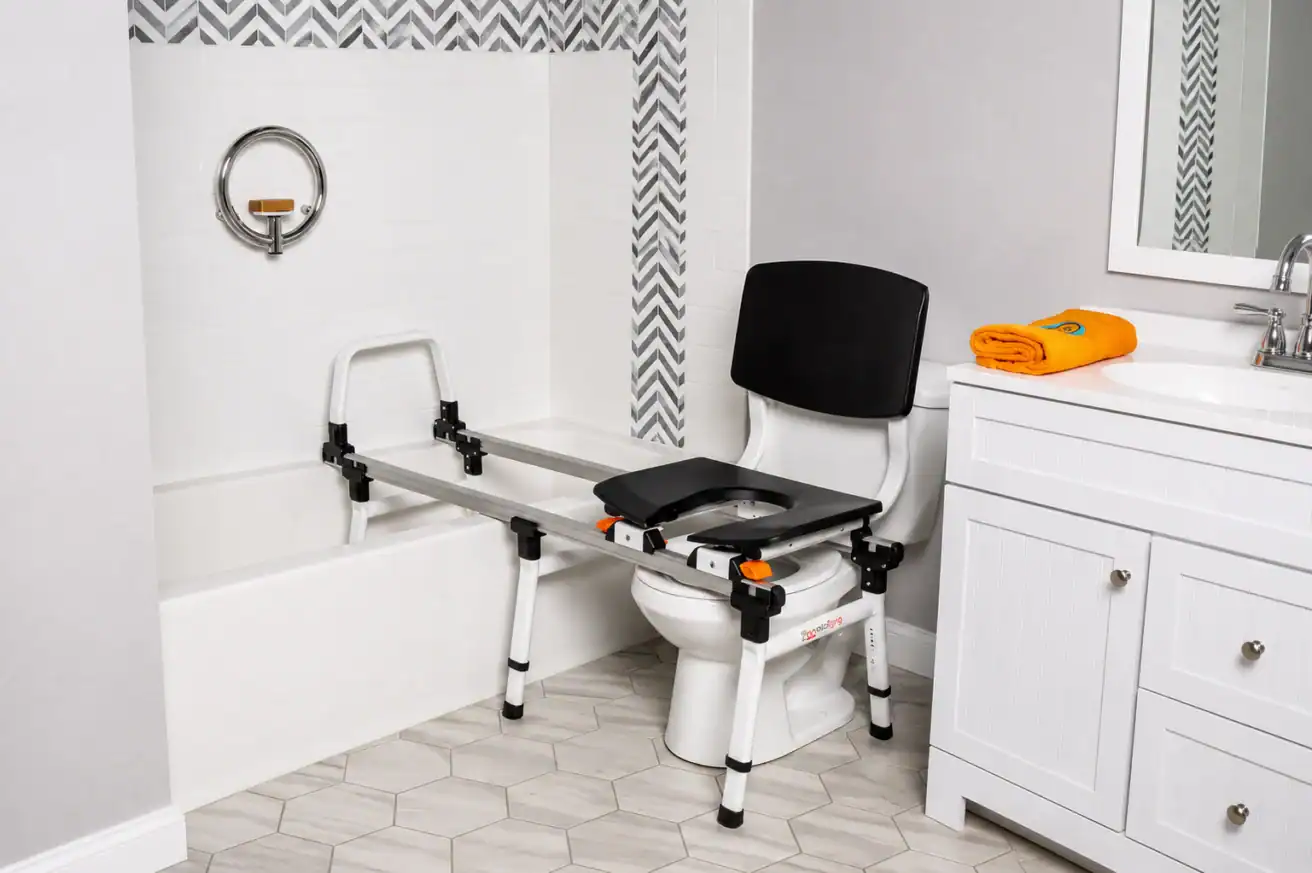
6. Consider transfer support for daily routines
Some bathrooms need more than a surface-level cleanup. If sitting, standing, or pivoting is becoming harder, additional support may help. Depending on the layout and user needs, that may include:
- Grab bars
- Support poles
- Transfer benches
- Shower seating
- Other bathing or transfer support solutions
This is often the next step when basic improvements are not enough to fully support daily routines.
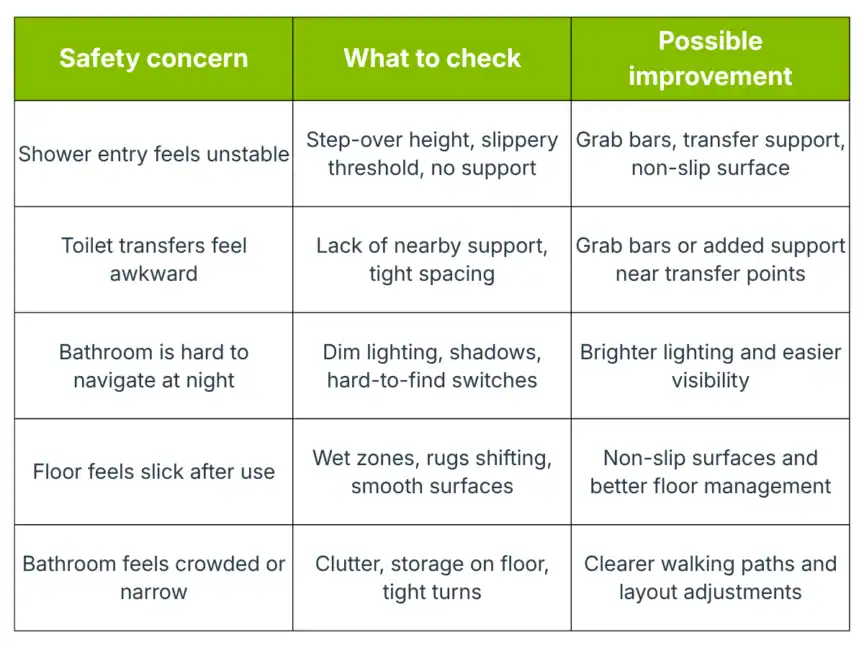
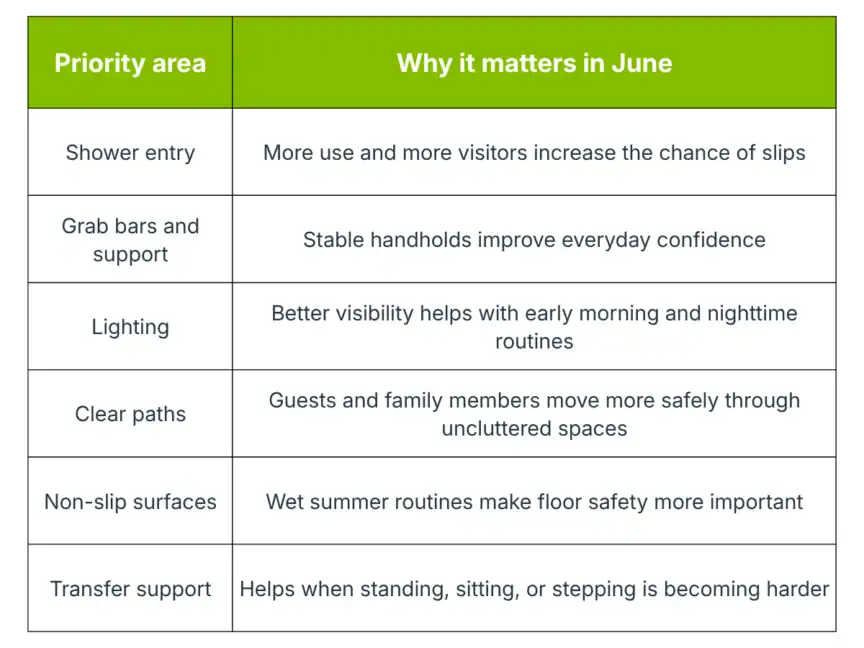
Quick Bathroom Safety Upgrade Table
Key Takeaways
When to Move Beyond a DIY Check
A quick home review is helpful, but some issues call for a closer look. It may be time for a professional consultation if:
- Shower or tub entry feels risky
- There is no good location for reliable support
- Bathroom layout makes movement harder
- A loved one is starting to avoid bathing independently
- You are planning for long-term senior bathroom accessibility
The right solution depends on the user, the space, and how the bathroom is used every day. A professional assessment can help you avoid guesswork and focus on improvements that actually fit the home.
FAQs
What should I check first during a June bathroom safety review?
Start with the highest-risk areas: shower entry, toilet transfer points, slippery flooring, and lighting. These are often the places where daily-use problems show up first.
Are grab bars worth adding even if no one has fallen?
Yes. Many homeowners add support before a fall happens. Well-placed grab bars Carencro families can depend on are often part of proactive bathroom fall prevention.
What improves shower safety the most?
That depends on the layout, but common improvements include stable support near entry, non-slip surfaces, and transfer-friendly setups when stepping in or out is difficult.
How do I know if a bathroom needs more than simple updates?
If daily movement feels awkward, shower entry feels risky, or a loved one needs extra help with transfers, it may be time to look at a more complete accessibility solution.
Is this only for seniors?
No. While older adults are a key audience, safer bathrooms also help guests, family caregivers, and households with children or changing mobility needs.
Make June a Good Time to Improve Bathroom Safety
A safer bathroom does not have to start with a major renovation. Often, it begins with a careful review of the space, a few smart upgrades, and the right support in the places that matter most.
If you are reviewing bathroom safety Carencro June concerns for your home, explore 101 Mobility Lafayette or learn more about bathroom safety solutions. When you are ready, Book a Free Consultation to find the right fit for your space and daily routine.