You’ve noticed the small things. Your parent pauses at the bottom of the stairs, they grip the railing a little tighter than they did last year, and they mention to you that their knees aren’t what they used to be. So you’re thinking about a stairlift. It’s a thoughtful idea but also a complicated one. Is it a gift, or does it feel like an intervention? Will it come across as caring, or as a hint that it’s time to leave the home they love?
There’s no single right answer. However, three factors can help you figure out if a stairlift is the right call this holiday season: your parent’s physical needs, the layout of their home, and how you approach the conversation. We’ve put together a few simple steps to help you talk with them and approach the conversation with confidence.
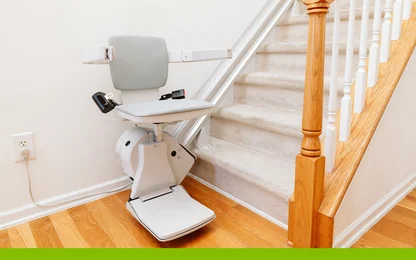
What Does a Stairlift Actually Do?
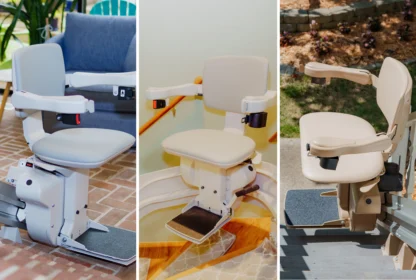
A stairlift is a motorized chair that travels along a rail mounted directly to the stair treads, not the wall. That distinction matters because it means installation doesn’t require structural changes to your parent’s home, and it won’t put extra stress on load-bearing walls.
Most stairlifts include a few standard safety and comfort features:
- Swivel seats that rotate at the top of the stairs for a safer, easier exit.
- Folding footrests and armrests that tuck away when not in use, keeping the staircase clear for other household members.
- Seat belts to keep the rider secure during the ride.
- Battery backups so the lift still works during a power outage.
- Remote call buttons that let the lift be summoned from either end of the staircase, which is ideal if two people share the stairs.
Straight vs. Curved Stairlifts: What’s the Difference?
Straight stairlifts are built for a single, uninterrupted flight of stairs. They’re typically available off-the-shelf, which means shorter lead times and a lower price point.
Curved stairlifts are custom-manufactured to follow a staircase that bends, turns, or crosses a landing. Each rail is built to the exact measurements of your parent’s staircase, so curved models take longer to produce and cost more than straight ones.
What Does a Stairlift Cost? Price Factors to Know
Stairlifts can range in price depending on fit, function, whether it’s straight or curved, number of landings, and other selected features. Straight stairlifts tend to be more affordable, while curved lifts require custom rails. Scheduling a free consultation will help to validate the right product and allow for accurate pricing.
A few other variables affect the final price:
- Staircase shape and length. Longer staircases and tighter curves require more material and labor.
- Rental options. Some providers offer short-term rentals, typically for straight staircases only, which can be a smart choice for a parent recovering from surgery rather than facing a long-term mobility need.”
Choose a rental unit if your parent’s need is temporary or the budget is tight. Choose new equipment if your parent plans to stay in the home long-term and wants the longest possible warranty coverage.
When looking at financial assistance, most health insurance usually doesn’t cover stairlifts. That said, some families find partial support through veterans’ benefits, Medicaid waivers, or local aging-in-place grant programs. Availability varies by state and situation, so it’s worth asking a mobility provider what options exist in your area.

Gift or Conversation? Making the Decision Together
Here’s the most important thing to know about buying a stairlift for a parent: it works best as a shared decision, not a surprise.
How Do You Know If the Timing Is Right?
According to the CDC, 1 in 4 older adults falls every year. That’s why it helps to know the signs. A few clues suggest your parent may be ready to talk about a stairlift:
- Resting partway up or down the stairs to catch their breath.
- Pulling hard on the handrail for support, rather than using it lightly for balance.
- Avoiding the upper floor altogether (i.e., sleeping downstairs, or skipping rooms they used to use daily).
- A recent fall or near-fall on the stairs.
If you’re noticing even one or two of these, it’s worth starting the conversation now rather than waiting for a more serious incident.
Want to learn more about fall prevention? The CDC STEADI program offers free, practical resources to help you and your parent stay steady at home.
How Do You Bring Up a Stairlift With a Parent?
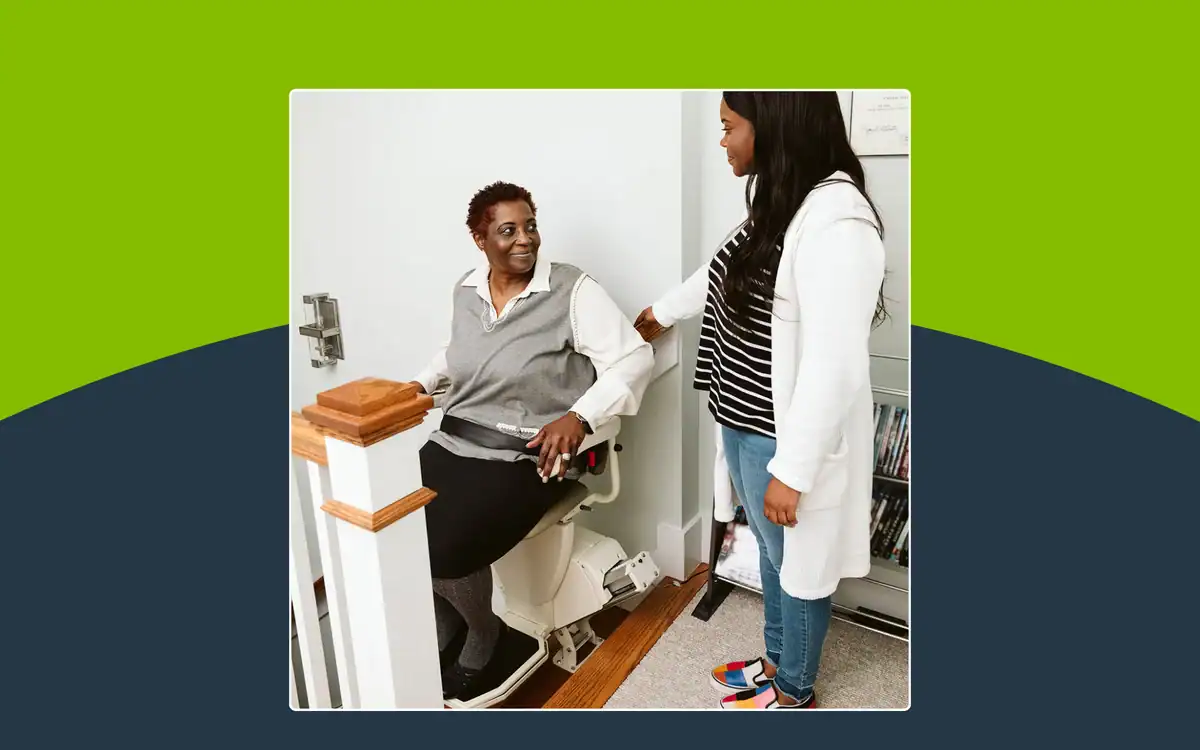
Frame the conversation around a goal your parent already has: staying in the home they love, safely and on their own terms. Aging in place isn’t a concession. It’s independence that’s supported by the right tools.
Instead of leading with, “I’m worried about you on the stairs,” try: “I want to help you stay in this house as long as possible. Can we look at a few ways to make that easier?” If your parent isn’t ready to commit to a stairlift outright, consider offering to schedule a free home accessibility assessment instead. It opens the door to the conversation without locking anyone into a decision before they’re ready.
The Buying Process: What to Expect
Once your family has decided a stairlift makes sense, the process generally looks like this:
- Schedule a home assessment. A mobility specialist measures your staircase, checks that there’s enough width to leave room for everyone else on the stairs when the lift is folded up, and talks through your parent’s specific needs.
- Review warranty terms. Ask what’s covered, for how long, and whether installation is included.
- Confirm service response times. If something breaks, how quickly can a technician come out?
Avoid DIY installation or buying a secondhand stairlift privately. A professionally reconditioned unit, measured and installed by a provider, can be a good lower-cost option, but a lift that’s even slightly mismatched to the staircase can create new safety risks instead of solving the original one.

Frequently Asked Questions
How much does a stairlift cost?
Stairlift prices start around $2,800 for a straight model. A custom curved stairlift price starts around $13,000. Your price depends on your staircase, whether it’s indoors or outdoors, and whether the unit is new or reconditioned. For a quote based on your home and your needs, book a free in-home consultation.
Will Medicare pay for a stairlift?
Typically, no. Original Medicare doesn’t cover stairlifts, and neither do most private health insurance plans. Some Medicare Advantage plans include home-safety benefits, so it’s worth checking your parent’s plan. Other families find partial support through veterans’ benefits, Medicaid waivers, or local aging-in-place grants, depending on location and eligibility.
Can a stairlift be installed on curved or narrow stairs?
Yes. Curved stairlifts are custom-built to follow the exact path of a staircase with turns or landings. For narrow staircases, a professional assessment confirms there’s enough clearance for both the lift and household foot traffic.
How long does stairlift installation take?
Straight stairlifts can often be installed in a few hours. Curved stairlifts take longer on both ends: the custom rail has to be manufactured first, which can take several weeks, and installation itself may take a full day. If you’re aiming for the holidays, start the process early.
Is a stairlift better than moving a parent to a one-story home?
For many families, yes. A stairlift lets a parent stay in the home filled with memories and community ties, often at a fraction of the cost and disruption of relocating. It works best when the rest of the home is otherwise manageable, and the parent wants to stay.
Giving a Gift That Gets Used
A stairlift makes a genuinely great holiday gift when three things line up: your parent is struggling with the stairs, they want to stay in their home, and they’re part of the decision from the start. If that sounds like your family’s situation, start now rather than waiting until the last minute. Schedule a free home assessment and get a written quote before the holiday season arrives.