Taking care of an elderly parent can be like walking a tightrope. You want to respect their autonomy, preserve dignity in aging, be mindful of your own caretaker burnout and, most importantly, keep them safe.
Many seniors struggle when it comes to getting up and down the stairs in their home. According to the CDC, falls are the leading cause of injury among those above 65, with one in four older adults reporting a fall every year. This has created a growing need for safe and reliable mobility solutions for stairs and there’s good news—there are more options available than ever to assist with this common problem.
But talking about mobility accommodations can be hard. Many seniors can be resistant to help—especially if it requires modifications to their home. 101 Mobility has helped countless people comfortably age at home with the help of stairlifts, enabling those of all ages to move around more freely and independently. We can work together to find the right solution for your loved one, no matter what mobility issues on the stairs are being faced.
The Elephant in the Room: Why Talking About Mobility Is a Hard Conversation to Start
Starting the conversation about a stairlift can be the hardest part. The topic is often met with resistance, not because your aging parent is being difficult, but because the topic is loaded with emotions. Mentions of potentially needing a mobility aid or accommodations like grab bars can be perceived as an accusation of weakness or a sign that they’re losing control. Your parent may fear losing their independence, feel like they’re becoming a burden, or simply have a subconscious reluctance to admit to a loss of ability.
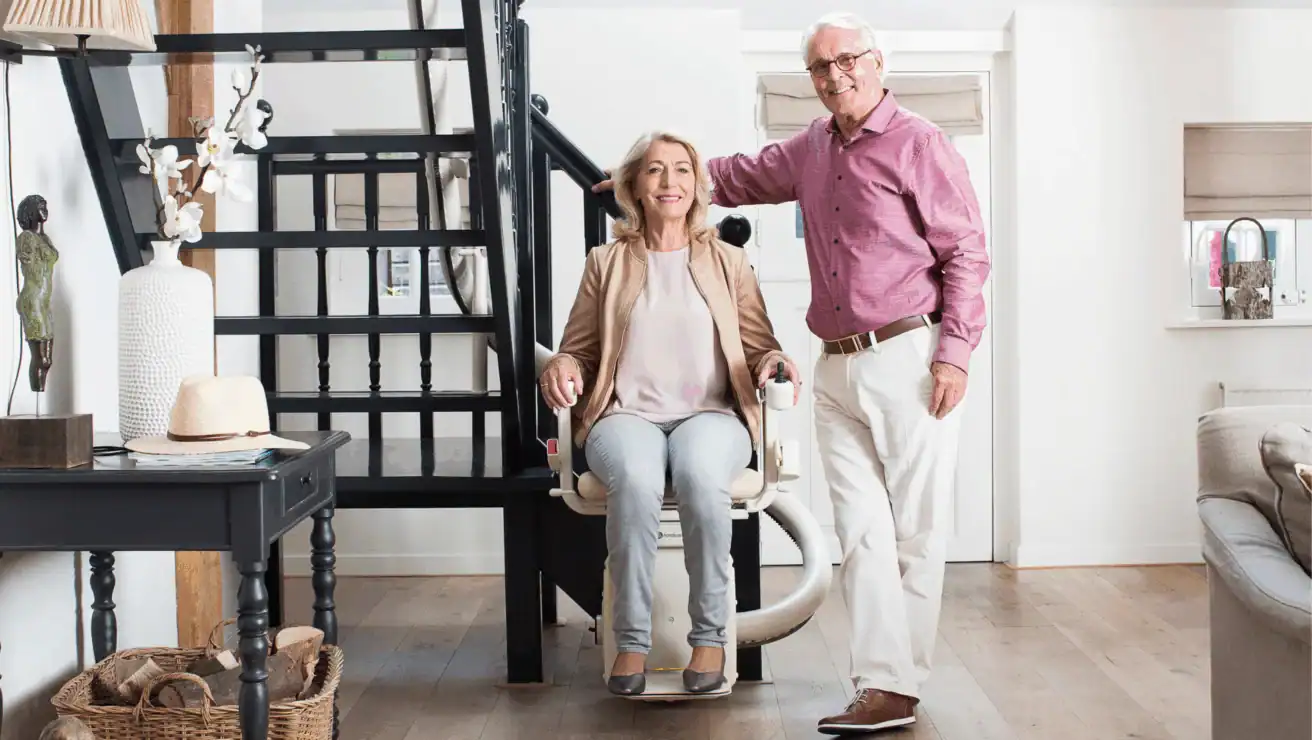
The key to a successful conversation isn’t to lecture or to present a prescription. Instead, it’s to approach the topic with empathy and understanding. A stairlift isn’t a symbol of decline. It’s a tool for retaining freedom and safety while enjoying the benefits of aging in place.
Before You Talk: Signs a Stairlift Might Be Necessary

Before raising the idea of a stairlift, watch for signs that it may be a useful tool. Subtle cues in behavior and physical movement can provide a data-driven, rather than emotional, foundation for the conversation.
- Physical Cues: Pay attention to how your parent moves on the stairs. Are they easily winded? Relying on the handrail or leaning on the wall for support? These physical signs are clear indicators that climbing stairs is becoming a struggle.
- Changes in Behavior: Notice if they start avoiding certain parts of the house. For example, have they moved their bedroom downstairs or stopped using the basement laundry room? This could be a sign that they’re actively trying to avoid the stairs.
- The “One Step at a Time” Method: Watch if they place both feet on each step before moving to the next. This cautious, slow movement is a clear and common indicator of instability and a fear of falling.
Beyond their behavior on stairs, keep an eye out for unsteady activity throughout your home, including how they stay safe in bathrooms and on outdoor walkways. Difficulty walking or maintaining balance elsewhere means the stairs are likely also a problem.
How to Start the Conversation: Framing It Around Their Needs
When you’re ready to talk to your parents about a stairlift, the way you frame the conversation is critical. Focus on their needs and desires, not your fears.
1. Focus on Independence, Not Limitations
The most effective way to frame the conversation is to present the stairlift as a tool for independence. A stairlift isn’t about what they can no longer do; it’s about what they can continue to do. Emphasize that it gives them safe and easy access to their entire home, from the bedroom upstairs to the workshop in the basement. It’s about maintaining their lifestyle on their own terms.
2. Use “I” Statements and Personal Stories
Clear, empathetic communication is a cornerstone in multigenerational households and should be at the center of difficult conversations. Instead of telling your aging parent “you need a stairlift,” focus on using “I” statements that express your concern. For example you might say, “I’m worried about you when you’re on the stairs, and I want you to be safe.”
If possible, prepare personal stories from friends or neighbors who have benefited from a stairlift. This can help normalize the idea and show that it’s a common solution for staying in your home longer. Try to avoid scare tactics or horror stories, but don’t shy away from reality. In the United States, 20–30% of older people who fall suffer moderate to severe injuries such as bruises, hip fractures, or head trauma, according to the World Health Organization.
3. Listen More Than You Talk
Be prepared for some resistance. This is a difficult topic for seniors, and they need to feel heard. Let them voice their concerns about cost, aesthetics, or a sense of “giving up.” It’s important to validate their feelings and acknowledge that it’s a big change. Your role is to listen and support, not to convince or argue.
4. Turn It Into a Collaborative Project
Avoid presenting the stairlift as a final and unilateral decision you’ve already made. Instead, invite your parents to be a part of the research process. Ask them, “Would you be willing to just look into some options with me?” This collaborative approach gives them a sense of control and ownership over the decision, making them more likely to accept a solution.
Addressing Common Parent Objections to a Stairlift

Once the conversation has started, you may hear some common objections. There are many myths about mobility aids your parent may be using to avoid accepting accommodations. When talking to an elderly parent about help, come prepared with compassionate and factual responses ready can help move the discussion forward.
They Say: I Don’t Need It Yet.
Response: That’s completely understandable. The great thing is, a stairlift is a proactive choice for peace of mind, not a reaction to a crisis. Think of it as a way to prevent a fall before it happens, so you can continue to enjoy your home without worry.
They Say: It Will Ruin the Look of My Home.
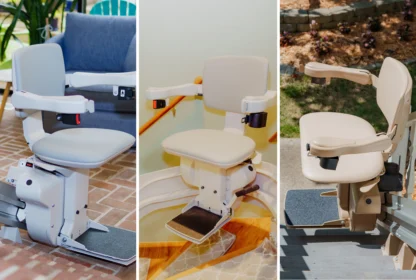
Response: Stairlifts don’t have to look like bulky medical equipment anymore. Modern stairlifts from 101 Mobility blend seamlessly into homes and can come in stylish finishes to match any décor. At 101 Mobility, we’re ready to recommend a number of solutions, especially if your priority is form and function. Our stairlifts feature a rail mounted to the steps, not the wall, which means there’s no structural work or damage to your home.
They Say: It’s Too Expensive.
Response: I know it seems like a big investment, but it’s important to think about the long-term value. A stairlift is often much more affordable than alternatives like moving to a new home or paying for a live-in caregiver.
Stairlift prices can vary, with the average cost running from $4,000 to $5,000. But there are many ways to make a stairlift affordable. 101 Mobility offers stairlift rentals for lower costs, used units, and other solutions. When you meet with a consultant, we can work to find a stairlift option that meets your needs and fits your budget. There are also financing options, tax deductions, or even grants and programs for veterans that might be available to help with the cost.
They Say: I’m Worried About Getting Stuck if It Breaks Down.
Response: That’s a valid concern. The good news is that modern stairlifts are designed with safety and reliability as a top priority. Most of them run on a battery that charges at a station, so even if the power goes out, the lift will still work, ensuring you won’t be left stranded. They’re also equipped with safety sensors that stop the chair if they detect an obstruction on the rail, preventing damage and a fall. If an issue does arise, you’ll have access to professional technicians who can diagnose and repair any problems.
They Say: My Stairs Are Too Narrow or Have a Curve.
Response: Stairlifts aren’t just for straight, wide staircases. Modern stairlifts can be installed on staircases as narrow as 24 inches. For staircases with curves, landings, or turns, our consultants can look for different solutions that can be used to create a safe and comfortable experience. This might mean two straight stairlifts or a customized curved stairlift built for your home. We also offer high-quality outdoor stairlifts.
The Next Step: A Free, No-Pressure Consultation From 101 Mobility
Once you’ve had a breakthrough, the next step is to move the conversation from an emotional one to an actionable one. You can take the next step with a free, no-pressure consultation from 101 Mobility.
During the consultation, a certified mobility consultant will visit your home to assess your specific needs and challenges. They’ll provide an objective voice in the discussion, which can help de-escalate any remaining tension. This allows your parent to get a feel for the equipment, ask questions, and see how a stairlift would actually look and work in their home, giving them a sense of control over the decision-making process. There’s no obligation to buy, just an opportunity to gather all the information you need to make the best choice for your family.
Tough conversations shouldn’t get in the way of safety for parents aging in place. Empower your senior parents to tackle the stairs and regain independence with a stairlift or one of the many other accessibility solutions and mobility products from 101 Mobility. Explore our wide range of stairlift options or schedule a free consultation today.