How to Choose the Right Accessibility Solution for Your Rayne Home
Choosing the right accessibility upgrade is not just about picking a product. It is about finding the safest, most practical fit for your home layout, mobility needs, and long-term goals.
For some Rayne homeowners, that means making entry access easier. For others, it means finding a better way to move between floors. The right solution depends on how you move today, how your needs may change, and how you want to live in your home over time.
This guide breaks down the most common accessibility solutions in Rayne so you can compare your options with confidence.
Start With the Problem You Need to Solve
Before comparing products, get specific about the challenge.
Ask yourself:
- Is the biggest issue getting in and out of the home?
- Are interior stairs becoming difficult or unsafe?
- Does the user walk with assistance, or use a wheelchair or scooter?
- Is the goal a short-term fix, or a long-term aging in place plan?
- Will a caregiver also need safer, easier access?
When the problem is clear, the right solution becomes easier to identify.
Compare Accessibility Solutions in Rayne by Home Layout
Home layout often determines what is realistic.
A few examples:
- A home with front steps but plenty of yard space may be a good fit for a ramp.
- A multi-story home with a straight staircase may be a strong candidate for a stairlift.
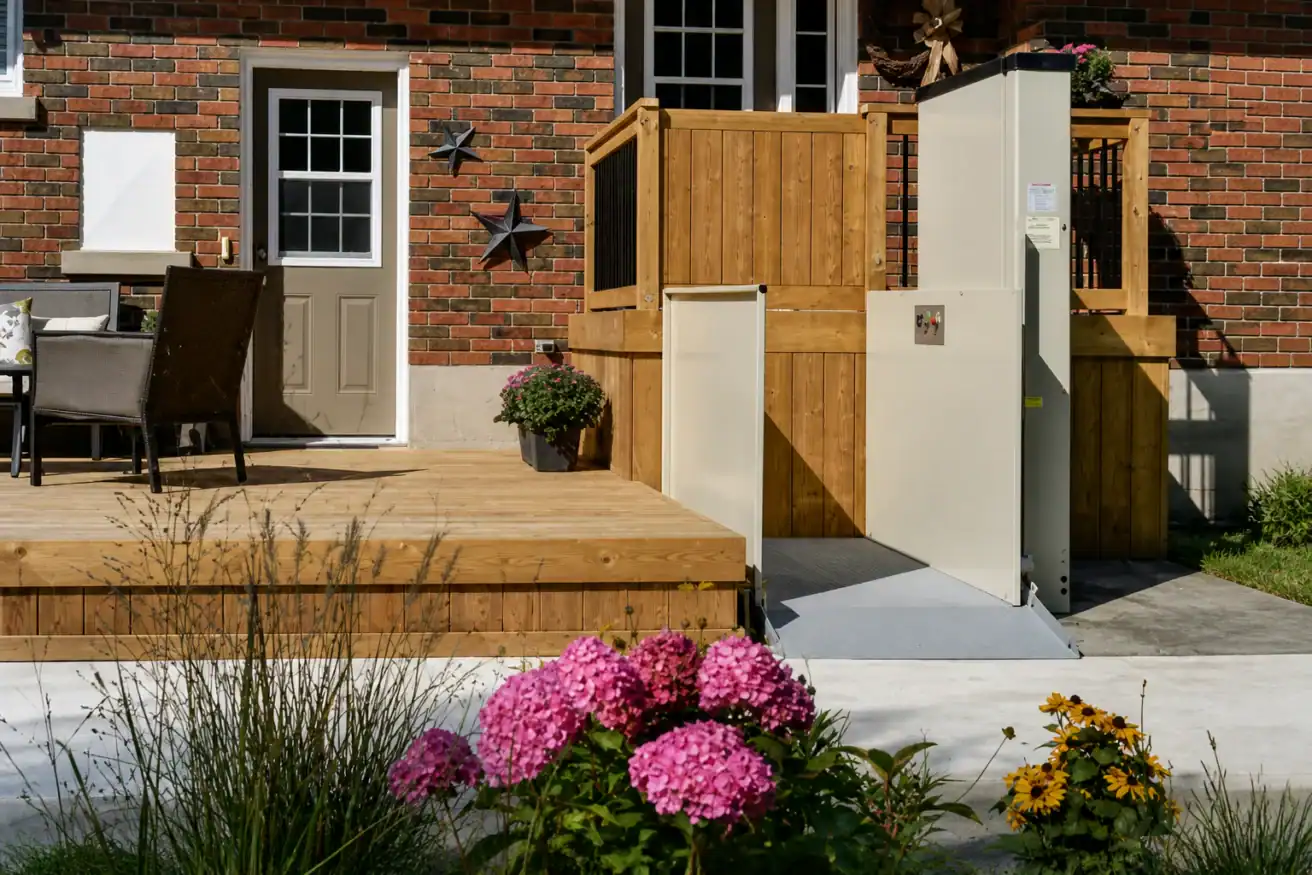
- A homeowner who uses a wheelchair may benefit more from a platform lift than a stairlift.
- A family planning for long-term accessibility in a multilevel home may want to compare a home elevator vs platform lift.
The goal is not to force a product into the space. The goal is to match the space to the right level of access.
When a Stairlift Makes Sense
A stairlift is often a strong fit when someone can still sit down and stand up safely but wants a more secure way to navigate stairs.
A stairlift may make sense if:
- The user is mobile but unsteady on stairs
- The staircase is used frequently every day
- Preserving the current layout matters
- The home has straight or curved indoor stairs
- The user wants a lower-impact alternative to bigger renovations
A stairlift is usually less disruptive than major structural work, and it can be an effective way to improve daily safety in a multilevel home.
Stairlift vs Ramp
The stairlift vs ramp question usually comes down to how the person moves and how much space the property allows.
A stairlift is often better when:
- The main barrier is an interior staircase
- The user can transfer into a seat
- Outdoor or yard space is limited
- The goal is to stay in the home with minimal changes
A ramp is often better when:
- The user relies on a wheelchair, scooter, or walker
- Step-free entry is the priority
- The home has enough room for a safe incline
- Caregivers need easier entry and exit too
If the user cannot safely transfer onto a stairlift seat, a ramp or lift-based option may be the better path.
Home Elevator vs Platform Lift
When comparing a home elevator vs platform lift, think about who will use it, how often, and what level of access is needed.
A home elevator may be the better choice when:
- The home has multiple levels
- Long-term convenience is a major priority
- The homeowner wants a solution integrated into daily living
- Multiple household members may use it
- The plan is to remain in the home for years
A platform lift may be the better choice when:
- The user needs to stay in a wheelchair during travel
- The elevation change is modest
- The application is porch, deck, garage, or short-rise access
- Space and budget call for a more targeted solution
For wheelchair users, a platform lift can be a practical alternative where a ramp would require too much space. For broader whole-home planning, a home elevator may offer more flexibility over time.
Match the Solution to Mobility Needs
The same home layout can require different solutions depending on the user.
If the user walks but feels unstable
A stairlift, grab bars, or entry modifications may be enough to improve safety and confidence.
If the user uses a wheelchair or scooter
A ramp or platform lift is often the better fit because it supports device access directly.
If transfers are difficult
Focus on solutions that reduce the need to sit, stand, or pivot during use.
If a caregiver is involved
Choose options that make assistance easier, not harder. A solution should improve safety for everyone in the home.
This is why a one-size-fits-all answer rarely works. The right recommendation depends on how the person actually moves through the home each day.
Think Beyond Today With Aging in Place Solutions
Many families wait until mobility becomes urgent. In many cases, it is smarter to plan earlier.
The best aging in place solutions help you stay ahead of the next challenge, not just react to the current one.
That might mean:
- Choosing a home elevator instead of a shorter-term workaround
- Installing a ramp before steps become a daily obstacle
- Replacing a difficult transfer point with a platform lift
- Making access improvements now to avoid a rushed decision later
If your goal is to remain in your home long term, the best solution is often the one that still works as needs change.
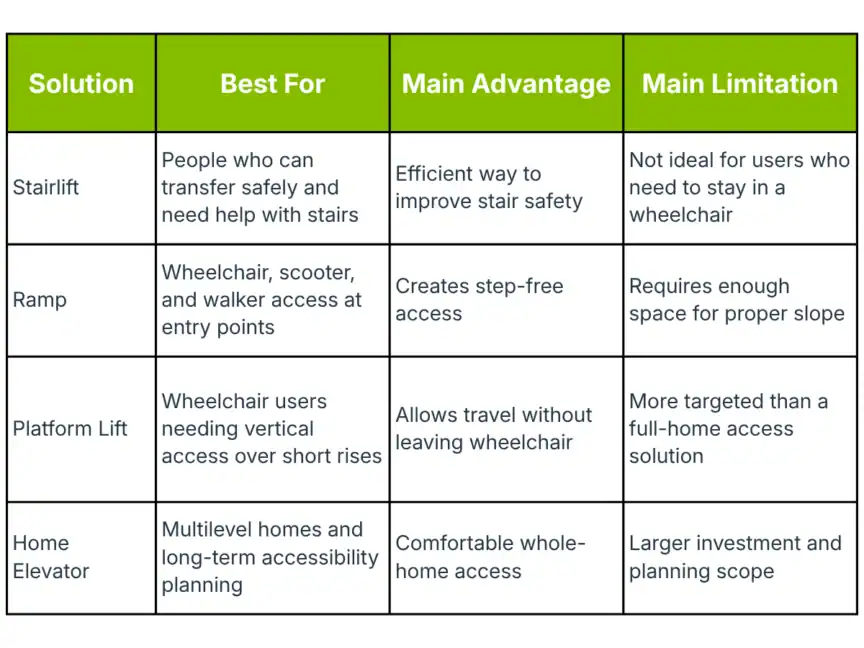
Quick Comparison Table
How to Narrow Down the Right Choice
If you are deciding between options, use this simple filter:
- Define the access point. Is the challenge at the entry, on interior stairs, or between floors?
- Define how the person travels. Walking, assisted walking, wheelchair, or scooter use changes the answer.
- Define the timeline. Temporary recovery needs and long-term accessibility goals are not the same.
Once those three points are clear, the shortlist usually becomes much smaller.
Why a Mobility Consultation Matters
The best decisions are made in the home, not just online.
A professional mobility consultation helps identify:
- Which solutions are realistic for the layout
- What the user can safely operate
- Whether the home has enough space for a ramp or lift
- Which option best supports aging in place goals
- What changes may be worth planning for now instead of later
That kind of in-home evaluation can save time, reduce guesswork, and help families avoid investing in the wrong solution. 101 Mobility emphasizes personalized in-home consultations and customized recommendations rather than one-size-fits-all product sales.
If you are exploring accessibility solutions in Rayne, a consultation can help turn a long list of possibilities into a practical next step.
You can also learn more about available solutions through the 101 Mobility Lafayette location or request help directly through their free consultation page.
FAQ
What is the best accessibility solution for a home with stairs?
It depends on the user. A stairlift is often a good choice for someone who can transfer safely. A platform lift or home elevator may be better if wheelchair access is needed.
Is a ramp better than a stairlift?
Not always. In the stairlift vs ramp decision, ramps are often better for wheelchair and scooter access, while stairlifts are often better for seated users who need help on stairs.
What is the difference between a home elevator and a platform lift?
A home elevator is typically designed for broader multilevel access throughout the home. A platform lift is usually more targeted and often works well for wheelchair access over shorter vertical rises.
When should I start planning aging in place solutions?
Earlier is usually better. Planning before mobility needs become urgent gives you more options and more time to choose the right fit.
What happens during a mobility consultation?
A specialist reviews the home layout, access barriers, mobility needs, safety concerns, and long-term goals, then recommends solutions that fit the space and the user.
Choose the Right Fit for Your Home and Goals
The best accessibility upgrade is the one that supports safe movement, fits your home, and still makes sense as needs change.
Whether you are comparing a stairlift vs ramp, weighing a home elevator vs platform lift, or planning aging in place solutions for the future, the next step is a professional evaluation of your space.
Book a Free Consultation to get personalized guidance on the right accessibility solution for your Rayne home.