How I Evaluate Stairlift Fit in Broussard: Space, Comfort, and Daily Use
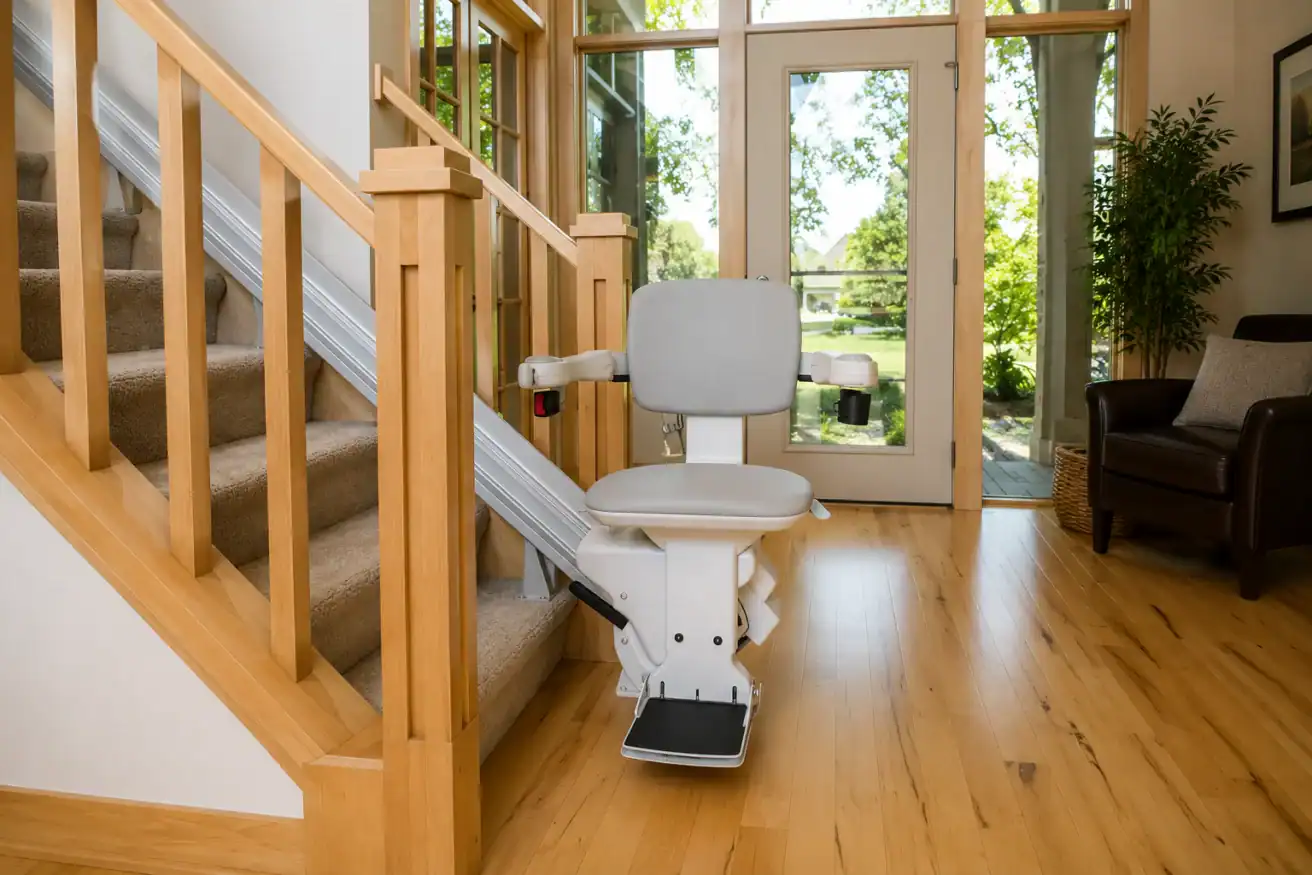
When I evaluate stairlift fit in Broussard, I do not begin by choosing a model from a catalog. I begin with the person who will use the lift, the shape of the staircase, and the way the household moves through the space every day.
A stairlift must do more than travel from one floor to another. It must provide a stable place to sit, allow safe entry and exit, fit without creating unnecessary obstacles, and remain practical for the other people using the stairs.
That is why an in-home assessment matters. Measurements are important, but the best recommendation also accounts for comfort, transfers, controls, power, household traffic, and long-term service.
Key Takeaways
- Staircase shape determines whether a straight or custom curved rail may be appropriate.
- Clear space at both landings is essential for safer boarding and exiting.
- Seat height, width, armrests, and footrest position should fit the individual user.
- Controls must be easy for the user or caregiver to operate consistently.
- Folding components can preserve space near doors, walkways, and narrow landings.
- Installation planning should include power access, household traffic, training, and future service.
What Determines Stairlift Fit in a Broussard Home?
A proper stairlift fit combines three areas:
- The staircase: Its shape, width, incline, landings, turns, doors, and nearby obstacles.
- The user: Their height, sitting posture, transfer ability, hand function, balance, and mobility needs.
- Daily use: How often the lift will operate, who else uses the stairs, and how the equipment will fit into the household routine.
I consider all three before recommending one of our stair access solutions.
A technically installable stairlift is not automatically the right stairlift. The final setup also needs to be comfortable, practical, and manageable over time.
My Stairlift Assessment in Broussard Starts With the Staircase
Every stairlift assessment in Broussard begins with the physical route the lift must travel.
Straight, Curved, or Interrupted Staircase
A straight staircase generally has one uninterrupted run from the lower landing to the upper landing. This configuration may accommodate a straight rail.
A curved staircase changes direction. It may include:
- A turn or bend
- A spiral section
- An intermediate landing
- Pie-shaped steps
- Multiple connected flights
- A change in incline
These configurations usually require a rail designed around the staircase.
I also check whether a staircase that appears straight has an obstruction or landing condition that changes the installation. A doorway, short hallway, or step extending beyond the main flight can affect the final design.
Stair Width and Rail Position
Stairlift rails are normally secured to the stair treads rather than attached to the wall. I measure the staircase to determine how much usable walking space will remain after the rail and chair are installed.
I review:
- Total stair width
- Width at the narrowest point
- Handrail placement
- Wall projections
- Trim and baseboards
- Newel posts
- Furniture near the stairs
- The stairlift’s folded profile
The objective is to provide access for the user while preserving a practical route for other household members.
Doorways, Hallways, and Obstructions
The lower end of a rail may extend near a doorway, hallway, or frequently used walkway. In these situations, I determine whether a folding rail or another configuration may help keep the area clear.
At the upper landing, I look for doors, railings, walls, furniture, and changes in floor level that could interfere with boarding or exiting.
These details are central to responsible stairlift installation planning.
How I Evaluate Landing and Transfer Space
The ride itself is only one part of using a stairlift. The person must also be able to approach the chair, sit down, secure themselves, and exit at the destination.
I evaluate both landings for:
- A stable standing or transfer area
- Space for a walker or cane
- Wheelchair positioning, when applicable
- Caregiver access
- Nearby doors and door swing
- Floor transitions
- Lighting
- Handhold locations
- The direction the seat faces during transfer
At the upper landing, a swivel seat can help the user turn away from the staircase before standing. Depending on the selected model and the user’s needs, the swivel may operate manually or with powered assistance.
The transfer plan must match the individual. Someone who walks independently but avoids stairs may need a different configuration than someone who uses a walker, relies on a caregiver, or has difficulty rising from a seated position.
Why Seat Comfort Is Part of Safe Stairlift Fit
Comfort is not an extra feature. It affects whether the user can sit securely and will use the lift consistently.
During the assessment, I consider:
- Seat width and depth
- Armrest spacing
- Seat-to-footrest distance
- Adjustable seat height
- Footrest size
- Back support
- The user’s knee and hip position
- The effort required to sit and stand
- The user’s weight and the model’s rated capacity
A seat that is too low may make standing difficult. A seat that is too high may prevent the user’s feet from resting securely on the footrest. Armrests that are too narrow or too wide can also affect comfort and stability.
Whenever possible, I want the user involved in the selection process. Their experience in the chair matters as much as the measurements.
Controls Must Match the User’s Abilities
Most stairlifts use a control positioned on an armrest. Many systems also include wireless controls that allow the chair to be called or sent from either landing.
I evaluate whether the user can operate the control comfortably and consistently. Factors include:
- Hand and finger strength
- Grip
- Reach
- Coordination
- Vision
- Reaction time
- Preferred operating hand
- Caregiver involvement
A control should not require an awkward reach or excessive pressure. I also explain what the user must do to start, stop, park, and charge the lift.
Remote controls can be useful in a shared household. For example, one family member can send an empty chair to the other floor so it is available for the next person.
How I Review Power and Everyday Reliability
Many residential stairlifts run from rechargeable batteries while receiving charging power from a nearby household outlet. This design may allow continued operation during a temporary power interruption, although the number of available trips depends on the model, battery condition, staircase length, and usage.
During the consultation, I check:
- Outlet availability
- Charging locations
- Rail parking position
- Cord routing
- Battery access
- Whether the outlet can remain dedicated
- How the system indicates a charging or operating issue
I also explain where the chair should be parked so that it remains charged. A reliable stairlift depends on both the equipment and the user understanding its normal operating routine.
Straight vs. Curved Stairlift: Which Fit Do I Recommend?
The straight vs. curved stairlift decision is primarily determined by the staircase—not by style preference.
| Evaluation Factor | Straight Stairlift | Curved Stairlift |
|---|---|---|
| Staircase shape | One straight, uninterrupted flight | Turns, bends, intermediate landings, or multiple flights |
| Rail design | Manufactured in a straight section and fitted to the stair run | Custom-designed around the staircase |
| Planning process | Standard measurements and site review | Detailed staircase measurements and custom rail planning |
| Installation complexity | Generally more straightforward | More customized due to rail geometry |
| Typical application | Simple straight residential staircase | L-shaped, U-shaped, spiral, or multi-flight staircase |
| Main fit question | Can a straight rail connect both landings safely? | How should the rail follow the staircase and position the chair at each landing? |
I do not recommend forcing a straight system onto a staircase that requires a custom solution. The rail must follow a safe, workable route while providing suitable boarding and exit positions.
Homeowners comparing models can also review general stairlift pricing information before the consultation. Final recommendations and costs depend on the staircase, equipment, options, and installation requirements.
I Evaluate How the Stairlift Will Affect Everyone Else
A stairlift becomes part of the home, so I consider more than the primary user.
I look at:
- How much stair width remains when the chair is folded
- Whether the footrest and armrests fold away
- Whether the rail affects a doorway
- How other family members use the staircase
- Whether children or pets live in the home
- Where the chair will normally be parked
- Whether a caregiver needs to walk beside or near the user
- Whether items are regularly carried between floors
A narrow staircase may require a compact chair profile or careful parking position. A rail near an entryway may benefit from a folding section. A busy household may need clear operating rules so that the stairlift remains available without disrupting normal movement.
This is one reason I prefer assessing the home in person rather than relying only on photographs or rough dimensions.
Long-Term Service Is Part of My Recommendation
I do not consider the job complete when the equipment is installed. The stairlift must be supported throughout its working life.
Before recommending a system, I consider:
- Product reliability
- Availability of replacement parts
- Diagnostic features
- Warranty coverage
- Access for future service
- The user’s ability to report a problem
- Local maintenance and repair support
- Whether the product suits expected long-term needs
Professional installation also includes testing the system and demonstrating its operation. The user and family should understand the seat belt, swivel function, footrest, controls, obstruction sensors, charging routine, and safe transfer process.
Our service and support options help customers continue receiving assistance after installation.
My Stairlift Installation Planning Checklist
| Assessment Area | What I Review | Why It Matters |
|---|---|---|
| Staircase configuration | Straight run, turns, landings, incline, step consistency | Determines the appropriate rail type |
| Stair width | Narrowest usable point and folded equipment profile | Preserves practical stair access |
| Lower landing | Doors, hallways, furniture, and rail extension | Prevents avoidable obstructions |
| Upper landing | Transfer space, swivel direction, railing, and floor level | Supports safer entry and exit |
| User fit | Height, posture, seat dimensions, foot position, weight capacity | Improves comfort and stability |
| Transfer needs | Walking aid, wheelchair, caregiver assistance, standing ability | Guides seat and landing configuration |
| Controls | Hand function, reach, vision, and preferred side | Promotes consistent operation |
| Power | Outlet location, charging points, and parking routine | Supports reliable daily use |
| Household traffic | Other stair users, children, pets, and shared routines | Keeps the installation practical |
| Long-term support | Service access, diagnostics, warranty, and parts | Protects long-term usability |
What Happens After the Assessment?
After I complete the evaluation, I explain which configuration best matches the home and the user.
The process typically includes:
- Consultation and measurements: I examine the staircase, landings, user needs, and household routine.
- Product recommendation: I explain the suitable stairlift category, available options, and why I am recommending that configuration.
- Installation planning: Measurements, rail placement, power access, and landing positions are confirmed.
- Professional installation: The rail and chair are installed, adjusted, and tested.
- User demonstration: I review normal operation, transfers, charging, safety features, and basic care.
- Ongoing support: The customer has a local resource for service questions and future maintenance.
This guided process is part of the 101 Mobility difference. My goal is to recommend the solution that fits the home—not simply the first product that can be installed.
Frequently Asked Questions
How do I know whether a stairlift will fit my Broussard home?
An in-home assessment is the most reliable way to determine fit. The evaluation should include staircase shape, width, landing clearance, rail placement, transfer needs, power access, and the stairlift’s folded dimensions.
Does a stairlift attach to the wall?
Most residential stairlift rails are secured to the stair treads rather than the wall. The exact installation method depends on the product and staircase.
How much space does a stairlift take up?
Space requirements vary by model. The rail remains along the staircase, while many seats, armrests, and footrests fold to reduce the chair’s profile when it is not in use. I measure the narrowest section before recommending a system.
Can a stairlift work on stairs with a turn or landing?
Yes. A staircase with a turn, curve, or intermediate landing may require a custom curved rail. The entire route must be evaluated to determine the appropriate configuration.
What happens if the power goes out?
Many residential models operate from rechargeable batteries and may continue running temporarily during an outage. Actual operating capacity varies by product, battery condition, staircase length, and usage.
Can two people use the same stairlift?
A stairlift may be shared when both users fit within the selected model’s specifications and can operate it safely. Seat dimensions, weight capacity, controls, and transfer needs must work for each person.
Is professional installation necessary?
Professional installation helps ensure that the rail is positioned correctly, the equipment is securely installed, operating features are tested, and the user receives instructions. Stairlift installation is not simply a matter of placing a chair on the stairs.
Should I choose a stairlift based on price alone?
Price is one factor, but it should not be the only one. Staircase compatibility, transfer safety, comfort, controls, product support, warranty coverage, and long-term service can all affect the value of the installation.
Find the Right Stairlift Fit for Your Broussard Home
The right stairlift should fit the staircase, support the user’s transfers, provide a comfortable seated position, and work naturally within the household’s routine.
That is what I evaluate before making a recommendation.
If you are considering a stairlift in Broussard, the team at 101 Mobility of Lafayette can assess your staircase, discuss the available options, and help you plan a solution around your home and daily needs.
About the Author
Jonas Boutte is the owner of 101 Mobility of South Louisiana. With hands-on training from leading accessibility-equipment manufacturers, he helps customers evaluate stairlifts, ramps, platform lifts, home elevators, and other customized mobility solutions. Jonas is involved throughout the consultation, recommendation, installation, and support process, with a focus on honest guidance, safe access, and long-term independence.