Home Lift Options in Baker: When a First-Floor Alternative Is Worth Exploring
For many homeowners, the first sign of a mobility challenge is not a fall. It is a change in routine.
Maybe the upstairs bedroom starts feeling less practical. Maybe the laundry room, bathroom, or family space on another level becomes harder to reach. Maybe the conversation shifts from “How do we keep using the whole house?” to “Do we need to stop using part of it?”
Before you give up access to upper floors, it may be worth exploring home lift options in Baker. In the right home, a residential lift solution can support safer movement, better daily convenience, and a more sustainable long-term plan than rearranging life around one floor.
When “Just Stay Downstairs” Stops Being a Good Long-Term Plan
Moving daily life to the first floor can sound simple at first. In reality, it often creates new limitations.
A dining room may become a temporary bedroom. Storage may need to be relocated. A preferred bathroom may no longer be easy to use. Family members may start avoiding part of the home altogether. Over time, that workaround can feel more disruptive than helpful.
That is why many families begin looking at multi-level accessibility solutions before making major changes to how the home is used. The goal is not only to reduce strain on stairs. It is to preserve how the home functions.
Home Lift Options in Baker Homeowners Commonly Explore
Not every lift serves the same purpose. The best fit depends on the home layout, the user’s mobility needs, and whether the goal is comfort, wheelchair access, long-term planning, or all three.
Home elevators
A home elevator Baker homeowners may consider is often a strong fit for long-term residential use in a multi-story home. Home elevators are designed to move people between levels comfortably and can also help with carrying household items from floor to floor.
They are often explored when:
- The home has two or more regularly used levels
- Stair use is becoming less practical
- The homeowner wants a permanent accessibility solution
- Planning ahead is part of the goal
Through-floor home lifts
Some residential home lifts are designed to travel between floors with a smaller footprint than a traditional elevator. These can be appealing when homeowners want a compact, discreet option that integrates into everyday living.
They are often worth exploring when:
- Space efficiency matters
- The user wants simple floor-to-floor travel
- The home needs a less extensive alternative to a traditional elevator
Vertical platform lifts
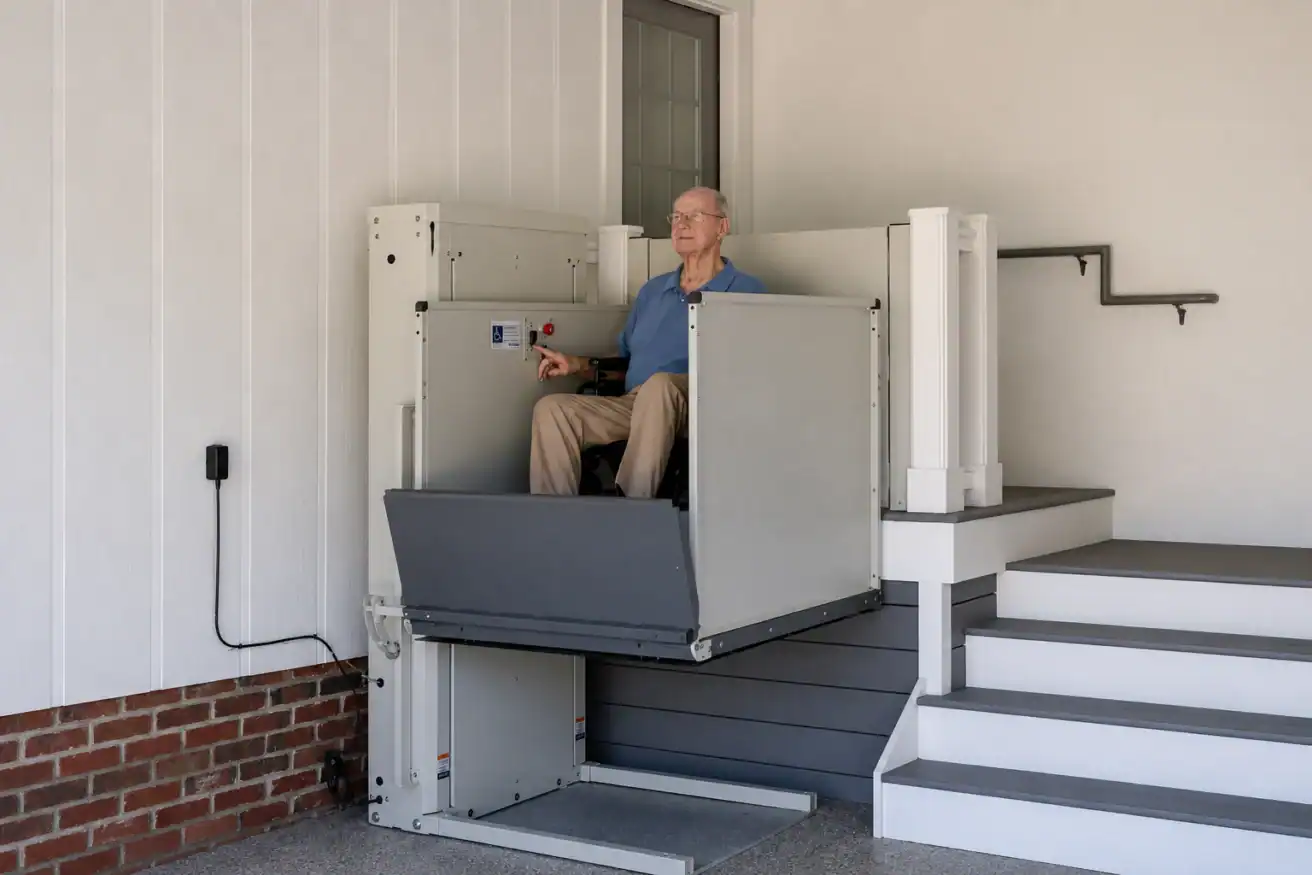
A vertical lift or vertical platform lift is often a different category from a home elevator. These lifts are commonly used when wheelchair access is a priority and vertical travel is needed over a shorter rise or specific access point.
They can be a strong fit in some residential settings, especially when accessibility needs are more functional and device-oriented.
Home Elevator Baker vs. Vertical Lift: What’s the Difference?
This is one of the most common planning questions.
A home elevator is typically chosen for comfortable residential travel between floors as part of a broader aging-in-place or accessibility strategy. A vertical platform lift is often chosen when the priority is moving a wheelchair user vertically without requiring a transfer.
Here is a simple comparison:

The right answer depends less on labels and more on how the home is used every day.
A Simple Way to Think About Multi-Level Accessibility
If you are weighing whether to keep life on one floor or restore access to the full home, this framework can help:

Signs It May Be Time to Consider a Lift Instead of Rearranging the House
You do not need to wait for stairs to become impossible.
It may be worth exploring lift options when:
- A staircase is being used less often because it feels tiring or risky
- An upstairs bedroom, bathroom, or laundry area is still important to daily life
- A loved one is recovering from surgery or adjusting to reduced mobility
- A family is discussing whether a downstairs relocation is really the best answer
- The homeowner wants to make proactive decisions instead of reactive ones
In many cases, the bigger question is not whether the first floor can work. It is whether it should have to do all the work.
Why Aging in Place Planning Often Starts Before There Is a Crisis
Good aging in place planning is not about expecting the worst. It is about protecting choices.
Many homeowners begin planning when they notice smaller frustrations: slower stair use, more fatigue, or a growing awareness that the home may need to function differently in the future. Addressing access early can create more flexibility and reduce the pressure of making a rushed decision later.
That is one reason lift solutions are often part of broader accessibility planning. Instead of shrinking how the home is used, the right solution can help preserve independence, convenience, and confidence.
What to Expect From a Home Accessibility Consultation
A professional consultation should focus on fit, not guesswork.
That process may include:
- Reviewing which levels of the home matter most
- Identifying who will use the lift and how often
- Evaluating available space and layout constraints
- Discussing whether a home elevator, through-floor lift, or vertical lift makes the most sense
- Recommending a customized path forward
A strong provider does more than sell equipment. They help identify the access challenge, explain the available options clearly, and recommend a solution that matches the home and the person using it.
For homeowners in the Baton Rouge area, that can start with a local consultation through the 101 Mobility Baton Rouge location.
Why Many Families Explore This Before Making Major Room Changes
Converting a dining room, den, or office into a first-floor bedroom may solve one problem while creating several others.
It can affect privacy, routines, hosting, storage, and the basic feel of the home. By comparison, a lift solution may allow the home to keep working more like home.
That does not mean a lift is right for every house. It means the option is often worth evaluating before making permanent lifestyle changes around the staircase.
FAQ
What are the main home lift options in Baker homeowners should consider?
The main categories usually include home elevators, through-floor home lifts, and vertical platform lifts. The right choice depends on layout, mobility needs, whether wheelchair access is required, and how the home is used day to day.
When is a home elevator worth exploring instead of moving downstairs?
A home elevator may be worth exploring when upper floors still matter to everyday living and moving downstairs would disrupt how the home functions. It is often considered when planning for long-term access, comfort, and independence.
Is a vertical lift the same as a home elevator?
No. A vertical lift is often used for direct platform travel, especially when wheelchair access is a key need. A home elevator is usually planned as a residential floor-to-floor transportation solution for broader daily use.
How does multi-level accessibility planning help with aging in place?
Multi-level accessibility planning helps homeowners keep using more of their home safely over time. Instead of limiting life to one floor, it supports better access, more independence, and a smoother long-term living plan.
Should families wait until stairs become unsafe before exploring options?
Usually not. Early aging in place planning gives families more time to compare solutions, think through layout needs, and make a decision before the situation feels urgent.
What is the first step if we are comparing lifts for a multi-story home?
Start with a consultation. A professional assessment can help determine whether a home elevator, through-floor lift, or vertical platform lift is the better fit for the home and the people using it.
Take the Next Step
If you are trying to decide between rearranging life around the first floor and keeping your full home accessible, it may be time to look at the alternatives.
101 Mobility helps homeowners evaluate practical accessibility solutions for real homes and real daily routines. If you are exploring home lift options in Baker, Book a Free Consultation to discuss the right path forward.