For Home Health and Therapy Teams: What to Send Before a Home Accessibility Evaluation in New Orleans
New Orleans Home Accessibility Referral Process-Before I Go There Are Four Things: The Route Problem, The Mobility Device or Transfer, Timing, and The Known To The Care Team.
There are things that help prepare me to go, and things that show product fit. Measurements and pictures are helpful, but I always do a final check myself.
Local Home Health and Therapy teams in New Orleans, Metairie, Kenner, Gretna and Marrero don’t need to diagnose the accessibility solution to give a referral. As 101 Mobility of New Orleans, I don’t need a referral that names a product to assist in the description of the problem. The more specific the description, the better.
What is needed is a clear description of the problem, product names should not be included.
What is needed
Where is the Route Problem
This is the place where the product will assist the most.
There are several examples to describe where a product is most needed. Examples include not having the ability to use the stairs to get to a bedroom, not having the ability to use the route to the front door of the house, or not having the ability to use the current route for the bed to wheelchair transfer.
For New Orleans cases, describing the movement is very helpful.
Some examples of movements are:
- Going in and out of the house
- Going to a different level in the house
- Going through a door
- Going around a bed
- Going to the bathroom
- Going to a different level in bed
In what is considered the ‘home’ environment, if a ramp is required, describe how a person approaches the issue rather than simply putting in a ramp order.
One of the main issues when talking about wheelchair ramps is the slope of the surface at the top and bottom, as well as the surface at the approach. A product such as Multi-Fold Ramps may be considered only after the route and access problem are understood.
The same applies to wheelchair lifts. Describing the issue in greater detail will help to determine if the described product is appropriate.
If the barrier has been properly described, determining the product that will remove this barrier is the next step.
Product Description
If equipment is being used to provide mobility, describe the product to the best of your ability or take a picture of it if available. This information will assist in determining the mobility needs and equipment that will help fulfill that need.
I also want to talk about the difference between a route and a transfer problem when discussing mobility equipment for home health cases.
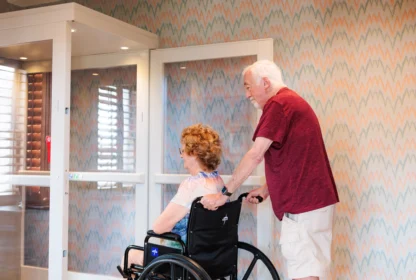
A patient who is unable to self-propel from a bed to a wheelchair requires a different kind of evaluation from the patient who is able to self-transport to and from the wheelchair but is unable to maneuver the wheelchair through the front entrance of a facility.
To better focus the problem:
- What is the name of the mobility aid being used?
- Where is the problem area?
- What is the nature of the surface being used to effect the transfer?
- Are there one or more persons providing assistance to the patient?
- What part of the current process is creating the most difficulties?
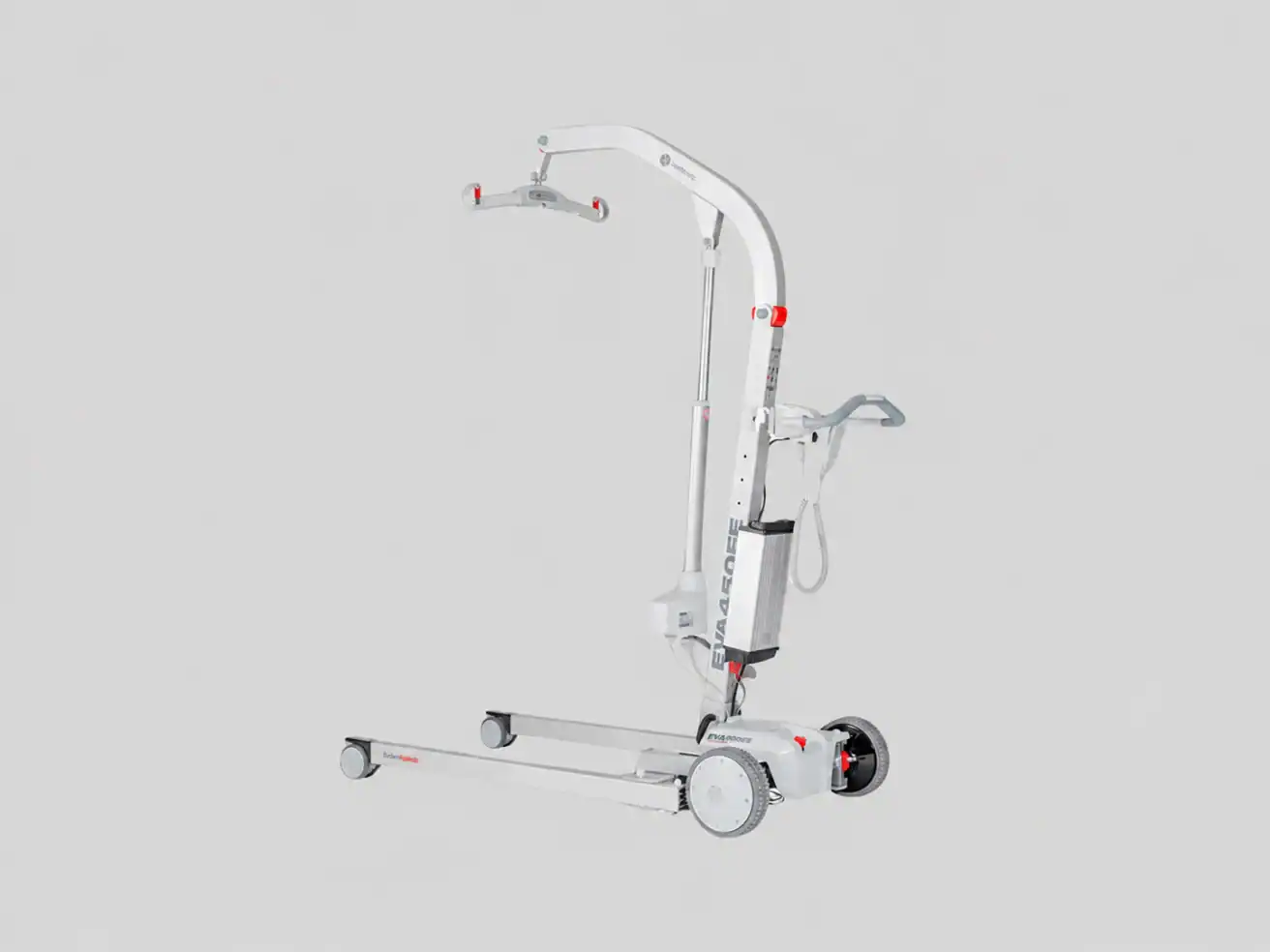
If the case is considered a patient handling case, one of the equipment options that is considered is a power assisted lifting device like the Handicare EvaDrive. However, the simple presence of the word “transfer” in the documentation of the case is not sufficient to support the equipment option.
I also need to understand the existing mobility aids in use, the situation with regard to the caregivers and the layout of the room where the transfer is taking place.
The last of the four aspects of the case documentation is the time element.
If the case is related to the rehabilitation discharge, I also need to know the expected discharge date.
I understand that one picture represents just a single step. Hundreds of pictures can explain an entire route.
Regarding an entry concern, photos may include some or all of the following:
- The path leading to the entry
- Any stairs and the landings
- The entry way
- The space beyond the entry way
Regarding stairs, photos of both landings and the entire stairway are appreciated.
Photos of room layouts are helpful when a transfer is of concern. The photos should not and will not reveal any personal or private medical information. The goal is to express the limits of the space I need to assess.
Photos and measurements of space may also be helpful, such as the width of a staircase, the height of a staircase, the width of a door frame, the width of a hallway, the distance between obstacles, the size of a landing, the size of a stairs turn, the clear width of a doorway, and the clear height of a doorway.
The care team may not be able to provide measurements and may depend on my judgment to assess if a space will support the use of specific equipment.
I rely on photos and measurements to determine the limits of space. There may be a concern that photos and measurements will give false reassurance. This is less of a concern for me. Measurements can also be provided by the care team.
The circumstances in which I will verify measurements depend on many factors including photos, space, and functionality. I examine movement and Judge if a space will functionally support the use of equipment.
I will assess the rise, landing, doorway, approach, mobility device, and available space when evaluating accessibility.
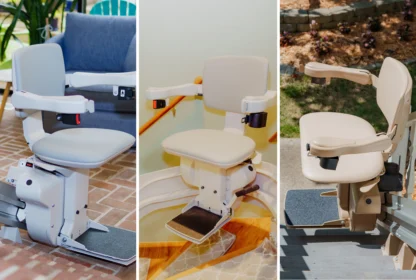
I consider the geometry of the staircase, the use of the surrounding doors and landings, and available space for boarding and alighting from the stairs, as well as the use of other staircase neighbors, when evaluating staircase accessibility. A product such as the Bruno Elan Straight Rail Stairlift may be evaluated only after those conditions are checked.
To assess the accessibility of a transfer, I examine the mobility device, available space, and the surfaces of the two locations involved in the transfer. I will also consider the working space of the caregiver and the available route.
It is helpful to the evaluation process to have a general idea of the mobility device; however, this information should not dictate the type of equipment recommended.
Evaluating the accessibility of a stairlift, wheelchair ramp, or patient lift, as determined by a therapist, is appropriate; however, I will determine if that equipment is appropriate to be installed in the home.
I will recommend an alternative equipment if the current equipment does not appropriately meet the client’s needs.
If the care team believes the client requires a wheelchair ramp to gain access to the home, and the team is correct in their assessment, I will recommend a wheelchair ramp. If the client only requires access to the home on a temporary basis, I will recommend a temporary access solution, if one is available.
I will explain my recommendations to the care team.
The recommendation depends on several factors including the family, the mobility device, the service environment, and the expected use of the device.
Assuming the family wishes to pursue this process, next steps will be determined by the specifics of the mobility device. These may include ordering, installing, and/or adjusting the device. Furthermore, it may be important to educate family members about the correct use of the device.
The device is intended to be permanently part of the service environment.
The service and support groups of our company are available to assist you with use and/or service issues pertaining to the mobility/accessibility devices.
Referral partners should consider the following format for providing useful information to our group.
What is the obstacle? What is the mobility device/transfer? When is the deadline? What have you already observed?
I will determine the rest.
If you are part of the home-based health, therapy, rehabilitation, case management or other allied health professional groups in New Orleans, Metairie, Kenner, Gretna, Marrero, or surrounding areas, you are invited to schedule a free in-home consultation to assess the mobility needs of your client.
What are the four most important things to include in a home accessibility case consultation?
The obstacle, mobility device required, time/date constraint, and what have you observed.
Do therapists need to provide accessibility product recommendations?
No. Therapists just need to provide a functional description of the issue. Product recommendations require an evaluation by me. I need to assess if the product will integrate with the equipment and the home environment.
Can pictures and measurements be used to replace an in-person evaluation?
Pictures and measurements can be used to describe an environment to an extent, but an in-person evaluation is always needed.
What kind of pictures should be included with an accessibility referral?
Pictures should be of the area that encompasses the problem as well as any relevant approach and landing areas.
What should be included in an accessibility referral if it is also associated with a discharge?
The referral should describe the problem in enough detail to justify the need for an accessibility product. The pictures do not need to be a discharge checklist.
What happens after an accessibility referral is made?
The customer or family is contacted to schedule an evaluation. The product options are explained and the family is given information on the product and its use. The product is installed and supported by the company after the sale.
About the Author
Jonas Boutte is the owner of 101 Mobility of South Louisiana and has hands-on training from accessibility-equipment manufacturers including Bruno, Harmar, Stiltz, Staying Home, EZ-ACCESS, National Ramp, and others. He works with families and care teams throughout Greater New Orleans from the initial accessibility consultation and recommendation through installation coordination and ongoing support.