What to Expect After Hip or Knee Replacement: A Bryan/College Station Home Mobility Checklist

Coming home after a hip or knee replacement is a huge milestone — but it’s also the point where a lot of the real work begins. The first few weeks at home are critical for healing safely, avoiding falls, and building the strength you’ll need to get back to your normal routine. The good news: a little preparation before surgery (or right after) can make that recovery period dramatically smoother.
Here’s what to expect during recovery, and a practical checklist to help you or a loved one get the home ready.
What Recovery Typically Looks Like
Every recovery timeline is different, but most hip and knee replacement patients follow a similar general arc:
- First 1–2 weeks: Limited mobility, reliance on a walker or crutches, swelling and discomfort are common. Most daily tasks — showering, using the bathroom, getting in and out of bed — require extra time and often extra help.
- Weeks 3–6: Physical therapy ramps up. Many patients progress from a walker to a cane. Stairs, uneven surfaces, and longer walks start becoming manageable, but fatigue and balance issues are still common.
- 6 weeks to 3 months: Strength and range of motion continue to improve. Most people are back to light daily activities, though full recovery (especially for knees) can take 6–12 months.
Throughout all of this, the home environment plays a bigger role in recovery than most people expect. Stairs, slippery bathroom floors, and low furniture aren’t just inconvenient — they’re genuine fall risks during a period when a fall could mean a serious setback or reinjury.
The Home Mobility Checklist
Before You Come Home
- Clear the path. Remove throw rugs, loose cords, and clutter from walkways, especially between the bedroom and bathroom.
- Set up a recovery station on the main floor if possible, so you’re not relying on stairs in the early days.
- Stock up on essentials (medications, easy-to-prepare meals, water bottles) within easy reach so you’re not bending, reaching, or making extra trips.
Bathroom Safety
- Install grab bars near the toilet and inside the shower or tub.
- Consider a raised toilet seat — this small change makes a big difference in the first few weeks, especially after hip surgery when bending is restricted.
- A shower chair or transfer bench reduces fall risk and fatigue during bathing.
- Use a non-slip bathmat both inside and outside the tub or shower.
Bedroom
- Make sure the bed is at a height where feet touch the floor comfortably when seated on the edge — not too low, not too high.
- Keep a nightlight or clear path to the bathroom for nighttime trips.
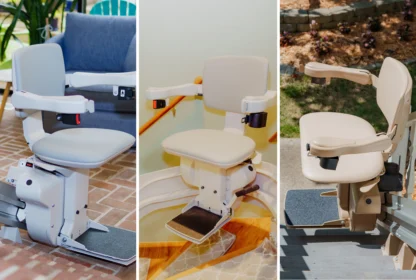
- If stairs stand between you and your bedroom, consider a temporary sleeping setup downstairs, or talk to us about stairlift options if stairs will be a long-term challenge.
Stairs and Entryways
- Ensure handrails are secure on both sides of any staircase, if possible.
- Check that entryway thresholds aren’t a tripping hazard and consider a temporary ramp if steps at the front or back door make coming and going difficult.
- If stairs are unavoidable multiple times a day, this is one of the most common points where patients ask about stairlifts or porch lifts — even as a short-term rental solution during recovery.
Mobility Aids
- Confirm you have the right walker, cane, or crutches fitted to your height before you leave the hospital or surgical center.
- Ask your care team whether a wheelchair makes sense for longer distances early on (getting to appointments, navigating larger homes).
- Many patients don’t realize equipment like this can often be rented short-term rather than purchased, which is worth asking about if you expect a full recovery within a few months.
Kitchen and Living Areas
- Rearrange frequently used items to waist height to avoid excessive bending or reaching.
- Keep a stable chair with armrests in commonly used rooms — armrests make sitting and standing significantly easier post-surgery.
- Consider a reacher/grabber tool for dropped items or hard-to-reach shelves.
When to Ask for Professional Help
If your home has multiple stairs, narrow doorways, or a layout that makes the checklist above difficult to implement, it may be worth a professional mobility assessment before surgery rather than scrambling afterward. Small modifications — a stairlift, a portable ramp, grab bar installation — can be the difference between a stressful recovery and a smooth one.
At 101 Mobility of The Woodlands & Conroe, we work with patients and families across Montgomery County to set up homes for a safe recovery, often on a short timeline before a scheduled surgery date. Whether you need a temporary rental or a longer-term installation, we can help you determine what makes sense for your home and recovery timeline.
Getting your surgery scheduled soon? Contact us for a free in-home mobility assessment — we’ll help you check off this list before you even head to the hospital.
Don’t wait until you’re home to figure out what your house needs.
Schedule a free in-home mobility assessment with 101 Mobility of The Woodlands & Conroe before your surgery date. We’ll walk through your home with you, flag any fall risks, and recommend the right equipment — whether that’s a short-term rental for recovery or a longer-term solution like a stairlift or ramp.
📞 Call us today at or visit our website to schedule your assessment. Serving The Woodlands, Conroe, and all of Montgomery County.
Serving Bryan/College Station, The Woodlands, Conroe, Spring, Kingwood, and Montgomery County, Texas.
Citations:
What to Expect after Hip or Knee Replacement – Rothman Orthopedics. https://rothmanortho.com/stories/blog/what-to-expect-after-hip-or-knee-replacement
Creating a Safe and Comfortable Home for Elderly Loved Ones: 5 Essential Tips. https://www.angelicacare.com/post/creating-a-safe-and-comfortable-home-for-elderly-loved-ones-5-essential-tips