Video: TODAY/NBC News, reported by Vicky Nguyen.
NBC’s TODAY Show recently featured how home modifications like stairlifts, ramps, and grab bars help seniors stay safely in their own homes. One-time accessibility upgrades average around $10,000, compared to roughly $3,000 per month for a retirement facility. 101 Mobility Long Island offers free in-home assessments across Nassau, Suffolk, and eastern Queens to help families find the right fit.
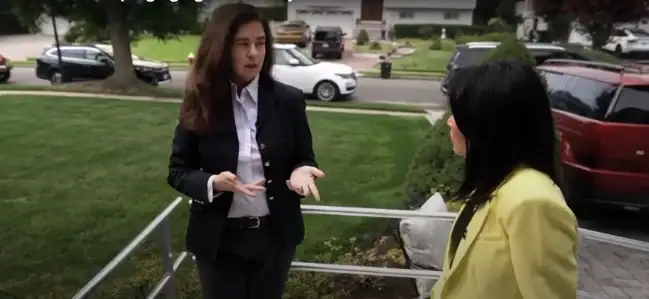
Your home holds your memories, routines, and your sense of self. For most people, leaving it is the last option, not the first choice. That’s exactly what NBC’s Vicky Nguyen explored in a segment that aired on the TODAY Show on September 4, 2026, titled “How New Tech is Helping Aging Adults Stay in Their Home.” This shift reflects what seniors have been saying for years. According to AARP, the vast majority of adults over 50 want to stay in their current home as they age. The reality of the challenge is navigating stairs, bathrooms, and entryways that weren’t built with mobility in mind.
The TODAY segment didn’t stop at theory. It told the story of a couple whose home transformation shows exactly what’s possible when the right equipment meets the right expertise.
The Story of Tina and Rios: From Unsafe to Accessible
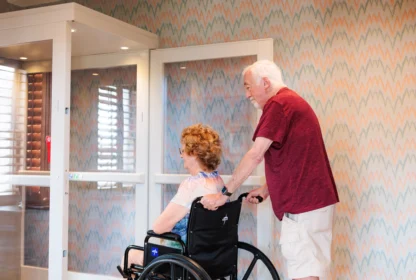
Tina, 88, and Rios, 92, are the kind of couple most people hope to become, but their house wasn’t built for the bodies they have now. Stairs had become a daily risk. Simple tasks carried the quiet threat of a fall. Rather than packing up a lifetime of memories, they modified their home instead.
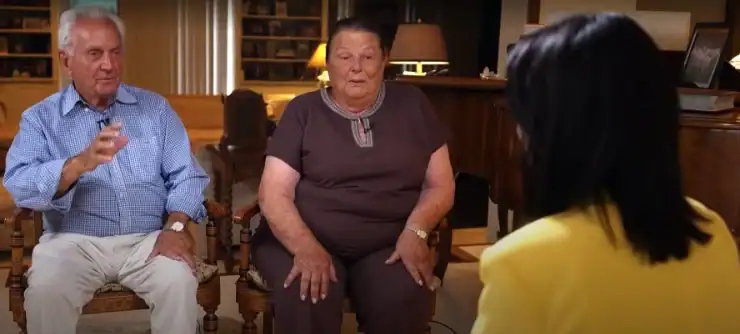
The TODAY segment followed their transformation step by step: a stairlift installed to make upper floors reachable again, grab bars added where balance mattered most, and other accessibility upgrades woven into the home they already loved. The result wasn’t a clinical retrofit. It was still their home, just safer.
Their story is a clear answer to a question many families ask quietly: is it possible to stay home safely? For Tina and Rios, the answer was yes.
What Home Accessibility Upgrades Did the TODAY Segment Feature?
The segment highlighted a handful of proven solutions, each addressing a specific safety concern inside the home.
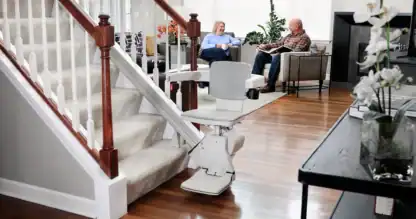
Stairlifts
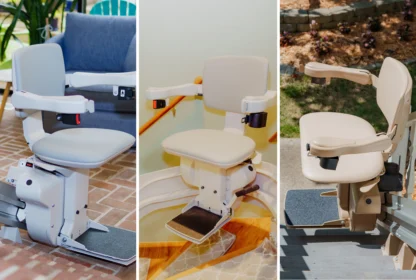
A stairlift carries a person up and down the stairs while seated, removing the physical strain and fall risk that stairs create. Modern stairlifts are built for straight, curved and even outdoor entryway staircases, so the solution fits the home rather than forcing the home to change.
Wheelchair Ramps
Wheelchair ramps replace steps at entryways, giving wheelchair and walker users a smooth, safe path in and out of the house. They’re especially valuable for anyone who uses a mobility device daily or is recovering from surgery.
Grab Bars and Bathroom Safety Modifications
Bathrooms are one of the most common locations for falls among older adults. Grab bars, non-slip surfaces, and other bathroom safety modifications give users something stable to hold onto exactly where they need it most.
The Role of a Certified Aging in Place Specialist
A Certified Aging in Place Specialist evaluates a home’s layout, the resident’s mobility level, and daily routines to recommend modifications that actually solve the problem, not just add equipment. This expertise is what turned Tina and Rios’s house back into a home they could move through confidently.
Is Aging in Place Cheaper Than a Retirement Facility?
The TODAY segment put real numbers behind this decision. A one-time home accessibility modification, including equipment like stairlifts and ramps, typically costs around $10,000. A retirement facility, by comparison, averages roughly $3,000 per month.
“People assume making a home accessible means a renovation and a huge bill. It usually does not,” said Kuester. “A ramp, a stairlift, a few changes in the bathroom, and a house that felt unsafe becomes workable again. I want families to know there is a lot of room between doing nothing and moving out.”
Run the math over a year, and the retirement facility costs about $36,000 which is more than three times the one-time investment in staying home. Over multiple years, the gap only widens.
This doesn’t mean a retirement facility is the wrong choice for every family. Some situations call for round-the-clock medical care that a home simply can’t provide. However, for seniors who are mobile with the right support and want to remain in their own space, the financial case for aging in place is hard to ignore.
Why Long Island Families Trust 101 Mobility for Home Accessibility
Behind every successful home modification is a team that knows the homes they’re working in. On Long Island, that team is led by Kim Kuester and the 101 Mobility Long Island staff, based out of Farmingdale.
The 101 Mobility Long Island team has installed more than 960 stairlifts and 740 ramps, served over 7,400 families, and completed more than 9,000 free home consultations. That depth of experience matters when every staircase, landing, and entryway is different. Split-levels, Cape Cods, attached row houses, steep front stoops; these local homes all present their own challenges, and the Farmingdale team has installed solutions for homes like these for years.
This experience extends across Nassau and Suffolk counties, as well as eastern Queens, including Hempstead, Huntington, Smithtown, Islip, Bayside, and Jamaica.
Every project starts with a free in-home assessment from 101 Mobility Long Island, where a specialist walks through the home, listens to the family’s concerns, and recommends solutions built around how the home is actually used. There’s no cost, and no pressure to commit before you have real answers.
What to Expect From a Free In-Home Assessment
Booking an assessment is the first step toward a safer home. Here’s what the process typically looks like:
- A home visit from a specialist. Someone from the local team comes to you, examines your stairs, entryways, and bathrooms, and talks through your specific concerns.
- A personalized recommendation. Based on your home’s layout and your mobility needs, the team will provide you with personalized recommendations. Whether that’s a straight stairlift, a curved stairlift, a ramp, or bathroom modifications.
- Clear pricing and timelines. You’ll know what the project costs and how long installation takes before you decide anything.
- Professional installation. Once you move forward, certified technicians handle the work, often completing it in a matter of hours or days, not weeks.
Your Home. Your Independence. Your Next Step.
Tina and Rios didn’t have to choose between safety and the home they love. With the right modifications and the right team behind them, they got both. That same path is available to families across Long Island and eastern Queens. A free in-home assessment from 101 Mobility Long Island is the simplest way to find out what’s possible for your home.
Schedule your free assessment or call (516) 774-1961 to speak with the Farmingdale team today.
Source: Nguyen, Vicky. “How New Tech Is Helping Aging Adults Stay Safe in Their Home.” Saturday TODAY, NBC News, www.today.com/video/how-new-tech-is-helping-aging-adults-stay-safe-in-their-home-269334597886.
Frequently Asked Questions
Overall pricing for aging in place home modifications vary based on your specific needs, and home layout. The 101 Mobility team will always provide you with upfront pricing during your free in-home consultation.
Professional stairlift installation is typically completed in a matter of hours for most straight staircases. Curved staircases require custom-built rails, which may add time to the process, but installations are generally completed within days of the initial assessment.
101 Mobility Long Island, based in Farmingdale, serves communities throughout Nassau and Suffolk counties and eastern Queens, including Hempstead, Huntington, Smithtown, Islip, Bayside, and Jamaica.
Yes. 101 Mobility Long Island offers free in-home consultations with no obligation to purchase. A specialist visits your home, assesses your needs, and provides recommendations and pricing before you make any decisions.
Anyone evaluating multiple accessibility needs, such as stairs, bathroom safety, and entryways, benefits from a Certified Aging in Place Specialist. Their training helps match the right combination of solutions to a home’s layout and a resident’s specific mobility level.