Caregiver-Friendly Mobility Solutions in Abbeville: Equipment That Makes Daily Assistance Easier
Providing care at home often means helping with transfers, repositioning, bathroom access, and movement from room to room. Those tasks may seem routine, but they can quickly become physically demanding for caregivers and uncomfortable for the person receiving care.
The right equipment can make a major difference. Thoughtful mobility upgrades can reduce strain, improve transfer safety, and make daily care feel more manageable. For families looking into caregiver mobility solutions in Abbeville, the goal is not just adding equipment. It is creating a safer, more workable home environment for everyone involved.
Why Caregiver Mobility Solutions Matter at Home
Many caregiving challenges happen during simple daily movements:
- Getting out of bed
- Moving to a chair or wheelchair
- Standing up from a seated position
- Getting into the bathroom safely
- Navigating steps or uneven entry points
When those tasks rely on manual lifting alone, the risk goes up for both people. Caregivers may deal with back, shoulder, or joint strain. The person receiving care may feel unstable, rushed, or uncomfortable during transfers.
That is why mobility equipment is often one of the most practical home care improvements a family can make. The right setup can support safer routines, more consistent assistance, and better comfort day to day.
Caregiver Mobility Solutions Abbeville Families Should Know
Not every home needs the same equipment. The best solution depends on the person’s mobility level, the caregiver’s role, and the layout of the home. In many cases, the most effective approach combines transfer equipment with accessibility upgrades that make movement easier overall.
Patient lifts for safer transfers
A lift can help when a person has limited weight-bearing ability or needs more support moving between surfaces. Common options include:
- Portable patient lifts: useful for bed-to-chair, chair-to-toilet, and similar transfers
- Ceiling lifts: helpful for repeated transfers in the same space and for reducing manual effort
- Sit-to-stand lifts: designed for individuals who can bear some weight but still need assistance
For families researching a patient lift Abbeville solution, the key question is not just which model looks best. It is which type matches the person’s abilities, daily routine, and transfer needs.
Transfer equipment for everyday assistance
Not every care situation requires a full lift system. In some homes, simpler transfer equipment may be the right first step. That can include:
- Transfer boards
- Pivot or turn-assist devices
- Gait support tools
- Repositioning aids
- Low-friction transfer accessories
These tools can be useful when the individual still has partial mobility but needs help moving safely and predictably.
Home patient handling upgrades beyond the lift
Home patient handling often works best when the full environment supports care. A transfer may start in the bedroom, continue through a hallway, and end in the bathroom. If any part of that path is tight, slippery, or awkward, the whole task becomes harder.
Helpful upgrades may include:
- Bathroom safety improvements
- Grab bars and support points
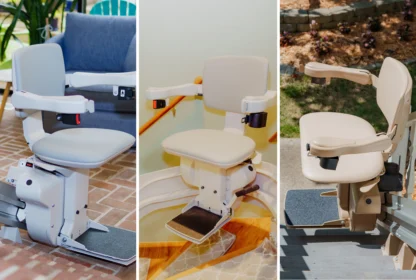
- Stair access solutions
- Ramp access at entrances
- Room layout adjustments for better clearance
Which Equipment Helps Most in Common Care Situations
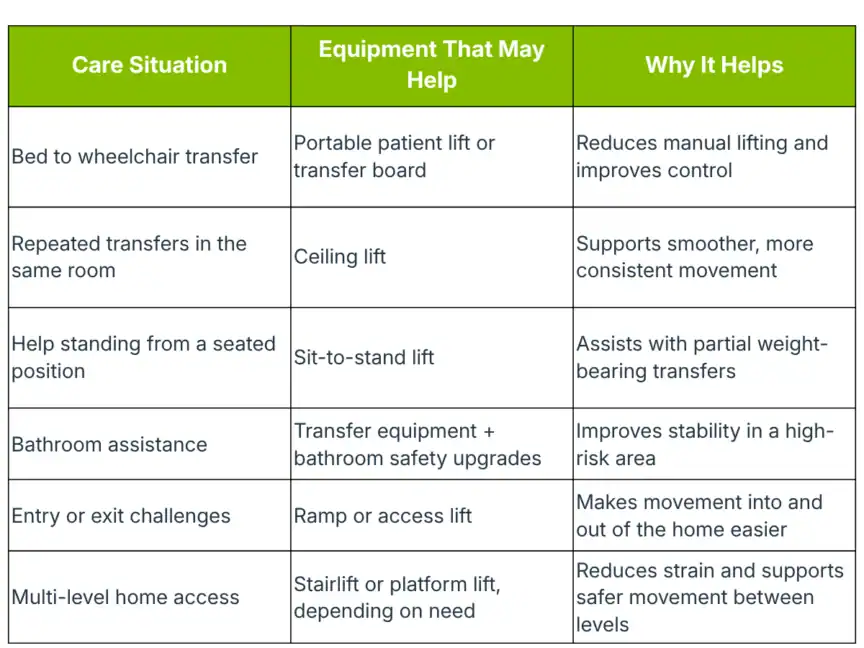
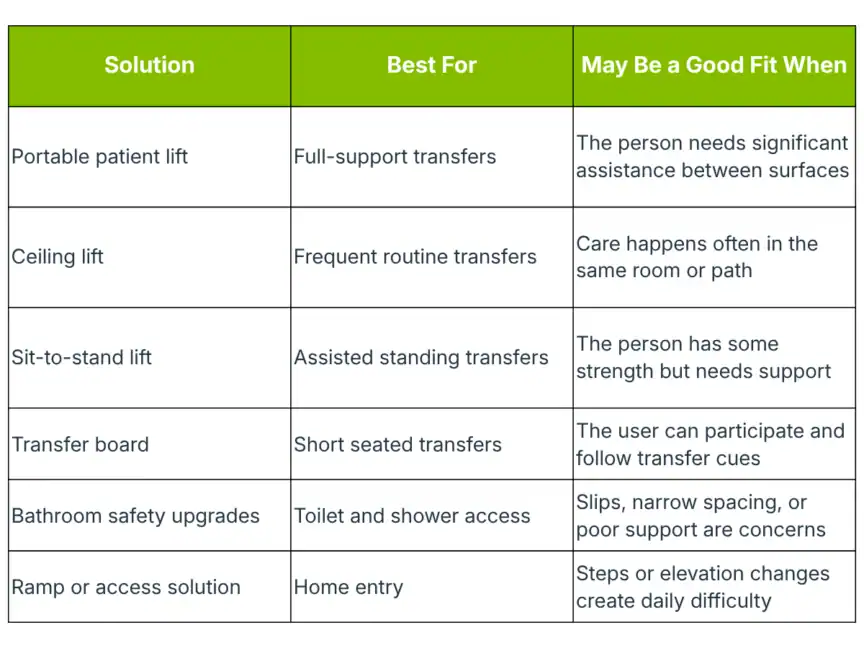
Quick comparison chart: what each solution is best for
How the Right Equipment Supports Caregiver Safety
Caregiver safety is not only about preventing major injuries. It is also about reducing the repeated strain that builds up over time.
The right equipment can help caregivers avoid:
- Twisting while assisting
- Lifting from awkward angles
- Overreaching in tight spaces
- Rushing unstable transfers
- Relying on unsafe workarounds
That matters whether care is provided by a spouse, adult child, home aide, or another support person. When the equipment matches the routine, assistance becomes more controlled and less exhausting.
It also improves the experience for the person receiving care. Transfers often feel steadier, more dignified, and less stressful when they are supported by the right solution.
What to Consider Before Choosing Equipment
Before selecting mobility equipment, it helps to look at the full care picture.
1. How much assistance is needed?
Can the person stand with help, or do they need full transfer support? That determines whether simpler transfer equipment may work or whether a lift is the safer option.
2. How often are transfers happening?
A tool used several times a day needs to fit the routine well. Frequent transfers may justify a more supportive long-term setup.
3. What does the home layout allow?
Door widths, flooring, bathroom spacing, bed height, and stair access all affect what will work well.
4. Who is providing care?
A solution should match the caregiver’s strength, experience, and daily responsibilities. Equipment should make care easier, not more complicated.
5. Is the need short term or ongoing?
Some families are addressing recovery after surgery. Others are planning for longer-term aging in place or progressive mobility changes.
Why Professional Assessment Matters
Choosing mobility equipment based on product descriptions alone can be difficult. Two homes may look similar on paper but need very different solutions once room layout, transfer paths, and daily care routines are considered.
A professional assessment can help identify:
- The safest transfer method
- The most practical equipment type
- Whether the home needs additional accessibility changes
- How to support both comfort and caregiver safety over time
That guidance is especially useful when families are comparing home patient handling options and want a solution that fits today’s needs without creating new problems tomorrow.
If you are exploring broader accessibility support, visit the local 101 Mobility Lafayette team to learn more about in-home solutions and consultation options. If transfer support is the main concern, the patient handling solutions page is a strong place to start.
FAQ
What are caregiver mobility solutions?
Caregiver mobility solutions are equipment and home accessibility upgrades that make assisting someone at home safer and easier. They often include patient lifts, transfer equipment, bathroom safety features, ramps, and other tools that reduce strain during daily care.
When is a patient lift a good idea?
A patient lift is often worth considering when manual transfers are becoming difficult, unsafe, or uncomfortable. It may be especially helpful when the person receiving care has limited weight-bearing ability or needs frequent assistance moving between surfaces.
What is the difference between a patient lift and transfer equipment?
A patient lift is usually a larger support system designed for more substantial transfer assistance. Transfer equipment can include smaller tools such as boards, pivot aids, and repositioning devices used for specific tasks when the individual can still participate in movement.
How do mobility upgrades improve caregiver safety?
They help reduce manual lifting, awkward body mechanics, and unstable movement patterns. That can lower the physical strain that often comes with repeated daily transfers.
Can home patient handling solutions be customized?
Yes. The best setup depends on the person’s mobility, the caregiver’s needs, and the layout of the home. A professional consultation can help identify the most practical combination of equipment and accessibility improvements.
Make Daily Care Easier With the Right Support
Home care should not have to rely on guesswork or physically exhausting routines. The right mobility equipment can improve transfer safety, reduce caregiver strain, and make everyday assistance more manageable.
If you are comparing caregiver-friendly mobility solutions in Abbeville, the best next step is to get guidance based on the actual needs of the person, the caregiver, and the home.
Book a Free Consultation to explore equipment and accessibility solutions that can make care at home safer and easier.