Caregiver-Friendly Home Setups in Port Allen: May Planning for Safer Transfers and Daily Support
May is a good time to take a hard look at how daily caregiving works at home. Before summer routines shift, family schedules change, or heat and fatigue start adding stress, a few smart updates can make transfers safer and everyday support easier.
A strong caregiver home setup Port Allen families can rely on is not about filling the house with equipment. It is about reducing strain, improving positioning, and making the most common movements more manageable. When the home is set up well, caregivers can assist with less reaching, twisting, and lifting, and the person receiving care can move with more comfort and dignity.
Why May Is a Smart Time to Rework a Caregiver Home Setup in Port Allen
Many caregiving routines become harder when schedules change. School breaks, vacation plans, shifting work hours, and more time indoors can all affect who is available to help and when support is needed.
That makes May a practical planning window. It gives families time to:
- Review unsafe transfer routines
- Adjust furniture placement
- Identify problem areas before they become urgent
- Explore mobility solutions that fit the home and the person’s needs
This kind of planning matters because caregiver strain often builds slowly. A setup that seems manageable in March may feel much harder by summer.
Start With the Transfers That Cause the Most Strain
The best place to start is with the movements that happen every day. These are often the moments when caregiver safety is most at risk.
Look closely at transfers such as:
- Bed to wheelchair
- Bed to standing
- Recliner to walker
- Toilet transfers
- Shower entry and exit
- Getting in and out of the home
- Stair use between levels
If a caregiver is pulling from the arms, leaning awkwardly, blocking a doorway, or rushing because there is not enough room to move, the setup likely needs improvement.
A simple way to assess the home is to ask:
- Where does the caregiver have to twist or overreach?
- Where is the floor slippery, narrow, or cluttered?
- Where does the person receiving care hesitate, grab, or lose balance?
- Which transfer feels hardest at the end of the day?
Those answers usually point to the first changes worth making.
Room-by-Room Priorities for Safer Daily Support
Bedroom
The bedroom often becomes the main transfer zone. That makes spacing and access especially important.
Helpful setup priorities include:
- Keeping both sides of the bed as clear as possible
- Leaving room for mobility aids or transfer equipment
- Reducing low, soft seating that makes standing harder
- Placing essential items within easy reach
- Improving nighttime lighting for early-morning or overnight assistance
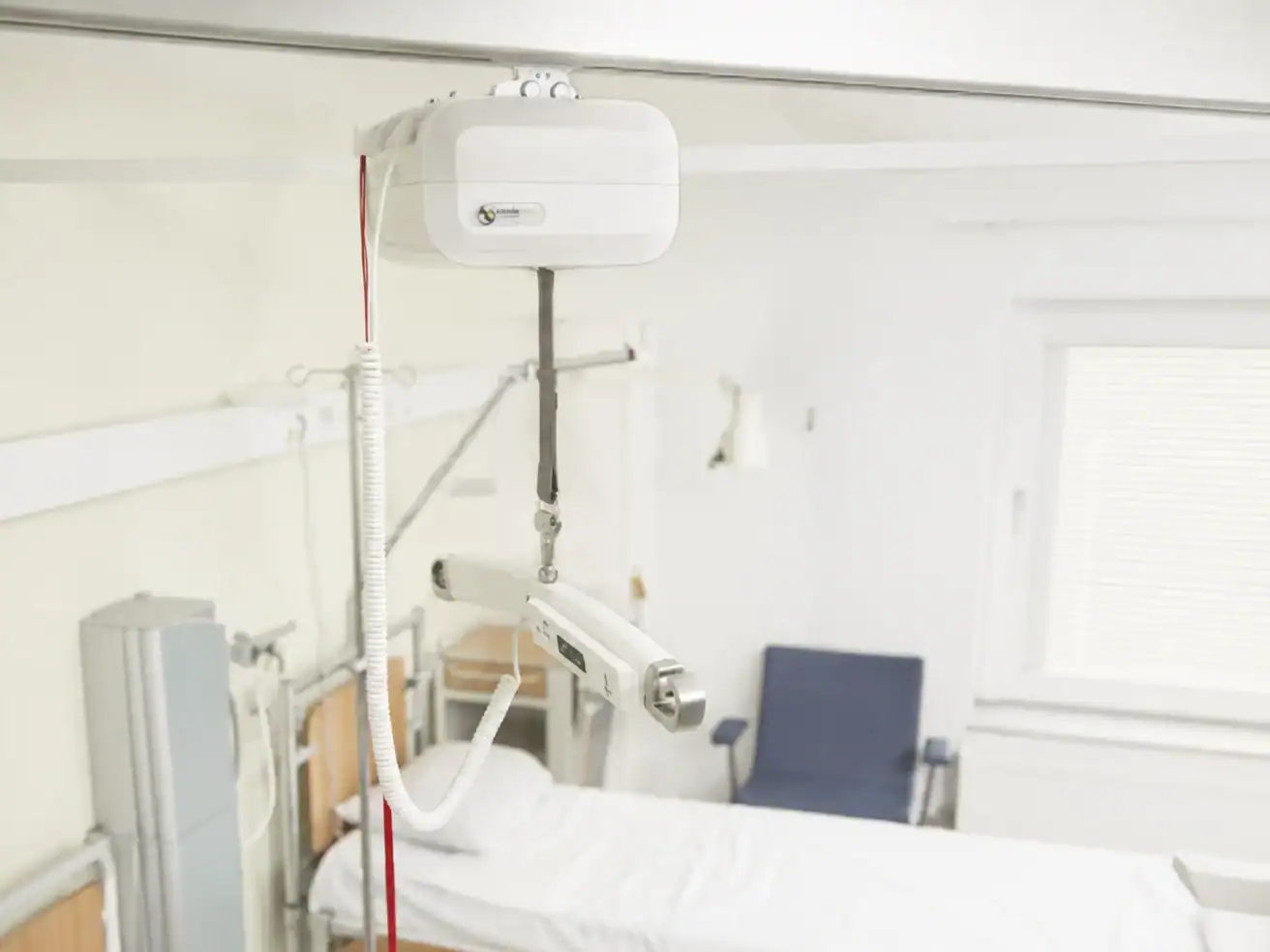
If bed transfers are becoming physically demanding, this is one of the first places to evaluate whether a patient lift or other support equipment may help.
Bathroom
Bathrooms create a high-demand caregiving environment because the space is tight and the surfaces are often wet.
Focus on:
- Clear approach space to the toilet and shower
- Stable support surfaces
- Enough room for a caregiver to assist from the safest angle
- Reducing the need for awkward pivoting
- Removing rugs or portable items that shift underfoot
If the caregiver has to brace against counters, squeeze beside the toilet, or manage transfers in a narrow opening, the layout may be contributing to risk.
Living Room
The living room is where long periods of sitting can make standing transfers harder.
Look for:
- Chairs that are too low or too soft
- Crowded pathways between seating and exits
- Tables that block safe turning space
- Cords, baskets, or décor that narrow the transfer path
A more supportive seat or a lift chair may help some households create safer sit-to-stand routines while improving comfort during the day.
Entryways and Stairs
If the person receiving care struggles at the front steps, porch, garage entry, or staircase, the caregiver is often forced to provide extra physical support in a risky position.
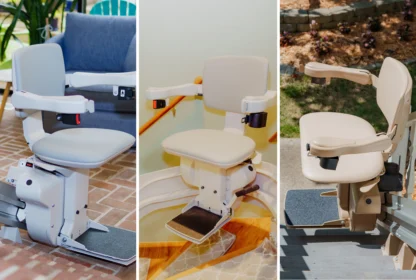
This is where home accessibility for caregivers becomes especially important. The right solution may involve better stair access, safer entry modifications, or equipment designed for multi-level living.
Transfer Equipment That May Improve Safety at Home
Not every home needs the same solution. The right choice depends on the person’s mobility, the caregiver’s physical demands, and the layout of the space.
Here is a simple overview:
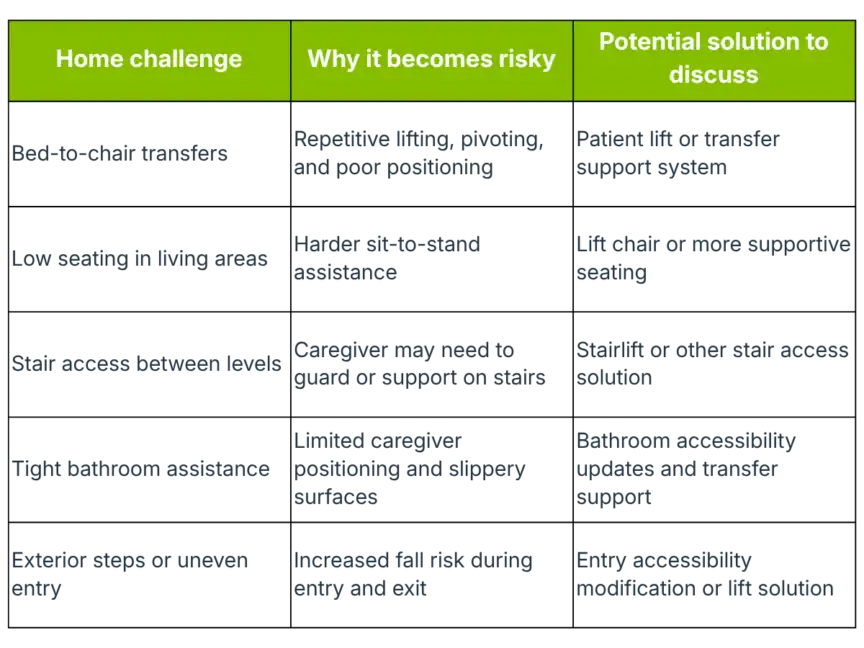
For some families, a patient lift Port Allen consultation is the right next step when manual transfers are becoming unsafe or exhausting. For others, better furniture placement, stair access improvements, or a more supportive seat may make the daily routine much easier.
The goal is not just mobility. It is a safer, more repeatable routine that protects both the caregiver and the person receiving care.
A Simple Home Setup Planning Checklist for May
Use this quick checklist to prioritize changes before summer routines begin:
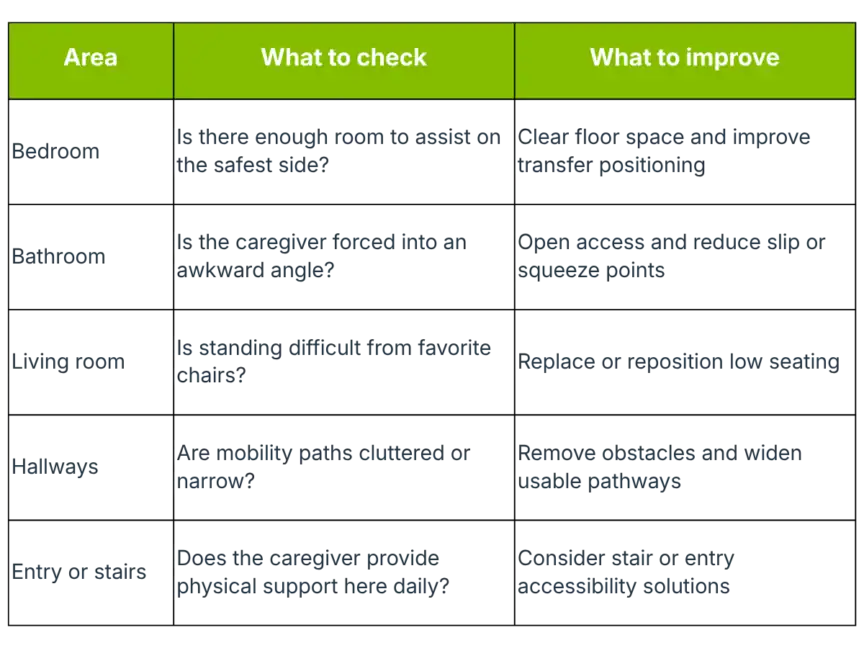
This kind of review helps families spot patterns instead of reacting one problem at a time.
When Home Accessibility for Caregivers Becomes More Than a DIY Fix
Some adjustments are simple. Moving furniture, clearing pathways, and changing room layouts can help right away.
But there is a point when a professional assessment makes sense.
That is usually the case when:
- Transfers are becoming a two-person task
- The caregiver has back, shoulder, or balance concerns
- Stairs are limiting access to part of the home
- The person receiving care is recovering from surgery or losing strength
- The family is trying to plan ahead instead of waiting for a fall or injury
This is also where the broader value of transfer equipment and customized accessibility planning becomes clear. A professional consultation can help families match the right solution to the actual home, rather than guessing based on a product list alone.
Why Local Guidance Matters
Every home is different. A narrow bathroom, split-level layout, porch steps, or multi-story floor plan can change what will work best.
That is why many families benefit from working with a local accessibility team that can assess the space, understand the caregiving routine, and recommend options that fit both safety goals and day-to-day use.
101 Mobility positions its support around identifying mobility challenges, recommending customized solutions, and providing professional installation and ongoing service rather than simply selling equipment. It also emphasizes patient handling equipment, stair access solutions, and consultations designed around real home layouts and daily routines.
FAQs
What is the most important part of a caregiver-friendly home setup?
The most important part is reducing unsafe transfers. Start with the places where lifting, pivoting, or supporting someone’s weight happens most often, especially the bedroom, bathroom, and stairs.
When should a family consider a patient lift?
A patient lift may be worth discussing when bed-to-chair or sit-to-stand transfers are becoming physically demanding, inconsistent, or unsafe for the caregiver or the person receiving care.
Can better furniture placement really improve caregiver safety?
Yes. Poor spacing often forces caregivers to twist, reach, or assist from the wrong angle. Better placement can improve body mechanics and make transfers easier.
What types of transfer equipment may help at home?
Depending on the need, options may include patient lifts, transfer support systems, lift chairs, stairlifts, and other accessibility solutions designed to reduce strain and improve movement at home.
How do I know whether the home needs professional accessibility help?
If daily support feels harder, transfers are becoming less safe, or stairs and entryways are limiting access, a professional consultation can help identify the right next step.
Make the Home Easier to Support This Summer
A safer caregiving setup does not happen by accident. It comes from looking closely at daily routines, fixing the spaces that create strain, and planning before the workload becomes harder.
If your family is reviewing a caregiver home setup Port Allen households can manage more safely, now is a good time to act. Book a Free Consultation to explore practical ways to improve transfers, reduce caregiver strain, and create a home that supports safer daily care.