Caregiver-Friendly Home Setups in Belle Chasse: May Planning for Safer Transfers and Daily Support
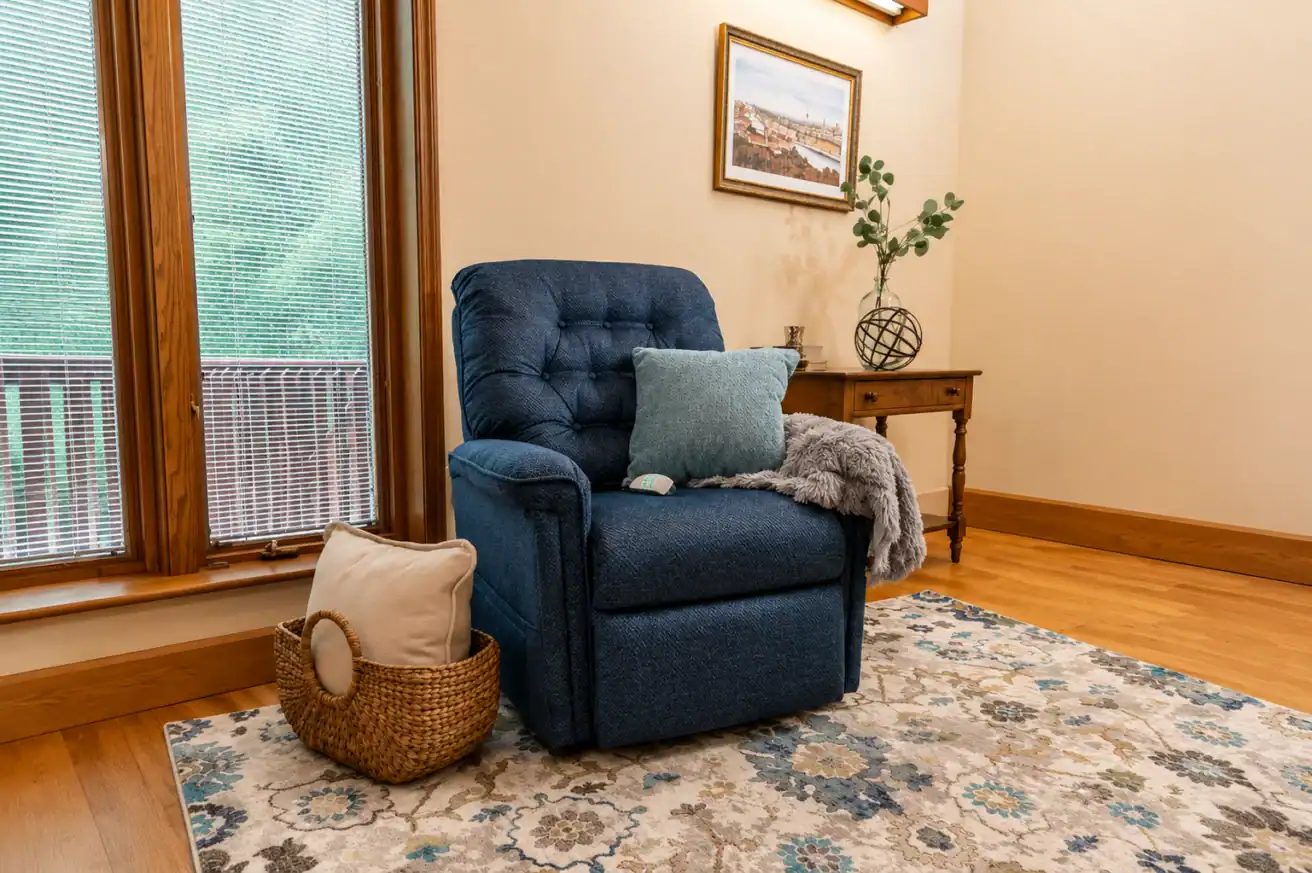
A safer home setup can make daily care more manageable for everyone involved. If you are helping a spouse, parent, or family member at home, May is a practical time to look at transfer routines, equipment placement, and room layout before summer schedules change.
The goal is not to overhaul the whole house. It is to identify the spots where caregiving feels hardest, then make targeted updates that reduce strain, improve flow, and support safer transfers.
Why May Is a Smart Time to Update a Caregiver Home Setup in Belle Chasse
Care routines often shift as summer approaches. Family members may travel, school schedules change, and household routines become less predictable. That makes May a good time to step back and ask a simple question:
Is the home set up to support safe, repeatable daily care?
For many families, the answer depends on small but important details such as:
- How much space is available beside the bed
- Whether the bathroom allows a safe assist
- If transfer equipment fits the room correctly
- Whether pathways stay clear throughout the day
- How easily one caregiver can help without overreaching, twisting, or lifting awkwardly
A well-planned caregiver home setup in Belle Chasse can help reduce physical strain and make daily support feel more organized.
Where Caregiver Strain Usually Starts at Home
Most caregiver injuries do not come from a single dramatic event. They often build over time through repeated awkward transfers, rushed positioning, and poor room layout.
Bed-to-chair transfers
This is one of the most common pressure points. Problems usually show up when there is not enough room for a clean approach, the wheelchair or recliner is set at a poor angle, or the caregiver has to twist during the transfer.
Bathroom support
Bathrooms are tight, slippery, and often not designed for assisted movement. Even a strong caregiver can struggle if there is not enough clearance near the toilet or shower.
Entryways and room-to-room movement
Thresholds, narrow turns, clutter, and poorly placed furniture can interrupt the safest route through the home. Over time, these obstacles add stress to every part of the routine.
Caregiver Home Setup Belle Chasse Checklist for Safer Daily Support
Before adding new equipment, review the home setup itself.
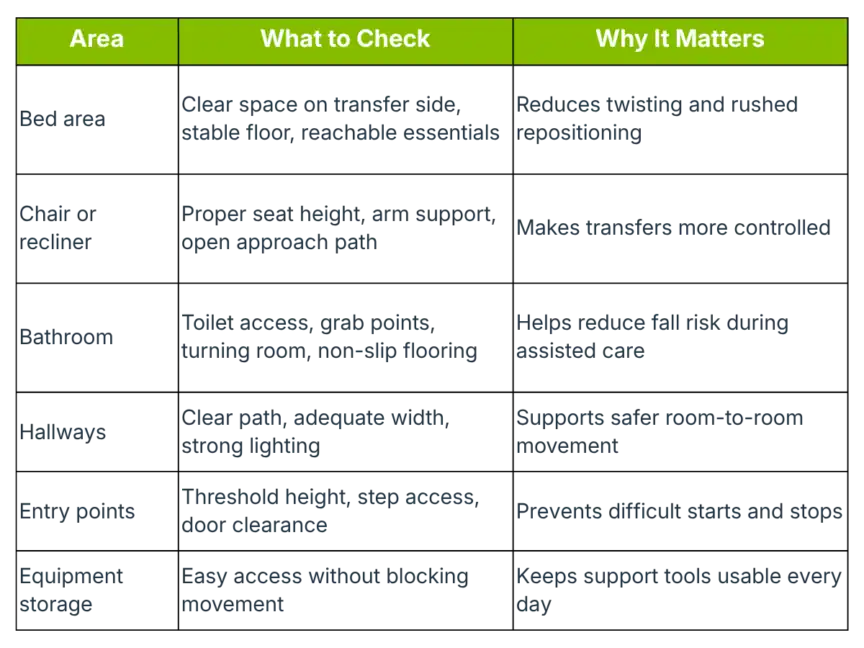
A useful rule is this: if a caregiver has to reach too far, pivot awkwardly, or improvise the same transfer every day, the setup needs another look.
Transfer Equipment That Can Make Daily Care Safer
The right transfer equipment depends on the person’s mobility level, the caregiver’s physical demands, and the layout of the home.
Some families begin with simple changes such as repositioning furniture or improving access around the bed. Others may need more structured support, especially when transfers are becoming harder or less predictable.
Common options may include:
- Transfer aids that help with seated repositioning
- Support solutions for bed-to-chair movement
- Bathroom accessibility updates
- A portable or more permanent patient lift
- Other home accessibility for caregivers that improves the care path between rooms
When families search for a patient lift in Belle Chasse, they are usually trying to solve one of two problems: repeated transfer strain or growing concern about safety during lifts and pivots.
How Equipment Placement Affects Caregiver Safety
Even the right equipment can feel difficult if it is placed poorly.
A safer setup depends on how the space works in real life. That includes:
- Which side of the bed the transfer happens on
- Whether a chair is positioned for a clean pivot or straight-line assist
- If the bathroom door opens into usable support space
- Where equipment is stored when not in use
- Whether power cords, bases, or charging stations interrupt movement
For example, a patient lift should not be treated as an afterthought once the room is already crowded. Placement needs to account for approach angle, base clearance, and the caregiver’s ability to move naturally during the transfer.
That is one reason professional planning matters. A solution that looks right on paper still has to work safely in the actual home.
Signs It Is Time to Consider a Patient Lift in Belle Chasse
Not every home needs lift equipment right away. But some signs suggest it may be time to explore a better setup.
You may want to consider a patient lift in Belle Chasse if:
- One person can no longer assist safely on their own
- Transfers are becoming slower, harder, or less stable
- The caregiver has back, shoulder, or joint strain
- The person receiving care is uncomfortable during movement
- Current routines depend too much on strength instead of positioning
- You are planning ahead before a return home from rehab, surgery, or a health change
The earlier these issues are addressed, the easier it is to build a safer routine before an urgent situation develops.
What to Prepare Before a Home Accessibility Consultation
A consultation tends to be more useful when families think through daily routines in advance.
Start with these questions:
- Which transfer is hardest right now?
- Where does the caregiver feel the most strain?
- Is the challenge mainly about strength, spacing, or both?
- Which rooms are hardest to navigate during the day?
- Are care needs likely to change in the near future?
It also helps to note:
- Doorway widths
- Tight corners
- Bed and chair heights
- Bathroom layout
- Flooring transitions
- Who provides care most often
This makes it easier to identify practical solutions instead of guessing.
A Practical Way to Make Daily Care Easier
A better caregiver setup is not just about equipment. It is about making the home work better for everyday support.
That may mean opening up transfer space beside the bed. It may mean improving bathroom access. It may mean reviewing transfer equipment options or exploring whether a patient lift would make daily care safer.
The best next step is usually a professional evaluation of the space, the routine, and the physical demands involved.
FAQ
What is a caregiver-friendly home setup?
A caregiver-friendly home setup is a layout designed to support safer daily care. It usually focuses on transfer space, equipment placement, clear pathways, and accessibility features that reduce strain on both the caregiver and the person receiving care.
When should a family consider transfer equipment?
Families usually start considering transfer equipment when bed-to-chair or bathroom transfers become more physically demanding, less stable, or harder for one caregiver to manage safely.
How do I know if we need a patient lift?
A patient lift may be worth evaluating when manual transfers are causing caregiver strain, creating safety concerns, or becoming inconsistent from day to day.
Why does equipment placement matter so much?
Placement affects approach angle, body positioning, turning space, and how easily the caregiver can assist. Even helpful equipment can become difficult to use if the room is too tight or arranged poorly.
Can home accessibility for caregivers be planned before needs become urgent?
Yes. In many cases, proactive planning is the best approach. Reviewing the setup before a health change, discharge, or seasonal schedule shift can make future care routines safer and easier.
Book a Free Consultation
If your family is reviewing a caregiver home setup in Belle Chasse, 101 Mobility can help you think through safer transfers, better equipment placement, and practical next steps for daily support.
Book a Free Consultation or learn more about patient handling solutions.