Caregiver-Friendly Home Setup in Abbeville: May Planning for Safer Transfers and Daily Support
A safer caregiving routine rarely starts with doing more. It usually starts with setting up the home better.
If you are helping a spouse, parent, or family member move through daily routines, the layout of the home matters. Bed height, bathroom spacing, chair placement, and the path between rooms can all affect how safe and manageable each transfer feels. A well-planned caregiver home setup in Abbeville can reduce strain, support safer movement, and make everyday care more sustainable.
May is a smart time to review the setup. Summer often brings travel, school breaks, shifting family schedules, and less consistency at home. Making changes now can help you avoid rushed decisions later.
Why May Is a Good Time to Review a Caregiver Home Setup in Abbeville
Many families wait until caregiving becomes overwhelming before changing the home. By that point, small daily tasks may already be causing physical strain, rushed movements, or close calls during transfers.
Planning in May gives you time to look at the home before summer routines change. It also gives you room to think clearly about:
- where transfers are hardest
- which rooms feel cramped or awkward
- whether current furniture placement supports movement
- whether equipment could make care safer and easier
This kind of planning is not about overhauling the entire house. It is about improving the spaces used most often.
Start With the Transfers That Happen Every Day
The best place to begin is with the transfers that happen repeatedly.
For many households, that includes:
- bed to wheelchair or bedside chair
- wheelchair to toilet
- shower seat to standing
- recliner to walker
- entry doorway to interior hallway
These movements may only take a minute, but they add up quickly. When the same transfer feels awkward several times a day, it can increase fatigue for the caregiver and discomfort for the person receiving help.
A useful rule is simple: fix the highest-frequency transfer first. That is usually where better positioning or the right transfer equipment will have the biggest daily impact.
The Home Areas That Deserve Attention First
Bedroom
The bedroom is often where the day begins and ends, which makes it one of the most important caregiving spaces.
Look closely at:
- bed height
- clearance on both sides of the bed
- space for a walker, wheelchair, or lift
- access to lighting and personal items
- flooring that may shift or bunch underfoot
If the caregiver has to twist, reach awkwardly, or work in a tight corner, the setup likely needs adjustment.
Bathroom
Bathrooms tend to compress movement into a small area. That makes transfer safety especially important.
Prioritize:
- open approach to the toilet
- enough space near the shower or tub
- slip-resistant surfaces
- stable grab points
- room for a mobility device or caregiver to assist without crowding
If the bathroom requires frequent repositioning, tight turns, or unsupported stepping, it may be time to rethink the layout.
Living Room
Families often focus on bedrooms and bathrooms, but the living room matters too. Recliners, sofas, and side tables can either support safe movement or make it harder.
Watch for:
- low or overly soft seating
- narrow walk paths
- furniture that blocks approach angles
- cords or rugs in transfer zones
A few layout changes can make it easier to sit, stand, and move without unnecessary effort.
Entry and Hallways
Even a strong in-room setup can break down if the path between rooms is cluttered or narrow.
Check whether hallways and entry points allow:
- smooth wheelchair or walker movement
- enough turning space
- good lighting
- clear transitions between flooring surfaces
A safer route between the bedroom, bathroom, and living area can reduce stress throughout the day.
When Transfer Equipment Makes Daily Support Safer
Not every home needs the same solution. The right choice depends on mobility level, caregiver capacity, home layout, and how often transfers happen.
That said, there are situations where transfer equipment may deserve a closer look. These include:
- the caregiver is lifting more weight than feels safe
- transfers require repeated pulling or repositioning
- the person receiving care has limited standing ability
- bathroom transfers feel rushed or unstable
- one caregiver is managing most daily movement alone
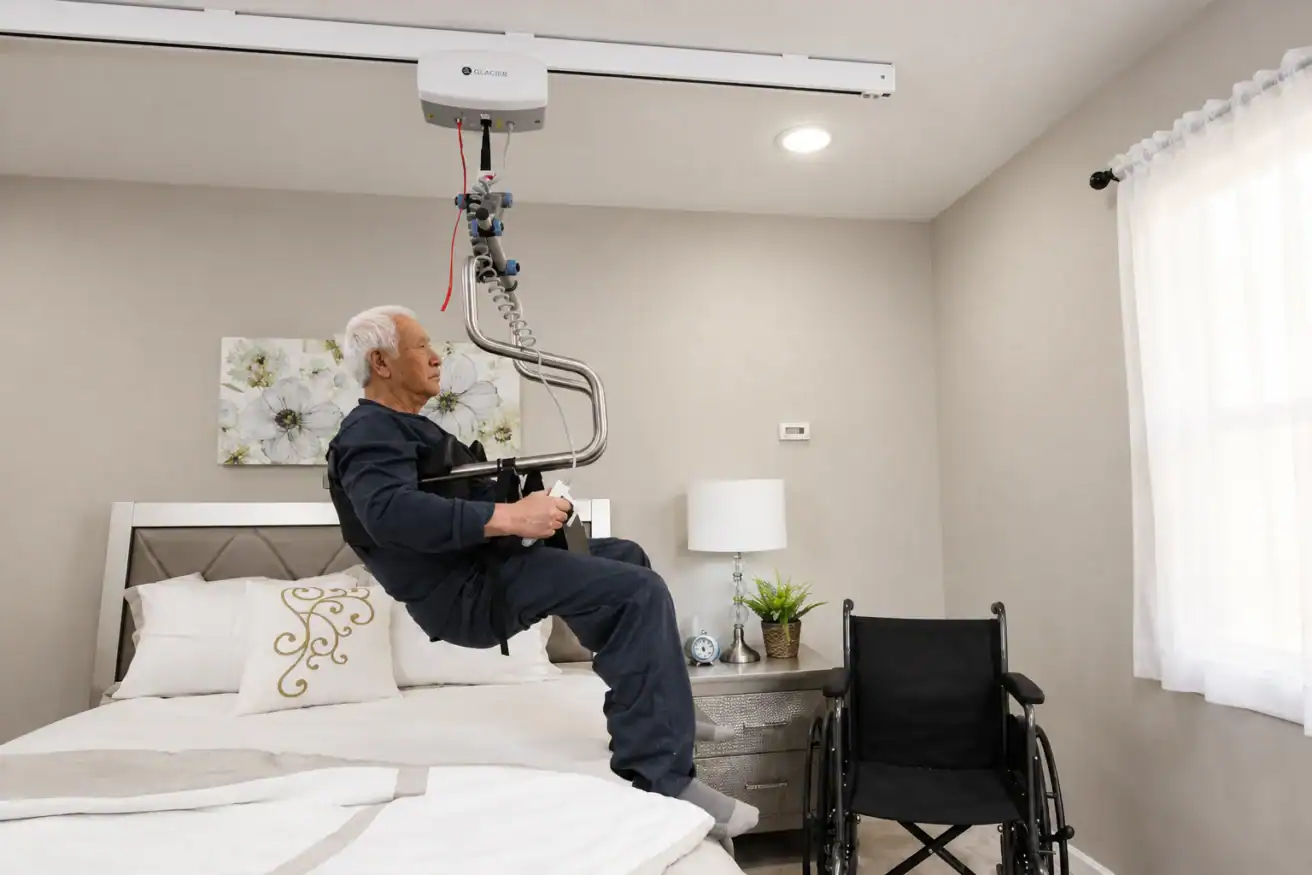
In those cases, a patient lift in Abbeville may help support safer transfers and reduce physical strain. Some households benefit from portable patient handling equipment. Others may need a more tailored solution based on room layout and routine.
The goal is not just adding equipment. The goal is choosing a setup that fits the home and supports better caregiver safety every day.
Equipment Placement Tips That Make a Real Difference
The right equipment can still be frustrating if it is poorly placed. Setup matters just as much as product selection.
Here are a few practical placement principles:
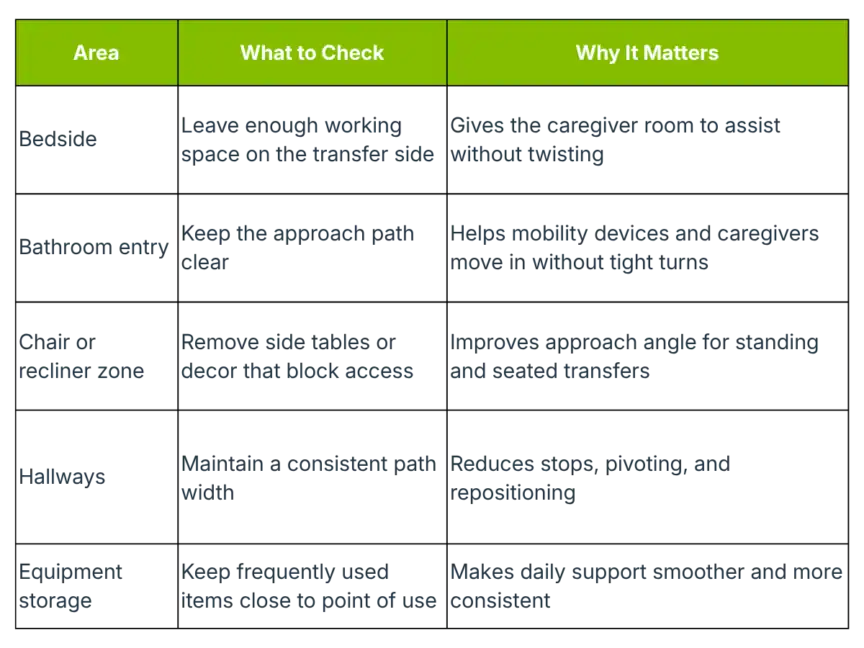
A simple way to evaluate placement is to walk through the transfer step by step. If the caregiver has to back up, reach around furniture, or change grip halfway through, the setup probably needs work.
Signs the Current Setup Is Creating Caregiver Safety Risks
Some warning signs are easy to overlook because they feel normal after a while. But they often point to a setup problem.
Watch for signs like these:
- back, shoulder, or wrist strain after routine care
- frequent repositioning during transfers
- difficulty getting close enough to assist safely
- tight bathroom or bedroom clearances
- unstable movement during sit-to-stand moments
- furniture that forces awkward angles
- hesitation about whether one person can manage the transfer safely
When these issues show up often, improving home accessibility for caregivers can make daily support more manageable.
A Simple May Planning Checklist for Families in Abbeville
Use this checklist to review the home before summer routines shift.

Better Home Setup Supports Better Daily Care
A better caregiving setup does not have to be complicated. In many homes, the biggest improvements come from focusing on the right room, the right transfer, and the right placement.
If daily movement feels harder than it should, that is worth paying attention to. A more thoughtful layout, safer transfer zone, or better-fit equipment can help reduce strain and improve confidence for everyone involved.
For families in Abbeville, the best time to plan is before the routine gets harder to manage.
FAQ
What is a caregiver-friendly home setup?
A caregiver-friendly home setup is a home layout designed to support safer daily care. It focuses on easier transfers, better room access, less clutter, and enough space for both the caregiver and the person receiving help to move safely.
When should a family consider transfer equipment?
A family should consider transfer equipment when routine movements start causing strain, instability, or repeated difficulty. Common signs include awkward bed-to-chair transfers, bathroom assistance in tight spaces, or concern about whether one caregiver can manage safely.
Can a patient lift work in a regular home?
In many cases, yes. A patient lift may work well in a regular home if there is enough clearance and the layout supports safe use. The right fit depends on room size, flooring, transfer frequency, and the individual’s mobility needs.
What rooms matter most for caregiver safety?
The bedroom and bathroom usually matter most because they involve the highest number of assisted transfers. Living rooms, hallways, and entry points also matter when they affect daily movement between key spaces.
Why plan home updates in May?
May is a practical time to plan because summer schedules often bring travel, visitors, and routine changes. Reviewing the home early can make it easier to make thoughtful updates before caregiving becomes more stressful.
Ready to make daily support safer and easier at home? Explore local solutions through 101 Mobility of Lafayette or learn more about patient handling solutions. When you are ready, Book a Free Consultation.