Car Transfer Accessibility in Scott: Safer Driveway and Garage Access for Daily Routines
Daily exits should not feel like an obstacle course. For many Scott homeowners, the route from the house to the car can include porch steps, uneven driveway surfaces, tight garage spacing, heat exposure, and awkward transfers into or out of a vehicle.
Improving car transfer accessibility in Scott starts with looking at the full path: where someone exits the home, where mobility equipment is stored, how the garage or driveway is arranged, and what support is available during the transfer. Small changes can make everyday routines safer, easier, and more manageable.
For families planning ahead, recovering after surgery, or supporting a loved one with changing mobility needs, 101 Mobility Lafayette can help identify practical solutions for safer daily movement.
Why Car Transfer Accessibility in Scott Matters for Everyday Movement
Car transfers are not only about getting into a vehicle. They involve the entire route between the home and the car.
That route may include:
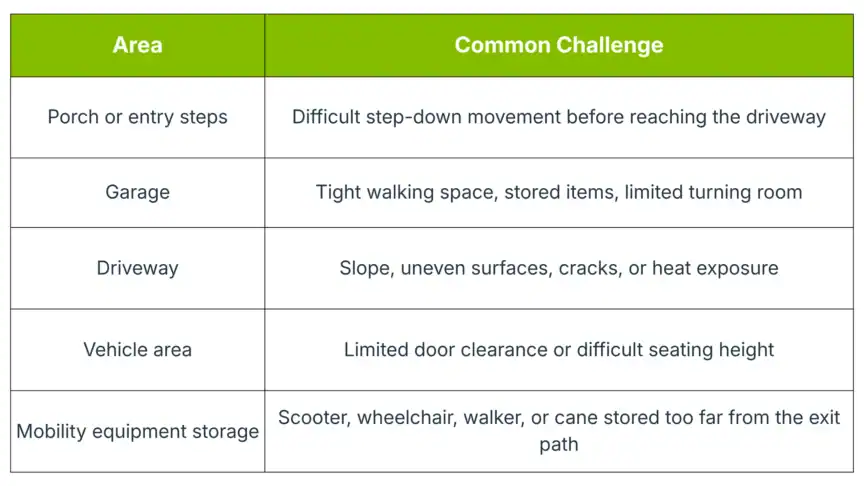
During hot weather, these issues can feel even more demanding. A long walk across an exposed driveway, repeated transfers, or extra effort loading a mobility device can make everyday errands more difficult than they need to be.
The goal is to create a safer, more predictable path from the home to the vehicle.
Common Driveway and Garage Access Problems
Many accessibility issues happen in areas homeowners use every day but rarely think about as “mobility zones.” Garages, side doors, driveways, and carports often become high-use transition areas.
Common problems include:
- A step between the house and garage
- A narrow walkway beside a parked vehicle
- Loose rugs, tools, boxes, or storage bins in the walking path
- Poor lighting near the garage door or side entry
- No stable handhold near steps or transfer points
- Mobility equipment stored away from the car
- A driveway slope that makes balance or wheelchair movement harder
- Direct sun exposure while preparing to leave the home
These are not always major renovation issues. In many cases, the first step is simply identifying where the route becomes difficult and what type of support would make the movement easier.
Practical Ways to Improve Driveway Access in Scott
Improving driveway access in Scott should focus on reducing unnecessary effort, improving stability, and making the route easier to use in daily life.
1. Create a Clear Path from Door to Vehicle
The walking or rolling route should be wide, clear, and predictable. Remove items that narrow the path, especially near:
- Garage entry doors
- Vehicle doors
- Storage shelves
- Mobility device charging areas
- Porch or side-door steps
A clear route helps reduce tripping hazards and makes it easier for caregivers to assist when needed.
2. Review the Surface Underfoot
Driveways and garage floors can create transfer challenges when surfaces are uneven, slick, cracked, or sloped. Pay attention to areas where someone slows down, reaches for support, or hesitates.
A smoother access route can help improve confidence during daily exits.
3. Add Support Where Movement Changes
Transfers often become more difficult where the body changes position: stepping down, turning, sitting, standing, or shifting weight into a vehicle.
Helpful support areas may include:
- Near the garage entry step
- Beside the vehicle door
- At a porch or side entrance
- Along a short walkway
- Near a mobility equipment storage point
The right support depends on the person, the space, and the type of mobility device being used.
4. Think About Shade and Heat Exposure
Hot weather can make outdoor movement more tiring. If the route from the home to the car is exposed, consider ways to reduce time spent in direct sun.
This may include parking closer to the most accessible exit, organizing equipment near the door, improving the garage route, or reviewing whether a shaded path is possible.
Garage Access Safety and Transfer Planning
Garage access safety is especially important because garages often combine several challenges in one space: vehicles, steps, storage, tools, equipment, and limited walking room.
A safer garage-to-car route should answer these questions:
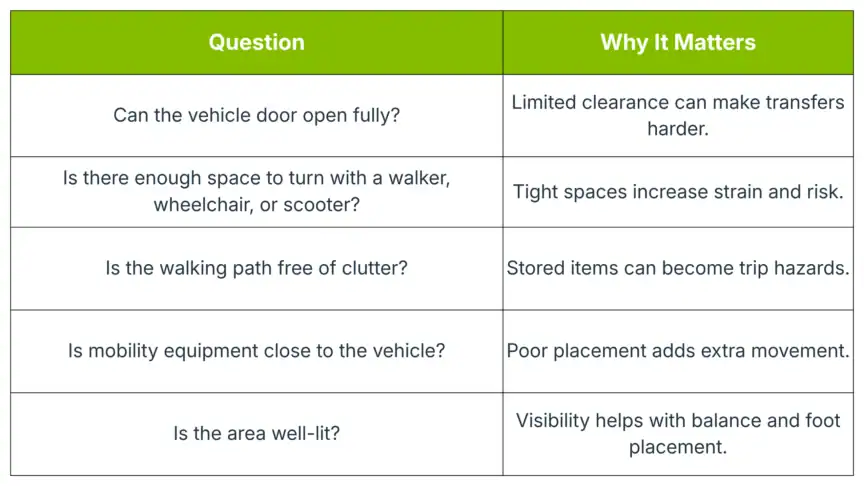
A good transfer setup should make the most common movement easier, not more complicated. For example, if someone usually exits through the garage, the garage should be treated as a primary accessibility area.
Outdoor Mobility Support Options to Consider
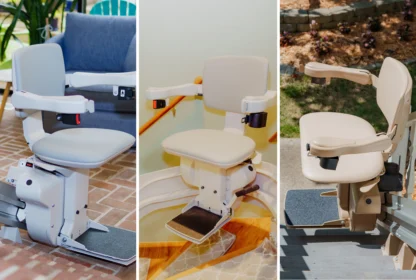
For some homes, small adjustments may be enough. For others, the safest solution may involve accessibility equipment designed for outdoor or transportation-related movement.
Depending on the home and vehicle setup, possible solutions may include:
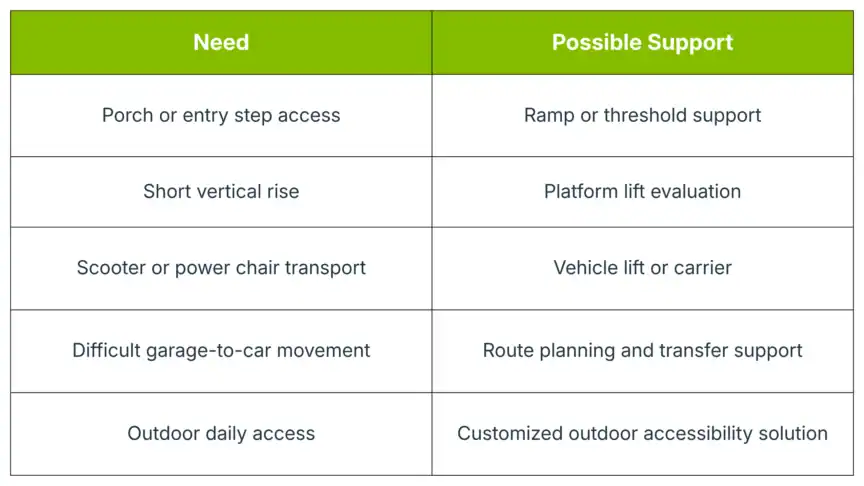
101 Mobility offers outdoor accessibility solutions that can help improve access around porches, garages, entry points, and outdoor routes.
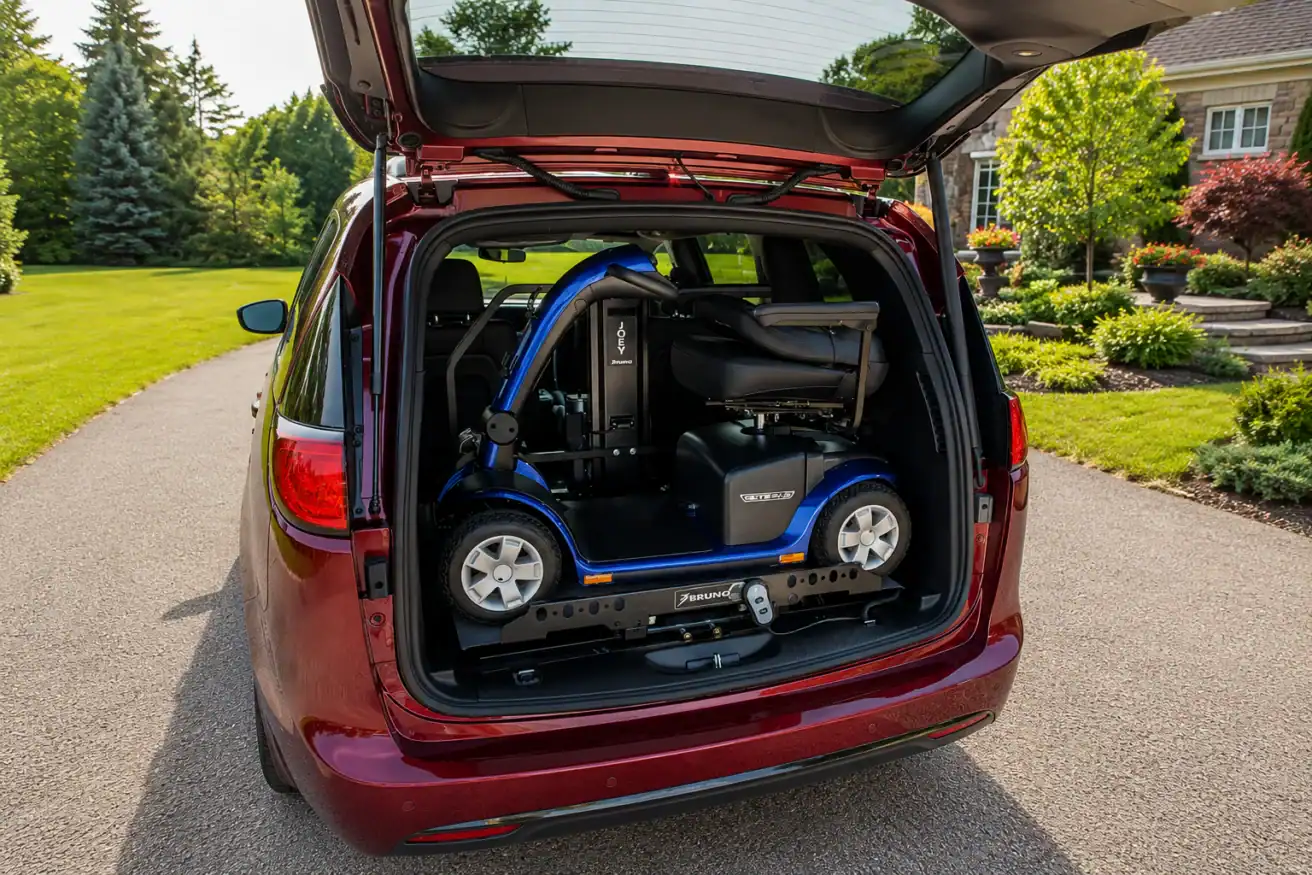
For individuals using scooters, power chairs, or wheelchairs, transportation solutions may also be part of the plan. Vehicle lifts and carriers can help make it easier to bring mobility equipment along for errands, appointments, and everyday travel.
When to Schedule a Professional Accessibility Consultation
A professional consultation can be helpful when the issue involves more than one part of the home-to-car route.
Consider scheduling one if:
- A loved one struggles with porch steps or garage steps
- Transfers into the car require extra effort or assistance
- A wheelchair, walker, scooter, or power chair is part of the daily routine
- The driveway slope or garage layout feels difficult to manage
- Mobility equipment is hard to load, unload, or store
- Hot weather makes daily exits more tiring
- A caregiver is physically assisting with transfers
The benefit of working with 101 Mobility is that the recommendation can be based on the actual home, vehicle, mobility equipment, and daily routine instead of a one-size-fits-all answer.
FAQ: Car Transfers and Driveway Access in Scott
What is car transfer accessibility?
Car transfer accessibility refers to how safely and comfortably a person can move between the home and vehicle. It includes the walking or rolling path, garage or driveway setup, vehicle door clearance, handholds, mobility equipment storage, and transfer support.
How can I make driveway access safer?
Start by clearing the route, improving lighting, checking for uneven surfaces, reducing clutter, and making sure the most-used path has enough space for walking aids or mobility equipment. If steps, slopes, or transfers remain difficult, a professional accessibility consultation may help.
What makes garage access unsafe?
Garage access can become unsafe when there is limited walking space, poor lighting, clutter, slippery flooring, awkward vehicle positioning, or a step between the home and garage without proper support.
Can 101 Mobility help with outdoor mobility support?
Yes. 101 Mobility can help evaluate outdoor access needs such as porch steps, garage entries, driveway routes, ramps, platform lifts, and transportation-related mobility solutions.
When should I consider a vehicle lift or wheelchair carrier?
A vehicle lift or carrier may be helpful if transporting a scooter, wheelchair, or power chair is difficult, physically demanding, or limiting daily travel. The right option depends on the vehicle, mobility device, and user needs.
Plan Safer Daily Exits with 101 Mobility
A safer daily routine starts with the path used most often. For many Scott households, that means the route from the home to the garage, driveway, and vehicle.
101 Mobility Lafayette can help assess the space, identify common transfer challenges, and recommend practical accessibility solutions that support safer movement at home and on the go.
Book a Free Consultation to discuss car transfers, driveway access, garage safety, and outdoor mobility support in Scott.