Car Transfer Accessibility in Central: Safer Driveway and Garage Access During Hot Weather
Getting from the house to the car should not feel like the hardest part of the day. For many Central homeowners, the challenge is not the drive itself. It is the short route between the door, garage, driveway, porch steps, and vehicle.
During hot weather, that route can feel even more difficult. Heat, glare, uneven pavement, tight garage spacing, and limited handholds can make daily exits slower, less comfortable, and less safe. Improving car transfer accessibility in Central starts with looking at the full path—not just the vehicle.
For families, caregivers, and homeowners planning ahead, small access changes can make daily movement easier, safer, and more manageable.
Why Car Transfer Accessibility Matters in Central
A car transfer often involves several movements at once. Someone may need to walk across a driveway, step down from a porch, manage a walker, position a wheelchair, load a scooter, or shift from a mobility device into the vehicle seat.
In hot weather, even a short delay outside can add stress. A driveway with no shade, a step without a rail, or a garage floor with limited turning space can make the process harder than it needs to be.
Car transfer accessibility is especially important for people who:
- Use a walker, cane, wheelchair, scooter, or power chair
- Need help from a caregiver when getting in or out of a vehicle
- Have balance concerns on uneven outdoor surfaces
- Are recovering from surgery or injury
- Want to age in place with safer home access
- Need better storage for mobility equipment near the vehicle
The goal is simple: create a clearer, steadier, and more usable route from the home to the car.
Common Driveway and Garage Access Problems
Many access issues around the driveway or garage are easy to overlook until they start affecting daily routines.
| Access Area | Common Problem | Why It Matters |
|---|---|---|
| Garage entrance | Small lip or raised threshold | Can catch wheels, walkers, or feet |
| Driveway | Uneven surface or slope | May increase balance concerns |
| Porch or side entry | One or two steps without handholds | Makes transfers harder, especially in heat |
| Garage walkway | Tight space beside the vehicle | Limits wheelchair, walker, or caregiver movement |
| Car transfer zone | No stable support nearby | Makes sitting, standing, or pivoting harder |
| Outdoor route | No shade or resting point | Hot weather can make exits more tiring |
| Equipment storage | Scooter, walker, or chair stored too far away | Adds extra effort before leaving home |
These issues may seem minor on their own. Together, they can turn a simple errand into a difficult process.
Car Transfer Accessibility Central Checklist
Use this checklist to review the route from the home to the vehicle.
| What to Check | What to Look For |
|---|---|
| Door to garage route | Is the path wide enough for a walker, wheelchair, or caregiver assistance? |
| Thresholds and garage lips | Are there raised edges that make rolling or stepping difficult? |
| Porch steps or side entry steps | Is there a safer way to manage short rises? |
| Driveway condition | Are there cracks, slopes, uneven transitions, or slippery areas? |
| Vehicle parking position | Can the vehicle be parked where transfers are easiest? |
| Handholds and support points | Are rails or grab points available where someone stands, turns, or pivots? |
| Shade and heat exposure | Is the transfer area exposed to direct sun for long periods? |
| Mobility equipment storage | Is the wheelchair, walker, scooter, or power chair stored close to the exit? |
| Caregiver space | Is there enough room for someone to assist safely? |
| Lighting | Is the route visible during early morning, evening, or rainy conditions? |
If several items on this list are a concern, it may be time to look at a more complete access plan.
Outdoor Mobility Support Options That May Help
The right solution depends on the home layout, the vehicle, the mobility device, and the person’s transfer needs. Some homes only need a small improvement. Others need a more customized setup.
Threshold Ramps and Short Ramp Solutions
Small lips at garage doors, side entries, or porch transitions can create a daily obstacle. A threshold ramp or short ramp may help smooth the route for wheelchairs, walkers, scooters, or rolling mobility equipment.
This can be especially useful when the challenge is not a full staircase, but a small rise that slows down movement every day.
Handrails and Stable Support Points
For someone who can walk but needs support, a handrail near a porch step, garage entry, or transfer area can make a meaningful difference. Handholds should be placed where the person naturally needs to steady themselves—not just where they are easiest to install.
Good rail placement can support safer standing, turning, and stepping during car transfers.
Vertical Platform Lifts for Higher Entry Points
If a porch, garage entry, or raised access point is too high for a practical ramp layout, a vertical platform lift may be worth considering. This can help wheelchair or scooter users move between levels without needing a long ramp.
A professional assessment can help determine whether a ramp, lift, or another access option is the better fit.
Safer Mobility Equipment Storage
Outdoor mobility support is not only about the walking path. It also includes where equipment is stored.
A walker stored across the garage, a scooter parked where it blocks the car door, or a wheelchair kept far from the exit can make transfers harder. Better storage planning can reduce unnecessary steps and make the routine smoother.
Vehicle Lifts and Carriers
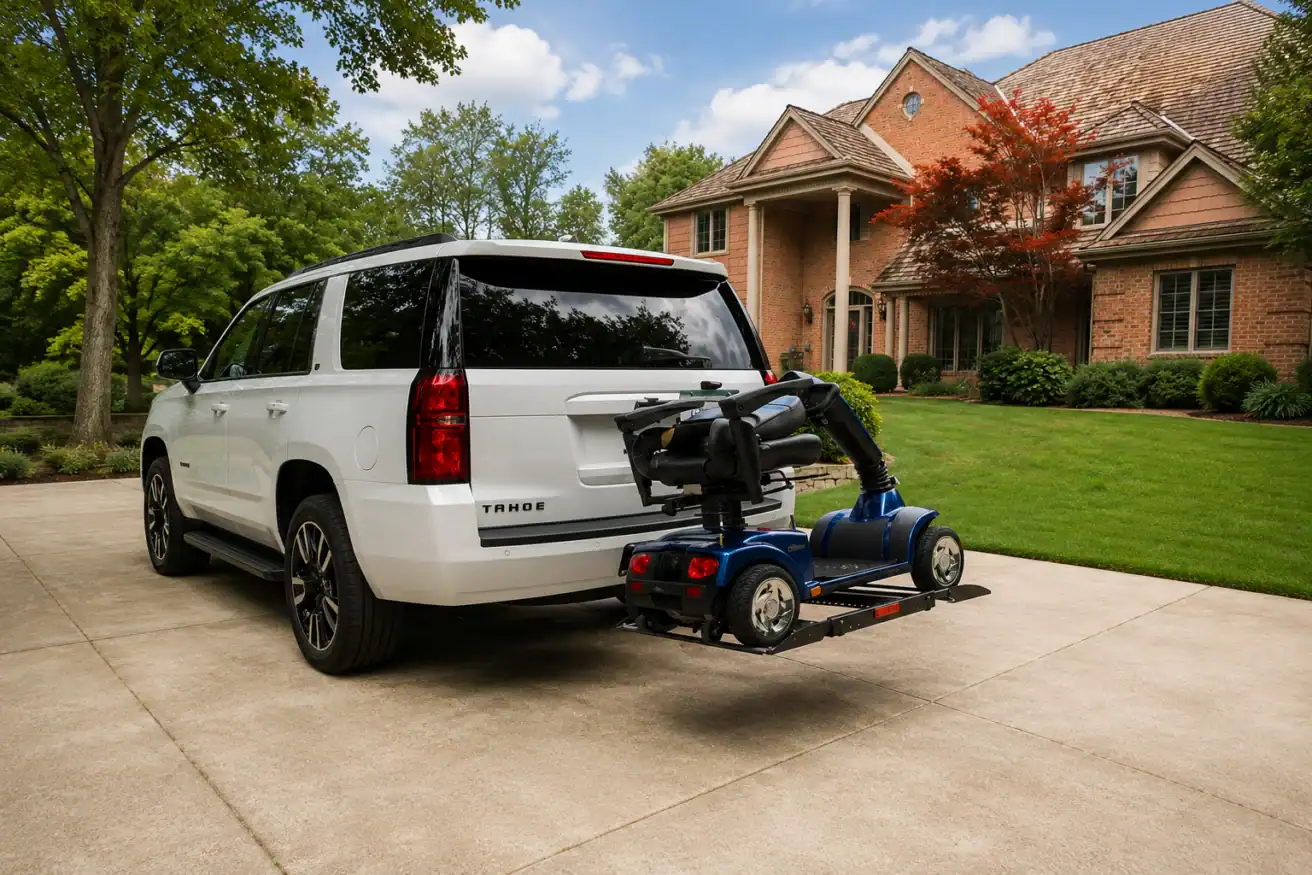
For people who travel with a scooter, wheelchair, or power chair, a vehicle lift or carrier may help make transportation easier. These solutions can support more independent travel by helping load and secure mobility equipment for trips outside the home.
This is especially helpful when the person can transfer into the vehicle seat but needs a practical way to bring the mobility device along.
Planning a Safer Garage-to-Car Route
A good access plan follows the actual movement pattern of the person using the space.
Start with the most common daily route:
- Where does the person exit the home?
- What surface do they cross first?
- Where is the mobility device stored?
- Where is the vehicle usually parked?
- Which side of the vehicle is used for entry?
- Does a caregiver need room to assist?
- Where does the person need to pause, turn, step, or sit?
This approach helps avoid one-size-fits-all recommendations. A solution that works for one driveway may not work for another. A short ramp may solve one home’s issue, while another home may need handrails, a platform lift, better parking placement, or a different equipment storage setup.
For Central homeowners, the best plan is usually the one that makes the full route easier—not just one part of it.
How Hot Weather Affects Transfer Safety
Hot weather can make outdoor movement feel more demanding. A person may move more slowly, tire faster, or feel less steady when standing in direct sun. Caregivers may also feel rushed when assisting someone outdoors.
Simple planning can help reduce heat-related stress during daily exits:
- Park closer to the most accessible entry when possible
- Create a shaded waiting or transfer area
- Keep mobility equipment near the door or garage route
- Reduce unnecessary back-and-forth movement
- Improve the surface between the entry and vehicle
- Add stable support where standing or pivoting happens
- Plan errands during cooler parts of the day when practical
A safer route should feel usable during real daily conditions, not just ideal weather.
When to Ask 101 Mobility for Guidance
If the route from the home to the car feels difficult, inconsistent, or unsafe, a professional consultation can help clarify the best options.
101 Mobility Baton Rouge helps Central-area families evaluate accessibility challenges and recommend practical solutions for daily movement. That may include ramps, lifts, vehicle mobility options, or other outdoor accessibility solutions based on the home and the user’s needs.
A consultation is especially helpful when:
- A porch step or garage lip keeps causing problems
- A wheelchair, scooter, or walker is difficult to manage outside
- Transfers require caregiver assistance
- The driveway route feels uneven, exposed, or tiring
- Mobility equipment needs to be transported with the vehicle
- The family is planning ahead for aging in place
The right solution should make daily exits feel more predictable, comfortable, and safe.
FAQs About Car Transfer Accessibility in Central
What is car transfer accessibility?
Car transfer accessibility refers to how safely and easily a person can move from the home to the vehicle and get in or out of the car. It includes the driveway route, garage access, porch steps, handholds, equipment storage, and transfer space around the vehicle.
How can driveway access in Central be improved?
Driveway access in Central can often be improved by addressing uneven surfaces, adding ramps for small transitions, improving handholds, creating a clearer path to the vehicle, and making sure mobility equipment is stored close to the exit.
What makes garage access safety important?
Garage access safety matters because many transfers happen in tight spaces. A raised garage lip, narrow walkway, cluttered storage area, or limited room beside the car can make it harder to use a walker, wheelchair, scooter, or caregiver assistance safely.
What outdoor mobility support options are available?
Outdoor mobility support may include threshold ramps, modular ramps, handrails, vertical platform lifts, scooter or wheelchair storage improvements, and vehicle lifts or carriers. The best option depends on the home layout and the person’s mobility needs.
When should a family consider professional transfer safety help?
A family should consider professional help when daily exits are becoming difficult, when a caregiver is physically assisting with transfers, when a mobility device is hard to move between the home and vehicle, or when outdoor heat makes the process more stressful.
Book a Free Consultation
A safer car transfer starts with a better route. If garage access, driveway movement, porch steps, or mobility equipment storage are making daily exits harder, 101 Mobility can help recommend a practical solution.
Book a Free Consultation with 101 Mobility Baton Rouge to explore car transfer accessibility options for your Central home.