Quick Takeaways:
- The main risks are financial, not mechanical: restocking fees of 15 to 25 percent, freight charges in both directions, and return windows as short as five business days.
- Custom equipment, such as a curved stairlift rail built to your staircase, is often non-refundable once fabrication starts.
- Online prices usually exclude installation, electrical work, permits, and removal of the old unit.
- Buying online is reasonable for portable, low-cost items and risky for anything mounted, wired, or built to a measurement.
The product arriving broken is not the problem. Buying medical equipment online risks a much more expensive failure: a unit that does not fit your home, a return window that closed before your installer could look at it, and a fee schedule written entirely by the seller. The equipment is usually fine. The terms are where people lose money.
Every fee below comes from a seller’s own published policy, and every installed range comes from a published price guide, so you can hold the two numbers next to each other and decide for yourself.
Why does mobility equipment carry more risk online than other purchases?
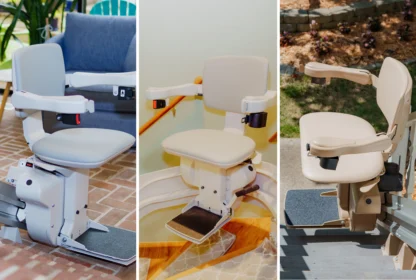
It attaches to a specific house rather than simply sitting in it.A stairlift is measured to your staircase, a ramp is cut to your entry height, and a platform lift needs a landing and a circuit. Three structural differences make the online version of this purchase harder to reverse than almost anything else you buy.
First, fit is not a size chart. A staircase with a gentle curve at the bottom is not a straight-rail job, and a ramp that looks long enough in a photo may be well short of a safe slope. Second, freight on a 200-pound rail is not a prepaid label. Third, almost nobody shops for this calmly. Most of these purchases follow a fall, a diagnosis, or a discharge date, and time pressure is what makes a one-click listing look like a solution.
101 Mobility sits in its own category. It is a network of locally owned providers that sell, install, and service equipment from manufacturers such as Bruno, Harmar, Handicare, and Savaria rather than building its own. That distinction matters here, because it determines who you call when something stops working. You can see the mobility products 101 Mobility installs and services across the full catalog.
What does buying medical equipment online actually cost once the fees are added?
The advertised price covers the equipment and likely nothing else. Installation, electrical work, permits, and disposal of the old unit all sit outside it, and the cost of changing your mind is set by a return policy you accept at checkout.
Here is what the two paths look like line by line.
| Line item | Bought online | Bought through a local installer |
|---|---|---|
| Equipment price | Lowest advertised number, listed on its own | Quoted inside one installed price |
| Outbound freight | Often bundled into the listing and then deducted if you return it; AmeriGlide lists $199 outbound freight on returned stairlifts | Included in the installed quote |
| Installation | You source and pay an installer, or do it yourself | Included, by the company that sold it |
| Electrical and permits | Your responsibility to arrange and pay | Coordinated as part of the job |
| Old unit removal | Not offered | Typically handled on site |
| Return window | Short; AmeriGlide publishes five business days from receipt | Resolved before install, at the in-home assessment |
| Restocking fee | 15 to 25 percent is the common range across sellers | Not applicable |
| Return freight | Yours to arrange and pay | Not applicable |
| Custom rails | Often non-refundable once fabrication begins | Measured on site before anything is ordered |
| Service warranty | Manufacturer parts coverage only, in most cases | Local service warranty on top of manufacturer coverage |
AmeriGlide’s published stairlift policy is a useful reference point because the numbers are specific: a 15 percent restocking fee calculated on the gross selling price, a $199 outbound freight charge on returned units, return shipping at the buyer’s expense, and a five-business-day return window. A refused delivery carries a minimum $700 charge. On custom curved orders, cancelling before shipment costs 20 percent for measurement and design work, and the terms escalate sharply after installation. All American Stairlifts puts the broader industry range at 15 to 25 percent of equipment cost.
| Figures in this article come from sellers’ own published return and refund policies as of November 2026. Policies change without notice, so confirm the current terms in writing before you buy. |
Set that against a complete installed number. 101 Mobility publishes installed price ranges by product category: wheelchair ramps from about $1,000, straight stairlifts between $2,800 and $8,000, curved stairlifts from roughly $13,000, vertical platform lifts from $12,000 to $23,000 and up, and home elevators from about $40,000. Those are site-dependent ranges rather than quotes, but they include the installation, which is the whole point of comparing them. Always confirm current pricing and request a quote for the most accurate number.
What happens if the equipment does not fit your home?
This is the costliest mistake. And the hardest one to spot before it happens. A measurement that is off by a few inches turns into a restocking fee, two freight charges, and weeks without a solution. Fit problems are also the most common reason mobility equipment gets returned, because the buyer is estimating something a technician would measure.
Common mistakes can include things like a staircase that looks straight but curves slightly at the bottom needs a curved rail. A ramp ordered to a doorway height without accounting for landing space ends up too steep to use safely. A platform lift specified without checking door clearance or circuit capacity cannot be commissioned when it arrives.
The timing matters as much as the measurement. Return windows start when the freight carrier drops the pallet, not when an installer finally gets to your house. On a custom curved rail, fabrication typically starts shortly after your order is confirmed, and that’s the point past which most of your money is no longer refundable.
Who handles installation, and what goes wrong without a professional?
Buying online means installation becomes your project. Either you hire someone yourself or you do it, and both routes carry costs the listing did not mention. The equipment is the easy part to buy and the hard part to mount correctly.
Hiring independently is harder than it sounds. Many local companies will not install equipment they did not sell, because they cannot stand behind someone else’s product or parts supply. The ones who will often price the job higher than they would for their own sale, and sourcing that installer takes time you may not have.
Doing it yourself raises a different issue. Stairlift rails anchor to stair treads and carry a rated load. Platform lifts and some stairlifts need dedicated circuits and, in many places, a permit and an inspection. Manufacturer warranties frequently carry conditions tied to professional installation, so a self-installed unit can lose its coverage on day one. Check the warranty language before you decide the install is a weekend job.
What happens to your warranty and service coverage?
A stairlift warranty is really three separate promises: parts, labor, and the service call. They often run for different lengths of time, and buying online typically leaves you with only the first. The manufacturer’s warranty covers replacement parts when a failure is approved as a covered defect. The labor to diagnose and fit those parts, and the trip to your home, usually come from whoever installed the unit, and only under that installer’s own terms.
When a stairlift stops mid-rail, the question isn’t only whether the part is covered; it’s who drives out to look at it and how soon. With parts-only coverage, you may need to find a technician the manufacturer authorizes, pay for the diagnostic visit and the labor, and manage the parts shipment yourself. And because many manufacturer warranties exclude damage from unauthorized service, the installer you choose can affect whether a later claim is approved.
Buying through a local provider closes much of that gap, but it’s still worth reading the terms closely. 101 Mobility includes a one-year limited service warranty on new stairlifts it sells and installs, covering labor for eligible repairs during that first year. Because each 101 Mobility location is locally owned and operated, details such as service plan options, pricing, and response times can vary, so ask your local team for the full terms in writing. Our guide to what a stairlift warranty actually covers walks through each tier and the questions to ask, and the advantages of buying mobility equipment from a professional covers the support side in more detail.
When is buying medical equipment online a reasonable risk?
For portable, inexpensive items with wide fit tolerance, online can be a sensible way to buy. Shower chairs, raised toilet seats, grab bar hardware, threshold ramps, transfer benches, and cushions all travel well, cost little, and carry a small penalty if you guess wrong.
Things to consider before making your purchase are whether the item is mounted, wired, weight-bearing, or built to a measurement. If none of these conditions apply, purchase from whichever source is most cost-effective. If any of them do apply, the installed quote is the figure that matters, as the online price is not directly comparable.
There is a middle path, too. Some buyers order the simple items online, then hire a local professional to handle the one mounted product that has to be done properly. It’s a sensible way to keep a budget in check without gambling on the most expensive piece.
One more check if you expect Medicare to help pay: Medicare only covers equipment like walkers and wheelchairs when it comes from a Medicare-enrolled supplier, and many online sellers aren’t enrolled. You can look up enrolled suppliers on Medicare’s supplier directory. Before buying anything mounted or used, it’s also worth checking the CPSC recall database for the model.
How does buying from a local provider change the total cost?
It changes what the number includes. A local quote is one price covering the in-home assessment, the equipment, installation, electrical coordination, permits where required, removal of anything being replaced, and a service warranty from the company that did the work. Nothing in that list is an add-on discovered later.
It also changes who is accountable. One company measured it, sold it, installed it, and answers the phone when it needs service, which removes the gap where an online purchase usually strands people.
101 Mobility providers are locally owned and operated, which is the difference this reader is usually trying to price. What a local 101 Mobility provider handles end to end sets out the scope, and local reviews from customers in your area are the faster way to judge whether a given location earns it.
Frequently Asked Questions
Is it actually cheaper to buy mobility equipment online?
Sometimes, for small portable items. For mounted equipment, rarely. The listing covers the product alone, and installation, electrical work, permits, and removal get added afterward. Once those land, an online stairlift purchase often costs about the same as an installed quote, with no local service warranty attached to it.
What are the biggest risks of buying a used stairlift from an online marketplace?
No warranty, unknown service history, and a rail cut for someone else’s staircase. Used rails rarely transfer between homes without modification or replacement, which is most of the cost. Add removal from the seller’s house, transport, and an installer willing to take on unfamiliar equipment, and the savings usually disappear.
Can I return mobility equipment I bought online if it does not fit?
Sometimes, but usually within a short window and at a real cost. Some sellers allow as little as five business days from delivery to return a stairlift, and deduct a restocking fee of 15 percent or more, the original shipping charge, and return freight. Custom-built equipment such as curved stairlift rails generally can’t be returned at all, and canceling an order, even before it ships, can cost a significant share of the price.
Will a local company install equipment I bought somewhere else?
Some will, many will not, and policies differ by location. Companies that decline usually do so because they cannot warranty a product they did not supply or source its parts quickly. If this is your plan, confirm an installer in writing before you order anything, not after the pallet arrives.
Which mobility products are safe to buy online?
Portable items with wide fit tolerance and a low cost of being wrong: shower chairs, raised toilet seats, threshold ramps, grab bar hardware, transfer benches, and cushions. Anything mounted to a wall or staircase, wired to a circuit, weight-bearing, or built to a measurement belongs with a local provider who measures first.
So how should you decide where to buy?
Run any mobility purchase through four questions. Is it portable or mounted? Does it have to match a measurement in your house? Who installs it, and have you confirmed that person before ordering? Who comes back when it needs service in year three?
Portable, no measurement, no installer needed means it’s safer to buy it online. Mounted, measured, wired, or weight-bearing means the only comparable number is an installed quote, and getting one costs nothing.
Start by seeing the mobility products 101 Mobility installs and services, then get a real number for your own home.
| Still weighing an online listing against a local quote? Get the local number first, so you are comparing two complete prices instead of one price and one estimate. A 101 Mobility provider will measure your home, price the whole job, and tell you plainly if a simpler product would do. Schedule a free in-home consultation and find out what your project actually costs installed. |