Quick Takeaways:
- The best stairlift is the one matched to your staircase, not a one-size-fits-all product.
- Straight staircases allow for faster, more affordable installation than curved ones.
- Key safety features include obstruction sensors, seat belts, and battery backup for power outages.
- A local installer who handles assessment, installation, and follow-up is worth more than a low catalog price.
- A free in-home consultation is the only way to know exactly which model fits your home.
You have already decided you want to stay in your home. That is not a question anymore. What you are sorting out now is how to make the stairs less of an obstacle, and whether a stairlift is the right answer. It is, for most people. But the best stairlift is not a brand you find on a list. It is the one that fits your actual staircase, your physical needs, and a team that handles the details for you.
This guide walks through the choices that actually matter: stair type, safety features, installation realities, and how to find a company you can trust to get it right the first time.
What Makes a Stairlift the Best Fit for Your Home
The most important factor in choosing a stairlift is your staircase, not the product catalog. The shape of your stairs determines which models are even compatible, which affects availability, lead time, and cost.
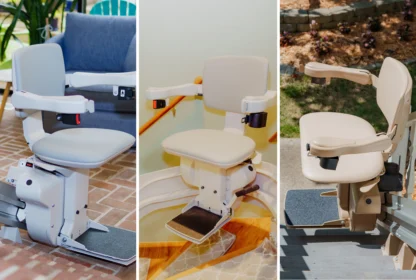
There are two staircase types: straight and curved. Straight stairs run in one uninterrupted line from bottom to top. Curved stairs change direction, have a landing midway, or spiral. Most homes have straight stairs. Curved staircases require a custom-built rail and are handled differently.
The second factor is where the lift will be used. Indoor stairlifts and outdoor stairlifts are built differently. Outdoor models are weatherproofed and designed for exposed conditions. If you have a stoop or exterior stairs you rely on, that option exists. A proper in-home assessment with a company like 101 Mobility is the only way to know exactly which configuration your home calls for.
Key Features to Look for in the Best Stairlift
Once you know your stair type, you can look at product features. These are the ones that actually affect how the lift performs day-to-day.
Weight capacity. Most standard stairlifts support up to 300 pounds. Bariatric models go higher. Confirm this before anything else.
Seat swivel. A swivel seat turns at the top of the stairs so you can exit facing forward rather than sideways or backward. This matters more than most people realize until they try it.
Soft start and stop. The lift should accelerate and decelerate smoothly. Abrupt movement is uncomfortable and can cause instability.
Remote controls. Call and send functions let you move the chair from either floor so it is always where you need it.
Battery backup. A stairlift that stops working during a power outage is a problem. Quality models run off a rechargeable battery that keeps functioning when the power is out.
Safety Features That Matter Most
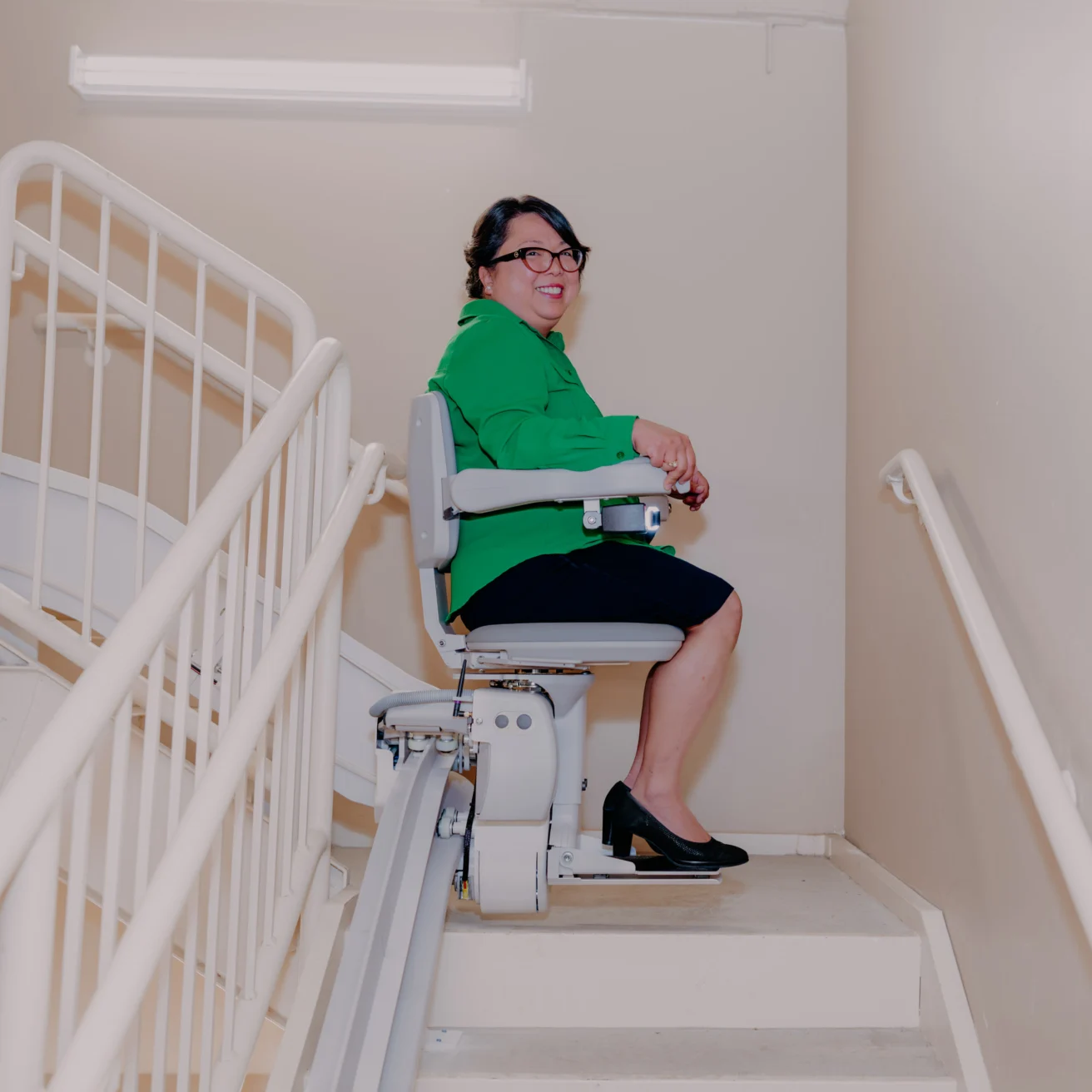
Modern stairlifts are designed for solo, unsupervised use. That is the point. Key safety features include a lap belt, obstruction sensors on the footrest that stop the lift if something is in its path, and footrest safety edges. These systems make independent daily use reliable, not just theoretical. For a full breakdown, read how safe are stairlifts.
Straight vs. Curved Stairlifts: The Practical Difference
Here is a side-by-side comparison of what separates these two types:
| Feature | Straight Stairlift | Curved Stairlift |
| Staircase type | Straight stairs only | Any staircase shape |
| Installation time | Same day or next day | Several weeks (custom rail) |
| Cost range | Lower | Higher |
| Availability | Widely stocked | Built to order |
| Best for | Most homes | Complex or multi-landing stairs |
If your stairs are straight, you have the faster and more affordable path. If they curve or have a landing, a custom curved unit is the right call.
How to Choose a Stairlift Brand You Can Trust
Brand reputation matters, but the installer matters just as much. A well-known manufacturer paired with a poor local installer creates problems. What you are looking for is a company with product expertise, responsive local service, and a track record in your area. That is how 101 Mobility works: locally owned franchises with national resources, handling everything from the first call to the post-installation follow-up.
Do not skip the reviews. Look for patterns: are customers mentioning clear communication, on-time installation, and helpful follow-up? Those are the signals that a provider has their process together.
What to Expect from Stairlift Installation
Installation is simpler than most people expect. A straight stairlift installation typically takes a few hours. The rail mounts to the stair treads, not the wall, so there is no structural modification to the house.
Curved stairlifts take longer because the rail is custom-fabricated to match your specific staircase. The measurement appointment happens first, the rail is built, and then installation follows. Your installer will walk you through the timeline during the consultation.
101 Mobility handles the full process: free in-home assessment, installation, and a walkthrough so you know how to use the lift confidently from day one. There are no contractors to coordinate, no product sourcing to figure out. For pricing details, the stairlift pricing guide gives you a clear starting point before the consultation.
Frequently Asked Questions
What is the most reliable stairlift for daily home use?
Reliability comes down to two things: a quality product and a competent local installer. Models from established manufacturers with direct-drive motors, battery backup, and obstruction sensors perform well long-term. The key is pairing that with an installer who configures the rail correctly and services the unit if anything needs adjustment.
How long does a stairlift last?
With regular maintenance, many stairlifts can provide years of reliable use. Routine maintenance, keeping the rail clean, and occasional servicing extend that lifespan. Your installer should be available for service calls after installation, not just during the sale.
Can I get a stairlift if my stairs have a curve or landing?
Yes. Curved stairlifts are custom-built to match any staircase configuration, including L-shaped stairs, spiral stairs, and those with intermediate landings. They take longer to produce and cost more than straight models, but they are fully functional and widely available through providers like 101 Mobility.
Does insurance or Medicare cover a stairlift?
Standard Medicare does not cover stairlifts. Some Medicaid waiver programs and VA benefits provide partial coverage depending on the state and eligibility. Financing options are available for those who do not qualify for assistance. Your 101 Mobility consultant can walk through options during the assessment.
What is the difference between renting and buying a stairlift?
Buying is the right choice for long-term use at home. Rental is more common for post-surgery recovery periods where the need is temporary. If you plan to age in place, a purchased unit is the better investment and typically installed faster through a local provider.
Ready to Find the Best Stairlift for Your Home?
You already know what matters most: safety, fit, and staying home on your terms. The right stairlift makes staying home not just possible but straightforward. The next step is a conversation with someone who can walk your stairs, look at your layout, and give you a clear recommendation with no guesswork.
| Staying home is the right choice. Finding the right stairlift means getting a proper assessment from someone who knows what they are looking at.101 Mobility handles everything from consultation to installation, so you do not have to coordinate contractors or second-guess product compatibility. Schedule your free in-home consultation with a local 101 Mobility expert today. |