Bathroom Safety in Carencro: Grab Bars, Showers, and Other Upgrades That Reduce Fall Risk
Bathrooms can become one of the hardest places in the home to navigate safely. Wet floors, tight spaces, high tub walls, and awkward transfers can turn simple routines into daily stress points for older adults, caregivers, and anyone planning for safer living at home.
The good news is that improving bathroom safety in Carencro does not always require a major remodel. In many homes, the right combination of grab bars, transfer support, accessible shower features, and other targeted upgrades can make bathing and toileting easier, safer, and more comfortable.
Why Bathrooms Are One of the Most Common Places for Falls at Home
Bathroom routines combine several risk factors at once. Surfaces get slippery. Balance can shift during stepping, turning, or sitting. And many people need extra support exactly where traditional bathrooms offer the least help.
Common problem areas include:
- Stepping over a tub wall
- Getting in and out of the shower
- Lowering onto or rising from the toilet
- Standing on wet tile
- Moving safely in a smaller bathroom footprint
For many families, fall prevention at home starts here because this is where daily routines are most physically demanding.
Bathroom Safety in Carencro Starts With the Right Risk Areas
Before choosing products, it helps to identify where support is needed most.
Shower and tub entry
A high tub edge or slick shower threshold can make bathing feel unstable. Even when someone can still walk independently, that single step in and out of the bathing area may be the moment they feel least secure.
Toilet transfers
Sitting down and standing up can become harder with reduced leg strength, balance changes, or recovery from surgery. The issue is often not the bathroom as a whole, but one repeated movement that now needs support.
Standing support near wet surfaces
Many people need a stable place to hold while turning, drying off, or repositioning. This is where well-placed support can make a meaningful difference without changing the entire room.
Bathroom Accessibility Upgrades That Can Make Daily Routines Safer
The best bathroom accessibility upgrades are the ones that fit the user, the space, and the daily routine.
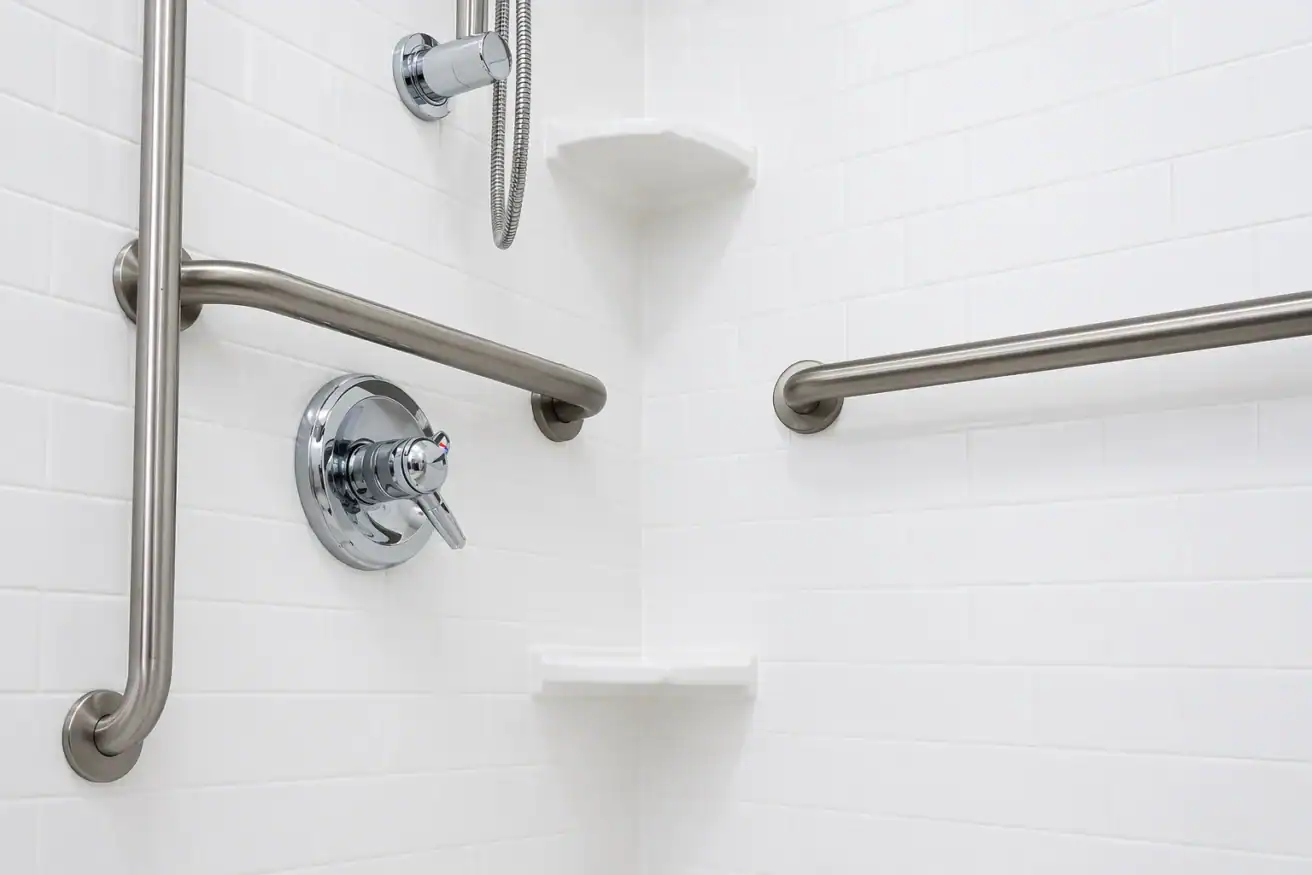
Grab bars
One of the most practical upgrades is a professionally installed grab bar. Grab bars can provide support near the shower, inside the shower, beside the toilet, or anywhere extra stability is needed.
They work well for people who can still walk independently but want more confidence during transfers and movement. They also help caregivers by creating more controlled, supported movement rather than relying on unstable towel bars or nearby counters.
When planned correctly, grab bars Carencro homeowners choose can blend into the bathroom while giving reliable support where it matters most.
Accessible shower options
An accessible shower can make entry easier and reduce the need to step over a high tub wall. Depending on the bathroom layout and the user’s needs, this may involve a lower-threshold bathing setup, a shower transfer solution, or a seating-friendly configuration that supports safer bathing.
This type of upgrade often makes sense when the shower itself, not just the surrounding floor, is the main safety issue.
Transfer benches and bath seating
For people who benefit from seated bathing, transfer solutions can reduce the strain of stepping into a tub or shower. A bench or seated transfer system can make the movement more controlled and less physically demanding.
This can be especially helpful after surgery, during recovery, or when a loved one has difficulty with balance, endurance, or stepping over the side of a tub.
Floor-to-ceiling support poles
Some bathrooms need support in spots where a wall-mounted bar is not the best answer. A floor-to-ceiling support pole can help with standing, turning, or repositioning and may work well near toilets, tubs, or adjacent dressing areas.
For households focused on safer transfers, this can be a strong option when support needs to be more centralized.
Which Bathroom Safety Upgrade Helps With Which Challenge?
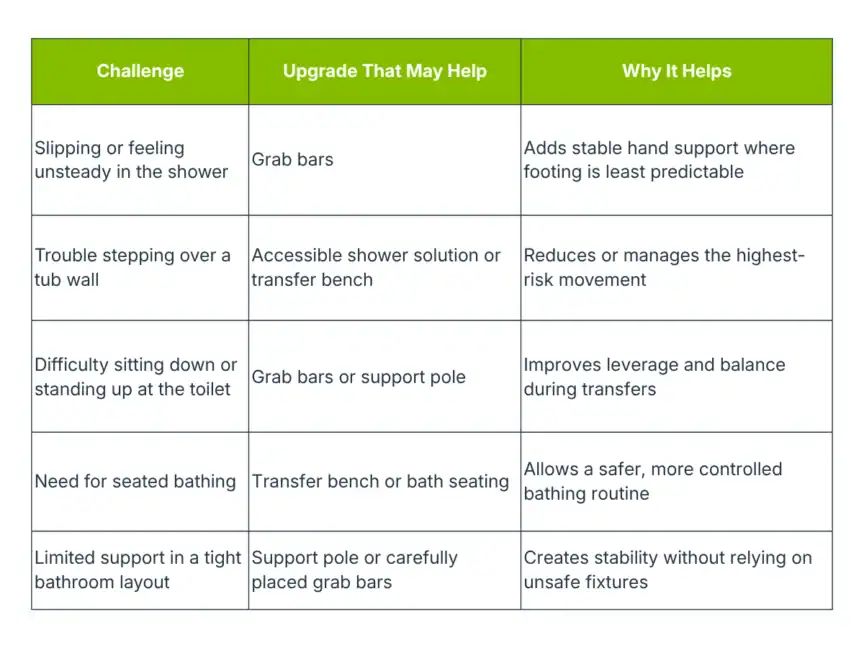
When a Small Upgrade Is Enough and When a Larger Change Makes Sense
Not every bathroom needs a full renovation. In many cases, a few targeted changes can meaningfully improve safety and comfort.
A smaller upgrade may be enough when:
- The main issue is stability, not access
- The user still walks independently
- Support is only needed in one or two locations
- The current bathroom layout mostly works
A larger change may make more sense when:
- Stepping into the tub is no longer safe
- A caregiver needs better transfer support
- Seated bathing is becoming necessary
- The bathroom setup creates repeated barriers every day
The goal is not to add more equipment than needed. It is to solve the right problem in the right way.
Why Professional Installation Matters
Bathroom safety products work best when they are matched to the person using them and installed for the specific surface, placement, and movement pattern involved.
That matters because support needs vary. One person may only need a grab bar at the shower entry. Another may need help with toilet transfers, bathing access, and standing balance in multiple spots.
Professional guidance also helps families avoid common mistakes, such as:
- Placing support too high or too low
- Choosing the wrong solution for the transfer challenge
- Assuming every wall can support the same hardware
- Buying a product before evaluating how the bathroom is actually used
For households comparing options, a personalized recommendation can save time and help avoid unnecessary changes.
FAQs About Bathroom Safety in Carencro
What is the best first step for improving bathroom safety?
Start by identifying the routine that feels least safe. For many people, that is entering the shower, stepping over a tub, or using the toilet. Once that movement is clear, it is easier to choose the right solution.
Are grab bars enough for bathroom safety?
Sometimes, yes. If the main concern is balance and stability, grab bars may be the most effective upgrade. If the issue is stepping over a tub wall or completing a seated transfer safely, a larger bathing-access solution may be more appropriate.
What makes a shower more accessible?
An accessible shower is easier to enter, easier to use safely, and better suited for support or seating if needed. The right setup depends on the bathroom layout and the user’s mobility needs.
How do I know which bathroom accessibility upgrades are right for my home?
The best answer depends on the user, the room, and the transfer challenge. A professional consultation can help identify whether small modifications or a more involved change will provide the safest long-term result.
Who should consider bathroom safety upgrades?
Older adults aging in place, people recovering from injury or surgery, wheelchair users, and family caregivers often benefit from evaluating bathroom safety early, before a near-fall or fall happens.
Make Bathroom Safety Easier With a Personalized Plan
If daily bathroom routines are starting to feel less safe, the right solution may be simpler than you think. From professionally installed grab bars to transfer-friendly bathing options, the best approach is one that fits your home and the way it is used every day.
If you are exploring bathroom safety in Carencro, learn more about local accessibility solutions on the 101 Mobility Lafayette page or browse bathroom safety solutions to see what types of upgrades may help.
Book a Free Consultation to get personalized recommendations for a safer, easier bathroom setup.