Accessibility Solutions After Surgery in Walker: What Helps Most During Recovery
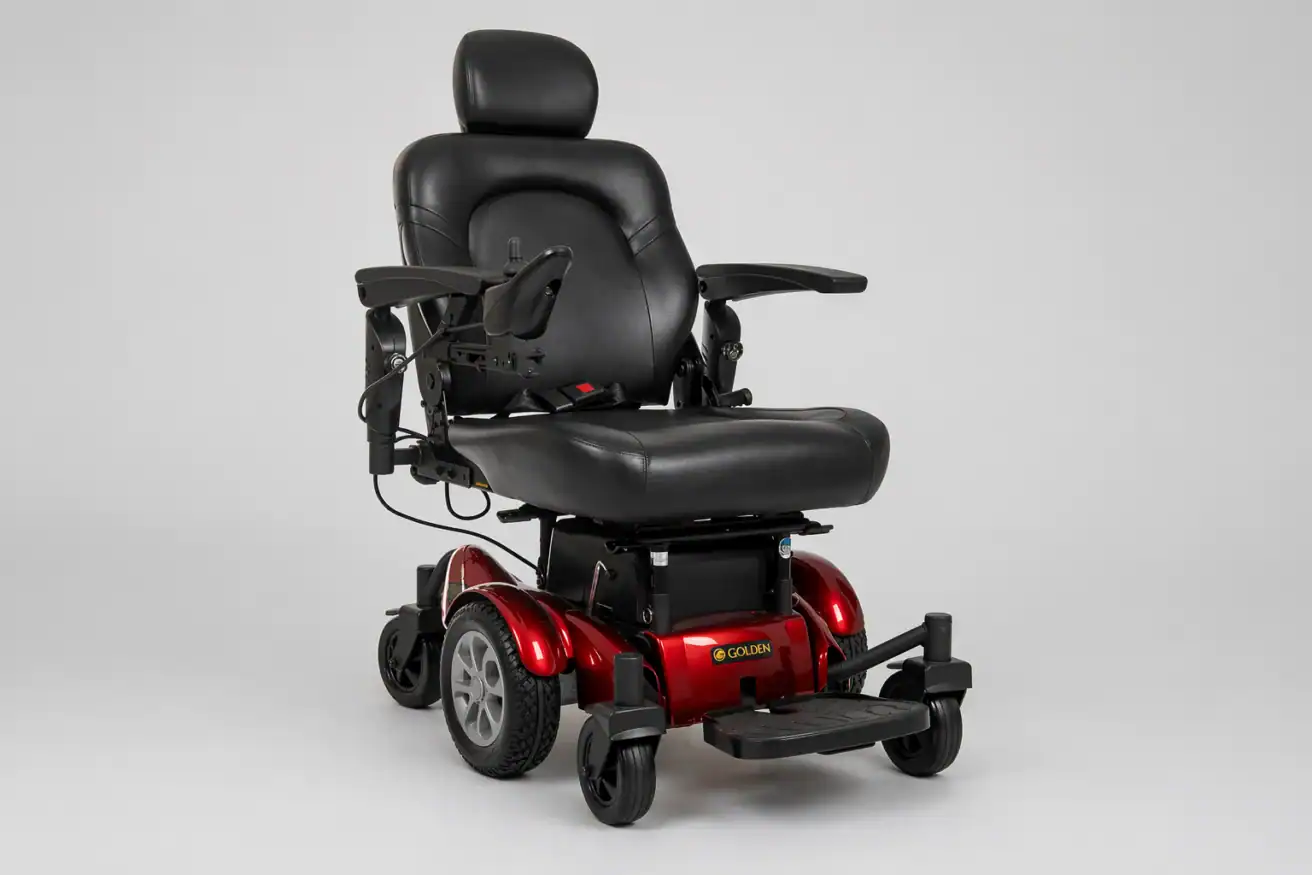
Recovering at home after surgery sounds simple until everyday routines start feeling harder than expected. A few steps at the front door, a slippery bathroom, or the need to sit and transfer safely can quickly turn normal tasks into stressful ones.
The right accessibility solutions after surgery in Walker can help reduce strain, improve safety, and make recovery at home more manageable. For some people, the best option is a short-term fix. For others, recovery reveals a longer-term need that is worth addressing now. The goal is the same either way: make daily life safer, easier, and less exhausting while healing.
Why recovery at home can be harder than expected after surgery
After surgery, even familiar spaces can feel less forgiving. Pain, limited range of motion, fatigue, swelling, and temporary balance issues can make stairs, showers, and transfers more difficult than they were before.
Common problems during recovery at home in Walker include:
- Trouble getting up and down stairs safely
- Difficulty stepping over a tub or shower threshold
- Limited stability in the bathroom
- Strain when moving from bed to chair or chair to toilet
- Unsafe entry points at porches, garages, or doorways
- Extra physical demands on spouses, adult children, or caregivers
This is where post-surgery accessibility planning helps. Instead of waiting for a close call, it makes sense to adjust the home around the recovery process.
Accessibility solutions after surgery in Walker that can make the biggest difference
Not every surgery recovery needs the same setup. The right recommendation depends on the home, the surgery, mobility limits, and how long support may be needed.
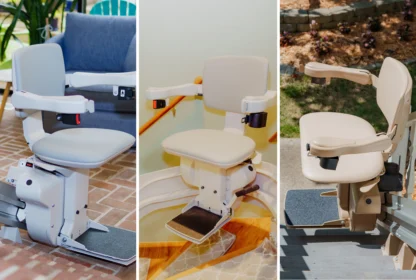
Stair support for safer movement between floors
Stairs are one of the first obstacles that become a problem after surgery. If a bedroom or full bathroom is upstairs, repeated stair use can slow recovery and increase fall risk.
A stairlift may help when:
- The person should limit bending, climbing, or weight-bearing
- The home has essential rooms on different levels
- Family members want to reduce the risk of a stair-related fall
- Recovery may last weeks or longer
For some households, stair support is one of the most practical temporary mobility solutions because it helps preserve access to the full home without forcing major routine changes.
Bathroom safety upgrades for bathing and toileting
Bathrooms often become the highest-risk room during recovery. Wet surfaces, tight layouts, and awkward movements can make bathing especially difficult after joint surgery, back surgery, or other procedures that limit movement.
Helpful home safety after surgery options may include:
- Grab bars for stability near the toilet, tub, or shower
- Transfer benches or sliding bath systems for safer entry into a tub or shower
- Support poles or pivoting support bars near high-use areas
- Seated bathing solutions when standing is difficult or unsafe
Bathroom safety upgrades are often among the fastest ways to improve comfort and confidence during recovery.
Entry access and threshold solutions
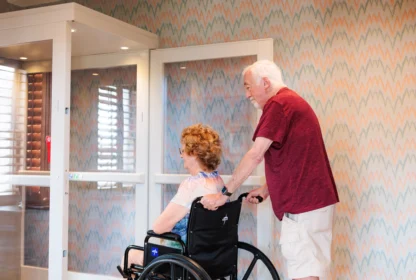
Even a small step at the front door, garage entry, or porch can be a problem after surgery. Temporary or modular access solutions may help make it easier to enter and exit the home safely for follow-up visits, therapy, or daily routines.
These solutions can be especially useful when someone is using a walker, wheelchair, or transport chair during recovery.
Transfer support for bed, chair, and bathroom routines
Transfers are often overlooked until they become difficult. Moving from sitting to standing, shifting from a bed to a chair, or repositioning in a bathroom can create strain for both the recovering person and the caregiver.
Support products that improve leverage and stability can make daily routines smoother while reducing the physical effort required throughout the day.
Temporary mobility solutions vs. longer-term home changes
Some recovery needs are truly short term. Others reveal an ongoing accessibility challenge that was already starting to build before surgery.
Here is a simple way to think about it:
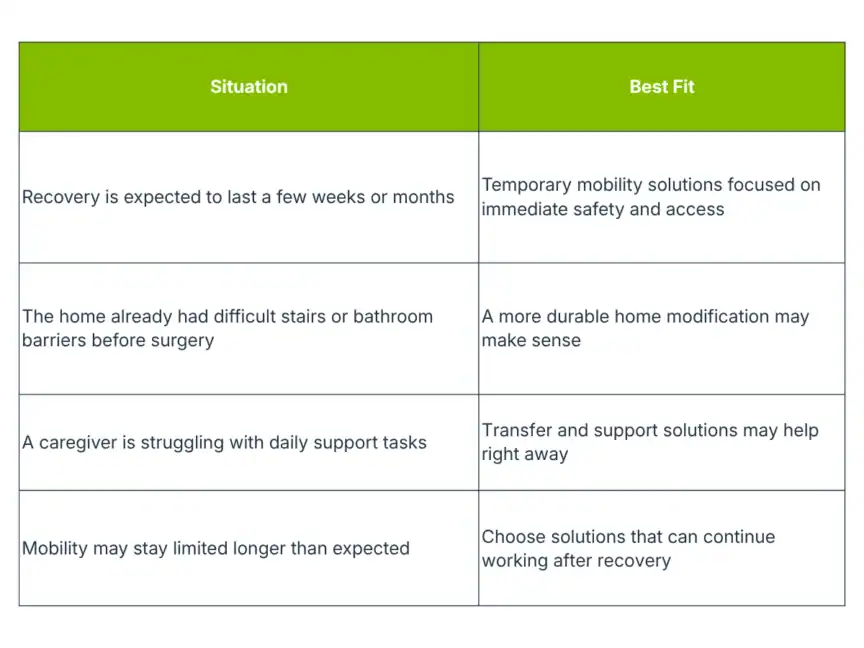
If the home was already hard to navigate before surgery, this may be the right time to make a more lasting improvement instead of relying only on a temporary workaround.
Which solution fits your recovery needs?
The best choice depends on where the difficulty shows up first.
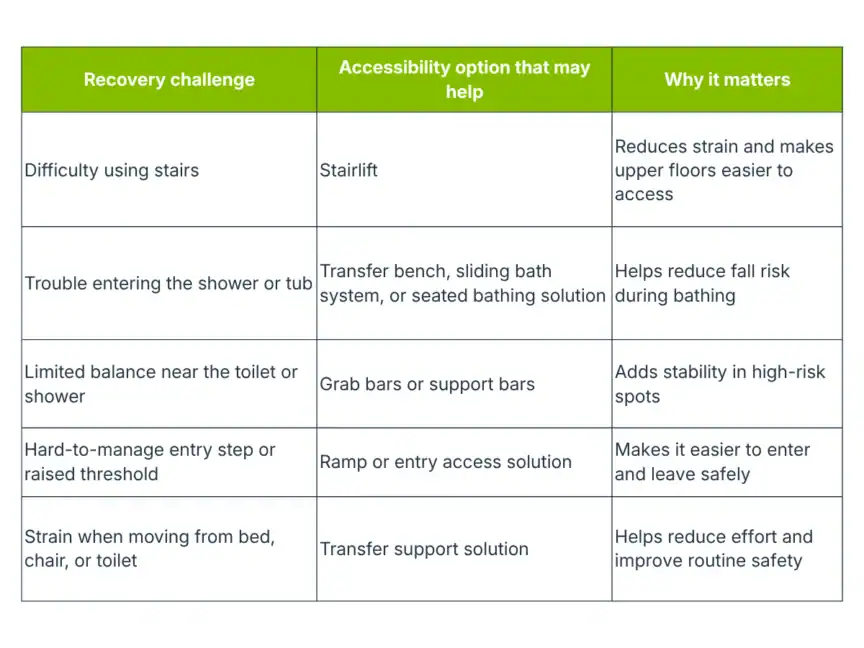
This kind of comparison is useful because many families are not searching for a specific product at first. They are trying to solve a daily problem. Matching the challenge to the right solution makes the decision much clearer.
When to schedule an accessibility consultation
You do not need to wait until recovery becomes frustrating or unsafe. A consultation is worth considering when:
- Discharge planning includes mobility restrictions
- The home has stairs, tubs, or difficult entry points
- A walker or wheelchair will be used during recovery
- A spouse or family caregiver will be helping every day
- You are unsure whether a short-term or longer-term solution makes more sense
A professional consultation can help you avoid guessing. Instead of piecing together equipment on your own, you can get recommendations based on the layout of the home and the person’s actual recovery needs.
For families looking at recovery at home Walker planning, that kind of guidance can save time and reduce stress.
You can also explore more about local accessibility support through 101 Mobility Baton Rouge and request help directly through the free consultation page.
FAQ
What are the best accessibility solutions after surgery at home?
The best option depends on the recovery challenge. Stairlifts can help with multi-level homes, grab bars and bath safety products can improve bathroom safety, and entry access solutions can make it easier to get in and out of the house during recovery.
Are temporary mobility solutions enough after surgery?
Sometimes, yes. If recovery is expected to be short and the home is otherwise manageable, temporary mobility solutions may be enough. But if the home already has difficult stairs, unsafe bathroom access, or repeated transfer challenges, a longer-term solution may be the better investment.
How can I improve home safety after surgery?
Focus first on the highest-risk areas: stairs, bathrooms, and entryways. Add stability where needed, reduce difficult transfers, and make sure the recovering person can move through daily routines with less strain and fewer fall risks.
What if I am not sure which product is right?
That is exactly when a consultation helps. The right recommendation depends on the surgery, the home layout, and how long mobility support may be needed. A professional assessment can narrow down the best fit quickly.
Can accessibility upgrades help caregivers too?
Yes. Good post-surgery accessibility planning can reduce lifting, awkward transfers, and physical strain for caregivers while making the recovering person more comfortable and confident at home.
Make Recovery at Home Safer and Easier
Surgery recovery is challenging enough without a home setup that works against it. The right accessibility changes can make movement safer, reduce daily strain, and support a smoother return to routine.
If you are planning for recovery at home in Walker, 101 Mobility can help you identify practical solutions for stairs, bathrooms, entry access, and everyday movement. Book a Free Consultation or learn more through 101 Mobility Baton Rouge.