Accessibility Solutions After Surgery in Breaux Bridge: What Helps Most During Recovery

Recovering at home after surgery can feel simple in theory and much harder in practice. A few front steps, a steep staircase, a high tub wall, or a hard transfer from bed to chair can quickly turn everyday routines into frustrating or unsafe tasks.
The right accessibility setup can make recovery smoother. For many households in Breaux Bridge, that means focusing on the areas that matter most right away: getting in and out of the home, using the bathroom safely, moving between floors, and reducing strain during daily routines.
If you are searching for accessibility solutions after surgery in Breaux Bridge, the goal is not to overcomplicate the home. It is to make recovery safer, easier, and more manageable for the person healing and for anyone helping them.
Why Recovery at Home Can Be More Difficult Than Expected
After surgery, even familiar spaces can become obstacles. Tasks that used to feel automatic may suddenly require more planning, more effort, or another person’s help.
Common challenges during recovery include:
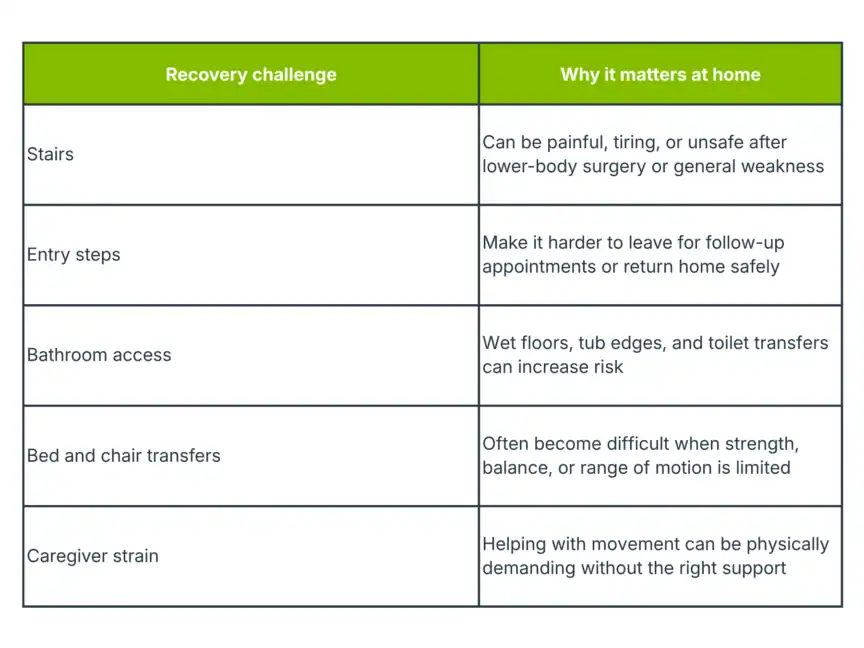
This is why post-surgery accessibility should be practical and targeted. A few well-matched changes can have a much bigger impact than a long list of generic products.
Accessibility Solutions After Surgery in Breaux Bridge That Can Make the Biggest Difference
The best solution depends on the home layout, the type of surgery, and how long recovery is expected to last. Still, a few categories tend to help most often.
Stair support for safer movement between floors
If the bedroom or full bathroom is upstairs, stairs can become one of the biggest obstacles during recovery. Repeated trips up and down may be exhausting, painful, or unsafe.
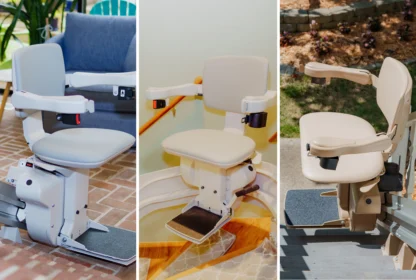
A stairlift can help when a person needs reliable access between floors without putting repeated strain on the body. This can be especially useful after joint surgery, during limited weight-bearing periods, or when balance is still improving.
A stairlift may be worth considering when:
- A person must use stairs several times a day
- The main sleeping or bathing area is on another floor
- The recovery timeline is more than a very short period
- The household wants a safer option than assisted stair climbing
Temporary mobility solutions for entryways and steps
Getting into and out of the home matters more than many people expect. Follow-up appointments, therapy visits, and everyday movement all become harder when entry access is not smooth.
Temporary mobility solutions may include ramps or threshold ramps that reduce the difficulty of steps, raised thresholds, or uneven transitions. These options can help support recovery at home in Breaux Bridge by making entry and exit safer and less stressful.
This type of support can be especially helpful for people using:
- Walkers
- Wheelchairs
- Transport chairs
- Crutches
- Knee scooters
Bathroom upgrades that improve home safety after surgery
Bathrooms are often one of the first places families worry about, and for good reason. Standing from a toilet, stepping into a shower, or keeping balance on a wet surface can all become more difficult after surgery.
Home safety after surgery often starts in the bathroom. Depending on the need, helpful solutions may include:
- Grab bars in key locations
- Shower seating
- Better support around toilet or bathing areas
- More accessible bathing setups
These updates can help reduce awkward movement, improve stability, and make everyday routines feel less risky.
Patient transfer and support equipment for difficult transitions
Some recoveries involve more than walking support. Moving from bed to chair, chair to bathroom, or one seated surface to another may require extra assistance.
In these cases, patient handling or transfer support can help make caregiving safer and daily movement less physically demanding. This can be especially important when family members are helping at home and want to reduce strain while still supporting recovery.
What Helps Most During Different Types of Recovery
Not every post-surgery setup needs the same solution. The most useful support usually depends on where movement is limited and which daily activities are hardest.

This is why an in-home evaluation can be so useful. What works well in one house may not be the right answer in another.
Temporary vs. Longer-Term Post-Surgery Accessibility
Some families need short-term help for a defined recovery period. Others begin with surgery recovery and realize the home would benefit from a more lasting accessibility plan.
Here is a simple way to think about it:
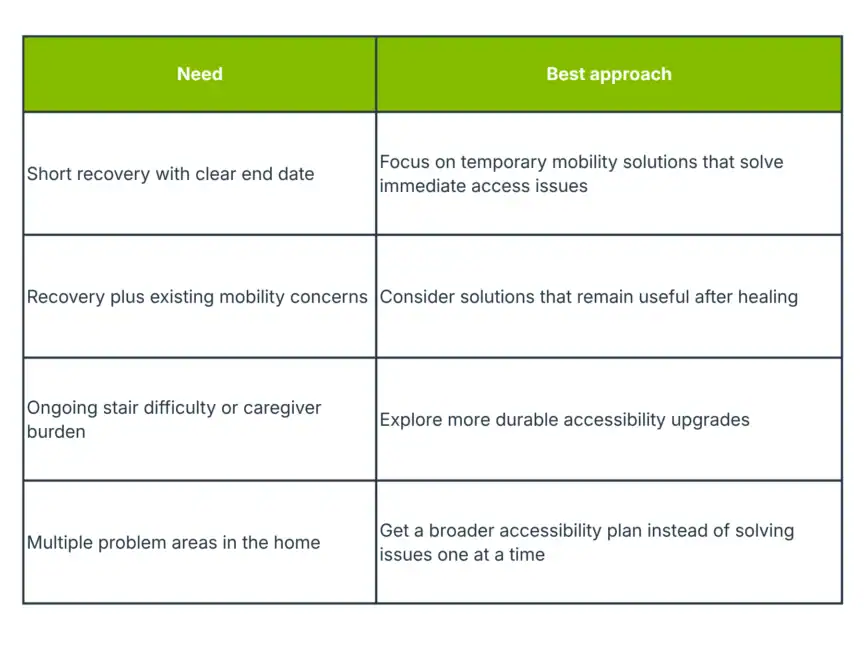
Post-surgery accessibility does not always need to become a major remodel. But it should match the real demands of the recovery period and the home itself.
How to Make Recovery at Home in Breaux Bridge Easier Before Returning From Surgery
Planning before a person returns home can make the first days of recovery much easier.
A simple 3-step recovery prep chart
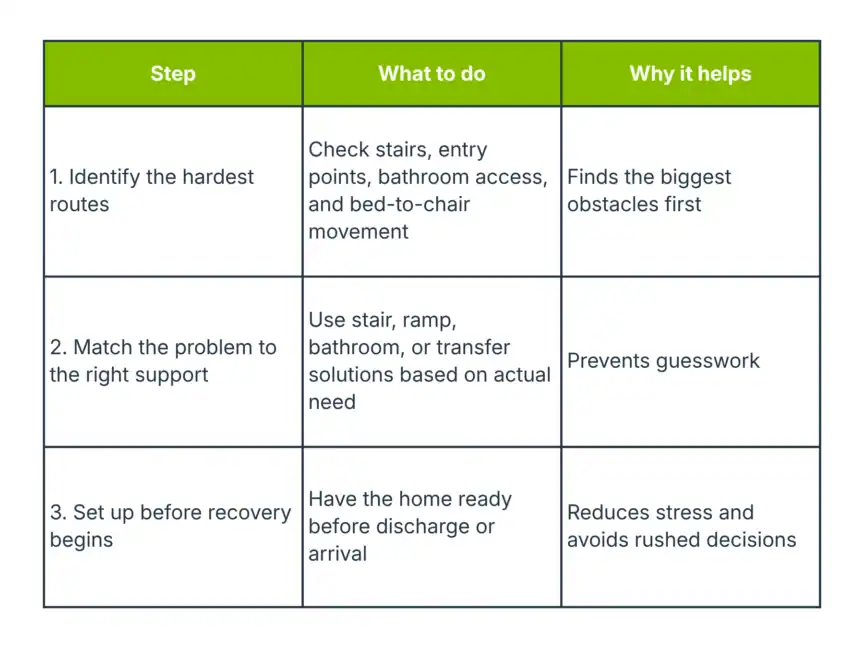
A good rule of thumb is to focus on the paths a person will use every day:
- Front door
- Bedroom
- Bathroom
- Main seating area
If those routes are safer and easier, the rest of recovery often becomes more manageable too.
When to Schedule a Home Accessibility Consultation
A consultation makes sense when the household is not sure which product fits the space, when there are several barriers at once, or when the recovery plan involves limited mobility for more than a very short time.
It can also help when:
- A caregiver is worried about helping with transfers
- Stairs are unavoidable in the home
- Bathroom routines already feel unsafe
- A walker, wheelchair, or transport chair will be used during recovery
- The family wants a practical solution before discharge
For people in Breaux Bridge and the surrounding area, working with a local accessibility specialist can make it easier to evaluate the layout, identify the biggest risks, and recommend a solution that fits the home rather than forcing a one-size-fits-all answer.
FAQ
What are the best accessibility solutions after surgery in Breaux Bridge?
The best solution depends on the home and the recovery plan, but common needs include stair support, ramps for entry access, bathroom safety upgrades, and transfer assistance.
Are temporary mobility solutions enough for post-surgery recovery?
Often, yes. If recovery is short-term, temporary mobility solutions can address immediate barriers without requiring permanent changes. If mobility concerns may continue, a longer-term option may make more sense.
How can I improve home safety after surgery?
Start with the highest-risk areas: stairs, entryways, bathrooms, and transfers. The goal is to reduce strain, improve stability, and make routine movement easier.
What type of post-surgery accessibility helps with stairs?
If stairs are used often and recovery makes climbing difficult, a stairlift may help create safer access between floors.
When should we set up recovery equipment at home?
Before the person returns home whenever possible. Preparing the home ahead of time can make the first days after surgery less stressful and safer.
Make Recovery at Home Easier With the Right Support
Recovery is hard enough without avoidable barriers at home. The right accessibility changes can help reduce strain, improve safety, and make daily routines more manageable during healing.
If you are planning for recovery at home in Breaux Bridge and want guidance on the best fit for your space, explore your local options through 101 Mobility Lafayette. When you are ready to talk through your home setup, Book a Free Consultation to get personalized recommendations.