After the Install: What Local Service Support Means for Your New Orleans Stairlift

The work of a technician is not fully complete with equipment installation. It is equally important for the technician to inform the owner of how the equipment functions, how and when to charge, which equipment to use regularly, and how to contact the company when things change. New Orleans mobility equipment service companies with this information can answer a client’s first service-related question.
With 101 Mobility of New Orleans, this relationship extends to New Orleans, Metairie, Kenner, Gretna, Slidell, and other communities. While the company’s product can be installed in one visit, knowing how to use the product remains important, as will client’s questions after the installation.
What I Demonstrate Before Leaving
I do not consider an installation complete until you have clear understanding of the equipment that you will be operating.
The specifics would depend on the equipment.
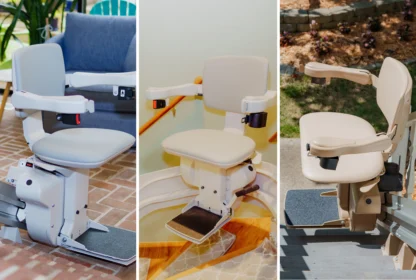
Bruno Elan Straight Rail Stairlift, for example, has armrest control, seat position, folding seat, arms and footrest, swivel function, and charging system. The Elan is a battery-operated stairlift and uses charging along the rail. Under normal operation of the stairlift, understanding the charging process is important.
The Elan has an audio diagnostic system. Understanding what the normal functioning system sounds like can help the client describe what has changed.
The Harmar Pinnacle line uses similar features including batteries, charging, obstruction sensors, remotes, and components that fold. For some Pinnacle models and configurations, some details may differ.
The Stiltz Duo Lift is a completely different system. For the handoff from a stairlift, the controls, access configuration, components, and operational features are all different and may require a new handoff.
I prefer the post-installation briefings not to be generic.
The handoff would include:
- Normal Controls
- How to start, stop, call, or operate the equipment
- Boarding and Exiting
- How to Engage and Disengage the Equipment
- Folding or moving components
- Which components fold, swivel, slide, reposition, etc.
- Charging or Power
- What charging or power behavior looks like
- Indicators or diagnostics
- Which lights, sounds, displays, or messages are normal
- Service contact
Who to call when something changes or you have a question
You do not have to diagnose the systems like a technician. Just know what is normal enough to recognize an abnormality.
What the Customer Should Record About the Equipment and Installation
A little documentation makes future service calls much more efficient.
I recommend customers document the equipment details at the time of installation so they have the product name and the model number, as well as the product and serial numbers if any. Make a note of the installation date and any warranty documents or service contracts you received with the equipment.
Keep a clear picture of the equipment label as part of your household records.
Information to give when calling about a stairlift repair in New Orleans or asking about another mobility product:
- Name of product manufacturer
- Name of product (model if possible)
- Serial number, if available
- Date of product installation
- Location of product in house
- Any service or warranty documentation
- Any diagnostic lights, sounds, or codes you noticed
- When you noticed the change
- If it is consistent or if it happens occasionally
You do not need to fix it yourself before calling.
I would actually prefer you call with an accurate description of what you have observed over your own imaginary quess of what could be the problem.
For instance, “the chair stops at the same point on the rail” is way more helpful than guessing it yourself and thinking it is a problem with that part.
Which Changes in Sound, Motion, Charging, or Controls Should You Call About?
The best reference point is how the equipment behaves normally.
Something behaving differently and continuing to do so is a reason to call.
A different or repeated sound
Like other equipment, mobility equipment has moving parts and controls that give some sound during operation. What sounds different is what matters.
A Different Function or Behavior
Do not try to solve the problem yourself and make mechanical changes if you notice that your stair lift or lift operates in a different way.
Describe what happens and whether the equipment finishes its normal movement.
Changes in Charging Behaviors
For battery operated stair lifts, charging behaviors should not be overlooked.
It is worthwhile to call the service team if you notice behaviors relating to charging that were not shown during the installation.
For example, the Bruno Elan has a battery powered system and charging along the rail. The Harmar Pinnacle also has battery powered systems with built-in charging systems.
The way you respond depends on what you saw and the model of the product. For this reason, I will try to identify the product.
behaving in a new way
If the controls respond in a new, unpredictable way, tell us about the control and what you think changes.
A response to this concern may be simple. However, it may also show that the equipment needs to be inspected.
Service is a honest limitation of the work I do. Not every question requires a major repair and I do not want to assume an expensive failure when the control behavior is merely new and unpredictable. The first call should be to identify the product and review what changed to see if service is warranted.
Why Local Installation History Matters When Service Is Needed
Understanding how the product was installed helps determine the reason for the service call.
A Bruno Elan, Harmar Pinnacle, or any other model, is one example of a Metairie stairlift, but even this model number doesn’t reveal everything. The configuration of the system, the selected add-on features, the layout of the landings, the power or charging system, and how the system is utilized are other important factors when considering the needs of the system.
Likewise, the service of a lift in Metairie applies to all of New Orleans, Kenner, Gretna, and Slidell.
If the local staff has knowledge of the original install and the system configuration, then there is likely less background information that I need to infer when I call.
The service of the system may require some investigation if the system has been installed by someone else, has been resold, or doesn’t have a lot of history.
That doesn’t necessarily mean the system can’t be serviced. It means I don’t want to pretend we know the configuration or history of the system when we don’t.
Your records help fill that gap.
The name of the product, model, installation date, history of service, and a detailed description of what was different are all useful.
Without a doubt, the call is now more productive.
What Happens During a Service Visit?
A service call typically begins with the problem that brought the customer to contact our service department.
Inform us as to what was different. If the equipment makes a new, unexplained sound, stops at a new unknown location, gives a new, unexplained signal, or a control that now behaves in an unusual manner, then we will investigate that control to determine the problem.
The system will be evaluated, and the equipment will be addressed in order of priority.
The steps to repairs always varies on the accessibility products being serviced. There is no responsible universal steps to repair checks.
It is that reason that scheduled repairs of mobility equipment should be based off the specific equipment, and not advice found on the internet.
Repairs and maintenance after the install of our products are covered under our service and support. There is even a One-Year Limited Service Warranty provided with the installation of new products. This is in addition to the manufacturer warranties.
After a repair is completed, I like to have the product checked based on how it is primarily used. For example, on a stairlift, this could be checking the travel distance and controls. Each different type of lift would have its own unique operating sequence.
If the needs of the customer have changed, service may not even come close to fulfilling the goal. More times than not, what fits the needs of a customer better as a solution is to replace the equipment.
To find out if new equipment is the answer, or to determine if your accessibility equipment still fulfills your needs, call to schedule a free in-home evaluation. We can evaluate your home, and give you plenty of options along with the installation and support service afterwards.
FAQ: Mobility Equipment Service in New Orleans
Does 101 Mobility provide service after the install of mobility equipment?
Yes. 101 Mobility has a support service for post-installation repair and continues to provide support for maintenance for accessibility equipment sold and installed by them. Their support service page also states that newly sold and installed equipment has a One-Year Limited Service Warranty.
When should I call about a change in my stairlift?
We ask that you contact us to report a change if you notice something that is different about how your stair lift charge, moves, sounds, control, or diagnostic indicators. You are not expected to identify where the problem is. Exactly describe the change and situation of your observation.
What should I have when I call for service?
When you contact us for service, try to have the manufacturer, model, product name, and serial number available, if at all possible. This also helps if you can describe the situation, when you noticed it, what you think may have caused the change, and how consistent the symptom is.
Should I try to repair the stairlift on my own?
No major mechanical repair should be assumed from a symptom alone. Contact the service team and explain what the equipment does rather than opening, changing, replacing or repairing the components.
Why does knowing the original installation matter?
Knowledge of the original installation matters because we like to understand the configuration of the product installed, optional components, rail types, position of the lift, how the rail or lift was installed, configuration of previous services, etc. Without that knowledge, the technician may be required to do additional diagnostic work before he/she can develop a course of action.
Do you only service stairlifts?
We service more than stairlifts. We service any accessibility equipment in our supported product line that includes, but isn’t limited to, stairlifts, platform lifts, home lifts, and other equipment. The process for supporting equipment maintenance and repairs differs based on the equipment needing support.
About the Author
Jonas Boutte is the owner of 101 Mobility of South Louisiana and has hands-on training from accessibility-equipment manufacturers including Bruno, Harmar, Stiltz, Staying Home, EZ-ACCESS, National Ramp, and others. He helps customers throughout Greater New Orleans evaluate accessibility equipment and stay connected to local support from consultation and product recommendation through installation coordination and ongoing service.