What I Check Before Installing an Outdoor Ramp or Platform Lift: Outdoor Accessibility Inspection in Slidell
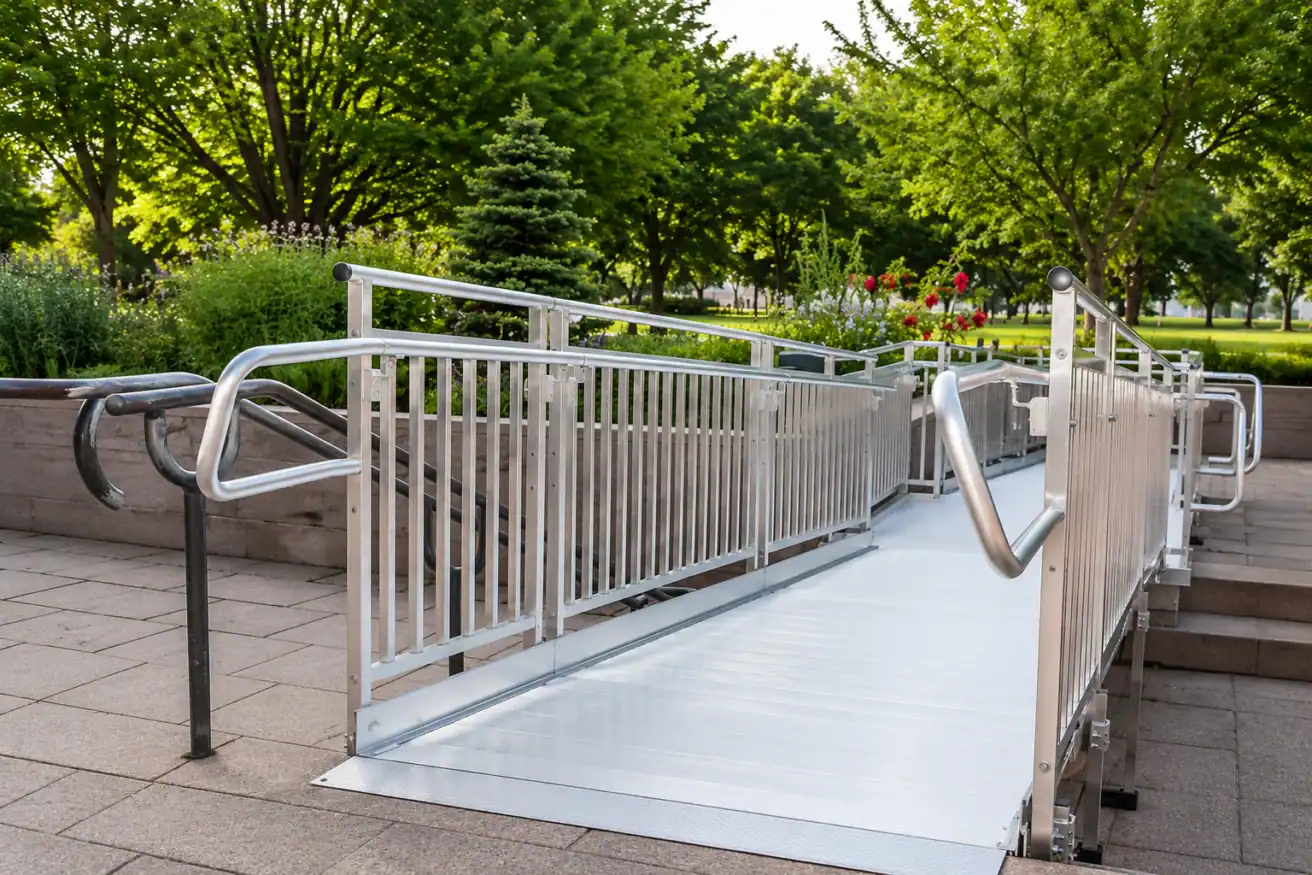
When I perform an outdoor accessibility inspection in Slidell, I look beyond the ramp or platform lift itself.
I want to understand what happens from the moment someone approaches the entrance until they are safely through the door. That means looking at drainage, standing water, the condition of the approach, available space, gate alignment, weather exposure, lighting, power, and how the equipment will be maintained over time.
For an outdoor Slidell entry, those site details help me decide whether an Aluminum Modular Ramp, a Harmar VPL400-X, a Bruno VPL, or another outdoor accessibility solution makes the most sense.
What an Outdoor Accessibility Inspection in Slidell Should Cover
Before recommending equipment, I typically focus on six areas:
| What I Check | Why It Matters |
|---|---|
| Drainage and standing water | Helps keep the approach and equipment area usable |
| Entry and exit route | Confirms the user can move comfortably from the approach to the door |
| Ramp or lift location | Determines whether the equipment fits the property naturally |
| Gate and landing alignment | Helps avoid awkward wheelchair turns |
| Power planning | Important when a powered platform lift is being considered |
| Maintenance access | Makes future inspection and service easier |
The goal is not simply to install equipment. It is to create a complete outdoor route that works for everyday use.
1. I Start With Drainage and Standing Water
Water is one of the first things I look for around an outdoor entrance.
I check where rainwater travels from the roof, driveway, yard, and nearby paved surfaces. I also look for low areas where standing water may remain near the bottom of a ramp or platform lift.
An accessible route should not lead someone directly through an area that regularly collects water.
For a ramp, I consider whether the approach and landings remain firm and usable after rain.
For a platform lift, I pay particular attention to the ground surrounding the lower landing and the area where the equipment will sit.
Managing the site around the equipment is just as important as choosing the equipment itself.
2. I Check the Entire Accessible Route
I do not evaluate a ramp or lift in isolation.
I look at the complete path:
driveway or walkway → equipment → landing → doorway
That helps me find obstacles that might otherwise be missed.
For example, a platform lift may fit beside the porch, but the wheelchair could still have difficulty turning toward the door at the top. A ramp may have enough overall space but connect to an approach that becomes soft or uneven after heavy rain.
Good accessible entry safety depends on the entire route working together.
I look for:
- enough room for the mobility device being used
- comfortable entry and exit from the ramp or platform
- stable approaches and landings
- clear gates and doorways
- minimal unnecessary turning
- obstacles such as posts, steps, landscaping, or drainage features
That is why measurements alone never tell the full story.
3. Ramp Inspection: What I Look for With Aluminum Modular Ramps
An Aluminum Modular Ramp can be a practical outdoor solution when the property provides enough room for the required route.
During a ramp inspection, I look at more than the ramp length.
I check the approach
The user needs a stable way to reach the beginning of the ramp. If the approach becomes muddy, uneven, or covered by standing water, that needs to be addressed as part of the overall plan.
I check the landings
The top and bottom of the ramp should work with the surrounding space and allow the user to transition comfortably.
I check the route
A modular system may need turns or intermediate landings depending on the layout. I want those changes in direction to make sense for the wheelchair, scooter, walker, or caregiver involved.
I check the surface and handrails
The ramp should provide a secure route for everyday use. I also consider how leaves, small branches, mud, and other outdoor debris might affect the surface after bad weather.
I think about what happens after installation
Outdoor access should be easy to visually check and keep clear. The simpler it is to inspect the route after heavy rain or strong wind, the easier it is to maintain reliable access.
4. What I Check Before Recommending an Outdoor Platform Lift
A vertical platform lift can make sense when a porch or entry is raised but the property does not offer a practical footprint for a longer ramp.
For Slidell outdoor projects, I typically look at:
- vertical travel
- platform location
- lower approach
- upper landing space
- wheelchair dimensions
- entry and exit direction
- gate alignment
- weather exposure
- nearby drainage
- electrical access
- backup-power needs
- future service access
Two products I may evaluate are the Harmar VPL400-X and the Bruno VPL.
Harmar VPL400-X vs. Bruno VPL for an Outdoor Entry
Both products can serve outdoor accessibility needs, but I choose based on the property rather than assuming one lift is right for every home.
| Planning Factor | Harmar VPL400-X | Bruno VPL |
|---|---|---|
| Outdoor applications | Designed for outdoor use | Outdoor-capable models available |
| Typical application | Lower-rise porches, decks, and garage entries | Raised porches, decks, garages, and taller access needs depending on model |
| Platform choices | Multiple platform sizes | Multiple platform sizes and layouts |
| Power planning | Electrical planning required | AC and battery-backed options vary by model |
| Best reason to consider it | Straightforward lower-rise outdoor access | Broader configuration and power choices |
I keep this comparison simple during the first conversation.
The home still has to tell us which option fits.
5. I Plan for Power Interruptions Before Installation
Power deserves additional attention when the main accessible entrance depends on a powered lift.
Before recommending a platform lift, I discuss where power will come from and whether the selected model provides an appropriate backup option.
Bruno offers certain battery-backed configurations, while the Harmar VPL400-X includes a manual lowering method.
The specific equipment matters, but so does the household’s emergency plan.
If a wheelchair user depends on one outdoor entrance every day, I want the family to understand how that entrance works during a power interruption before installation is complete.
That conversation is part of practical accessibility planning rather than something to figure out after an outage occurs.
6. I Leave Room for Outdoor Lift Maintenance
One thing that can be overlooked during installation is future access to the equipment.
I do not want landscaping, fencing, storage, or other improvements placed so tightly around a lift that inspection or service becomes difficult later.
Good outdoor lift maintenance starts with an installation that allows the equipment to be reached.
It should also be easy for the homeowner to perform basic visual checks after severe weather.
I recommend paying attention to unusual debris, water accumulation, blocked gates, damaged surfaces, or anything else that appears different from normal before using the equipment.
Quick Storm Access Check for a Slidell Home
After significant rain or strong weather, a simple storm access check in Slidell can help identify obvious problems before the entry is used.
| Check | What to Look For |
|---|---|
| Approach | Standing water, mud, branches, or unstable surfaces |
| Ramp | Debris, unusual movement, blocked landings, slick contamination |
| Platform lift | Debris around the platform or lower landing |
| Gates | Clear opening and closing path |
| Drainage | New pooling or water flowing toward the equipment |
| Lighting | Clear visibility along the complete route |
| Power | Normal lift operation before relying on it |
| Doorway | Clear and unobstructed access |
If something appears damaged, unstable, or different from normal, I would rather have it evaluated before the equipment is relied on.
Professional Installation Starts With the Site Details
Professional installation is not only about placing equipment correctly. It starts with understanding the property.
That is why feedback like Mark P.’s stands out to me. He described receiving a quick and professional response and specifically highlighted the installer’s expertise.
That experience reflects what I want from an outdoor accessibility project.
The installer should understand why the equipment is being positioned where it is, how the user will approach it, where water moves, how the gate needs to align, and how the equipment can be accessed later for service.
Those details can have a major effect on how practical the final entry feels every day.
When I Recommend a Ramp vs. a Platform Lift
Neither option is automatically better.
I compare the needs of the user with the conditions around the home.
| Home Situation | Direction I Usually Explore |
|---|---|
| Plenty of usable horizontal space | Aluminum Modular Ramp |
| Raised entrance with limited ramp space | Vertical platform lift |
| Homeowner prefers a non-powered solution | Ramp |
| Direct wheelchair access to an elevated porch | Platform lift may be worth considering |
| Complicated wheelchair turns around the entry | Compare both layouts before deciding |
| Frequent outdoor exposure | Evaluate drainage and site conditions for either option |
| Primary wheelchair entrance depends on equipment | Give extra attention to reliability, maintenance, and backup planning |
Sometimes an outdoor accessibility assessment confirms the option a homeowner already expected.
Other times, the measurements and approach route point us in a different direction.
That is exactly why I prefer to see the site before recommending the final solution.
FAQs About Outdoor Accessibility in Slidell
Should I inspect an outdoor ramp after heavy rain?
Yes. A basic visual check can help identify debris, standing water, mud, changes around the approaches, or anything unusual along the route. Keep the ramp and landings clear before using them.
Can a vertical platform lift be installed outdoors?
Yes. Outdoor-rated vertical platform lifts are available. The selected equipment, site preparation, drainage, electrical setup, landing, and surrounding access route should all be appropriate for an outdoor installation.
What happens to a platform lift during a power outage?
It depends on the model. Some lifts offer battery-backed operation, while others provide another method for safely lowering the platform. Power-outage planning should be discussed before choosing a lift, especially when it serves as the user’s main entrance.
Is a ramp or platform lift better where water collects?
Neither should simply be placed in an area with unresolved standing water. I first look at the drainage and approach conditions, then determine which access solution can be planned appropriately for the property.
How often should I check outdoor accessibility equipment?
Regular visual checks are useful, particularly after strong storms, heavy rain, or anything that may have affected the surrounding area. Manufacturer-recommended inspection and maintenance should also be followed for the equipment installed.
Start With the Outdoor Route, Not the Product
The best outdoor accessibility solution starts with understanding how the property behaves.
I look at where water goes, where the wheelchair needs to travel, how much room is available, where gates and landings need to sit, what happens when power is interrupted, and whether the equipment can be maintained easily afterward.
From there, we can determine whether an Aluminum Modular Ramp, Harmar VPL400-X, Bruno VPL, or another solution is the better fit.
If you are planning a safer outdoor entry in Slidell, book a free consultation with 101 Mobility of New Orleans. We can evaluate the site and help you choose an accessibility solution built around the way your home and daily routine actually work.
About the Author
Jonas Boutte is the owner of 101 Mobility of South Louisiana and an accessibility specialist with hands-on manufacturer training. He helps families throughout the New Orleans area choose practical ramps, platform lifts, stairlifts, home elevators, and other mobility solutions tailored to their homes and everyday needs.