Honoring Veterans This Labor Day: Home Accessibility Benefits You May Not Know About
Many veterans qualify for VA home modification grants including the SAH, SHA, and HISA programs that help fund wheelchair ramps, stair lifts, grab bars, and other accessibility upgrades. Additional support is available through state programs and nonprofits. This article explains what’s available, who it’s for, and how to get started.
Labor Day is a chance to pause. To appreciate the people who gave years of their lives in service to others. For many veterans, that service left a lasting mark on their health, their mobility, and their ability to move safely through their own homes. And yet, a meaningful category of support exists specifically to help them live more independently: veteran home accessibility benefits.
Most people have never heard of them. Families caring for a veteran often don’t know where to start, and veterans themselves may assume these programs don’t apply to their situation. This article is here to change that.
Below, you’ll find a plain-language overview of VA home modification grants, practical accessibility upgrades that make a real difference in daily life, and additional resources beyond what the VA offers. If there’s a veteran in your life, or if you are one, this is worth knowing.
The Connection Between Service and Home Accessibility Needs
A veteran’s need for home accessibility doesn’t always trace back to a dramatic injury. Sometimes it does. But often, it’s the cumulative effect of years of physical demands on the body between heavy loads, high-impact environments, irregular sleep, and the kind of wear that doesn’t show up on an X-ray until later in life.
For many veterans, mobility challenges emerge gradually. Getting in and out of the bathtub becomes harder. Stairs that were never a second thought start to feel risky. A bathroom that was designed for an able-bodied 30-year-old doesn’t work well for someone navigating joint pain or balance changes at 60.
The good news is that the VA recognizes this. Several programs exist specifically to help veterans modify their homes so that the bathroom, the entryway, and the staircase stop being obstacles and start being part of a life lived on their own terms.
VA Grants and Programs for Home Modifications
The VA offers multiple grant programs to help veterans fund home modifications. These programs generally cover upgrades like wheelchair ramps, widened doorways, roll-in showers, grab bars, stair lifts, and other structural changes that improve safety and independence. None of them require repayment; they’re grants, not loans.
Specific eligibility requirements and benefit amounts are managed by the VA and updated regularly. The best place to verify current details is directly through the VAor a VA-accredited claims agent. What follows is a plain-language overview of the three primary programs.
Specially Adapted Housing (SAH) and Special Home Adaptation (SHA) Grants
These two programs serve veterans with significant service-connected disabilities, particularly those affecting mobility or limb use. The SAH grant is designed for veterans who need to build or substantially modify a home to accommodate a severe disability, such as paralysis or limb loss. The SHA grant covers adaptations to an existing home for veterans with qualifying disabilities that may be different in nature but equally impactful on daily living.
Both grants can be used more than once, up to a lifetime limit, and can apply to a home the veteran owns, a family member’s home where the veteran lives, or in some cases a rental property. The goal of both programs is the same: to help veterans live as independently as possible in a home that fits their needs.
Home Improvements and Structural Alterations (HISA) Grant
The HISA grant is the more commonly accessed program, and for many veterans, it’s the most practical starting point. It funds smaller-scale modifications; the kind that improve daily function without requiring major construction.
Common HISA-funded projects include roll-in showers, exterior ramp installation, widened doorways to accommodate a wheelchair or walker, and bathroom safety upgrades. Veterans with service-connected and non-service-connected disabilities may both qualify, though benefit amounts differ between those categories.
If you’re not sure whether a veteran qualifies for any VA home modification grant, a VA benefits counselor or accredited claims agent can walk through the options at no cost.
Accessibility Upgrades and Resources Beyond VA Benefits
VA programs are a strong foundation, but they’re not the only source of support available. The full picture of home accessibility solutions for veterans includes state programs, local nonprofits, and practical upgrades that can be implemented regardless of funding source.
Common Home Modifications That Improve Independence
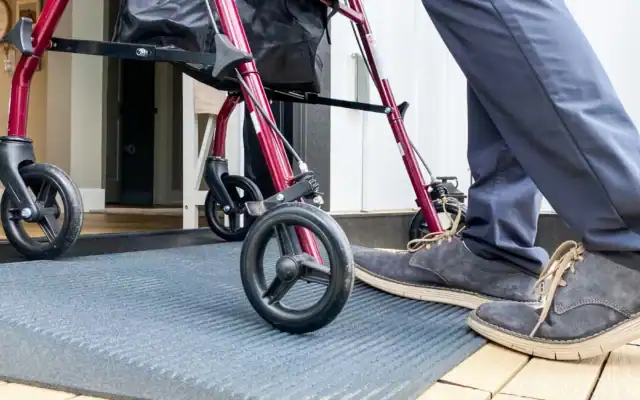
The modifications that make the biggest difference are rarely the most dramatic ones. They’re the changes that make the bathroom safe to use alone, the entryway navigable without help, and the staircase something other than a daily risk.
Here are the most common upgrades and the everyday problem each one solves:
- Wheelchair ramps: Replace stairs at entryways, making it possible to get in and out of the home safely with or without a mobility device
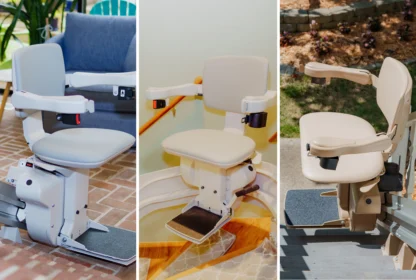
- Stair lifts: Allow veterans to access all floors of their home without navigating stairs, removing one of the most common causes of home falls among older adults; learn more about stairlift options for your home
- Walk-in or roll-in showers: Eliminate the high step into a tub, which is a leading fall hazard, and create a space that works with a shower chair or wheelchair
- Grab bars near the toilet and in the shower: Provide stable support during transfers and balance changes, small in size, significant in impact
- Widened doorways: Create clearance for a wheelchair, walker, or scooter, turning inaccessible rooms into fully usable spaces
- Non-slip flooring: Reduces the risk of slipping on hard surfaces, especially in kitchens and bathrooms where wet floors are common
None of these modifications require a complete home renovation. Most can be completed in a day or two by a qualified installer. If you’d like a clear sense of what your specific home might need, a free home accessibility consultation can help you prioritize.
State, Local, and Nonprofit Support Programs
VA grants aren’t the only path to funding. Depending on where a veteran lives, additional help may be available through:
- State veterans affairs offices, many of which have their own home modification grant or loan programs separate from the federal VA
- Area Agencies on Aging (AAAs), local organizations that often connect older adults, including veterans, with home modification assistance, typically at low or no cost
- Veteran-focused nonprofits, such as Homes for Our Troops, Operation Finally Home, and local chapters of national organizations, which sometimes fund accessibility modifications directly
Availability varies by state and by year, so it’s worth contacting your state veterans affairs office or local AAA directly to ask what’s currently offered. Don’t assume a program doesn’t exist simply because you haven’t heard of it.

Frequently Asked Questions
What home modification benefits are veterans eligible for?
Veterans may be eligible for VA home modification grants through three main programs: the Specially Adapted Housing (SAH) grant, the Special Home Adaptation (SHA) grant, and the Home Improvements and Structural Alterations (HISA) grant. Eligibility depends on disability status, service connection, and other factors. Additional support may be available through state veterans affairs offices, Area Agencies on Aging, and veteran-focused nonprofits. A VA benefits counselor can help determine which programs apply to a specific situation.
How do I apply for a VA home accessibility grant?
Applications for VA home modification grants are submitted through the VA. Veterans can apply online through the VA’s website, by mail, or in person at a regional VA office. Working with a VA-accredited claims agent or veterans service organization (VSO) representative can make the process more straightforward, especially for first-time applicants. These services are typically free.
Does the VA pay to add a wheelchair ramp to a house?
Yes, in many cases. The HISA grant specifically covers exterior ramp installation as an eligible modification, among other accessibility upgrades. Veterans with both service-connected and non-service-connected disabilities may qualify, though the benefit amounts differ. Contact the VA or a VSO to confirm current eligibility requirements and grant amounts, as these details are updated periodically.
Can family members help a veteran apply for home accessibility benefits?
Yes. Family members and caregivers can assist veterans in gathering documentation and completing the application process. In cases where a veteran is unable to manage the process independently, a VA-accredited claims agent or VSO representative can serve as a formal representative. Some modifications can also be made to a family member’s home where the veteran resides, depending on the program.
What is the difference between the SAH grant and the HISA grant?
The SAH grant is designed for veterans with severe service-connected disabilities, such as loss of limb use or paralysis, who need to construct or substantially adapt a home to meet their needs. It typically covers more extensive modifications. The HISA grant, by contrast, is intended for smaller-scale home improvements that improve safety and function, like ramp installation, roll-in showers, and widened doorways. The HISA grant is generally more accessible and covers a broader range of veterans, including those with non-service-connected disabilities.
Honoring Service With Everyday Independence
Gratitude for veterans takes many forms. Parades. Moments of silence. A hand on the shoulder and a simple thank you.
But one of the most meaningful things a person can do for a veteran, this Labor Day or any day, is help them stay home. Safely. On their own terms.
The programs covered in this article exist because independence isn’t something that should stop at the front door. VA home modification grants, state-level resources, and practical accessibility solutions all work toward the same goal: making it possible for veterans to live in their homes without having to fight their way through them.
If you’re a veteran, start by reaching out to the VA or a local VSO to find out what you qualify for. If you’re a family member or caregiver, share this article with someone who needs it.
And when you’re ready to see what home accessibility looks like in practice, 101 Mobility’s local consultants offer free home consultations by coming to your home, assessing what would make the most difference, and helping you understand every option available. No pressure. Just a clear path forward.
Your service mattered. Your independence matters too.