Quick Takeaways:
- Bringing up growing older at home lands better when you lead with a plan, not just a wish.
- A strong plan often includes a home safety assessment, a few specific product decisions, and one trusted local provider.
- Naming exactly what you’ve already done removes the instinct your kids might have to step in and take over.
- A local, consultation-first provider gives you something concrete to describe when your family asks who’s involved.
- The conversation usually gets easier, not harder, once there’s a real plan behind it.
Telling your adult children you intend to stay in your own home as you get older can feel like walking into a debate you didn’t want to be a part of. Bring it up without a plan, and it can turn into a conversation about your safety, your judgment, or whether it’s time to consider other options. Bring it up with a plan already in hand, and it becomes something else: a decision you made, not one being made for you. The difference is preparation. Here is the groundwork that changes the tone of that conversation, and how to talk about growing older at home in a way that reassures your family instead of alarming them.
Why This Conversation Feels Harder Than It Should
Most people past 60 have some version of this conversation sitting in the back of their mind. The hesitation isn’t really about the words. It’s about what the conversation implies. Bring up aging in place with no context, and adult children often hear something happened or you’re not managing as well as you used to. That reaction isn’t a lack of respect. It’s what happens when a topic surfaces with no information attached to it.
The fix isn’t avoiding the conversation. It’s changing what you bring to it. A parent who says, I’ve thought about what happens if the stairs become a problem, and here’s what I’ve already looked into, is having a fundamentally different conversation than one who says, I don’t want to think about that yet. One sounds like control. The other can sound like avoidance, even when it isn’t.
What “Having a Plan” Actually Looks Like
A real aging-in-place plan often comes down to a short list of concrete answers:
- Which parts of the home create risk: a set of stairs, a walk-in shower with no grab bars, a tub that’s hard to get in and out of
- What’s already been evaluated by a professional rather than guessed at
- Who you’d call if something needed to change quickly.
None of this requires installing anything today. It requires having already done the thinking, so if something changes, the response is “I already have someone for that,” not “I’ll figure it out.”
How to Start the Conversation With Your Family
Lead With What You’ve Already Done
Skip the philosophical opening. Instead of “I’ve been thinking about getting older”, try, “I had a home safety assessment done last month, and here’s what came out of it.” Specifics change the register of the conversation immediately. A parent describing a completed assessment, a list of products they’ve compared, or a company they’ve already talked to sounds like someone managing their own future. A parent describing only a worry can leave the door open for others to step in.
Address Their Concerns Before They Ask
Your children’s questions are predictable. Is this safe? What does it cost? Who’s going to do the work? Answer those before they’re asked. If you already have a quote, say so. If you know installation takes a day rather than a week of contractors coming and going, say that too. Removing uncertainty is what actually reassures adult children, not tone of voice.
Choosing a Partner That Makes the Conversation Easier
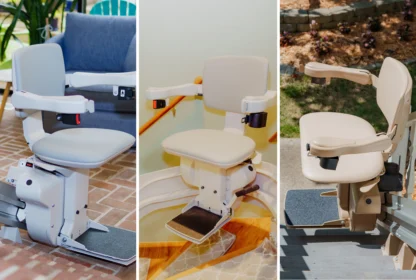
The provider behind your plan matters as much as the plan itself. A locally owned team that handles the assessment, the product selection, and the installation as one process gives you a single, simple answer when your family asks who’s doing this. 101 Mobility’s consultation-first model exists for exactly this moment: one appointment, one point of contact, and a clear recommendation you can describe in a sentence, whether that’s a stair lift, a wheelchair ramp, or a bathroom safety upgrade. That’s a very different story than “I found some things online and I’m still comparing them.”
Frequently Asked Questions
How do I bring up aging in place without upsetting my family?
Lead with information rather than feelings. Adult children generally react to uncertainty, not to the idea of aging itself. Telling them what you’ve already assessed and decided gives them something concrete to respond to, rather than a topic to worry about.
What does a home safety assessment for aging in place include?
A typical assessment reviews stairs, bathrooms, entryways, and other high-risk areas of the home, then identifies specific products, such as stair lifts or grab bars, that address what’s actually found. It’s a walkthrough, not a sales pitch, and it gives you a documented starting point for any conversation with family.
Do I need to make changes right away after planning for aging in place?
No. Having a plan and acting on it immediately are two different things. Many homeowners complete an assessment and hold onto the recommendations until they’re ready, or until a specific need comes up. The value is in already knowing what to do, not in doing it on a deadline.
How is a local provider different from ordering equipment online?
A local provider handles product selection and professional installation as one coordinated process, backed by someone in your area you can call again. Ordering online means managing the choice, the installation, and any follow-up service yourself, often with no local support.
What if my family disagrees with my plan?
Bring specifics to the table: cost, timeline, and what’s already been evaluated by a professional. Most disagreements soften once the plan stops sounding like a hope and starts sounding like a decision already backed by real information.
Bring a Plan, Not Just a Topic
| A plan changes the whole shape of this conversation. It moves you from the person being questioned to the person who already has an answer. If you haven’t had that home safety assessment yet, that’s the place to start, before the conversation, not during it.Schedule your 101 Mobility home assessment today and walk into that family conversation with a plan already in hand. |