What Seniors Really Want for National Senior Citizen Day: The Gift of Staying Home

With National Senior Citizen Day (August 21) just around the corner, it’s worth asking: what do most seniors actually want? According to AARP, 77% of adults over 50 want to age in place. The most meaningful gift for elderly parents is the ability to stay home safely through practical upgrades like stair lifts, grab bars, and ramps that protect senior independence at home without changing how home feels.
This guide is for anyone who wants to give that gift. Whether you’re thinking about an aging parent’s safety, looking for next steps as a caregiver, or planning ahead for yourself, you’ll find straightforward guidance on the home accessibility upgrades that make aging in place genuinely possible.
Why “Staying Home” Is the Gift Seniors Ask for Most
The desire to stay home goes deeper than convenience. Home is where identity lives: the kitchen where someone has made breakfast for decades, the backyard where grandchildren play, the neighborhood they know by heart. Moving means leaving all of that behind. Staying home is about dignity. The ability to move through your own space, on your own schedule, without asking for help, is a quiet but powerful form of freedom.
The good news? Many of the barriers that make staying home feel risky are fixable. The right home accessibility upgrades for seniors don’t just reduce fall risk. They restore confidence.
The Home Upgrades That Make Aging in Place Possible
These aren’t renovations, they’re smart additions that make your home work better for you, targeting the spaces where safety and independence matter most.
Stair Lifts and Home Lifts
Falls on stairs are one of the leading causes of serious injury among older adults. For seniors in multi-story homes, the staircase can quietly become the biggest barrier to full use of the home, or the reason a move feels necessary.
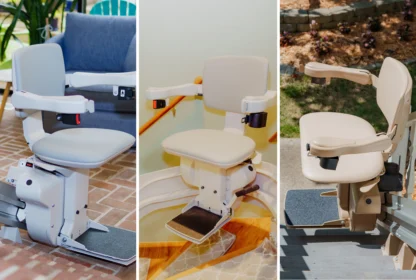
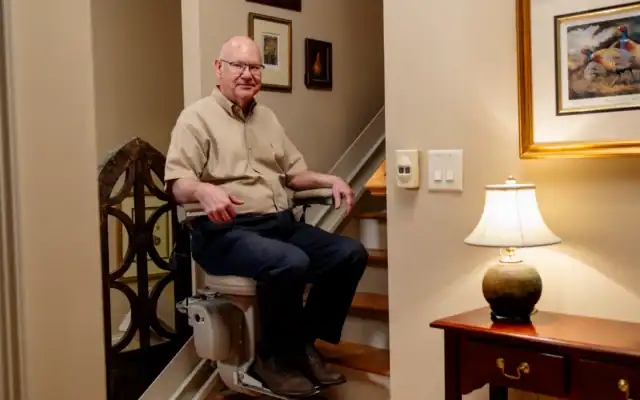
A stair lift solves that. It’s a motorized chair that travels along a rail mounted to the stair treads, carrying the user safely between floors. Most installations can be completed with no major construction.
Straight models work for standard staircases, while curved stair lifts are custom-built for staircases with bends or landings. Vertical platform lifts are available for wheelchair users or those who prefer a fully enclosed ride.
Grab Bars and Bathroom Safety Modifications
The bathroom is statistically the most dangerous room in the home for seniors. Wet surfaces, tight spaces, and the physical demands of getting in and out of the shower create conditions where falls happen most often.
Grab bars are one of the simplest upgrades available. Installed near the toilet, inside the shower, and alongside the tub, they provide a secure handhold that makes a real difference. Bathroom safety upgrades worth considering include walk-in shower conversions, raised toilet seats, handheld shower heads, and non-slip flooring treatments. Together, these turn one of the home’s riskiest areas into a safer space.
Wheelchair Ramps and Threshold Ramps
For seniors using a walker, wheelchair, or scooter, a single step at the front door can be enough to limit independence. Entry ramps solve this directly. Modular ramp systems are portable, adjustable, and fit almost any porch or entryway. Permanent ramps offer a more finished look for long-term use. Threshold ramps handle smaller height differences at sliding doors or between flooring types.
Working with a professional on ramp selection ensures the slope, width, and surface material are right for the user and their specific home entry.
Automatic Door Openers
Grip strength decreases with age, and heavy doors become a daily obstacle for seniors using a cane, walker, or wheelchair. Automatic door openers eliminate that friction. By activating a push button or motion sensor, they give users hands-free access to their home. This is a small change with an immediate impact on daily comfort.

How to Choose the Right Gift: A Simple Framework for Families
Not sure where to start when considering gifts for elderly parents who want to stay home? Here’s a practical approach:
- Walk through the home as your parent does. Notice where they pause, what they hold onto, which spaces they avoid.
- Focus on the highest-priority areas such as the bedroom-to-bathroom path, the kitchen, the front entrance, and daily-use stairs.
- Get a professional assessment before buying anything. The right solution depends on the specific layout of the home and the user’s physical needs. A free in-home consultation with 101 Mobility takes the guesswork out, and costs nothing.
Buying online without an assessment is a common and costly mistake. Equipment that doesn’t fit the home correctly can create new hazards rather than solve existing ones.
What Makes a Mobility Upgrade Feel Like Home
Modern home accessibility products are designed differently. Stair lifts come in fabric and color options that coordinate with existing furniture. Grab bars match bathroom fixture finishes. Modular ramps are low-profile and can complement a home’s exterior.
A well-chosen upgrade doesn’t announce itself. It makes the home work better. That’s exactly how 101 Mobility approaches every installation: not as a medical accommodation, but as a home improvement that respects both the space and the person in it.
Frequently Asked Questions
What are the best aging in place gifts for seniors who want to stay home?
The most meaningful aging in place gifts for seniors are home upgrades that directly support independence; stair lifts, grab bars, bathroom safety modifications, entry ramps, and automatic door openers. A free in-home consultation with 101 Mobility is the best first step for families who want to get this right.
How do I know if my parent’s home is safe for aging in place?
Walk through the home and identify where your parent pauses, holds onto walls, or avoids certain areas. Bathrooms, staircases, and entry points are the highest-risk zones. A professional assessment provides specific recommendations based on your parent’s mobility and their home’s layout.
Are home accessibility upgrades covered by insurance or Medicare?
Medicare generally does not cover home modification costs, but some Medicare Advantage plans, Medicaid programs, and VA benefits may provide assistance depending on eligibility. 101 Mobility also offers flexible financing options to help make upgrades more accessible.
How much does it cost to modify a home for an aging senior?
Costs vary by scope. Grab bars are among the most affordable upgrades. Stair lifts range from a few thousand dollars for straight models to higher for custom curved configurations. A free consultation gives you a clear picture of what’s needed with no obligation.
What is the difference between aging in place and assisted living?
Aging in place means staying in your own home with the right modifications in place to remain safe and independent. Assisted living involves moving to a staffed facility and trading the familiarity, privacy, and autonomy of home for more structured care. For most seniors, aging in place is the strongly preferred option when properly supported.
Give a Gift That Lasts: The Case for Investing in Independence
The best thing you can give a senior this National Senior Citizen Day isn’t something that comes in a box. It’s confidence; the kind that comes from knowing your home is set up to support you.
Home accessibility upgrades last for years. A stair lift that gets used every morning. A grab bar that prevents a fall. A ramp that makes the front door feel welcoming again. These aren’t purchases; they’re investments in senior independence at home.
101 Mobility offers free in-home consultations with local specialists who understand both the practical and personal dimensions of aging in place. No pressure. No commitment. Just a clear picture of what’s possible.
Your home. Your independence. Let’s make sure it stays that way.
Book a free consultation with 101 Mobility